
Table of Contents
- Welcome to Belgium
- Brussels - Belgium's Grand Capital
- Bruges - A Fairytale Medieval City
- Ghent - Where History Meets Modern Life
- Antwerp - Art, Fashion and Architecture
- Dinant - A Scenic Gem Along the Meuse
- Leuven - Belgium's Charming University City
- Durbuy - A Tiny Town in the Ardennes
- Belgian Experiences You Shouldn't Miss
- Start Planning Your Belgian Adventure
Welcome to Belgium
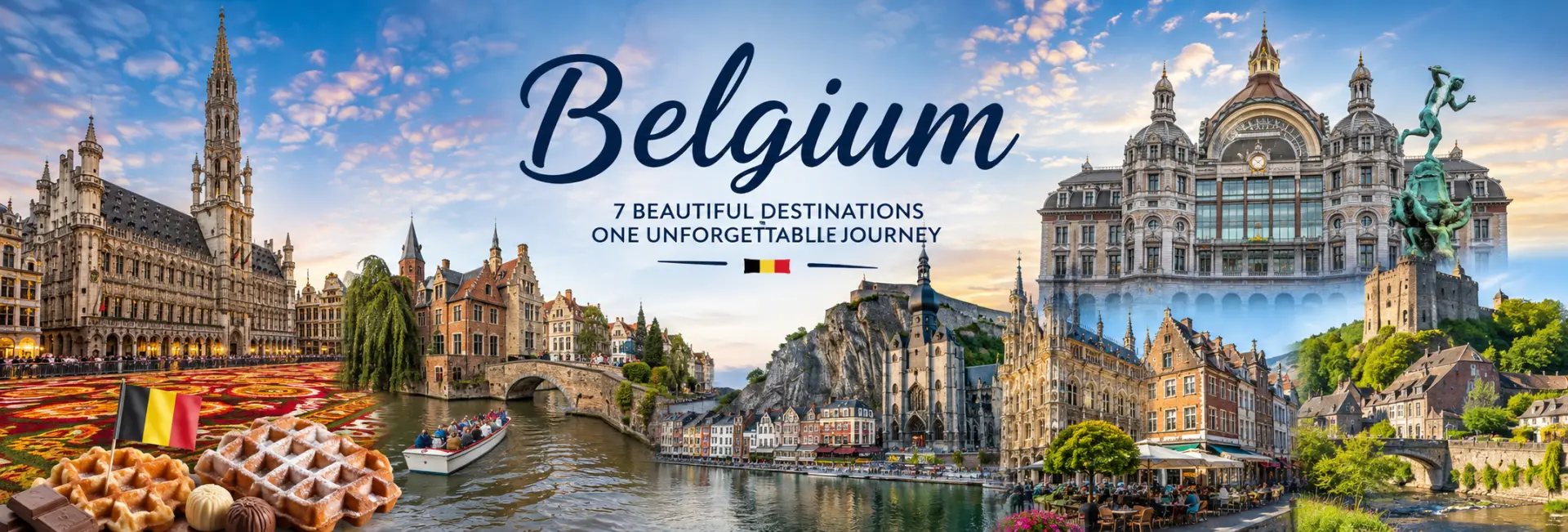
Belgium packs an outsized amount of variety into a country you can cross by train in under three hours. Medieval town squares, Gothic cathedrals, quiet canals, and rolling countryside all sit within short hops of one another, so a single trip can move from a buzzing capital to a fairytale canal town to a forested river valley without ever needing a rental car.
This guide covers seven destinations that between them capture Belgium's range: grand cities built on trade and diplomacy, university towns that never stopped feeling young, and small villages tucked into the Ardennes hills. Along the way, expect the country's other calling cards - waffles, chocolate, beer, and fries - to show up everywhere you go.
Part of what makes Belgium so approachable is its size. The entire country is roughly the same footprint as the U.S. state of Maryland, and its dense rail network means most of the destinations below are less than two hours apart by train. That makes it realistic to base yourself in one or two cities and take day trips to the rest, rather than repacking a suitcase every night.
Brussels - Belgium's Grand Capital
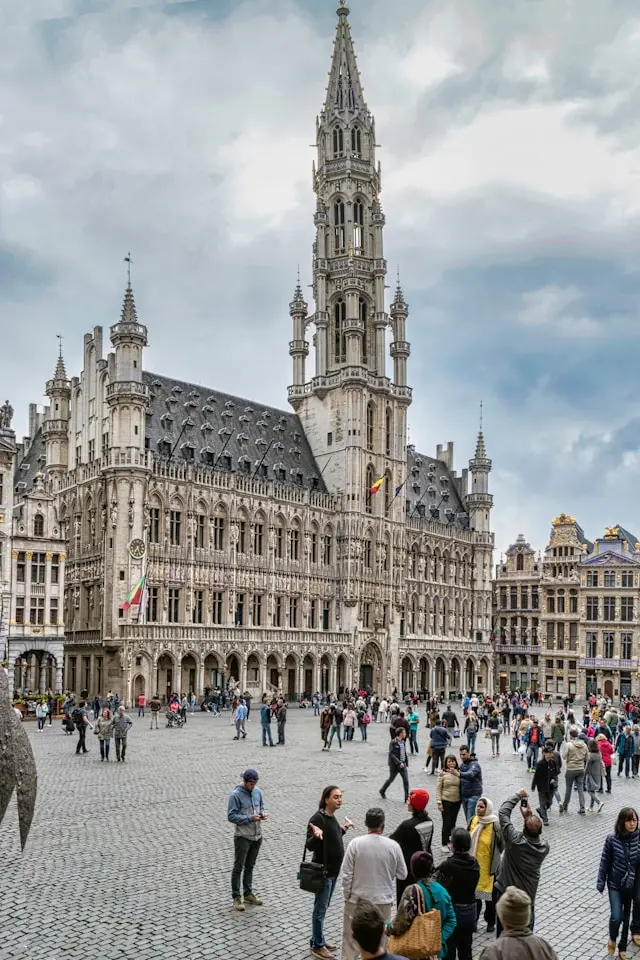
Brussels is Belgium's political and cultural anchor, and almost every visit starts at the Grand Place. This UNESCO-listed square, rebuilt in stone after a 1695 bombardment, is ringed by ornate guild houses, the Gothic City Hall, and the 17th-century Maison du Roi, making it one of the most striking public squares in Europe. From there, the compact historic core rewards wandering on foot, with comic strip murals scattered through the streets nodding to the city's status as a global hub for graphic art.
Iconic Landmarks
- Grand Place, the UNESCO-listed square at the heart of the old town
- Manneken Pis, the small bronze statue that has become a symbol of the city
- Galeries Royales Saint-Hubert, a covered 19th-century shopping arcade
- The Atomium, built for the 1958 World's Fair, with panoramic views from its upper sphere
- Royal Museums of Fine Arts and the Belgian Comic Strip Center
- Cinquantenaire Park and its triumphal arch in the European Quarter
Where to Stay
First-time visitors do best in the Pentagon, the historic centre stretching from Grand Place to Sainte-Catherine, which keeps every major sight within walking distance and sits close to the city's main metro hubs. For a quieter, more residential base, the Sablon district pairs antique shops and chocolate makers with easy access to the centre, while Saint-Géry and the Dansaert area suit travellers after nightlife and independent boutiques. Families and business travellers often prefer Ixelles or the area around Avenue Louise, which trade a few extra minutes' walk for leafier streets and upscale shopping.
Bruges - A Fairytale Medieval City
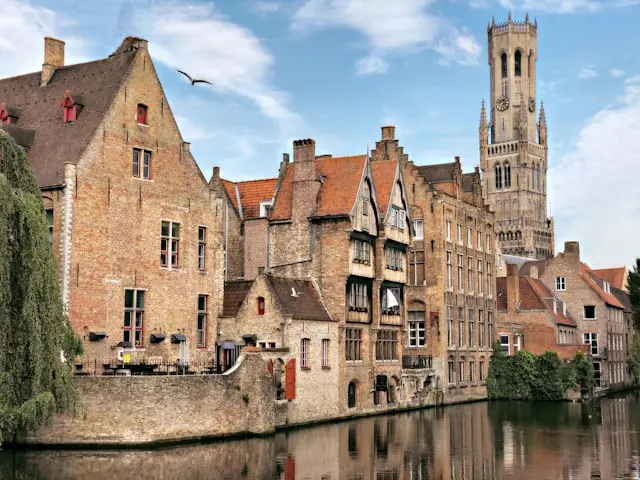
Bruges earns its "Venice of the North" nickname honestly. Its network of canals winds past stepped gable houses and beneath stone bridges, and the entire historic centre carries UNESCO World Heritage status thanks to how intact its medieval architecture has remained. Rozenhoedkaai, where the canal bends past the Belfry's reflection, is one of the most photographed spots in the country, and a boat tour remains the easiest way to see the old town from a different angle.
Iconic Landmarks
- The Belfry of Bruges, a 13th-century bell tower with 366 steps to a rooftop viewpoint
- Rozenhoedkaai, the classic canal-bend photo spot
- Markt (Market Square) and the adjoining Burg Square
- Basilica of the Holy Blood, home to a relic venerated since the Middle Ages
- Church of Our Lady, which houses a Michelangelo sculpture of the Madonna and Child
- Minnewater Park and the Begijnhof, a tranquil former beguinage
Where to Stay
The Historic Center around Markt and Burg is the obvious choice for a first visit, putting the Belfry, the canals, and most restaurants within a few minutes' walk, though it's also the busiest and priciest part of town. For a calmer stay that's still close to everything, look toward the Sint-Anna quarter, known for its residential streets and windmill-lined park, or the Magdalena area near Minnewater Park, which suits travellers who want canals and cobblestones without the crowds around Markt.
Ghent - Where History Meets Modern Life
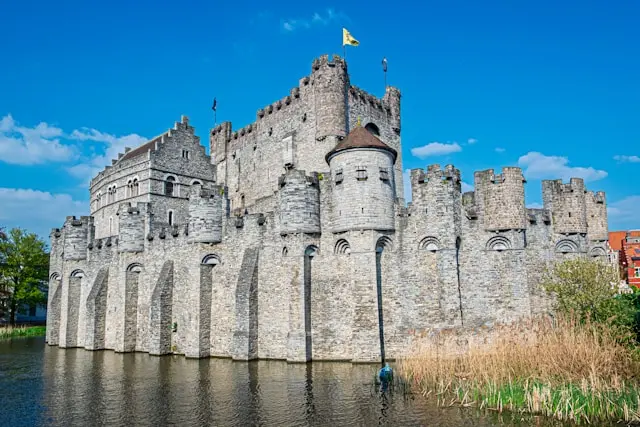
Ghent sits at the meeting point of the Leie and Scheldt rivers and carries a quieter, more lived-in energy than its more famous neighbour Bruges. The 12th-century Gravensteen castle, once the seat of the Counts of Flanders, anchors the old town and can be explored room by room with an audio guide covering its centuries as fortress, court, and even prison. Ghent is also a large student city, which shows in its nightlife, independent cafés, and a laid-back pace that gives visitors more room to explore without the crowds that sometimes fill Bruges.
Iconic Landmarks
- Gravensteen, the moated Castle of the Counts in the heart of the old town
- St Bavo's Cathedral, home to the Ghent Altarpiece by the van Eyck brothers
- The "Three Towers" skyline of St Nicholas' Church, the Belfry, and St Bavo's Cathedral
- Graslei and Korenlei, the guild-house-lined quays along the Leie River
- Het Patershol, the city's oldest surviving medieval quarter
Where to Stay
The Old Town around Korenmarkt and the Belfry is the most convenient base, putting the main sights, shops, and transport links within easy reach. For more character, Het Patershol just north of Gravensteen offers narrow lanes lined with restaurants and boutique guesthouses in converted historic buildings, making it a favourite for travellers who want atmosphere over convenience. Budget-conscious visitors can look toward the Stationsbuurt area near Gent-Sint-Pieters station, which connects to the centre by tram in about ten minutes.
Antwerp - Art, Fashion and Architecture
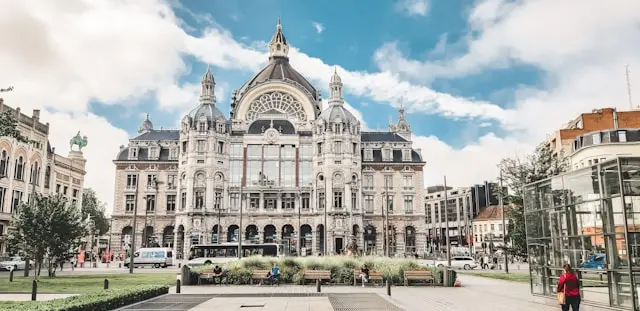
Antwerp trades storybook charm for urban confidence. The city is Belgium's second-largest and a genuine global player: its Diamond District, clustered around the streets near Antwerp Central Station, handles a substantial share of the world's diamond trade and has done for centuries. Central Station itself, with its domed hall of stone and glass, is often ranked among the most beautiful railway stations anywhere, and the city's working port still shapes its identity today.
Iconic Landmarks
- Antwerp Central Station, nicknamed the "railway cathedral" for its domed hall
- The Diamond District, the historic centre of the global diamond trade
- Cathedral of Our Lady, the tallest Gothic building in the Low Countries, housing major Rubens paintings
- Rubens House, the painter's restored home and studio
- Grote Markt, ringed by 16th-century guildhalls and the Brabo Fountain
- MAS (Museum aan de Stroom), a riverside museum with a free rooftop viewpoint
Where to Stay
The Historic Centre, steps from the Cathedral of Our Lady and Grote Markt, is the natural choice for first-time visitors who want everything on foot. Travellers on a budget often base themselves near Central Station, which is a little less polished but well connected and close to the Diamond District. For a quieter, more local feel, Zurenborg offers Antwerp's best Art Nouveau architecture along Cogels-Osylei and a villagey atmosphere around Dageraadplaats, while Het Zuid suits art lovers with its museums, galleries, and upscale dining.
Dinant - A Scenic Gem Along the Meuse
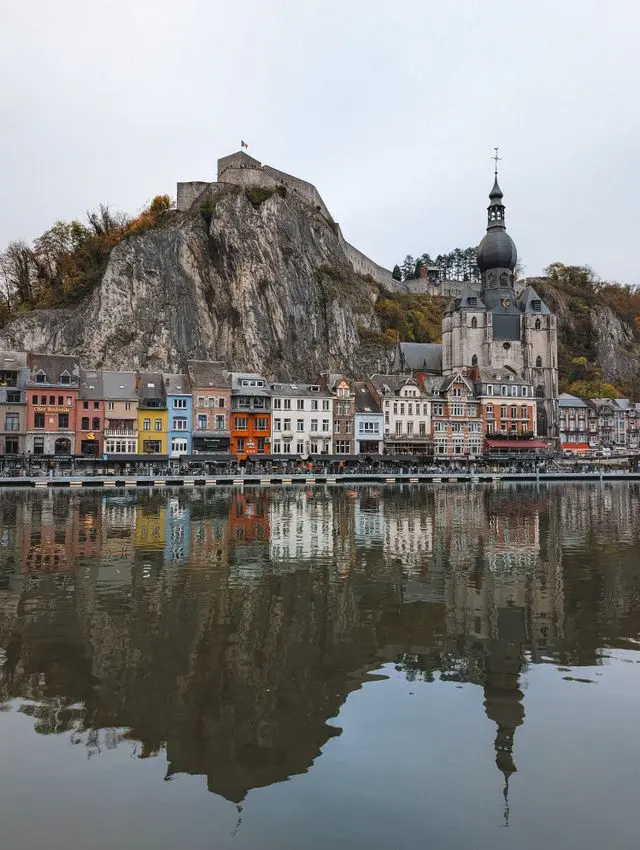
About 90 kilometres southeast of Brussels, Dinant sits wedged between steep cliffs and the Meuse River, with a citadel dating back to 1051 looming over the town from a rocky outcrop. The Collegiate Church of Notre-Dame stands directly beneath it, and together the two create one of the most striking skylines in Wallonia - best appreciated from the opposite riverbank or by cable car up to the fortress itself. Dinant is also the birthplace of Adolphe Sax, inventor of the saxophone, and the town leans into that legacy with large painted saxophone sculptures scattered across bridges and streets.
Iconic Landmarks
- The Citadel of Dinant, reachable by cable car or a climb of 408 stone steps
- Collegiate Church of Notre-Dame, directly beneath the citadel
- Pont Charles de Gaulle, the bridge lined with saxophone sculptures representing EU countries
- Maison de Monsieur Sax, a small free museum on the site of Adolphe Sax's childhood home
- Grotte La Merveilleuse, a cave system with stalactites beneath the town
- Abbaye Notre-Dame de Leffe, the abbey where Leffe beer has been brewed since the 13th century
Where to Stay
Dinant Centre, along the riverbank near the citadel and Collegiate Church, is the most convenient base, putting the saxophone bridge, cafés, and boat departures within easy walking distance. Riverside hotels near the train station work well for travellers arriving by rail, while those looking for a quieter countryside stay often base themselves a short drive away in the surrounding villages of the Meuse Valley, closer to the Caves of Han and the Lesse Valley trails.
Leuven - Belgium's Charming University City
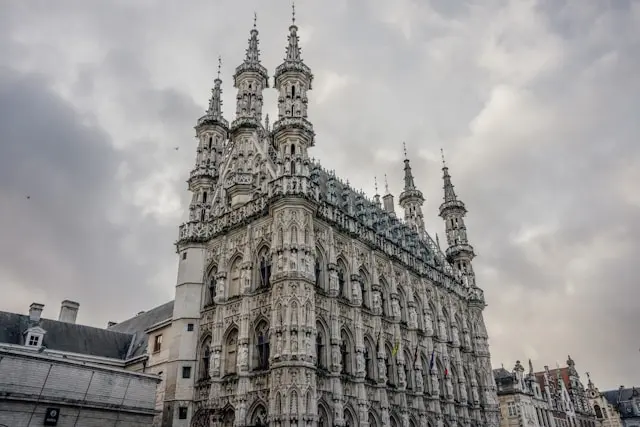
Just fifteen minutes from Brussels by train, Leuven revolves around KU Leuven, one of Europe's oldest universities, founded in 1425. Its University Library is as much a landmark as an academic building: destroyed during the First World War, it was rebuilt afterward, and its bell tower can be climbed for panoramic city views along the way. The mix of centuries-old academic tradition with a young, buzzing student population gives the city a character distinct from Belgium's other historic towns.
Iconic Landmarks
- University Library and Bell Tower, rebuilt after wartime destruction
- Grote Markt and its ornately carved Gothic Town Hall
- St Peter's Church, a Brabantine Gothic landmark facing the Town Hall
- Oude Markt, nicknamed "the longest bar in Europe" for its wall-to-wall terraces
- Groot Begijnhof, a 13th-century beguinage and UNESCO World Heritage Site
- Stella Artois Brewery, with over 600 years of brewing history in the city
Where to Stay
Staying near Grote Markt puts you closest to the University Library, the Town Hall, and the main shopping streets, while a room near Oude Markt suits travellers who want to be in the middle of the city's nightlife. For a calmer alternative that's still walkable to the centre, the area around the Groot Begijnhof and Botanical Garden offers a quieter pace, and the suburb of Heverlee is a good option for families, with its parks, woods, and the historic Park Abbey nearby.
Durbuy - A Tiny Town in the Ardennes
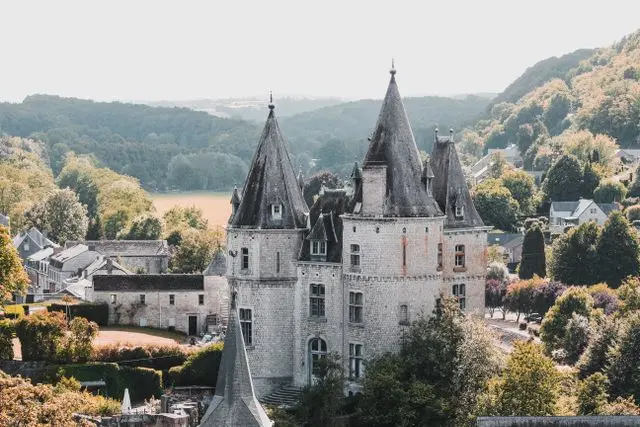
Durbuy calls itself the smallest city in the world, a title it has held since 1331, when King John of Bohemia granted it official city status. With around 400 permanent residents, the entire old town can be explored on foot in an afternoon: cobbled lanes, 17th-century stone houses, and a hilltop castle give it a fairytale feel that belies its size. The surrounding Ardennes countryside opens up options for hiking, kayaking, and mountain biking along the Ourthe River.
Iconic Landmarks
- The Old Town (Vieille Ville), with its cobbled lanes and 17th-century stone houses
- Château de Durbuy, the medieval castle overlooking the town (viewable from outside only)
- Topiary Park, home to roughly 250 sculpted boxwood figures
- Rocher de la Falize, a striking rock formation and geological viewpoint above the town
- The megalithic site at Wéris, a short drive away, with some of Belgium's oldest standing stones
Where to Stay
Staying in the old town centre puts you within a few minutes' walk of the Topiary Park, the castle view, and Durbuy's restaurants, and several small hotels here look directly onto the castle. Travellers with a car sometimes prefer a countryside guesthouse just outside town, closer to hiking trails and kayak put-ins along the Ourthe, while those touring the wider Ardennes may use nearby towns like Marche-en-Famenne as a base with easier access to attractions such as the Caves of Han.
Belgian Experiences You Shouldn't Miss
Beyond the destinations themselves, a handful of experiences show up in nearly every Belgian itinerary and are worth building time around, wherever your trip takes you.
- Try a fresh Belgian waffle, ideally from a street stall rather than a supermarket freezer
- Taste Belgian chocolate at a specialist chocolatier rather than a mass-market shop
- Sample Belgian fries served in a paper cone with a proper sauce, not ketchup alone
- Explore local beer culture, from Trappist ales to lighter blondes at a neighbourhood café
- Take a canal cruise in Bruges to see the medieval centre from the water
- Visit a medieval castle or citadel, such as those in Dinant or Ghent
- Spend a day in the Ardennes countryside around Durbuy, hiking or kayaking along the Ourthe
Start Planning Your Belgian Adventure
Belgium's greatest advantage as a destination is how little it asks of your itinerary. Its excellent rail network puts grand capitals, canal towns, university cities, and Ardennes villages within easy reach of one another, so a week can realistically cover several very different sides of the country without much time lost in transit.
Whether you're drawn to Brussels' grand squares, Bruges' canals, or the quieter charm of Durbuy and Dinant, Belgium rewards travellers who mix a couple of famous stops with at least one smaller town. Start with the destinations that call to you most, build in time for the food and beer culture along the way, and let the short distances between towns do the rest of the planning for you.
Frequently Asked Questions
How many days do I need to see Belgium's top destinations? +
A week is enough to comfortably cover three or four cities, such as Brussels, Bruges, and Ghent or Antwerp, with a day trip to somewhere like Leuven or Dinant. Ten days to two weeks allows for a more relaxed pace that includes the Ardennes.
Is it easy to travel between Belgian cities without a car? +
Yes. Belgium has a dense, efficient rail network connecting all seven destinations in this guide, and most historic centres are compact enough to explore entirely on foot once you arrive.
Which Belgian city is best for a first-time visitor? +
Brussels is the natural starting point thanks to its transport connections and central location, but Bruges is often the highlight for travellers prioritising medieval architecture and canals over city life.
Is Bruges or Ghent better to visit? +
Bruges offers a more polished, postcard-perfect medieval centre and tends to be busier with day-trippers, while Ghent has similar architecture with a livelier, more local, student-driven atmosphere and fewer crowds.
Where's the best place to stay for a first visit to Brussels? +
The Pentagon, the historic centre around Grand Place and Sainte-Catherine, keeps the main sights and transport hubs within walking distance and suits most first-time visitors.
What is Durbuy known for? +
Durbuy bills itself as the smallest city in the world, a status granted in 1331, and is known for its medieval old town, a large topiary garden, and easy access to Ardennes hiking and kayaking.
Why is Dinant famous? +
Dinant is known for its dramatic citadel perched above the Meuse River and for being the birthplace of Adolphe Sax, inventor of the saxophone, whose legacy is celebrated with saxophone sculptures throughout the town.
What food should I try in Belgium? +
Waffles, chocolate, and fries are the obvious starting points, but Belgium's beer culture — from Trappist ales to regional specialties like Leffe — is just as central to the food scene.
Is Belgium an expensive destination to visit? +
Belgium is moderately priced by Western European standards. Major attractions like the Grand Place and canal walks are free, while museum entry, guided tours, and boat rides typically run in the €10–€16 range.
