

Table of Contents
- About Cheltenham
- Getting to Cheltenham
- Transportation in Cheltenham
- Things to Do in Cheltenham
- Cheltenham's Festivals
- Day Trips from Cheltenham
- Food in Cheltenham
- Neighborhoods to Explore
- Accommodation in Cheltenham
- Best Time to Visit Cheltenham
- Budget & Costs in Cheltenham
- Safety Tips in Cheltenham
About Cheltenham
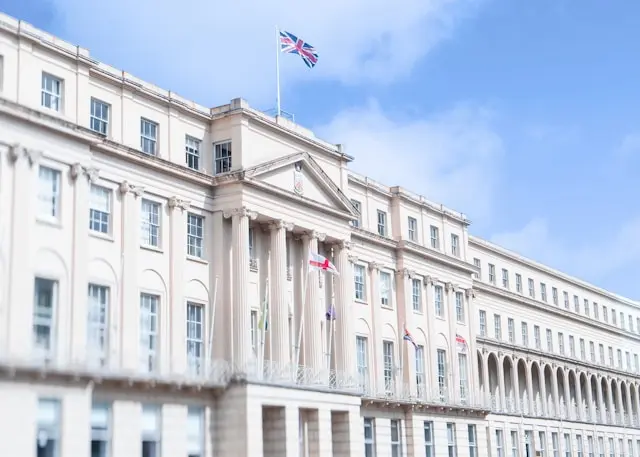
Cheltenham is an elegant spa town on the western edge of the Cotswolds in Gloucestershire, England, widely regarded as Britain's most complete Regency town. Its fortunes changed in 1716, when mineral springs were discovered locally, and again after a visit from King George III in 1788 turned it into a fashionable destination for the wealthy. That spa-era wealth left behind sweeping crescents, wrought-iron balconies, and pale stucco facades that still define the town center today.
Modern Cheltenham balances that Regency inheritance with a genuinely lively contemporary scene: independent shops and cafés around Montpellier and the Suffolks, a packed calendar of festivals covering literature, music, jazz, and science, and the world-famous Cheltenham Racecourse, home of the Cheltenham Festival and the sport of jump racing's biggest event.
Compact and walkable, with the Cotswold countryside starting just minutes outside town, Cheltenham works equally well as a short cultural break or a base for exploring the wider Cotswolds, Stratford-upon-Avon, and nearby Bath.
Getting to Cheltenham
By Train
Cheltenham Spa railway station has direct services to London Paddington (around two hours), Birmingham, Bristol, and Cardiff, making rail the most straightforward way to reach the town from most of England and Wales.
By Air
Birmingham Airport and Bristol Airport are the closest, each roughly an hour away by car. London's Heathrow is about two to two and a half hours by car or a combination of train and connections, and remains a common gateway for international visitors continuing on to Cheltenham and the Cotswolds.
By Car
Cheltenham sits just off the M5 motorway, with easy connections to Birmingham, Bristol, and South Wales, and the A40 leads directly into the Cotswolds. A car is useful for exploring surrounding villages at your own pace, though it isn't necessary for the town center itself.
By Coach
National Express coach services connect Cheltenham to London and other major UK cities, generally a slower but cheaper alternative to the train.
Transportation in Cheltenham
Cheltenham's town center is compact and largely flat, making it an easy place to explore on foot once you've arrived.
Walking
Most of the main sights, from the Promenade to Montpellier and the Suffolks, sit within a 20-minute walk of each other, and a well-marked self-guided Regency walking trail covers the highlights.
Local Buses
Stagecoach operates the local bus network, connecting the town center to outlying neighborhoods, the racecourse, and nearby villages not served by rail.
Cycling
Cheltenham has a growing network of cycle paths, and the surrounding flat approaches to the Cotswolds make cycling a popular way to combine the town with countryside exploration.
Taxis
Taxi ranks are available at the train station and around the town center, useful for reaching the racecourse on event days or for late-night journeys.

Things to Do in Cheltenham
Cheltenham's appeal rests on its Regency architecture, green spaces, and a cultural calendar that punches well above the town's size.
- The Promenade and Montpellier – Cheltenham's most photographed streets, lined with Regency townhouses, caryatid-fronted buildings, and independent boutiques.
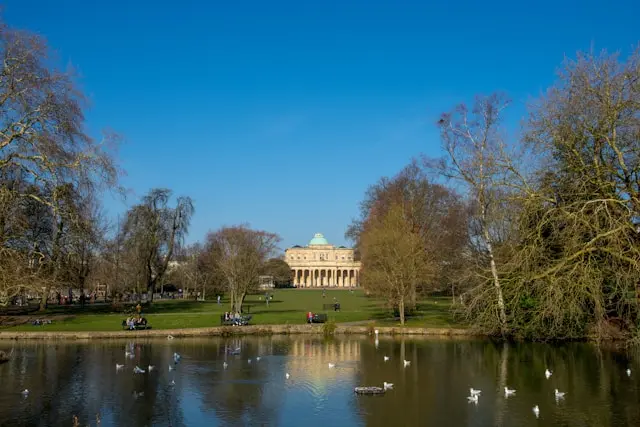
- Pittville Park and Pump Room – A large Regency-era park with a boating lake and aviary, anchored by the grand Pittville Pump Room, once the town's premier spa building.
- Holst Victorian House – The birthplace of composer Gustav Holst, preserved as a museum of Victorian domestic life alongside items connected to his career.
- Cheltenham Racecourse – The home of jump racing in Britain and the March Cheltenham Festival, with race meetings held throughout the year.
- Imperial Gardens – Formal gardens next to the Town Hall, hosting outdoor festival events and colorful seasonal planting displays.
- Cheltenham Paint Festival murals – Large-scale street art by artists including Inkie and Dank, many of which remain as permanent fixtures around town, forming a self-guided street art trail.
Cheltenham's Festivals
Few towns of Cheltenham's size host as packed a festival calendar, and several of its events draw international audiences.
Cheltenham Festival (Horse Racing)
Held every March at Cheltenham Racecourse, this is the biggest event in British jump racing, drawing racing fans from across the UK and Ireland for four days of top-level competition, including the Gold Cup.
Cheltenham Literature Festival
One of the world's longest-running literary festivals, held every October, bringing authors, journalists, and public figures to venues across town for talks, readings, and debates.
Cheltenham Jazz and Music Festivals
The Jazz Festival in spring and the Music Festival in summer bring live performances to venues and outdoor stages around the town center, including Imperial Gardens.
Cheltenham Science Festival
Held each June, this festival brings scientists and researchers to town for public talks and hands-on events aimed at both adults and families.
Day Trips from Cheltenham
Cheltenham's position on the edge of the Cotswolds, with fast road and rail links further afield, makes it a practical base for a wide range of day trips.
Cotswold Villages
Postcard villages such as Bourton-on-the-Water, Bibury, and Stow-on-the-Wold are all within about half an hour's drive, offering the honey-colored stone cottages and countryside the region is known for.
Sudeley Castle
A Tudor castle with royal connections near Winchcombe, roughly 20 minutes from Cheltenham, set in extensive gardens and open for tours and exhibitions.
Bath
The Georgian city of Bath, with its Roman Baths and Royal Crescent, is about an hour away by car or a direct train, and pairs naturally with Cheltenham's own Georgian and Regency heritage.
Stratford-upon-Avon
Shakespeare's birthplace is around 40 minutes away by car, a popular pairing for visitors interested in English literary and theatrical history.

Food in Cheltenham
Cheltenham's dining scene reflects its affluent Regency character, with a strong concentration of independent restaurants, cafés, and gastropubs, particularly around Montpellier and the Suffolks.
- Sunday roast – A classic across Cheltenham's pubs, typically roast meat with Yorkshire pudding, roast potatoes, and vegetables, best sought out at one of the town's traditional gastropubs.
- Afternoon tea – Fitting for a Regency spa town, several of Cheltenham's hotels and tearooms serve a traditional afternoon tea of finger sandwiches, scones, and pastries.
- Gloucestershire cheeses – The wider county is known for Double Gloucester cheese, found on menus and at local delis and markets around town.
- Cotswold lamb – A regional specialty appearing on many Cheltenham restaurant menus, reflecting the sheep farming of the surrounding countryside.
The Suffolks neighborhood in particular has built a reputation for independent cafés and brunch spots, while Montpellier's terraces are popular for alfresco dining in warmer months.
Neighborhoods to Explore
Montpellier
Cheltenham's most fashionable district, developed as the town's first spa quarter, known for Regency architecture, boutique shopping, and upscale cafés and restaurants.
The Suffolks
A relaxed, villagey pocket of independent shops, cafés, and delis just south of the town center, popular with locals for a slower-paced alternative to Montpellier.
Pittville
A largely residential Regency and Victorian district built around Pittville Park, known for its grand terraces and the landmark Pittville Pump Room.
Town Centre
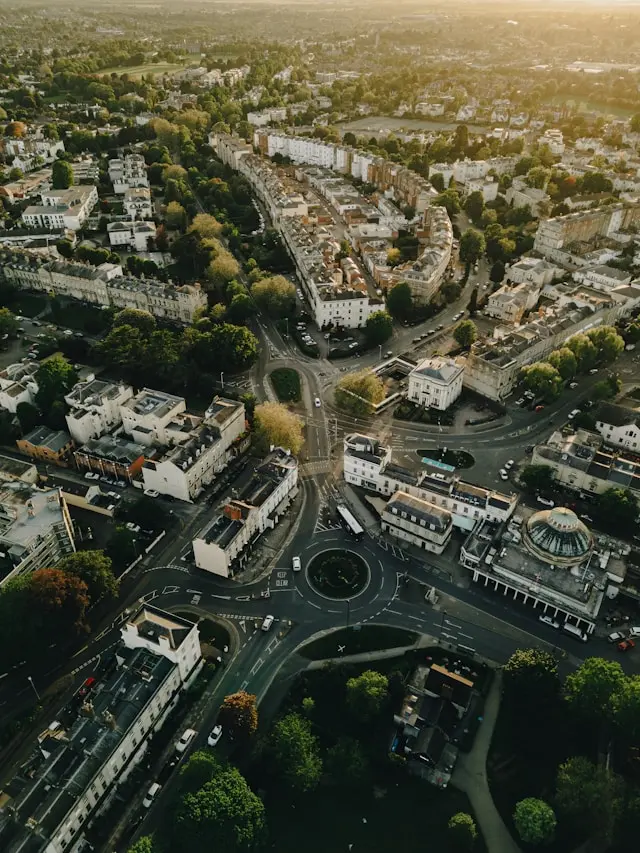
The area around the Promenade, High Street, and Imperial Gardens holds the main shopping streets, the Town Hall, and much of the festival activity throughout the year.
Accommodation in Cheltenham
Cheltenham's accommodation ranges from grand Regency townhouse hotels to budget chain options, with prices rising sharply during the Cheltenham Festival and major festival weeks.
Montpellier and Town Centre
The most central option, putting the Promenade, restaurants, and festival venues within easy walking distance; includes several boutique hotels in converted Regency buildings.
Near the Train Station
Convenient for arrivals by rail and for day trips further afield, with a mix of chain hotels and guesthouses a short walk from the town center.
Pittville and Residential Areas
A quieter option a short walk or bus ride from the center, often in period properties near Pittville Park, suited to travelers who prefer a calmer setting.

Best Time to Visit Cheltenham
Cheltenham has a temperate English climate with mild summers and cool, wetter winters, and the best time to visit often depends on which of its festivals appeals most.
March
The Cheltenham Festival transforms the town for four days of horse racing; a lively and atmospheric time to visit, but accommodation books up early and prices rise significantly.
Late Spring to Summer (May–August)
The most comfortable weather for walking the town and exploring the surrounding Cotswolds, coinciding with the Jazz, Music, and Science Festivals.
October
The Cheltenham Literature Festival brings a packed program of author events and talks, drawing visitors specifically for the festival alongside the usual autumn charm of the surrounding countryside.
Winter (November–February)
Quieter and cooler, with shorter days, but a good time for lower accommodation prices and a more local, less crowded experience of the town.
Budget & Costs in Cheltenham
As an affluent spa town, Cheltenham tends to run slightly above the UK average for accommodation and dining, with costs spiking sharply during the Cheltenham Festival in March.
- Budget travelers can keep costs down by visiting outside the Cheltenham Festival, staying near the train station rather than in Montpellier, and taking advantage of free attractions like Pittville Park and the Paint Festival street art trail.
- Mid-range travelers will find a good selection of three- and four-star hotels and independent restaurants, particularly around the Suffolks and town centre.
- Higher-end travelers have access to boutique Regency townhouse hotels and upscale dining in Montpellier, with the Cheltenham Festival week commanding the highest prices of the year.
Public transport, walking, and the town's many free green spaces make it possible to enjoy Cheltenham without a heavy spend outside of festival periods.
Safety Tips in Cheltenham
Cheltenham is a generally safe town for visitors, with most safety considerations relating to typical UK town-center precautions rather than serious risk.
- Keep an eye on belongings in crowded areas during major festivals and race days, when pickpocketing risk rises with the crowds.
- Cheltenham Festival race days draw very large crowds and heavy drinking is common in the evenings; plan transport home in advance rather than relying on finding a taxi late at night.
- As with the rest of the UK, weather can turn quickly; pack for rain even in summer if exploring the surrounding Cotswold countryside.
- The standard UK emergency number 999 (or 112) reaches police, medical, and fire services.

Frequently Asked Questions about Cheltenham
How many days do you need in Cheltenham? +
A full day covers the main Regency sights and Montpellier, but two to three days allows time for a Cotswold village day trip and, if timed right, one of the town's festivals.
What is Cheltenham best known for? +
Its Regency architecture (it's often called Britain's most complete Regency town), the Cheltenham Festival horse racing meeting, and a busy calendar of literature, music, jazz, and science festivals.
What is the best time of year to visit Cheltenham? +
March suits horse racing fans for the Cheltenham Festival, October suits literature fans for the Literature Festival, and late spring through summer offers the most comfortable weather for walking the town and exploring the Cotswolds.
Do you need a visa to visit Cheltenham? +
Cheltenham is in England, and UK entry requirements depend on nationality; since February 2026 most visa-exempt visitors, including from the US, EU, Canada, and Australia, need to obtain an Electronic Travel Authorisation (ETA) online before travel, so current requirements should always be checked before booking.
Is Cheltenham safe for visitors? +
Yes, Cheltenham is a safe town by UK standards, with typical town-center precautions around belongings and evening crowds, especially during the Cheltenham Festival, being the main practical concern.
How do you get from Cheltenham to the Cotswolds? +
Many Cotswold villages, including Bourton-on-the-Water and Stow-on-the-Wold, are within a 20 to 30 minute drive, with some also reachable by local bus.
Is Cheltenham suitable for families? +
Yes, its walkable center, large parks like Pittville with a boating lake and aviary, and generally low-key pace make it a comfortable base for families, outside of the busiest festival weeks.
What's the best area to stay in Cheltenham? +
Montpellier offers the most central, atmospheric base close to shops and restaurants, while staying near the train station suits travelers planning day trips or arriving by rail.
What to pair a Cheltenham visit with? +
The Cotswold villages make a natural half-day or full-day addition, while Bath and Stratford-upon-Avon both work well as slightly longer day trips.
What do people wish they knew before visiting Cheltenham? +
That accommodation and prices spike sharply during the Cheltenham Festival in March, so booking well ahead (or deliberately avoiding that week for a quieter, cheaper visit) makes a real difference.