

Table of Contents
- About Luxembourg City
- Climate in Luxembourg City
- Getting to Luxembourg City
- Transportation in Luxembourg City
- Things to Do in Luxembourg City
- Neighborhoods to Explore
- Food in Luxembourg City
- Accommodation in Luxembourg City
- Day Trips from Luxembourg City
- Budget & Costs in Luxembourg City
- Local Customs & Etiquette
- Festivals & Events
- Suggested Itinerary
About Luxembourg City
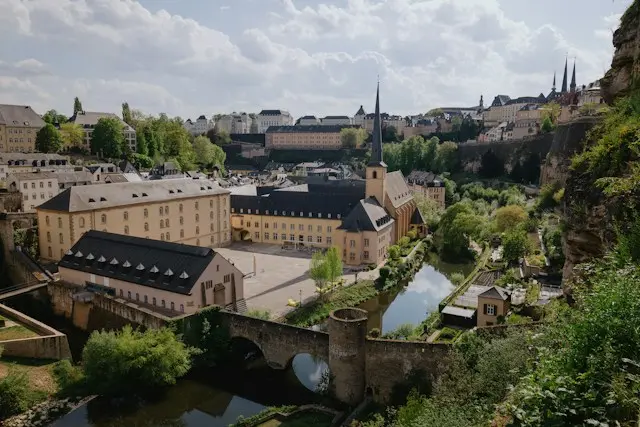
Luxembourg City is the capital of the Grand Duchy of Luxembourg and a compact European destination built around dramatic valleys, cliffs and the remains of a powerful historic fortress. Its Old Quarters and fortifications have been a UNESCO World Heritage Site since 1994, giving the city an unusually strong combination of history, architecture and scenery.
The city mixes its medieval and fortress heritage with modern European institutions, contemporary architecture, museums, cafés and green spaces. The Old Town, Grund, Pétrusse Valley and Kirchberg each reveal a different side of Luxembourg City, making it well suited to a short city break.
Climate in Luxembourg City
Luxembourg City has a temperate climate with cool winters, mild springs and generally warm summers. Weather can change quickly, so visitors should be prepared for occasional rain throughout the year.
Spring and Summer
Spring brings greener parks and comfortable conditions for walking, while summer is usually the warmest period and works well for exploring the valleys, viewpoints and outdoor areas.
Autumn and Winter
Autumn adds colour to the city's parks and river valleys. Winter is colder and can be damp, but the historic centre, museums, cafés and seasonal events still make the city attractive for a short visit.
Getting to Luxembourg City
Luxembourg City is well connected to neighbouring countries by rail and road. Trains provide connections with Belgium, France and Germany, making the capital convenient to combine with a wider European itinerary.
By Air
Luxembourg Airport is close to the city and can be reached by public transport. The official tourism information notes that the capital is around a 20-minute bus ride from the airport, depending on traffic and service conditions.
By Train
Luxembourg railway station is the principal rail gateway to the capital. From the station, local buses and other public transport options make it straightforward to continue into the central districts.

Transportation in Luxembourg City
Luxembourg is particularly easy to explore without a car. Public transport throughout the country is free for standard second-class travel on trains, buses and trams, which makes moving between the city centre and outer districts simple.
Walking
Many major sights in the historic centre are close together and can be explored on foot. Walking is especially rewarding around the Old Town, Corniche, Bock area, Pétrusse Valley and Grund, although some routes involve steep slopes or stairs.
Buses, Trams and Lifts
Buses and trams connect the main districts, while facilities such as the Pfaffenthal panoramic lift help visitors move between different levels of the city. Check current routes and operating information before travelling because schedules can change.
Things to Do in Luxembourg City
Luxembourg City combines fortress history, UNESCO heritage, viewpoints, museums and contemporary cultural spaces. Its compact centre makes it possible to see several major sights during a short stay.
- Explore the UNESCO-listed Old Quarters and historic fortress remains.
- Walk along the Corniche for views across the Alzette valley and Grund.
- Visit the Bock Casemates and learn about the city's underground defensive network.
- See the Grand Ducal Palace and the surrounding streets of the historic centre.
- Visit Notre-Dame Cathedral and the Pétrusse Casemates.
- Explore Kirchberg, including MUDAM, the Philharmonie and the Dräi Eechelen Museum.
- Walk through the Grund district beside the Alzette and visit Neumünster Abbey.
- Discover Luxembourg's history at the Lëtzebuerg City Museum.
Neighborhoods to Explore
Ville Haute and the Old Town
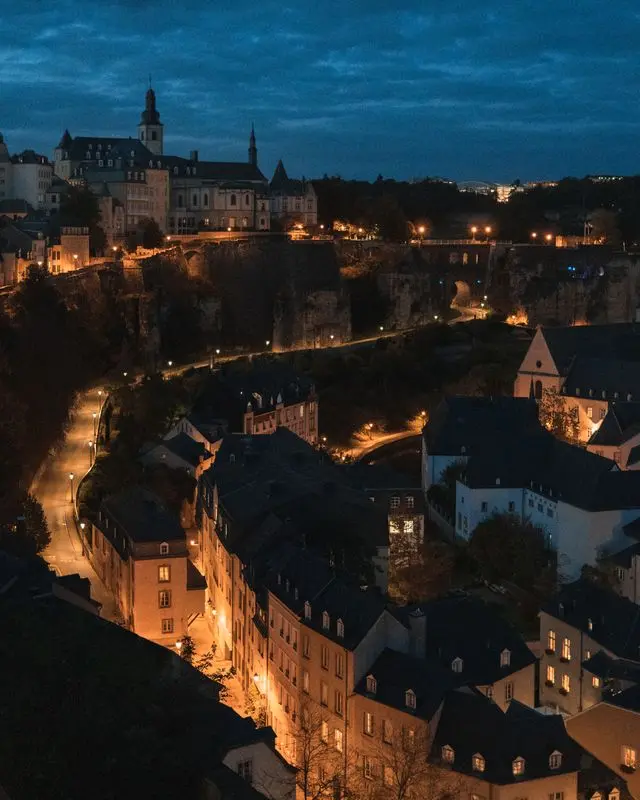
The upper town is the historic heart of Luxembourg City, with major squares, heritage buildings, shopping streets and access to the UNESCO-listed old quarters.
Grund
Grund sits in the Alzette valley below the upper town. Its riverside setting, historic buildings, cafés and views towards the fortress make it one of the city's most atmospheric areas.
Kirchberg
Kirchberg presents Luxembourg City's modern side, with European institutions, contemporary architecture, cultural venues and broad public spaces. MUDAM, the Philharmonie and the Dräi Eechelen Museum are key reasons to visit.
Pfaffenthal
Pfaffenthal occupies part of the Alzette valley and offers a different perspective on the city's layered geography. The panoramic lift connects the valley with the city centre and provides striking views along the way.
Food in Luxembourg City
Luxembourg City's food scene reflects its multicultural population and its location between France, Germany and Belgium. Visitors can combine traditional Luxembourgish dishes with French-influenced cooking, European dining and international restaurants.
What to Try
- Judd mat Gaardebounen, a traditional smoked pork and broad bean dish.
- Gromperekichelcher, crisp seasoned potato cakes commonly associated with local markets and events.
- Bamkuch, a layered cake that is a well-known Luxembourgish speciality.
- Local pastries, breads and French-style café dishes in the central districts.
For the widest range of restaurants and cafés, explore the Old Town and nearby central streets, while Grund offers a more atmospheric setting for dining beside the valley.

Accommodation in Luxembourg City
Staying centrally is convenient for visitors who want to explore the historic sights mostly on foot. The Old Town and Ville Haute put many landmarks, restaurants and shopping streets close at hand.
Best Areas for First-Time Visitors
Ville Haute suits travellers who want immediate access to the historic centre. Grund is appealing for visitors who prefer a picturesque valley setting, while Kirchberg can suit business travellers and those interested in modern architecture, museums and European institutions.
Choosing a Hotel
Compare location, access to public transport and walking distances rather than focusing only on room price. Because public transport is free, accommodation slightly outside the historic core can still be practical if it has good connections.
Day Trips from Luxembourg City
Luxembourg City's location makes it a useful base for exploring other parts of the country and nearby European regions. The country's short distances make several excursions realistic for travellers with extra time.
- Vianden – visit the medieval castle and explore the picturesque town and surrounding countryside.
- Clervaux – known for its castle, cultural heritage and the photography exhibition The Family of Man.
- Mullerthal – explore sandstone landscapes and hiking routes in Luxembourg's eastern countryside.
- Remich and the Moselle Valley – combine riverside scenery with Luxembourg's wine-growing region.
- Echternach – explore one of Luxembourg's historic towns and use it as a gateway to the surrounding countryside.
Check current train and bus schedules when planning a day trip, especially on weekends and during public holidays.

Budget & Costs in Luxembourg City
Luxembourg City is generally positioned as a higher-cost European capital, particularly for accommodation and some dining. However, visitors can reduce transport expenses because standard public transport is free throughout Luxembourg.
Ways to Save
- Use buses, trams and standard second-class trains instead of taxis where practical.
- Stay slightly outside the most central hotel areas while keeping access to public transport.
- Combine free walks, viewpoints and public spaces with selected paid museums or tours.
- Check whether a LuxembourgPass offers useful discounts or admissions for the attractions on your itinerary.
Prices for accommodation, restaurants, attractions and tours vary by season and provider, so confirm current rates before booking.
Local Customs & Etiquette
Luxembourg is highly international, and French, German and Luxembourgish are official languages. English is also commonly encountered in tourist and international settings, particularly in central areas.
Polite greetings and respectful behaviour are appreciated in shops, restaurants and public spaces. Restaurant tipping is not governed by a single mandatory custom, so check the bill and leave an additional amount when you feel the service deserves it.
When visiting churches, museums and historic sites, dress and behave respectfully. Follow current visitor instructions around protected heritage areas and fortress structures.
Festivals & Events
Luxembourg City has a busy cultural calendar, with events ranging from traditional celebrations to concerts, fairs and seasonal markets. Dates can change from year to year, so check the current programme before planning a trip around a specific event.
- Schueberfouer – a major annual funfair and one of the city's best-known events.
- Christmas markets – seasonal markets add festive activity to central squares and streets.
- Concerts and cultural programmes – venues such as the Philharmonie contribute to the city's year-round cultural calendar.
- National Day celebrations – events around June 23 mark Luxembourg's national holiday.

Suggested Itinerary
One Day
Start in Ville Haute and explore the Old Town, Grand Ducal Palace area and Notre-Dame Cathedral. Continue to the Corniche and Bock area, descend towards Grund, and finish with dinner in or near the historic centre.
Two Days
Use the second day to explore Kirchberg, including MUDAM, the Philharmonie area and the Dräi Eechelen Museum. Return through Pfaffenthal or the valley and allow time for a museum, café stop or additional walk through the Pétrusse Valley.
Three Days
With a third day, add a countryside excursion such as Vianden, Mullerthal or the Moselle Valley. Choose the destination according to whether you prefer castles, hiking landscapes or wine-country scenery.
Frequently Asked Questions about Luxembourg City
How many days do you need in Luxembourg City? +
Two days are enough for a focused first visit covering the Old Town, fortress sights, viewpoints, Grund and selected museums. Three days allow more time for museums or a day trip.
Is Luxembourg City expensive? +
It can be more expensive than many European destinations, especially for accommodation and dining. Free standard public transport helps keep local travel costs down.
Is public transport free in Luxembourg City? +
Yes. Standard public transport is free throughout Luxembourg, including buses, trams and second-class train travel.
What is the best area to stay in Luxembourg City? +
Ville Haute is convenient for first-time visitors who want to be close to historic sights. Grund offers a scenic valley setting, while Kirchberg is useful for modern cultural attractions and business travel.
What are the main attractions in Luxembourg City? +
Major highlights include the UNESCO-listed Old Quarters and fortifications, Bock Casemates, Corniche, Grand Ducal Palace, Notre-Dame Cathedral, Grund, Pétrusse Valley and Kirchberg's museums and cultural buildings.
Can you visit Luxembourg City without a car? +
Yes. The city centre is walkable and the country's free public transport network makes it practical to travel between districts and many nearby destinations without driving.
Is Luxembourg City good for a weekend trip? +
Yes. Its compact historic centre, UNESCO heritage, museums, viewpoints and efficient transport make it well suited to a short European city break.
What language is spoken in Luxembourg City? +
Luxembourgish, French and German are official languages. Because the city is highly international, English is also widely encountered in visitor-facing settings.