

Table of Contents
- About Brașov
- Climate & Best Time to Visit
- Getting to Brașov
- Getting Around Brașov
- The Old Town & Council Square
- Tâmpa Mountain & Outdoor Activities
- Poiana Brașov Ski Resort
- Day Trips: Castles of Transylvania
- Food in Brașov
- Where to Stay in Brașov
- Festivals & Events
- Budget & Costs in Brașov
- Local Customs & Etiquette
- Safety Tips in Brașov
About Brașov
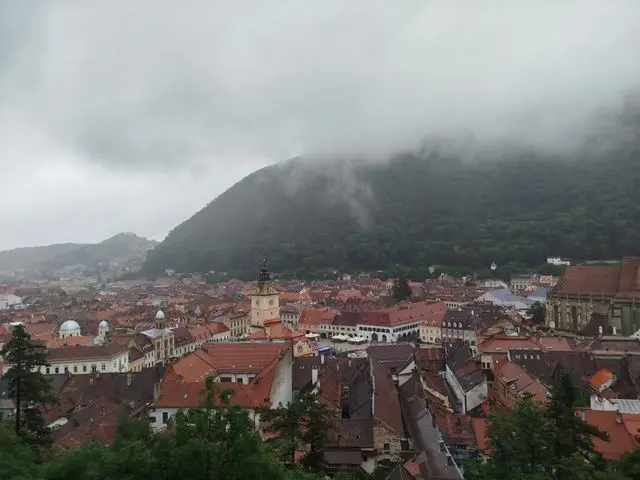
Brașov is a fortified Saxon town in the heart of Transylvania, first documented in 1235 and built up over the following centuries by German-speaking merchants who ringed it with defensive walls, bastions, and watchtowers. Much of that fortification still stands, framing an old town of pastel-colored townhouses, Gothic churches, and cobbled lanes set against the forested slopes of Tâmpa Mountain, which rises directly behind the main square.
It's also the most convenient base in Romania for exploring the Transylvanian countryside's biggest draws, from the much-mythologized Bran Castle to genuine royal residences and hilltop fortresses within an hour's drive. Add a well-regarded ski resort a short bus ride away and a old town that's genuinely pleasant to wander rather than purely functional, and Brașov works equally well as a multi-day base or a quick stop on a longer Romania itinerary.
Climate & Best Time to Visit
Winter (December–March)
Cold and often snowy, with winter conditions supporting the ski season at nearby Poiana Brașov. Brașov's own elevation of around 600 meters means it typically sees more snow and colder temperatures than lowland Romanian cities. December brings Christmas markets to Council Square, adding a festive draw despite the cold.
Spring (April–May)
A mild, increasingly green season as the surrounding hills come back to life, with fewer crowds than summer and comfortable temperatures for walking the old town and hiking lower trails.
Summer (June–August)
The busiest season, with warm days that rarely turn oppressively hot thanks to the elevation, making it a comfortable base for hiking, castle day trips, and evenings in Council Square's outdoor cafes.
Autumn (September–November)
Cooling temperatures and turning foliage across the surrounding forests make autumn a quieter, scenic alternative to summer, particularly good for hiking before the first snow arrives.
Getting to Brașov
By Air
Brașov-Ghimbav International Airport (GHV), about 15 km from the city center, opened in 2023 and has grown quickly, with Wizz Air operating a steadily expanding network of European routes. It's the most convenient option when a suitable route is available, with taxis or rideshares to the center taking roughly 15 to 20 minutes.
Bucharest's Henri Coandă Airport (OTP), Romania's main international hub, remains a common alternative, particularly for long-haul or less common routes, though it sits around 170 km away.
By Train or Bus from Bucharest
Direct trains connect Bucharest's Gara de Nord to Brașov in around two and a half hours and are a popular way to cover the route, including directly from Bucharest's airport with a change of trains at Gara de Nord. Direct buses and shared minibuses also run the route, though they're more exposed to road traffic, which can add significant time on weekends and during ski season.
By Car
Driving from Bucharest takes roughly two and a half to three hours. A car is useful for reaching Bran Castle, Rasnov, and other countryside sights at your own pace, though the old town itself is best explored on foot.
Getting Around Brașov
Central Brașov, including the old town and Council Square, is compact and best explored on foot. Getting to the surrounding attractions requires a short bus ride, taxi, or rental car.
- The old town is fully walkable, with most major sights within a 15-minute walk of Council Square.
- Local RATBV buses connect the center to outlying neighborhoods, the train station, and the airport.
- Bus 20 runs from the center to Poiana Brașov, the nearby ski resort, in around 15 to 20 minutes.
- Taxis and rideshare apps are inexpensive and useful for reaching Rasnov or other short countryside trips without a rental car.

The Old Town & Council Square
Council Square (Piața Sfatului)
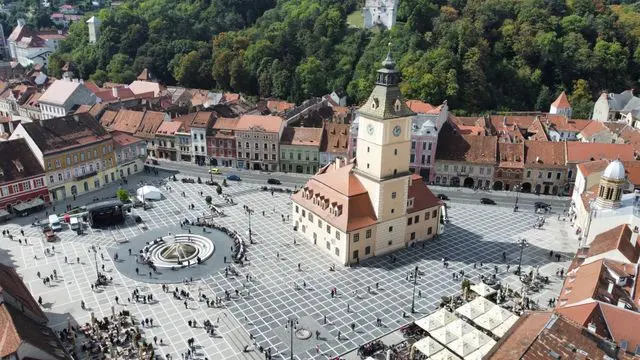
The historic and social heart of Brașov, ringed by pastel Baroque and Saxon townhouses and centered on Casa Sfatului, the 15th-century former council house that now holds the city's history museum. Cafes with outdoor terraces line the square and stay busy well into the evening, and it's also home to seasonal markets, including a well-known Christmas market in December.
The Black Church
Just off the square, the Gothic Black Church is Brașov's most recognizable landmark, built by the city's Saxon community from the 14th century and renamed after a 1689 fire scorched its walls. It holds Romania's largest church bell and a large collection of Anatolian rugs donated by Saxon merchants centuries ago.
Rope Street & the Fortification Walls
Strada Sforii, one of the narrowest streets in Europe, connects two of the old town's residential lanes and is a popular quick photo stop. Sections of the medieval city walls, along with towers and bastions such as the Weavers' Bastion, still trace the old town's original fortified perimeter.
The Schei District
Just beyond the old Schei Gate, this quieter neighborhood was historically home to the city's Romanian community during Saxon rule and has a slower, more residential feel. It's home to St. Nicholas Church and the First Romanian School Museum, an important site in the history of Romanian-language education.
Tâmpa Mountain & Outdoor Activities
Tâmpa Mountain rises directly behind the old town, topped by a large hillside sign spelling out Brașov's name in the style of the Hollywood sign. A marked trail climbs to the summit in around an hour, and a cable car normally offers a faster alternative, though it's worth checking current operating status before planning a trip, as it periodically closes for maintenance.
The mountain and surrounding forest are genuinely wild, home to brown bears, lynx, and wild boar alongside more visible wildlife like birds of prey. Sightings on the main trails are uncommon but not unheard of, and hikers are generally advised to stick to marked paths and make some noise as they walk. Beyond Tâmpa, Solomon's Rocks is a popular short hiking and picnic spot on the edge of the city, with an old trail connecting it onward to Poiana Brașov.
Poiana Brașov Ski Resort
Romania's largest and best-known ski resort sits about 12 km from central Brașov, roughly 15 to 20 minutes by bus or car, and is set at an elevation of around 1,020 meters, ringed by four mountains. The resort offers around a dozen marked pistes totaling roughly 25 km, ranging from beginner-friendly runs to the well-regarded Lupului ("Wolf") red run favored by intermediate skiers.
Because it's so close to the city, Poiana Brașov works equally well as a full ski holiday base or a single-day outing from Brașov itself. In summer, the same slopes and surrounding forest become terrain for hiking and mountain biking, making the resort a year-round rather than purely winter destination.

Day Trips: Castles of Transylvania
Bran Castle
Perched on a rocky outcrop about 30 km from Brașov, Bran Castle owes its fame largely to its loose association with the Dracula legend, though its more grounded history includes serving as a residence of the Romanian royal family in the 20th century. It remains the single most visited day trip from Brașov and is easily combined with a stop in Rasnov.
Rasnov Fortress
A hilltop peasant fortress around 15 km from Brașov, built centuries ago as a refuge for the local community during invasions rather than a noble residence. Its walls and watchtowers offer sweeping views over the surrounding Bârsa Land countryside.
Peleș Castle
Located in Sinaia, roughly 60 km from Brașov, Peleș is a Neo-Renaissance royal castle built for Romania's first king in the late 19th century, with lavishly decorated interiors that contrast with the more austere, defensive character of Bran and Rasnov.
Food in Brașov
Brașov's food scene blends Transylvanian Saxon, Hungarian, and Romanian influences, served in everything from historic cellar restaurants around Council Square to casual grills.
- Mici (mititei) – skinless grilled sausages of mixed beef, lamb, and pork, Romania's signature street food, typically served with mustard and bread.
- Sarmale – cabbage rolls stuffed with minced meat and rice, slow-cooked and usually served with a side of polenta (mămăligă) and sour cream.
- Ciorbă de burtă – a tangy, garlicky beef tripe soup often eaten as a hearty starter, or a hangover cure by local tradition.
- Zacuscă – a cooked vegetable spread of roasted peppers, eggplant, and tomatoes, common as a starter or snack.
- Papanași – fried dumplings made from sweet cheese, served with sour cream and fruit jam, the city's most popular dessert.
Where to Stay in Brașov
Brașov's compact size means most areas put you within reasonable walking distance of the main sights, so the choice mostly comes down to atmosphere and budget.
- Around Council Square and the old town: the most central and atmospheric option, close to restaurants, the Black Church, and the main pedestrian streets, though also the busiest and priciest.
- The Schei district: a quieter, more residential alternative just beyond the old walls, still an easy walk from the center.
- Near Poiana Brașov: the practical choice for a ski-focused stay, trading old-town atmosphere for proximity to the slopes.
Festivals & Events
Brașov's Christmas market fills Council Square through December with stalls, mulled wine, and seasonal lights against the backdrop of the Black Church, making it one of the city's most popular times to visit despite the cold. In spring, the Junii Pageant brings traditional costumed riders through the Schei district on the Sunday after Easter, a centuries-old local custom rooted in the neighborhood's history. Summer adds a steady calendar of outdoor concerts and cultural events centered on the old town and Council Square.

Budget & Costs in Brașov
- Romania uses the Romanian leu (RON); the country has not adopted the euro, so currency exchange or leu-denominated cards are needed even though it's an EU and Schengen member.
- Brașov is generally affordable by Western European standards, though prices in the old town around Council Square run higher than in surrounding neighborhoods.
- Mici, ciorbă, and other street-level Romanian food are inexpensive, while sit-down restaurants in the historic center are priced closer to typical European levels.
- Costs rise around the December Christmas markets and during the peak ski weeks at Poiana Brașov, and drop in the spring and autumn shoulder seasons.
- Combining the old town with day trips by bus or shared tour is generally cheaper than renting a car solely for short countryside hops.
Local Customs & Etiquette
Unlike some of its Balkan neighbors, Romania follows the standard nod-for-yes, shake-for-no convention, so there's no local head-gesture reversal to watch for. A tip of around ten percent is customary in restaurants, and it's common to round up smaller bills.
Dress modestly when visiting churches, covering shoulders and avoiding shorts where possible. Brașov's old town leans heavily into its Dracula-adjacent branding for visitors, but locals generally view Bran Castle's vampire associations as tourist marketing rather than local tradition, so it's worth keeping that distinction in mind in conversation.
Safety Tips in Brașov
- Brașov is a safe city by European standards, with low rates of violent crime toward visitors.
- Keep an eye on belongings in crowded spots like Council Square and the Christmas markets, where pickpocketing is the most commonly reported issue.
- Use licensed taxis or ride-hailing apps rather than unmarked cabs, particularly from the train station or airport.
- The forests around Tâmpa Mountain and the wider Carpathians are home to brown bears; stick to marked trails, avoid hiking alone at dusk or after dark, and make noise while walking to avoid surprising wildlife.
- Mountain roads and trails around Poiana Brașov and the surrounding peaks require extra caution in winter, when conditions can change quickly.
- The general emergency number across Romania is 112.

Frequently Asked Questions about Brașov
How many days do you need in Brașov? +
Two to three days covers the old town, Tâmpa Mountain, and a day trip to Bran Castle and Rasnov comfortably. A longer stay allows time to add Poiana Brașov or Peleș Castle without rushing.
What's the best time to visit Brașov? +
Summer for warm-weather sightseeing and hiking, December for the Christmas markets, and winter through early spring for skiing at Poiana Brașov. Spring and autumn are quieter, milder alternatives to the summer crowds.
Is Brașov the same as Bran Castle or "Dracula's Castle"? +
No. Brașov is a separate medieval city about 30 km from Bran Castle, though it's the most common base for visiting it. Brașov has its own old town, churches, and fortifications distinct from Bran.
How do I get from Bucharest to Brașov? +
The most common options are a direct train from Bucharest's Gara de Nord, taking around two and a half hours, or a bus or shared minibus, which can take longer depending on traffic.
What currency is used in Brașov? +
The Romanian leu (RON). Romania is an EU and Schengen member but has not adopted the euro.
Do I need a car in Brașov? +
Not for the old town itself, which is walkable, but a car or organized tour makes day trips to Bran, Rasnov, and Peleș Castle more flexible than relying solely on public transport.
Is Brașov safe for tourists? +
Yes, it has a low rate of serious crime. The main practical precautions involve watching belongings in crowds and being cautious on forest hiking trails, where brown bears live in the surrounding hills.
What day trips pair well with Brașov? +
Bran Castle and Rasnov Fortress are commonly combined into a single day trip, while Peleș Castle in Sinaia and the ski slopes of Poiana Brașov are popular standalone additions.
Is Poiana Brașov within Brașov itself? +
It's a separate resort about 12 km from central Brașov, reachable by local bus, taxi, or car in around 15 to 20 minutes, and is often visited as a day trip from the city.