

Table of Contents
- About Sighișoara
- Getting to Sighișoara
- Getting Around Sighișoara
- Things to Do in Sighișoara
- Neighborhoods to Explore
- Food in Sighișoara
- Where to Stay in Sighișoara
- Best Time to Visit Sighișoara
- Day Trips from Sighișoara
- Budget & Costs in Sighișoara
- Local Customs & Etiquette
- Safety Tips in Sighișoara
About Sighișoara
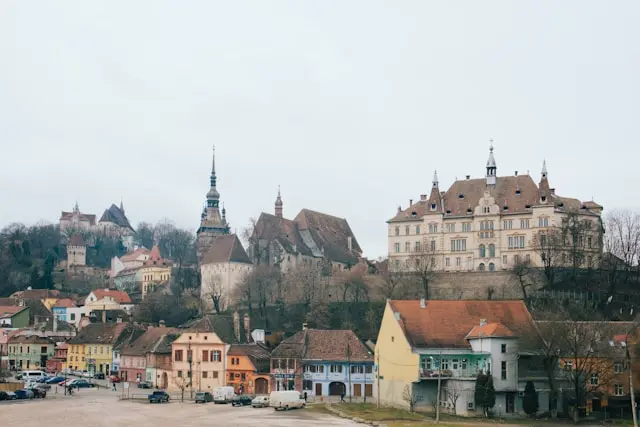
Sighișoara is a small hilltop town in central Transylvania, built by Saxon settlers from the 12th century onward and still centered on a walled citadel that ranks among the last inhabited medieval fortresses in Europe. Ochre, mustard, and rose-colored houses line steep cobbled streets that climb toward a clock tower, defensive craft-guild towers, and a hilltop church, giving the town a storybook feel that has made it one of Romania's most photographed destinations.
The Historic Centre of Sighișoara was added to the UNESCO World Heritage List in 1999, recognized for nearly 850 years of continuous Saxon urban life. The town is also known as the birthplace of Vlad III, better remembered as Vlad the Impaler or Vlad Dracul, the 15th-century prince who inspired Bram Stoker's Dracula, which adds a dose of dark-tourism intrigue to its otherwise quiet, pastel-toned streets.
Unlike Romania's larger Transylvanian cities, Sighișoara is compact enough to see on foot in a day, though its atmosphere - especially early morning or after the day-trip crowds leave - rewards an overnight stay.
Getting to Sighișoara
By Train
Sighișoara sits on Romania's main east-west rail line, making it one of the easiest Transylvanian towns to reach without a car. Direct trains connect it to Brașov, Bucharest, and Cluj-Napoca several times a day, with the Bucharest run taking roughly six hours and Brașov around two. Sighișoara's train station sits in the lower town, a 15 to 20 minute walk (or short taxi ride) from the citadel gate.
By Air
The closest airport is Târgu Mureș (TGM), about 45 minutes away by car, followed by Sibiu (SBZ) at roughly 1.5 hours and Cluj-Napoca (CLJ) at around 2 hours; all three have limited but growing regional and seasonal European connections. Most international visitors instead fly into Bucharest's Henri Coandă Airport (OTP) and continue by train or long-distance bus, a journey of five to seven hours.
By Car or Bus
Sighișoara lies just off the DN13/E60 road linking Brașov and Cluj-Napoca, making it a natural stop on a Transylvania road trip. Long-distance buses and minibuses (maxi-taxis) also run from Bucharest, Brașov, Sibiu, and Cluj-Napoca, generally cheaper than the train but with less predictable comfort and schedules.
Entry Requirements
Romania is a full Schengen Area member, with land border checks lifted in January 2025, so travelers arriving from another Schengen country typically face no border formalities. Citizens of the US, UK, Canada, Australia, and most EU countries can enter visa-free for up to 90 days within a 180-day period; travelers from visa-required countries should arrange a Schengen visa in advance. Entry rules can shift, so confirm current requirements against an official source close to your travel date.

Getting Around Sighișoara
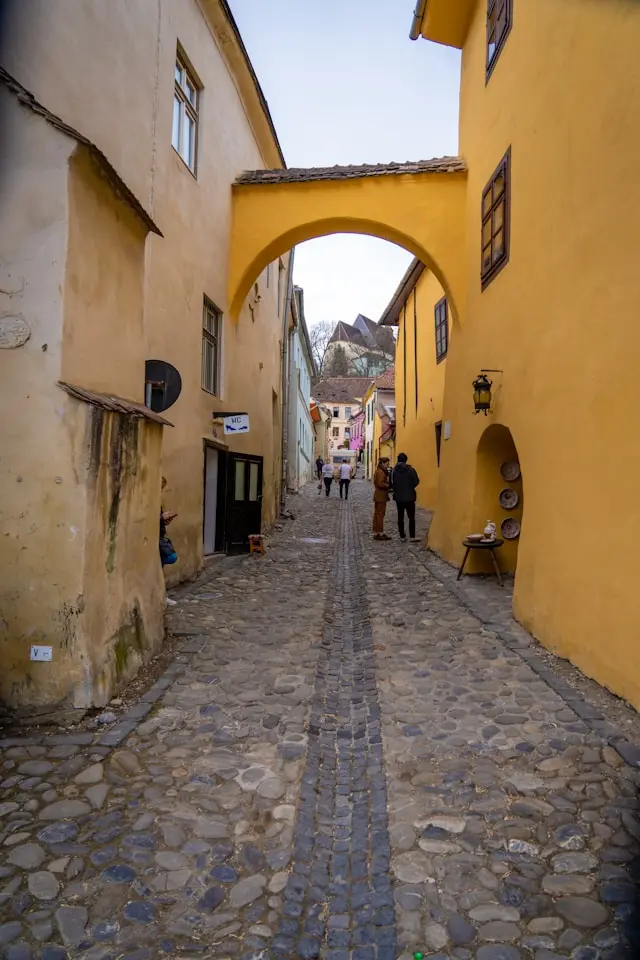
The walled citadel is entirely walkable and largely closed to casual car traffic, with steep cobblestone lanes that are best explored on foot in sturdy shoes. The Scholars' Stairs (Scara Școlarilor), a covered wooden stairway of around 175 steps, is the classic route from the citadel up to the Church on the Hill and is worth climbing slowly rather than rushing.
The newer, lower town spreads out below the citadel walls and is where most hotels' overflow parking, supermarkets, and the train and bus stations are located. It's an easy 10 to 20 minute walk between the two, or a short, inexpensive taxi ride for those with luggage or mobility concerns. A car is unnecessary for exploring Sighișoara itself but useful for reaching nearby villages and fortified churches.
Things to Do in Sighișoara
Sighișoara's sights are concentrated within and just below the citadel walls, so most visitors can cover the highlights in a half or full day.
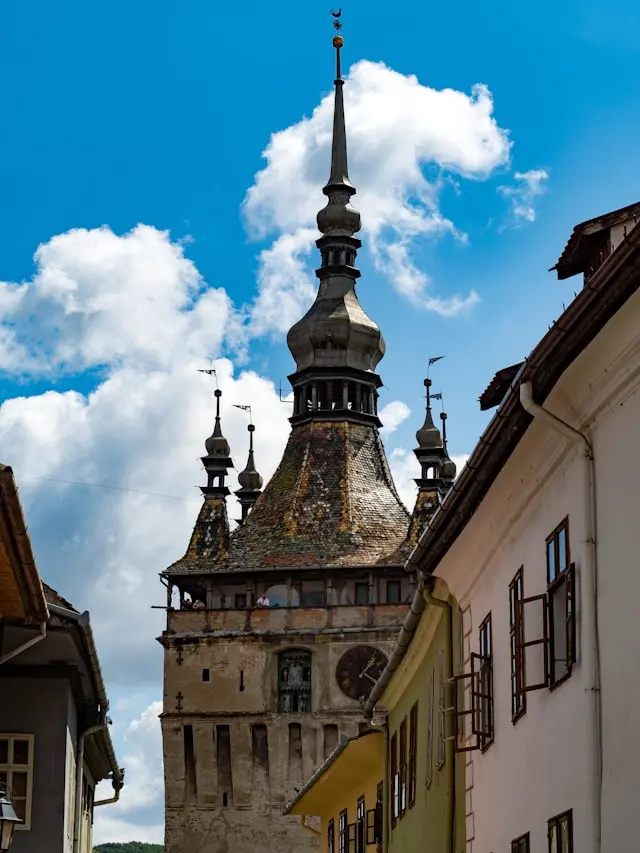
- Clock Tower (Turnul cu Ceas) - the citadel's iconic landmark and main gate, housing a small history museum and an upper gallery with panoramic views over the colored rooftops.
- Vlad Dracul House - the house traditionally identified as Vlad III's birthplace, now home to a restaurant and a small exhibition space, one of the town's most-photographed buildings.
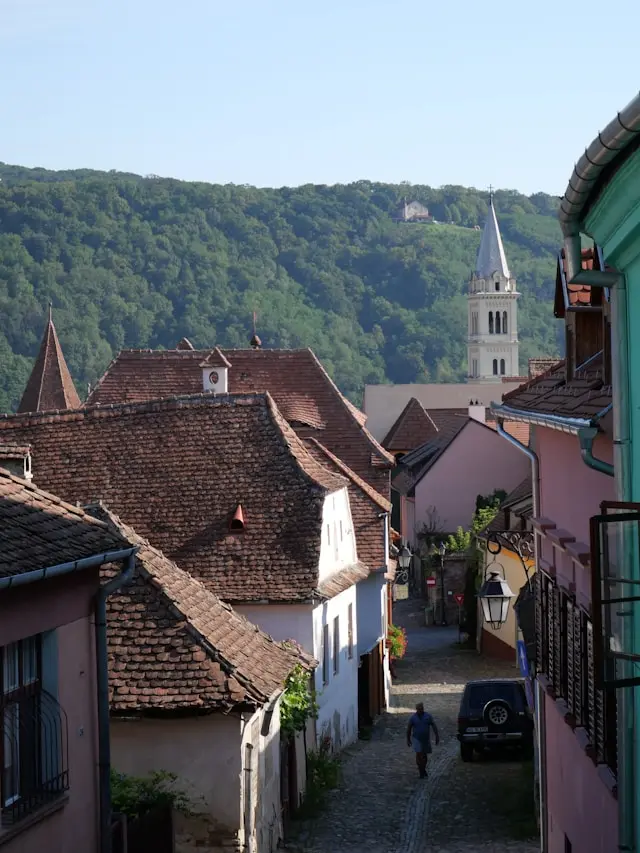
- Church on the Hill (Biserica din Deal) - a Gothic church reached via the Scholars' Stairs, with a crypt, restored medieval frescoes, and an adjoining Saxon cemetery.
- The Guild Towers - several of the citadel's original defensive towers survive, each historically maintained by a different craft guild, including the Tinsmiths' Tower and the Shoemakers' Tower.
- Piața Cetății (Citadel Square) - the main square, ringed by pastel merchant houses, cafés, and craft stalls, and the hub for festivals and evening strolls.
- Monastery Church (Holy Trinity) - a former Dominican monastery church known for its Baroque organ and Oriental-style carpets donated by Saxon merchants.
Neighborhoods to Explore
The Citadel (Cetatea)
The hilltop walled old town is Sighișoara's postcard image: narrow lanes, artisan shops, guesthouses tucked into centuries-old houses, and most of the sights worth seeing. It's at its most magical early in the morning or after sunset, once the day-trip tour groups have thinned out.
The Lower Town (Orașul de Jos)
Spreading out along the Târnava Mare river below the citadel, the lower town is where everyday Sighișoara life happens - supermarkets, the train station, local bars, and more affordable places to eat and sleep. It lacks the citadel's charm but offers a useful, less touristy base within easy walking distance of the old town.
Food in Sighișoara
Sighișoara's kitchens blend Romanian staples with the German-influenced Saxon cooking of Transylvania. Expect hearty, comforting dishes built around pork, cabbage, and potatoes, often served in restaurants set inside the citadel's historic merchant houses.
- Ciorbă de burtă - a tangy, sour tripe soup finished with cream and garlic, a Romanian classic found on most local menus.
- Sarmale - cabbage rolls stuffed with minced pork and rice, typically served with polenta (mămăligă) and sour cream.
- Mici - grilled, garlicky minced-meat rolls, a favorite street food and beer-garden staple.
- Papanași - fried, doughnut-like cheese dumplings topped with sour cream and jam, the region's signature dessert.
The nearby Târnave wine region, one of Romania's oldest, supplies many local restaurants with crisp white wines that pair well with the area's rich cooking.

Where to Stay in Sighișoara
Inside the Citadel Walls
Small guesthouses and boutique pensions occupy centuries-old Saxon houses within the walls, putting guests steps from every major sight. Rooms tend to be atmospheric but compact, with uneven floors and steep stairs typical of historic buildings, and can get lively during the summer festival season.
The Lower Town and Outskirts
Modern hotels and larger guesthouses in the lower town and surrounding streets generally offer better value, easier parking, and quieter nights, at the cost of a short uphill walk to the citadel. This area suits travelers with a car or those visiting outside peak festival dates.
Best Time to Visit Sighișoara
Late spring through early autumn (May to September) brings the mildest weather and the fullest calendar of events, though July and August also bring the heaviest crowds and the warmest, sometimes humid, days. Winters are cold and can be snowy, which suits the citadel's fairy-tale look but sees many guesthouses and restaurants reduce their hours.
Two events shape the town's high season: "Carnival in the Citadel," a free multi-day music and street-performance festival held in late May or early June, and the long-running Sighișoara Medieval Festival at the end of July, when the citadel fills with costumed performers, craft stalls, and concerts. Visitors who prefer a quieter citadel should aim for shoulder-season weeks in May, June, or September, avoiding festival weekends.
Day Trips from Sighișoara
Sighișoara sits at the heart of Transylvania's Saxon fortified-church country, making it a convenient base for day trips by car or, for some destinations, by train.
- Biertan - a UNESCO-listed fortified church on a hilltop, considered one of the finest surviving Saxon fortified churches in Transylvania, about 45 minutes away.
- Viscri - a quiet Saxon village with another UNESCO-listed fortified church and traditional guesthouses, roughly an hour's drive on partly unpaved roads.
- Saschiz - a smaller fortified-church village a short drive along the road to Sighișoara, easy to combine with Biertan.
- Sibiu - a larger, polished Transylvanian Saxon city with its own historic center and museums, about 1.5 hours away.
- Brașov - a lively mountain-ringed city near Bran and Peleș castles, roughly two hours away and a common next stop for travelers continuing east.

Budget & Costs in Sighișoara
Sighișoara is inexpensive by Western European standards, and Romania's currency is the leu (RON); cards are widely accepted in the citadel, though small guesthouses and rural day-trip stops may prefer cash. Museum and tower entry fees are modest, typically just a few lei per site, and a sit-down meal with a drink at a citadel restaurant costs noticeably less than the equivalent in Western Europe.
Accommodation ranges from budget guesthouse rooms in the lower town to pricier boutique stays inside the citadel walls, with the biggest cost jump tied to location and festival-season demand rather than luxury level. Travelers who rent a car for day trips should budget for fuel and, in some villages, small entry donations at fortified churches maintained by local communities.
Local Customs & Etiquette
Romanian is the main language, though Sighișoara's Saxon and Hungarian heritage means German and Hungarian place names and signage still appear around town; English is commonly understood in citadel restaurants and shops. A nod or handshake and a simple "Bună ziua" (good day) go a long way with older residents and shopkeepers.
Tipping around 10% is customary in sit-down restaurants if a service charge isn't already included, and rounding up is common for cafés and taxis. Many houses inside the citadel walls are still private homes rather than tourist sites, so visitors should keep noise down in residential lanes, especially in the evening.
Safety Tips in Sighișoara
Sighișoara is a low-crime destination and generally very safe to explore on foot, including after dark within the citadel. The main practical hazards are physical rather than criminal: uneven cobblestones, steep and sometimes slippery stairs (particularly the Scholars' Stairs in wet or icy weather), and low doorways in historic buildings.
- Wear supportive, closed-toe shoes for the citadel's cobbled and stepped streets.
- Watch for pickpockets in dense festival-weekend crowds, as with any busy European event.
- Confirm taxi fares or use a reputable app before riding, as with anywhere in Romania.
- The general European emergency number 112 works throughout Romania for police, fire, or medical help.

Frequently Asked Questions about Sighișoara
How many days do you need in Sighișoara? +
A half to full day covers the citadel's main sights, but staying one or two nights lets you experience the old town in the quiet early morning and evening hours after day-trippers leave.
What is the best time of year to visit Sighișoara? +
Late spring through early autumn offers the mildest weather; May, June, and September are quieter than the July Medieval Festival and peak summer crowds.
Do I need a visa to visit Sighișoara? +
As part of Romania and the Schengen Area, most Western passport holders, including US, UK, Canada, and Australia, can enter visa-free for up to 90 days in a 180-day period; travelers from visa-required countries need a Schengen visa arranged in advance.
Is Sighișoara expensive? +
No — Sighișoara and Romania generally are inexpensive by Western European standards, with affordable meals, modest museum fees, and guesthouse rooms that cost noticeably less than comparable Western European towns.
How do you get around Sighișoara without a car? +
The citadel and lower town are both fully walkable, connected by a 10 to 20 minute walk or a short taxi ride, though a car or organized tour is useful for day trips to nearby fortified-church villages.
What is Sighișoara known for? +
Sighișoara is known for its UNESCO-listed walled medieval citadel, its colorful Saxon architecture, and being the birthplace of Vlad III, the historical inspiration for Dracula.
What's the best area to stay in Sighișoara? +
Staying inside the citadel walls puts you steps from the main sights in an atmospheric historic setting, while the lower town offers quieter nights, easier parking, and better value a short walk away.
Is Sighișoara worth visiting if I've already seen Brașov or Sibiu? +
Yes — Sighișoara is smaller and quieter than both, with a distinct hilltop layout and a more intimate, small-town version of Transylvania's Saxon heritage that pairs well with a Brașov or Sibiu itinerary rather than duplicating it.
Can you visit Sighișoara as a day trip from Brașov or Sibiu? +
Yes, it's a common day trip from either city by train or car (roughly 1.5 to 2 hours), though an overnight stay is recommended to fully enjoy the citadel without crowds.