

Table of Contents
- About Sibiu
- Climate & Best Time to Visit
- Getting to Sibiu
- Getting Around Sibiu
- The Old Town: Piața Mare & Piața Mică
- The ASTRA National Museum Complex
- The Transfăgărășan & the Mountains
- Day Trips: Saxon Villages & Sighișoara
- Food in Sibiu
- Where to Stay in Sibiu
- Festivals & Events
- Budget & Costs in Sibiu
- Local Customs & Etiquette
- Safety Tips in Sibiu
About Sibiu
Sibiu is one of Transylvania's great Saxon cities, founded by German-speaking settlers in the 12th century and built up over the centuries into a fortified trading center known in German as Hermannstadt. Its old town still centers on two connected squares, Piața Mare and Piața Mică, ringed by pastel townhouses whose steeply pitched roofs are punctured by narrow dormer windows locals call the "Eyes of Sibiu," said to have once let residents watch the streets below unseen.
Named a European Capital of Culture in 2007, Sibiu has since built a reputation well beyond its size, anchored by one of the world's major theatre festivals and one of Europe's largest open-air ethnographic museums on its outskirts. It's also the natural starting point for the Transfăgărășan, the high mountain road across the Făgăraș range, and for the fortified Saxon villages scattered through the surrounding countryside.
Climate & Best Time to Visit
Winter (December–February)
Cold, with regular snow and average lows well below freezing. This is when Sibiu's Christmas market, the first and among the largest in Romania, fills Piața Mare with stalls, lights, and an ice rink from mid-November into early January.
Spring (March–May)
A mild, quieter season with fewer visitors, though the high mountain roads, including the Transfăgărășan, typically remain closed by snow until late spring or early summer.
Summer (June–August)
Warm and the busiest season, coinciding with the Sibiu International Theatre Festival in June and the full opening of the Transfăgărășan, making it the best window for combining the city with a mountain road trip.
Autumn (September–November)
Cooling temperatures and good visibility make early autumn a pleasant, less crowded alternative for both the old town and the surrounding countryside, before winter closes the mountain roads again.
Getting to Sibiu
By Air
Sibiu International Airport (SBZ) sits about 5 km from the city center, one of the more convenient airport locations in Romania. It has grown substantially in recent years, with Wizz Air and Lufthansa both expanding schedules, and offers direct routes to a range of Western European cities, heavier in the summer season.
By Train or Bus from Bucharest
Sibiu does not have direct flights from Bucharest, so travelers connecting through the capital typically go overland instead. Direct trains and buses run from Bucharest, taking several hours depending on the service, making Sibiu a practical stop on a wider Transylvania rail or road itinerary rather than a quick day trip from the capital.
By Car
Sibiu sits on Romania's main east-west route through Transylvania, making it an easy stop between Brașov and Cluj-Napoca, or a base for driving out to the Transfăgărășan and the surrounding Saxon villages.
Getting Around Sibiu
Sibiu's compact size means the entire old town, including both main squares, can comfortably be explored on foot from almost any central accommodation.
- The old town is fully walkable; most sights sit within a 10 to 15-minute walk of Piața Mare.
- Local buses connect the center to the airport, train station, and the ASTRA Museum on the city's edge.
- Taxis and rideshare apps are inexpensive for reaching the airport or nearby villages without a car.
- A rental car is the most practical way to drive the Transfăgărășan or combine several Saxon villages in a single day.

The Old Town: Piața Mare & Piața Mică
Piața Mare (Grand Square)
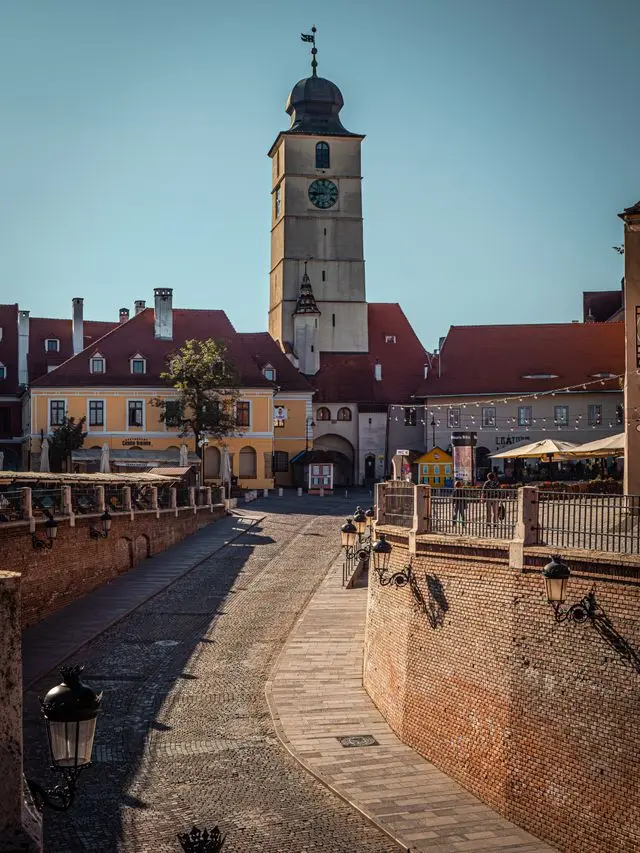
Sibiu's largest square is lined with historic townhouses and anchored by the Brukenthal National Museum, Romania's oldest museum, housed in a Baroque palace with an extensive art collection. The Council Tower, a former city gate dating to the 13th century, separates Piața Mare from the smaller square beyond it and offers rooftop views over the old town for those who climb it.
Piața Mică (Small Square) & the Bridge of Lies
A more intimate square just beyond the Council Tower, lined with leaning medieval facades, cafes, and small museums. It's connected to the rest of the old town by the Bridge of Lies, Romania's first cast-iron bridge, wrapped in local legends about what happens to anyone who tells a lie while standing on it.
Huet Square & the Evangelical Cathedral
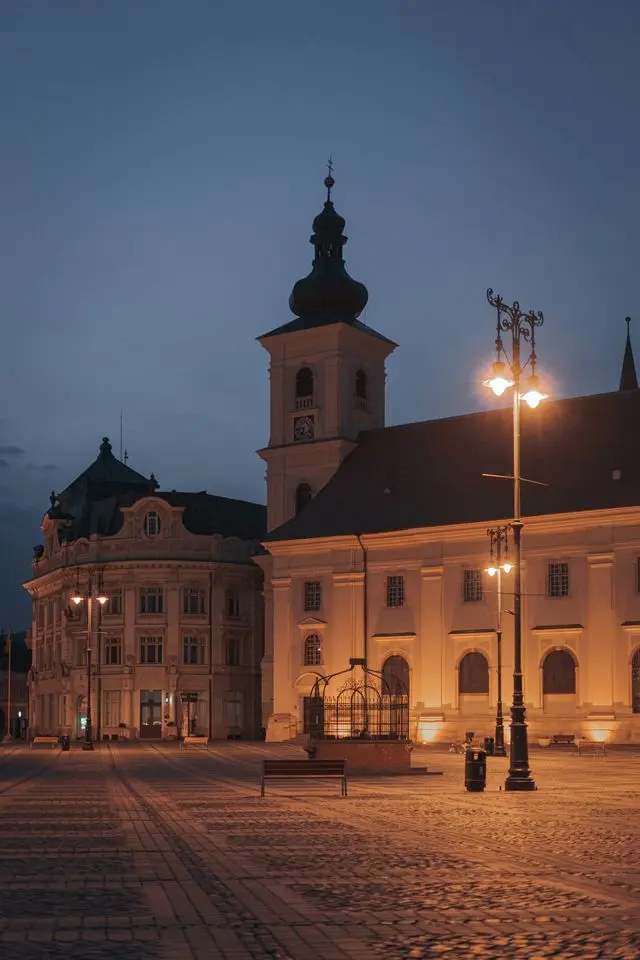
The Gothic Evangelical Cathedral dominates Huet Square with its tall spire, one of the tallest in Transylvania, and marks the transition from the old town's commercial squares to its more residential upper town.
The ASTRA National Museum Complex
Set in the Dumbrava Sibiului forest a few kilometers from the center, ASTRA is one of the largest open-air ethnographic museums in Europe, spread across nearly 100 hectares. Traditional houses, windmills, and workshops gathered from across Romania are arranged through the wooded park, giving a hands-on sense of rural Transylvanian and Romanian life that complements the old town's more formal Saxon architecture.
The scale of the site means a proper visit takes several hours; renting a bike near the entrance is a popular way to cover more ground than walking allows, and the museum is often paired with a visit to the adjacent zoo or a walk through the surrounding forest park.
The Transfăgărășan & the Mountains
The Transfăgărășan, a high mountain road crossing the Făgăraș range, is one of Romania's signature drives and is most commonly done as a day trip from Sibiu, roughly two hours each way to reach the highest section near Bâlea Lake. Built in the 1970s and made internationally famous by television road-trip coverage, the road climbs through hairpin switchbacks to over 2,000 meters, with views across the Făgăraș peaks along the way.
The road is seasonal, typically open only from late June through October depending on snow conditions, so travelers visiting outside that window should check current status before planning around it. Guided tours are widely available for visitors who'd rather not navigate the switchbacks themselves, and many combine the drive with a stop at a fortified Saxon village on the return leg.

Day Trips: Saxon Villages & Sighișoara
Fortified Saxon Villages
The countryside around Sibiu is dotted with fortified churches built by Saxon communities centuries ago as places of refuge, several of them UNESCO World Heritage sites. Villages such as Cisnădioara, with its hilltop Romanesque church, and Viscri, a well-preserved village popular with slower-paced day trips, are among the most visited.
Sighișoara
A UNESCO-listed medieval citadel about two hours from Sibiu, Sighișoara is one of the best-preserved fortified towns in Europe and the birthplace of Vlad the Impaler, the historical figure behind the Dracula legend. Its cobbled citadel, clock tower, and colorful houses make it a popular full-day or overnight addition to a Sibiu-based itinerary.
Alba Iulia
A star-shaped Vauban-style citadel around an hour from Sibiu, significant as the site of Romania's 1918 unification and worth a half-day visit for its fortifications and museums.
Food in Sibiu
Sibiu's food scene reflects the same Transylvanian Saxon influence as its architecture, served in old town cellar restaurants and casual grills alike.
- Ciorbă de burtă – a sour, garlicky beef tripe soup found on nearly every traditional menu.
- Sarmale – cabbage rolls stuffed with minced meat and rice, usually served with polenta and sour cream.
- Mici – grilled, skinless sausages of mixed meats, a Romanian street food staple sold throughout the old town.
- Local Saxon-style dishes featuring smoked meats, cabbage, and hearty stews, reflecting the region's mountain and farming traditions.
- Papanași – fried cheese dumplings topped with sour cream and fruit jam, the standard dessert to close a meal.
Where to Stay in Sibiu
Sibiu's old town is small enough that location matters less for convenience than for atmosphere and budget.
- Around Piața Mare: the most central option, close to the Brukenthal Museum, Council Tower, and main restaurants.
- Around Piața Mică: a quieter, equally central alternative with a more intimate, cafe-lined feel.
- Just outside the old walls: often better value while remaining an easy walk into the historic center.

Festivals & Events
The Sibiu International Theatre Festival, held over ten days each June, is one of the largest performing arts festivals in the world, turning much of the old town into a stage with hundreds of performances from dozens of countries, many of them free and outdoors. In winter, Sibiu's Christmas market, the first of its kind in Romania, fills Piața Mare from mid-November into early January with stalls, an ice rink, and a Ferris wheel, drawing visitors from across the country each year.
Budget & Costs in Sibiu
- Romania uses the Romanian leu (RON); the country has not adopted the euro despite EU and Schengen membership.
- Sibiu is generally affordable by Western European standards, with old-town restaurants and hotels priced somewhat above the surrounding region but still reasonable overall.
- Street food like mici and bakery items are inexpensive, while sit-down meals in Piața Mare's restaurants run closer to typical European prices.
- Costs and crowds both rise sharply during the June theatre festival and the November-to-January Christmas market, Sibiu's two busiest stretches of the year.
- A rental car for the Transfăgărășan and nearby villages is a worthwhile added cost for travelers who want to see the wider region rather than just the city.
Local Customs & Etiquette
Romania follows the standard nod-for-yes, shake-for-no convention, so there's no local reversal to watch for as in some neighboring countries. A tip of around ten percent is customary in restaurants, and rounding up smaller bills is common practice.
Dress modestly when visiting churches and cathedrals, and be mindful that Sibiu's Saxon heritage remains a point of local pride distinct from broader Romanian identity; many locals appreciate visitors showing curiosity about that history rather than treating the city as interchangeable with other Transylvanian towns.
Safety Tips in Sibiu
- Sibiu is a safe city by European standards, with low rates of violent crime toward visitors.
- Keep an eye on belongings in crowded areas like the Christmas market and theatre festival, when pickpocketing risk rises with the crowds.
- Use licensed taxis or ride-hailing apps rather than unmarked cars, especially from the train station.
- The Transfăgărășan and other mountain roads demand cautious driving, with hairpin turns, sudden weather changes, and seasonal closures; check current road status before setting out.
- The surrounding Carpathian forests are home to brown bears; hikers venturing into rural or forested areas should stick to marked trails and take standard wildlife precautions.
- The general emergency number across Romania is 112.

Frequently Asked Questions about Sibiu
How many days do you need in Sibiu? +
Two to three days covers the old town, ASTRA Museum, and a day trip comfortably. Four to five days allows time to add the Transfăgărășan and a nearby Saxon village or Sighișoara without rushing.
What's the best time to visit Sibiu? +
June for the International Theatre Festival, summer through early autumn for the Transfăgărășan, and mid-November through early January for the Christmas market. Each period draws its own crowds, so book accommodation early.
Is the Transfăgărășan open year-round? +
No. It's typically open only from late June through October depending on snow conditions, and closed the rest of the year. Check current status before planning a trip around it outside summer.
How do I get from Bucharest to Sibiu? +
There are no direct flights between the two, so most travelers go by train or bus, both taking several hours, or drive via the main Transylvania route.
What currency is used in Sibiu? +
The Romanian leu (RON). Romania is an EU and Schengen member but has not adopted the euro.
Do I need a car in Sibiu? +
Not for the old town itself, which is walkable, but a car makes the Transfăgărășan and the surrounding fortified Saxon villages far more flexible to visit than relying on tours alone.
What's the difference between Sibiu and Sighișoara? +
Sibiu is a larger Saxon city with two main squares and a modern airport, while Sighișoara is a smaller, UNESCO-listed fortified citadel about two hours away, known as the birthplace of Vlad the Impaler. Many visitors base themselves in Sibiu and visit Sighișoara as a day trip or overnight stop.
Is Sibiu safe for tourists? +
Yes, it has a low rate of serious crime. The main precautions are watching belongings in festival and market crowds, and taking normal care on mountain roads and forest trails.
What day trips pair well with Sibiu? +
The Transfăgărășan road, fortified Saxon villages like Viscri and Cisnădioara, and the medieval citadel of Sighișoara are the most popular options from Sibiu.