

Table of Contents
About Budva
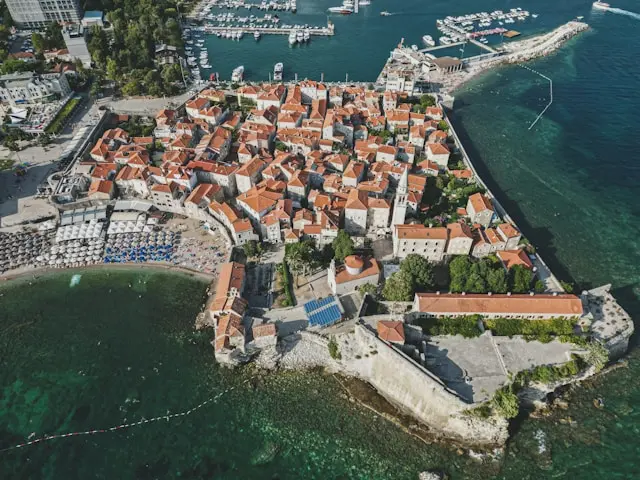
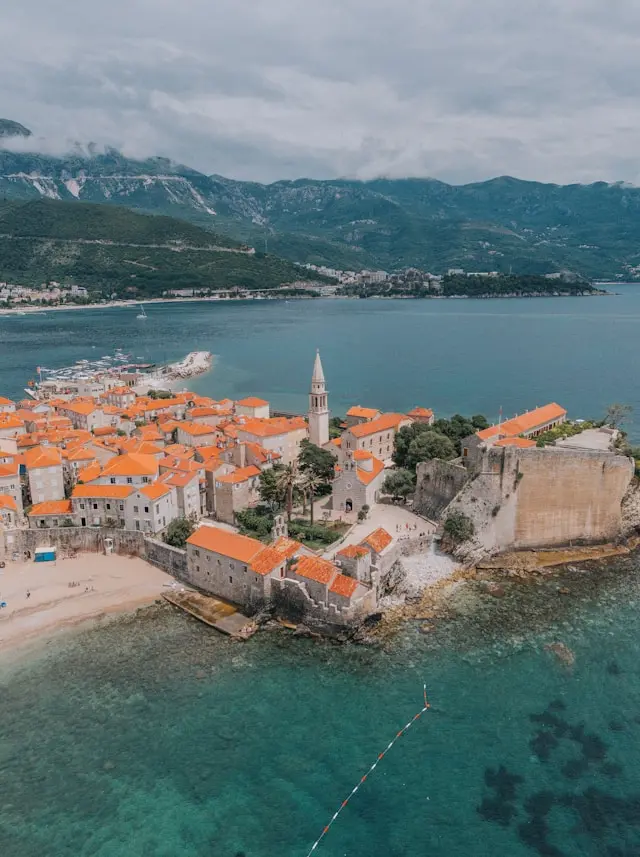
Budva is Montenegro's busiest coastal resort town, built around a small walled Old Town that sits on a rocky peninsula jutting into the Adriatic. At over 2,500 years old, it's one of the oldest settlements on the coast, though much of what visitors see today was carefully rebuilt after a devastating 1979 earthquake, layered onto nearly 400 years of Venetian-era architecture.
Where Kotor to the north trades on quiet historic atmosphere, Budva is unapologetically a beach-and-nightlife town: sandy coves flank the Old Town on both sides, a long string of resort beaches stretches along the so-called Budva Riviera, and by night the bars built into the fortress walls and the clubs along the beachfront make Budva the liveliest town in the country. It draws well over half a million visitors each summer and works equally well as a beach base or as a jumping-off point for day trips up the coast.
Getting to Budva
By Air
Tivat Airport (TIV) is the closest, roughly 25 km away (about 30-40 minutes by road), and handles a growing number of seasonal charter and low-cost flights in summer. Podgorica Airport (TGD), Montenegro's main international gateway, is about 65 km (roughly an hour's drive) and tends to have more year-round scheduled routes.
By Bus
Budva's bus station is a short taxi or walk from the Old Town and has frequent connections along the coast to Kotor (about 30 minutes), Herceg Novi, Bar, and Podgorica, as well as cross-border routes toward Dubrovnik in Croatia and Tirana in Albania.
By Car
Budva sits roughly midway along Montenegro's coastline, about 1.5 hours from both the Bosnian/Croatian border to the northwest and the Albanian border to the southeast. The coastal road linking Budva to Kotor and the wider Budva Riviera is scenic but can get congested in peak summer, so allowing extra time is worthwhile. The Old Town itself is car-free, so plan to park just outside the walls.
By Cruise Ship or Ferry
Budva receives some Adriatic cruise traffic, with tender boats or dockings near the Old Town, though it sees noticeably less cruise-ship volume than Kotor.

Getting Around Budva
The Old Town is small, pedestrian, and easily covered on foot in under half an hour, though it rewards slower wandering through its narrow lanes and squares. The seafront promenade along Slovenska Plaza connects the Old Town to the main hotel strip and beaches, making walking a practical option for much of central Budva.
For beaches and villages further along the Riviera, such as Bečići, Rafailovići, and Sveti Stefan, local buses, taxis, and ride-hailing apps all run regularly. Renting a car or scooter gives the most flexibility for exploring the wider Riviera and nearby villages in a single day.
Things to Do in Budva
Old Town and the Citadel
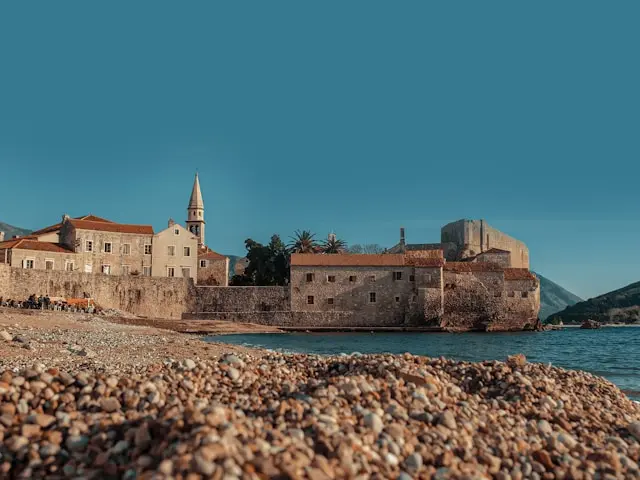
The Budva Citadel, a 15th-century fortress at the tip of the Old Town, houses a small maritime museum, a library, and a rooftop terrace with sweeping views over the rooftops and sea, especially striking at sunset. The surrounding Old Town streets hold Orthodox and Catholic churches, including the Church of Santa Maria in Punta, dating to the 9th century.
Dancing Girl Statue
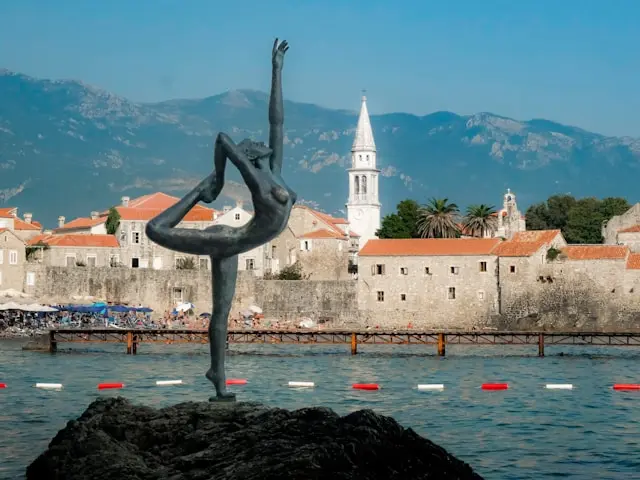
Just outside the Old Town walls, the bronze Dancing Girl (Ballerina) statue perched on the rocks is one of Budva's most photographed landmarks and a popular sunset spot.
Sveti Nikola Island
Known locally as Hawaii Island, Sveti Nikola sits about 800 meters offshore and is reachable by a short boat ride from the Budva Marina. Its far side holds some of the area's best beaches, including Hawaii Beach, away from the busier town shoreline.
Sveti Stefan Viewpoint
The iconic islet village of Sveti Stefan, now a private luxury resort, sits about 10 km down the coast and is best appreciated from the public viewpoints above it, since the islet itself is generally closed to non-guests.
Walking the Coastal Trail
A coastal walking path connects several of the Riviera's beaches, offering a scenic way to move between coves without a car and taking in views back toward the Old Town walls.
Beaches in and Around Budva
Mogren Beach
A short walk beyond the Old Town walls, Mogren is actually two adjoining coves connected by a short tunnel, generally considered the most scenic beach close to the center.
Slovenska Plaza
The main town beach, Slovenska Plaza runs along the hotel strip north of the Old Town and is the most convenient and crowded option, backed by restaurants, bars, and beach clubs.
Bečići and Rafailovići
A few kilometers south, Bečići has a long stretch of fine sand often ranked among the better beaches on this part of the coast, with Rafailovići just beyond offering a quieter, family-oriented stretch.
Jaz Beach
A few kilometers northwest of the Old Town, Jaz is a longer, less developed beach known for hosting large open-air concerts and festivals in summer.
Nightlife in Budva
Budva is widely considered Montenegro's nightlife capital, with the scene split between two areas: cocktail bars, wine bars, and live music built into the Old Town's fortress walls, and a livelier strip of clubs and beach bars along Slovenska Plaza and the wider Riviera. Dinner runs later than in much of Europe, typically 8 to 9 p.m., so the bar scene doesn't pick up until around 10 p.m., with clubs filling from midnight.
- Old Town sea-wall bars lean toward cocktails, wine, and sunset views rather than dancing
- Slovenska Plaza and the beachfront strip host the bigger clubs and late-night restaurants
- Open-air hilltop and beach clubs above Bečići draw international DJs through the summer season, often with cover charges and a dress code
- Beach parties tend to peak in the afternoon, roughly 2 to 5 p.m., separate from the late-night club scene

Food in Budva
Budva's dining mixes Adriatic seafood with Montenegrin coastal staples. Grilled fish, octopus salad, and black risotto made with cuttlefish ink show up on most Old Town and waterfront menus, and mussels are a common starter, often prepared "na buzaru" style with wine, garlic, and tomato.
Njeguški pršut (smoked air-dried ham) and Njeguški sir (a firm mountain cheese) from the Montenegrin interior are worth trying as a starter, and burek, a flaky filled pastry, makes a common quick breakfast. Restaurants inside the Old Town walls and along the main tourist strips tend to charge a premium, so wandering slightly off the main squares often turns up better value.
Where to Stay in Budva
Staying inside or right beside the Old Town puts the walls, beaches, and nightlife all within walking distance, though rooms can be noisier in peak season given the concentration of bars nearby. Slovenska Plaza and the main hotel strip offer larger resort-style properties directly on the beach, convenient for a straightforward beach holiday.
Bečići and Rafailovići, a short drive or bus ride south, offer a calmer, more family-oriented base with their own beaches, while still keeping Budva's Old Town and nightlife within easy reach. Travelers prioritizing quiet over nightlife sometimes prefer basing themselves slightly outside central Budva and visiting the Old Town for an evening rather than staying inside it.
Day Trips from Budva
Kotor
Montenegro's other major coastal draw is about 30 minutes up the coast, pairing its own walled Old Town with the dramatic, mountain-ringed Bay of Kotor.
Sveti Stefan and Miločer Park
The viewpoints above the islet village of Sveti Stefan, along with the shaded walking trails through the old olive groves and pine forest of neighboring Miločer Park, make an easy half-day outing from Budva.
Lake Skadar National Park
The Balkans' largest lake, with its scattered island monasteries and strong birdwatching reputation, is reachable as a day trip from Budva, often paired with a boat tour of the lake.
Ostrog Monastery
Montenegro's most significant Orthodox pilgrimage site, built into a sheer cliff face in the interior, is a longer but striking day trip inland from the coast.
Podgorica
Montenegro's capital is about an hour's drive east and can be visited for a change of pace from the coast, though it draws far fewer tourists than Budva or Kotor.

Best Time to Visit Budva
Late May through June and September offer warm swimming weather with noticeably fewer crowds and lower prices than the peak of July and August, when beaches, restaurants, and clubs are at their busiest and most expensive.
July and August are the months to choose for the full beach-and-nightlife experience, since many beach clubs, open-air venues, and festivals only operate through the summer season. Winter is quiet, with much of the nightlife and beach infrastructure closed, making it better suited to a low-key stroll through the Old Town than a beach holiday.
Safety and Practical Tips
- Budva is generally safe, with petty theft and occasional late-night rowdiness around the nightlife strips the main practical concerns
- Montenegro uses the euro despite not being an EU member, and cash is still preferred at many smaller bars and konobas
- Citizens of the US, UK, EU, and many other countries can visit visa-free for up to 90 days within a 180-day period; check current requirements for your passport before traveling
- Tipping is not standard in Montenegro, though rounding up the bill is appreciated
- Budva can get very hot in July and August, so staying near the beaches and Old Town helps avoid long walks in peak heat
- Travel insurance with medical coverage is strongly recommended given the limited capacity of local healthcare facilities
Budget and Costs in Budva
Budva is pricier than quieter Montenegrin towns, reflecting its status as the country's main resort destination, though it remains more affordable than comparable spots in Western Europe. Costs rise sharply in July and August, when accommodation, beach clubs, and restaurants all charge peak-season rates.
- A day's budget covering food, a beach spot, and modest evening drinks is markedly cheaper outside peak summer
- Beach clubs and reserved sunbeds along Slovenska Plaza and Bečići typically carry a daily fee
- Nightclub cover charges, especially at larger venues with international DJs, add up quickly in peak season
- Eating slightly outside the Old Town and main tourist strip generally means lower restaurant prices

Frequently Asked Questions about Budva
How many days do you need in Budva? +
Two to three days covers the Old Town, a couple of beaches, and a Kotor day trip at a relaxed pace, while a longer stay suits travelers treating Budva as a full beach holiday base.
What is the best time of year to visit Budva? +
Late May, June, and September offer warm weather with smaller crowds and lower prices, while July and August bring the busiest beaches, the fullest nightlife calendar, and the highest costs.
Is Budva expensive to visit? +
Budva is pricier than many other Montenegrin towns, especially in peak summer when beach clubs, hotels, and nightlife all charge premium rates, though it's still generally more affordable than equivalent resort towns in Western Europe.
Do I need a visa to visit Budva? +
Travelers from the US, UK, EU, and many other countries can enter Montenegro visa-free for up to 90 days within a 180-day period, but requirements vary by nationality, so it's worth confirming current rules before booking.
Is Budva safe for visitors? +
Yes, Budva is generally safe, with petty theft and occasional late-night rowdiness near the nightlife strips the main practical concerns rather than any serious risk.
How do you get around Budva without a car? +
The Old Town and central beachfront are entirely walkable, and buses, taxis, and ride-hailing apps cover trips to beaches and villages further along the Riviera; a rental car or scooter helps for covering more ground in a day.
What's the best area to stay in Budva? +
Staying in or beside the Old Town puts beaches and nightlife within walking distance, while Bečići and Rafailovići a short ride south offer a quieter, more family-friendly base.
Is Budva good for nightlife? +
Yes, Budva is widely considered Montenegro's nightlife capital, with Old Town sea-wall bars for a calmer evening and the Slovenska Plaza strip and hilltop clubs above Bečići for late-night parties through the summer season.
What should I pair a trip to Budva with? +
Kotor is an easy day trip about 30 minutes up the coast, Sveti Stefan and Miločer Park make a scenic half-day outing, and Lake Skadar National Park suits travelers wanting a break from the beach.