

Table of Contents
About Herceg Novi
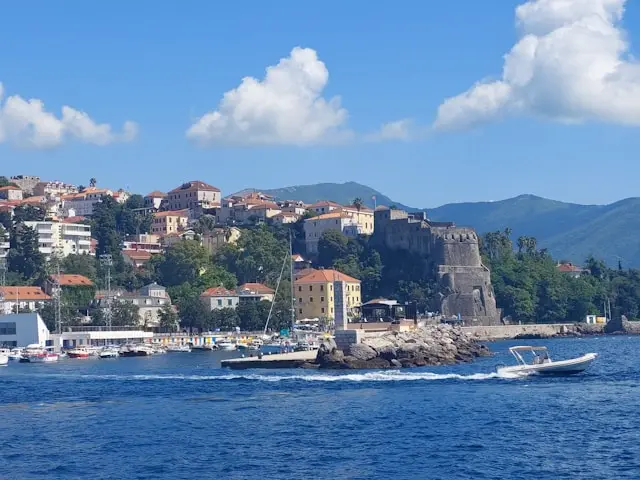
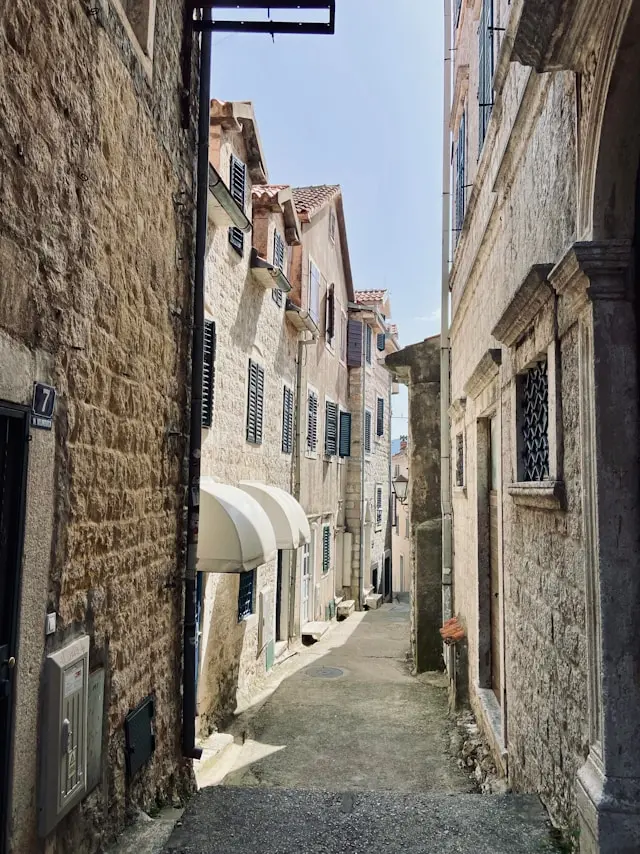
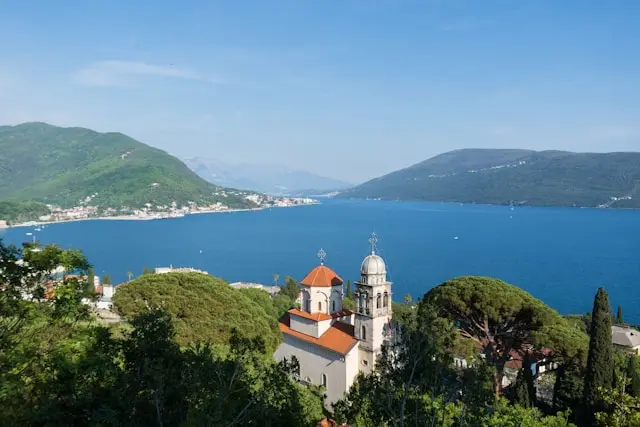
Herceg Novi sits at the western entrance to the Bay of Kotor, where the mountains of Orjen drop steeply toward the Adriatic. Founded as a fortress town in 1382 by the Bosnian king Tvrtko I, it passed through Ottoman, Venetian, Spanish, French, and Austrian hands over the centuries, and each left a layer behind: a scatter of fortresses, an Ottoman clock tower, and an Old Town built in tiers up the hillside and stitched together by stone staircases, which is why locals half-jokingly call it the town of a thousand steps.
Compared to Kotor's dense, tightly walled center or Budva's beach-and-nightlife energy, Herceg Novi feels looser and more lived-in, with fewer souvenir shops and a slower daily rhythm built around sea swims, café terraces, and long seafood lunches. Its position right at the mouth of the bay also makes it a practical, less crowded base for exploring the wider Bay of Kotor region.
Getting to Herceg Novi
By Air
Dubrovnik Airport (DBV) in neighboring Croatia is the closest, only about 30 km away, making it a faster entry point than either of Montenegro's own airports. Tivat Airport (TIV) is roughly 30-40 km around the bay, and Podgorica Airport (TGD), Montenegro's main international gateway, is farther still, generally over an hour and a half by road.
By Bus
Herceg Novi's bus station has regular connections along the coast to Kotor and Budva, as well as routes toward Podgorica and cross-border service to Dubrovnik.
By Car
Herceg Novi is a common first or last stop for travelers driving between Croatia and the rest of Montenegro, since it sits just past the Debeli Brijeg border crossing. Because of the cross-border paperwork involved with rental cars, many travelers coming from Dubrovnik instead book a private transfer directly to the Old Town. From Kotor, the scenic route around the bay takes roughly 40 minutes to an hour, or can be shortened using the Kamenari-Lepetane car ferry.
By Ferry
A car and passenger ferry crosses the narrows of the bay between Kamenari and Lepetane, offering a shortcut for travelers heading between Herceg Novi and Kotor or Tivat without driving the full loop around the water.

Getting Around Herceg Novi
Herceg Novi is effectively split into two levels: an upper town centered on the Old Town and the main street, Njegoševa, and a lower town along the seaside promenade and beaches. Walking is the natural way to explore both, though the staircases connecting the levels mean some genuine uphill effort, especially in summer heat.
For longer distances, such as reaching Igalo to the west or Zelenika and Meljine to the east along the 7 km promenade, local buses and taxis are readily available. Renting a car adds flexibility for exploring the wider Bay of Kotor and the Luštica peninsula.
Things to Do in Herceg Novi
Old Town Squares and the Clock Tower
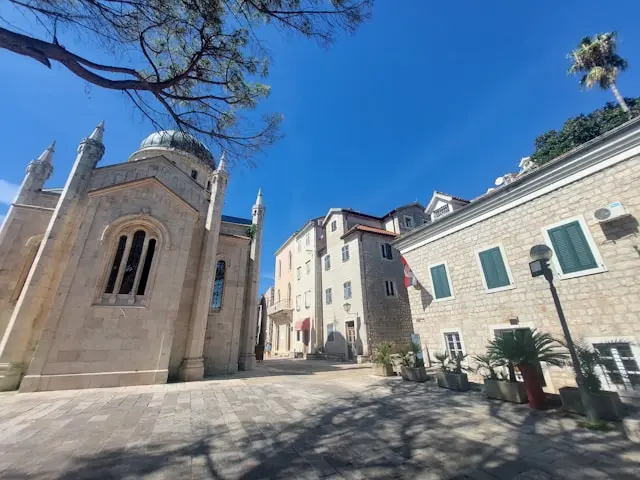
Herceg Novi's compact Old Town centers on Nikola Đurković Square, ringed by colorful historic houses and café terraces, and the Ottoman-built Sahat Kula (clock tower), which dates to 1667 and doubled as the old town gate. Belavista Square, home to the 19th-century Church of St. Michael the Archangel, is another lively gathering point.
Forte Mare
The town's oldest fortress, built in 1382 by founder Tvrtko I and expanded over later centuries, sits right at the edge of the Old Town and offers an easy introduction to the layered history built into Herceg Novi's walls, along with sea views.
Kanli Kula
Perched higher above the Old Town, the Ottoman-built Kanli Kula ("Bloody Tower") served as a prison and defensive stronghold before its long, atmospheric halls were repurposed as the town's main open-air theatre, hosting concerts and festivals in summer.
Savina Monastery
A short walk or drive from the center, this Orthodox monastery complex sits in a hillside olive grove and holds churches dating back to the 11th century, along with notable frescoes and one of the region's respected boutique wineries nearby.
Boat Trip to the Blue Cave
Boat tours depart from Herceg Novi for the Blue Cave, a sea grotto where light reflects off the water in a vivid blue glow, often combined with a stop near the Mamula island fortress at the mouth of the bay.
Beaches and the Promenade
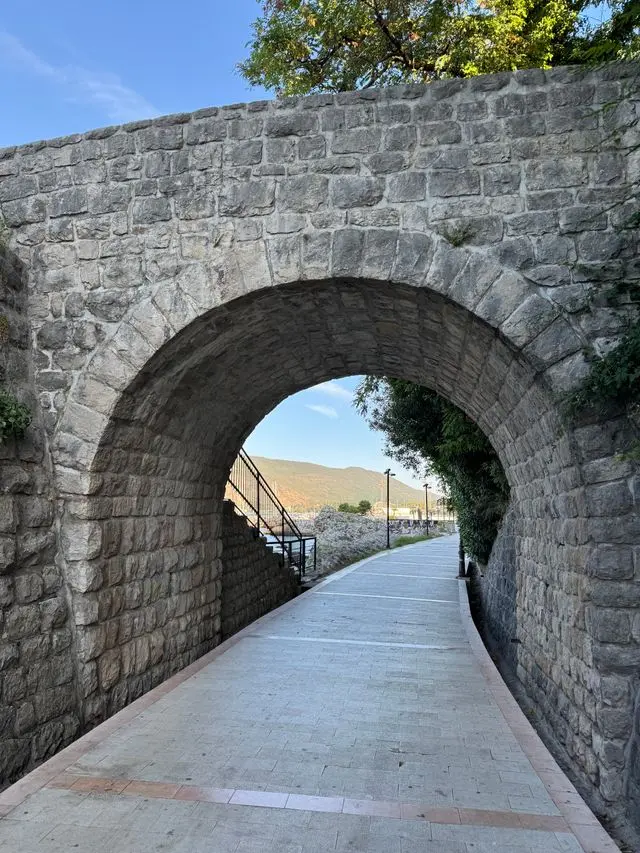
Herceg Novi's beaches run along a roughly 7 km promenade (Pet Danica) stretching from the neighboring spa town of Igalo through the town center to Meljine at the eastern edge, mixing small pebble coves, concrete sunbathing platforms, and a scatter of beach bars along the way.
The beaches here are generally quieter and less see-and-be-seen than Budva's, better suited to relaxed swimming than a resort scene. Igalo, just west of the center, is known as a spa and wellness destination, while the stretch nearer town gives easy access to cafés and the Old Town above.
Food in Herceg Novi
As elsewhere on the Montenegrin coast, seafood dominates: grilled fish, octopus salad, mussels, and black cuttlefish-ink risotto are common on menus along the promenade and in the Old Town. Long, unhurried lunches that stretch into the afternoon are part of the town's slower pace.
Njeguški pršut and Njeguški sir, smoked ham and firm cheese from the Montenegrin interior, are worth trying as a starter, and the wider region's Vranac and Krstač wines pair well with a seafood meal. Small konobas tucked away from the main squares and promenade often offer better value than the more visible waterfront restaurants.

Where to Stay in Herceg Novi
Staying in or near the Old Town puts the fortresses, main squares, and staircases within easy walking reach, though some properties are only accessible via steps rather than a direct vehicle drop-off. The lower town along the promenade offers easier access for those prioritizing beach time and flatter walking routes.
Igalo, just west of the center, suits travelers drawn to its spa and wellness reputation, while Meljine and Zelenika to the east offer a quieter, more residential base still connected to Herceg Novi by the coastal promenade and local buses.
Day Trips from Herceg Novi
Kotor
Kotor's walled Old Town and dramatic bay scenery are reachable in under an hour by road around the bay, or faster using the Kamenari-Lepetane ferry shortcut.
Luštica Peninsula
Across the water from Herceg Novi, the Luštica peninsula offers quieter coves, hiking trails, wild olive groves, and access to submarine tunnels left over from the Yugoslav era, reachable by a short boat crossing or a longer drive.
Budva
Montenegro's nightlife and beach hub is about 1.5 hours away by road, making it feasible as a longer day trip for travelers wanting to pair Herceg Novi's calm with Budva's energy.
Dubrovnik, Croatia
With Dubrovnik Airport only about 30 km away, the walled city of Dubrovnik itself is an easy cross-border day trip, typically under an hour by car including the border crossing.
Mount Orjen
Rising directly behind the town, Mount Orjen offers hiking routes and cooler mountain air for visitors wanting a break from the coast, with sweeping views back down over the bay.

Best Time to Visit Herceg Novi
Late spring (May to June) and early autumn (September) bring warm, swimmable weather with smaller crowds and lower prices than the height of summer. Herceg Novi has a reputation as one of Montenegro's sunniest towns, which makes shoulder-season visits pleasant even outside the main beach season.
July and August are the busiest and most expensive months, particularly along the promenade and in the Old Town's cafés, while winters stay relatively mild but quiet, with much of the beach infrastructure closed.
Safety and Practical Tips
- Herceg Novi is generally very safe, with normal city-level caution around belongings in busy squares the main concern
- Montenegro uses the euro despite not being an EU member, and cash is still preferred at smaller konobas and cafés
- Citizens of the US, UK, EU, and many other countries can visit visa-free for up to 90 days within a 180-day period; check current requirements for your passport before traveling
- The Old Town's many staircases mean sturdy, comfortable footwear matters more here than in flatter coastal towns
- Some historic sites, such as the Spanish Fortress, undergo periodic restoration and may be closed to visitors, so it's worth checking current access before planning around them
- Travel insurance with medical coverage is strongly recommended given the limited capacity of local healthcare facilities
Budget and Costs in Herceg Novi
Herceg Novi is generally more affordable than Kotor or Budva, with lower accommodation and dining prices reflecting its lighter tourist footfall, while still offering the same Bay of Kotor scenery and fortress-topped Old Town.
- Accommodation along the promenade or in Igalo tends to cost less than comparable stays in central Kotor or Budva
- Konobas set back from the main squares typically offer better value than waterfront restaurants on the promenade
- Boat trips to the Blue Cave and Mamula fortress are worth budgeting for as the main paid activity beyond food and lodging
- Prices rise in July and August but generally stay lower than in Montenegro's more heavily touristed towns

Frequently Asked Questions about Herceg Novi
How many days do you need in Herceg Novi? +
Two to three days is enough to explore the Old Town's squares and fortresses, walk sections of the promenade, and fit in a boat trip to the Blue Cave, with extra time worth adding for a Kotor or Luštica day trip.
What is the best time of year to visit Herceg Novi? +
Late spring (May to June) and September offer warm, sunny weather with smaller crowds and lower prices than the peak of July and August.
Is Herceg Novi expensive to visit? +
Herceg Novi is generally more affordable than Kotor or Budva, with lower accommodation and dining costs while still offering Bay of Kotor scenery and historic sightseeing.
Do I need a visa to visit Herceg Novi? +
Travelers from the US, UK, EU, and many other countries can enter Montenegro visa-free for up to 90 days within a 180-day period, but requirements vary by nationality, so it's worth confirming current rules before booking.
Is Herceg Novi safe for visitors? +
Yes, Herceg Novi is considered very safe, with ordinary city-level caution in busy squares the main practical concern.
How do you get around Herceg Novi without a car? +
The Old Town and promenade are walkable, though the town's many staircases mean some real uphill effort, and local buses and taxis cover longer stretches like Igalo or Meljine.
What's the best area to stay in Herceg Novi? +
The Old Town puts fortresses and squares within walking distance, the promenade area suits travelers prioritizing beach access and flatter routes, and Igalo offers a quieter, spa-town alternative just outside the center.
Is Herceg Novi crowded like Kotor or Budva? +
No, Herceg Novi generally sees fewer tourists than Kotor or Budva, giving it a more relaxed, local feel even in peak season.
What should I pair a trip to Herceg Novi with? +
Kotor is under an hour away around the bay, Dubrovnik is an easy cross-border day trip given the nearby airport, and the Luštica peninsula offers a quieter add-on for hiking and coves.