

Table of Contents
- Explore Marbella Old Town
- Visit Plaza de los Naranjos
- Relax at Marbella's Best Beaches
- Walk the Paseo Marítimo
- See the Dalí Sculptures on Avenida del Mar
- Explore Puerto Banús
- Experience the Golden Mile
- Discover Marbella's Hidden Gems
- Hike or Admire La Concha Mountain
- Enjoy Water Sports and Outdoor Activities
- Taste Traditional Andalusian Cuisine
- Watch the Sunset by the Mediterranean
- Experience Marbella's Nightlife
- Take Day Trips to Ronda, Mijas and Estepona
- Follow a 2-3 Day Marbella Itinerary
Explore Marbella Old Town
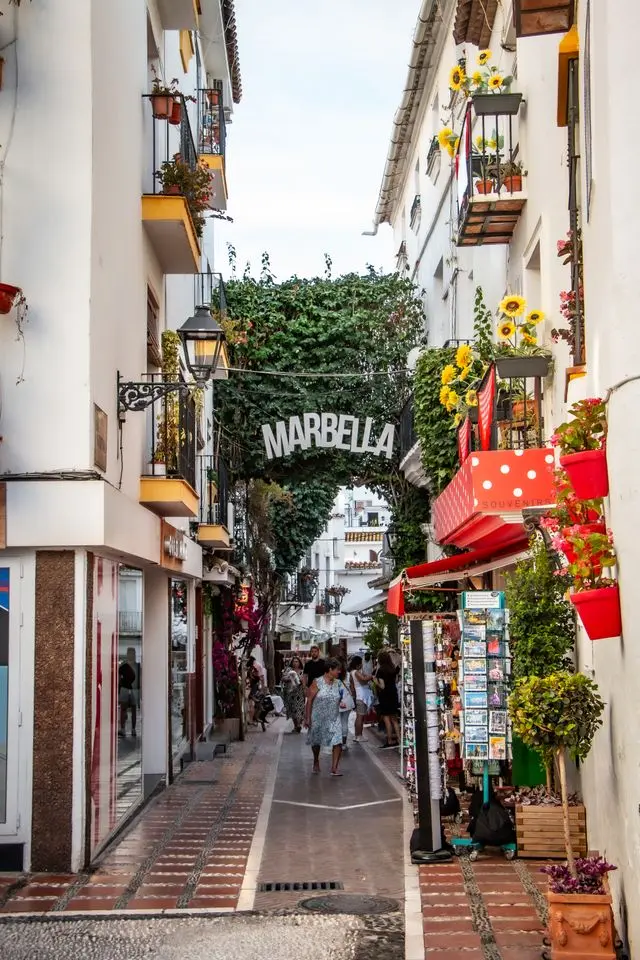
Most people picture Marbella as yachts and sunbeds, but the city's real character lives a few blocks back from the beach, in the Casco Antiguo. This is the Old Town, a maze of whitewashed lanes that still follows the layout laid down after the Christian reconquest in the late 1400s, and it's the part of Marbella that feels least like a resort.
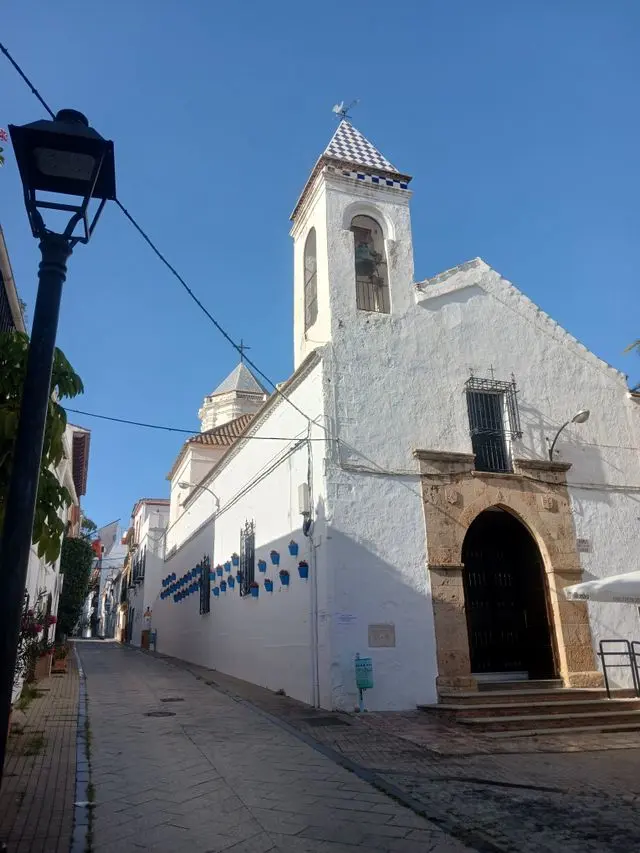
There's no real route to follow here, which is kind of the point - just pick a direction and get a little lost. You'll pass geranium-covered balconies, tucked-away courtyards, and eventually stumble on things like a stretch of old Moorish wall or the Ermita de Santiago, a tiny church thought to be the oldest building still standing in the city.
- Go early morning or after 6pm, since midday sun in the narrow streets gets stuffy
- It costs nothing to wander, and there's no "must-see checklist" to rush through
- Small galleries, ceramics shops and family-run bars are scattered throughout

Visit Plaza de los Naranjos
Right in the middle of the Old Town sits Plaza de los Naranjos, the Square of the Orange Trees, and it's been the town's social hub since 1485. The orange trees themselves are newer, planted in the 1940s, but the fountain at the center and the buildings ringing the square, including the old town hall and the Casa del Corregidor, are original to the plaza's earliest days.
Honestly, the square isn't much bigger than a few tennis courts, but it doesn't need to be. Grab a table at one of the cafes lining the edges, order a coffee or a glass of wine, and just watch the place do what it's always done: bring people together.
- Free to visit, day or night, though it's liveliest around midday and early evening
- A short walk connects it straight to Avenida del Mar and the seafront
- Good jumping-off point before you dive into the Old Town's side streets
Relax at Marbella's Best Beaches
With roughly 27 kilometers of coastline, Marbella isn't short on options, and the city has racked up more Blue Flag beach certifications than any other municipality in Andalusia in recent years, meaning cleaner water and better facilities. Playa de la Fontanilla, just west of the marina, is the obvious pick for a first-timer: central, sandy, and lined with restaurants.
For calmer water, try Playa de Puerto Banús, right by the marina restaurants and shallow near the shore. Playa Nagüeles, out on the Golden Mile, is noticeably wider than its neighbors thanks to a breakwater that traps extra sand, and if crowds aren't your thing, Cabopino further east has pine-backed dunes and a much quieter feel.
- Playa de la Fontanilla - central and lively, full facilities
- Playa de Puerto Banús - calm, shallow, close to marina dining
- Playa Nagüeles - extra-wide sands on the Golden Mile
- Cabopino - dunes, pines and a slower pace
Walk the Paseo Marítimo
Marbella's seafront promenade runs for several kilometers, stitching the town center to the Golden Mile beaches, and it's genuinely one of the best free things to do in the city. Palm trees, the odd sculpture, a sea breeze that never quite stops - locals use it as much as visitors do.
What makes it useful, not just pretty, is that it links several beaches directly, so you can walk from one stretch of sand to the next without going back to the road. Beach shacks called chiringuitos pop up along the way, and stopping at one for grilled fish with sandy feet is basically a Marbella rite of passage.
- Flat, paved, and easy going for any fitness level
- Rental bikes and boardwalk cafes show up along most of the route
- An hour or two before sunset is the sweet spot for a walk
See the Dalí Sculptures on Avenida del Mar
Here's a detail a lot of first-time visitors miss: the pedestrian boulevard connecting Alameda Park to the seafront doubles as a free outdoor Dalí exhibit. Ten bronze sculptures line Avenida del Mar, cast from smaller originals, giving the street a strange, surreal energy next to the palm trees and ice cream stands.
Among the pieces are a seated Don Quixote, a cosmic elephant balanced improbably on spindly insect legs, and a horse with a stumbling rider mid-fall. A separate Dalí work, called Libertad, stands alone near the entrance to Puerto Banús.
- Free, open around the clock, no ticket needed
- Takes about fifteen minutes to walk the length of it, longer if you stop for photos
- There's underground parking beneath the avenue if you're arriving by car
Explore Puerto Banús
Puerto Banús went up in the 1970s and has been Marbella's glamour magnet ever since. Superyachts line the docks, supercars get parked along the quay like it's nothing, and wandering the marina to gawk at both is a legitimate way to spend an afternoon, free of charge.
Behind the boats, the streets fill with designer boutiques, high-end restaurants and a bar scene that wakes up after dark. It's practical too, with beaches on either side and bus connections along the coast.
- Best after about 6pm, when the marina fills in and the lights come on
- Window-shopping and boat-watching are free entertainment
- Boat trips and yacht charters can be booked right at the dock
Experience the Golden Mile
The Golden Mile is the strip of coast between Marbella's center and Puerto Banús, and it earned its name honestly: since the 1950s it's been packed with private villas, five-star hotels and enough old money to fund a small country.
You don't need a villa to enjoy it, though. The beaches, including Playa Nagüeles, are open to everyone, and plenty of the grand hotels here will happily let you buy your way into their beach clubs and restaurants for an afternoon.
- Best seen by car, bike, or the coastal promenade on foot
- Home to some of the most photographed beach clubs on the coast
- Worth the drive alone at golden hour, even without stopping
Hike or Admire La Concha Mountain
La Concha, meaning "the shell," is the jagged limestone peak towering over Marbella at 1,215 meters, and it's basically impossible to photograph the city without it in the background. For hikers, the classic route starts at Refugio de Juanar and follows the marked PR-A-168 trail, roughly 14 kilometers round trip with about 900 meters of climbing.
Most people take five to six hours for the whole thing, and it's fair to call it moderate to challenging - the last stretch to the summit is rough and exposed, not a casual stroll. If a full-day hike isn't your idea of a vacation, you can still enjoy the view from any beach or rooftop terrace in town, no boots required.
- Full summit hike: about 14 km round trip, 5-6 hours, moderate to challenging
- Shorter option: the Mirador del Corzo viewpoint, a gentle 500-meter walk from the refuge
- Bring proper shoes, water and sun protection - the trail offers little shade
Enjoy Water Sports and Outdoor Activities
Between the warm, sheltered water and the near-constant sunshine, Marbella is built for being outdoors. Jet skis, paddleboards, banana boats and parasailing are set up along the main beaches, particularly around Fontanilla and Puerto Banús, and most operators rent by the hour with no experience needed.
Inland, the area lives up to its "Costa del Golf" nickname, with around a dozen courses within easy reach, plus horseback riding, mountain biking and rock climbing in the hills behind the city for anyone who wants a change from sand between their toes.
- Water sports rentals run seasonally, roughly spring through autumn
- Boat charters and sailing trips can be arranged from either marina
- Book golf tee times ahead in high season - the good courses fill up fast
Taste Traditional Andalusian Cuisine
Marbella's restaurant scene spans everything from paper-plate beach shacks to Michelin-starred tasting menus, but the dish that defines the coast is espeto - sardines skewered on a cane and cooked over an open wood fire on the sand. Eat it standing up, straight off the beach, and you'll understand why locals never bother dressing it up any further.
Gazpacho and its thicker cousin salmorejo are the go-to cold soups when the heat gets unbearable, and pescaíto frito, a mix of lightly fried local fish, shows up on nearly every tapas menu. Add jamón ibérico, some olives and a glass of local Málaga wine and you've basically eaten your way through the region.
- Espeto - grilled sardines on a skewer, a true beachfront specialty
- Gazpacho and salmorejo - chilled tomato soups, made for summer
- Pescaíto frito - mixed fried local fish, a tapas staple
- Skip the tourist-strip menus and look for chiringuitos along the Paseo Marítimo
Watch the Sunset by the Mediterranean
Because Marbella faces almost due south, its beaches get something a lot of Mediterranean towns don't: long, drawn-out sunsets over open water instead of a quick drop behind the hills. The area near Playa de la Fontanilla and the marina fills up every evening with people watching the sky shift from orange to pink.
For more polish, rooftop bars along the Golden Mile and in the town center pair the view with a cocktail, though they fill up fast right at sunset. If you'd rather skip the crowd, a bench along the Paseo Marítimo, away from the beach clubs, works just as well and costs nothing.
- Best window is roughly 8:30 to 9:30pm in summer, earlier in winter
- Arrive early for a rooftop table - everyone has the same idea
- No cost at all for a spot on the beach or the promenade
Experience Marbella's Nightlife
Marbella after dark is a different city entirely. Puerto Banús is where most of the energy goes - marina-front bars and clubs that pull in a glamorous, late-night crowd and keep going well past midnight in peak summer.
The Old Town offers a calmer alternative, with tapas bars and the occasional live flamenco or jazz set spilling into the plazas, while beach clubs along the Golden Mile blend daytime lounging with DJ sets and dinner that runs deep into the night. Pick your pace - Marbella has a version of nightlife to match it.
- Puerto Banús - high-energy clubs and cocktail bars, packed in summer
- Old Town squares - tapas, live music, a more relaxed crowd
- Beach clubs - dinner-and-DJ format, great for a night that starts early
Take Day Trips to Ronda, Mijas and Estepona
Marbella works well as a home base for exploring further afield. Ronda, about an hour inland, is famous for its dramatic gorge and the Puente Nuevo bridge spanning it, plus one of the oldest bullrings in Spain - it's more dramatic in person than any photo suggests.
Closer by, Mijas Pueblo sits about thirty minutes away, a whitewashed hillside village with sweeping coastal views and an old-fashioned Andalusian pace. Estepona, roughly twenty minutes west, has quietly built a name for its flower-covered Old Town streets and a growing collection of street murals.
- Ronda - dramatic gorge and historic bullring, about 1 hour by car
- Mijas Pueblo - whitewashed hill village, about 30 minutes by car
- Estepona - flower-lined streets and murals, about 20 minutes by car
- All three work by car, tour bus, or local bus routes

Follow a 2-3 Day Marbella Itinerary
Day 1: Old Town and Beaches
Start in the Old Town while it's still cool out, taking in Plaza de los Naranjos and whatever side streets catch your eye. By afternoon, head to Playa de la Fontanilla for a swim, then walk the Paseo Marítimo as the light starts to soften toward evening.
Day 2: Art, Marina and Nightlife
Spend the morning on Avenida del Mar with the Dalí sculptures, then work your way to Puerto Banús for lunch and an afternoon of marina-browsing. Stay for dinner, and if you've still got energy, this is the night to sample the nightlife.
Day 3: Mountains or a Day Trip
With a third day, it's really a choice between two moods: hike toward La Concha if you want the outdoors, or take a day trip to Ronda or Mijas Pueblo if you'd rather see something different before heading back to the coast for one last evening.
Frequently Asked Questions
How many days do you need in Marbella? +
Two to three days covers the essentials - the Old Town, the beaches, Puerto Banús and the Dalí sculptures - though give yourself longer if you want to fit in a day trip to Ronda, Mijas or Estepona.
Is Marbella good for a beach holiday? +
Definitely. With around 27 kilometers of coastline and several Blue Flag beaches, you can go from the lively central sands at Fontanilla to the quieter, dune-backed stretch at Cabopino without leaving town.
What is Marbella's Old Town known for? +
Mostly its whitewashed streets, the Plaza de los Naranjos with its orange trees and Renaissance fountain, and the scattered leftovers of the city's medieval and Moorish past that show up when you least expect them.
Is Puerto Banús only for luxury travelers? +
Not at all. Walking the marina, looking at the boats, and window-shopping cost nothing, and both beaches next to Puerto Banús are open to anyone - it's really just the restaurants and boutiques that lean upscale.
Is the hike up La Concha mountain difficult? +
Yes, in the sense that it's not for beginners. The full route from Refugio de Juanar runs about 14 kilometers round trip with roughly 900 meters of ascent, so you'll want a reasonable fitness level and proper shoes.
What food should you try in Marbella? +
Espeto is the one dish worth planning a meal around - sardines grilled on a skewer over an open fire - but don't skip the gazpacho, salmorejo, and freshly fried local fish while you're at it, ideally at a beachfront chiringuito.
What's the best time of year to visit Marbella? +
Late spring and early autumn hit that sweet spot of warm weather without the peak-summer crowds, though summer itself is when the beaches and nightlife are at their most lively, crowds and all.
Can you visit Marbella without a car? +
Yes - the Old Town, beaches, Paseo Marítimo and Puerto Banús are all walkable or bus-accessible. A car (or a tour) just makes the day trips to Ronda, Mijas or Estepona a lot simpler.
