

Table of Contents
About Bovec
Bovec is a small alpine town in far northwestern Slovenia's Soča Valley, hemmed in by the Julian Alps and sitting just a few kilometers from the Italian border. Known as the adventure sports capital of Slovenia, it has built its reputation almost entirely around the Soča River, whose vivid turquoise water and steep surrounding gorges make it one of Europe's premier destinations for whitewater rafting, kayaking, and canyoning.
Despite its small size and permanent population of around 1,500, Bovec punches well above its weight for outdoor tourism, drawing visitors for river sports in summer and skiing on nearby Mount Kanin in winter. The town also carries a heavier layer of history: it sat directly on the Isonzo Front during World War I, and forts, memorials, and museums throughout the valley reflect that legacy alongside the area's natural beauty.
Climate & Best Time to Visit
Summer (June–September)
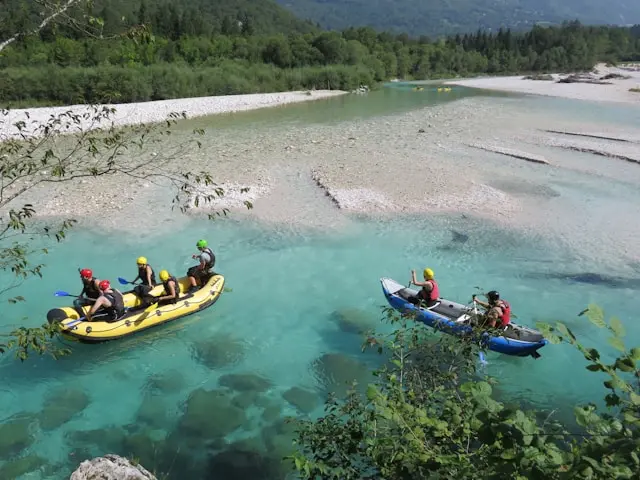
Summer is peak season, with warm temperatures, the best conditions for rafting and canyoning, and the longest days for hiking. Snowmelt earlier in the season can raise water levels and add excitement (and sometimes limit access) on the Soča, so late spring through midsummer tends to offer the most dramatic rafting conditions.
Spring and Autumn (April–May, October)
Spring brings high water from snowmelt, making it a strong season for experienced rafters and for chasing waterfalls like Boka at their most powerful, while autumn offers crisp weather, fewer crowds, and good hiking conditions, though river sports operators may scale back offerings as temperatures drop.
Winter (December–March)
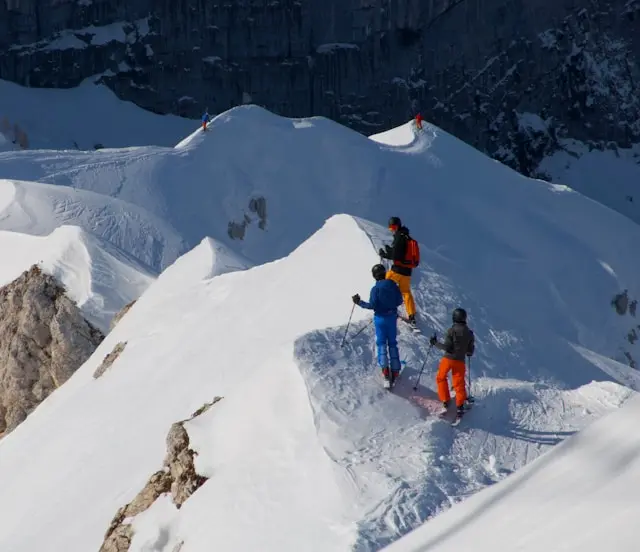
Winter shifts Bovec's focus uphill to the Kanin ski resort, Slovenia's highest, with skiing on both the Slovenian and Italian sides of the mountain (also known as Sella Nevea-Kanin). The town itself is quiet in winter compared to its packed summer months, and some passes and lower-elevation trails may be affected by snow.
Getting to Bovec
Bovec has no airport or train station of its own. The closest international airports are Ljubljana Jože Pučnik Airport (around 130–150 km), Trieste Airport in Italy, and Klagenfurt Airport in Austria, each roughly a two- to two-and-a-half-hour drive away depending on route and conditions.
The nearest train stations are at Jesenice to the north and Nova Gorica or Most na Soči to the south, both requiring a connecting bus into Bovec. A scenic option is the Bohinj railway line and its car-carrying motorail service, which runs from the Bled area through the Bohinj tunnel to Most na Soči, from where a bus continues to Bovec. Direct Nomago buses also run from Ljubljana, typically taking three and a half to four hours via Idrija, Cerkno, and Tolmin, and seasonal summer buses (roughly late June through August) connect Bovec with Kranjska Gora and Ljubljana via the Predel Pass in Italy.
Driving is the fastest and most flexible option, taking around two to three hours from Ljubljana depending on the route, either via the Vršič Pass from Kranjska Gora (open only when clear of snow) or via Idrija and Tolmin, which stays open year-round. As Slovenia is part of the European Union and the Schengen Area, most EU/EEA citizens can enter with just a national ID card, while citizens of the US, UK, Canada, Australia, and many other countries can typically visit visa-free for up to 90 days within a 180-day period. Entry rules can change, so it's worth confirming current requirements with official sources shortly before travel.

Transportation in Bovec
Walking
Bovec's small center is easily covered on foot, with most accommodation, restaurants, and adventure sports outfitters within a short walk of the main square.
Car
A car is the most practical way to explore the wider Soča Valley, reach trailheads and waterfalls, and connect onward to Kobarid, Tolmin, or over the mountain passes; rental cars are available in Ljubljana and at nearby airports.
Seasonal Free Shuttles
In recent summers, free seasonal shuttle buses have connected Bovec with the Soča River source, the Vršič Pass, and Kranjska Gora, offering a way to experience the valley's mountain roads, including the famous hairpin turns, without driving. Schedules and availability vary by year, so it's worth checking current listings before relying on this option.
Bikes
Cycling is popular throughout the Soča Valley, with routes ranging from gentle riverside paths to demanding climbs over the surrounding passes, and bike rental is available in town.
Things to Do in Bovec
Great Soča Gorge
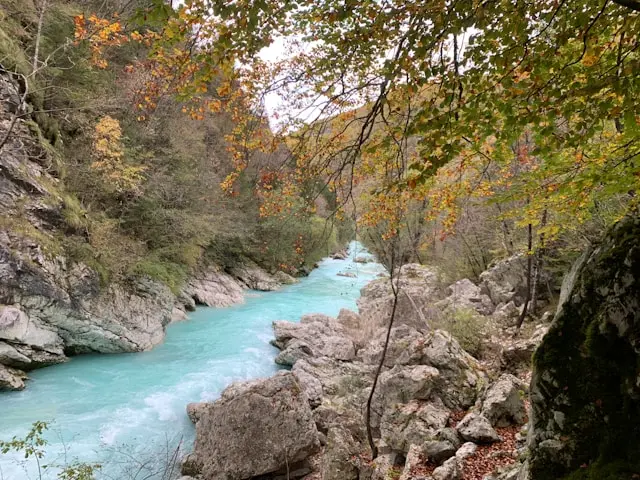
A dramatic narrow gorge carved by the Soča River close to Bovec, this is one of the most accessible and photogenic stops in the valley, with paths and viewpoints allowing a close look at the river's striking turquoise water without needing to hike far.
Kanin Cable Car
Rising from Bovec to over 2,200 meters, this cable car climbs into the high alpine terrain of Mount Kanin, with panoramic summer views that can stretch as far as the Adriatic Sea on a clear day, and access to Slovenia's highest ski resort in winter.
Kluže Fortress
About 4 km northeast of Bovec, this Austrian-built fortress from 1882 sits dramatically above a 70-meter ravine on the Koritnica River, guarding a strategically important gorge and offering a striking combination of military history and landscape.
Boka Waterfall
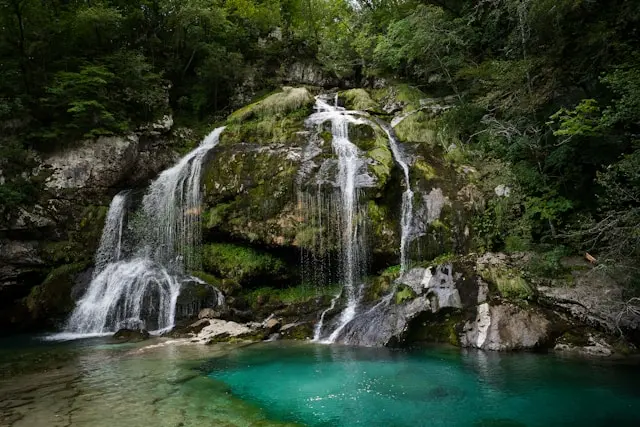
Slovenia's highest waterfall drops around 106 meters in its main fall, with a smaller cascade below, and is at its most powerful in spring during snowmelt; it's visible from the road but a short trail leads closer for a better view.
Kozjak Waterfall
An easy roughly 20-minute walk from a marked parking area (closer to Kobarid than Bovec) leads to this waterfall tucked inside a rounded rock amphitheater, considered one of the most beautiful and accessible in the valley.
Sunikov Vodni Gaj
A network of gentle walking paths and small waterfalls just outside Bovec, this spot offers an easy, family-friendly way to experience the valley's water and greenery without a demanding hike.
Adventure Sports on the Soča River
Bovec is Slovenia's undisputed hub for river sports, with numerous outfitters offering whitewater rafting, kayaking, canyoning, hydrospeeding (descending rapids on a small handheld board), and stand-up paddleboarding on and around the Soča River. Trip difficulty ranges from gentle, family-friendly floats to serious whitewater for experienced paddlers, and canyoning trips explore narrower side gorges like Sušec and the Predelica.
Beyond the water, the surrounding mountains support paragliding, via ferrata routes, mountain biking, and an extensive network of hiking trails into Triglav National Park, which borders the valley. Guided trips are strongly recommended for anything beyond gentle activities, both for safety and because permits and access can be restricted on certain stretches of river.
WWI History in the Soča Valley
Bovec and the wider Soča Valley sat on the Isonzo Front, the site of a dozen major battles between Austro-Hungarian and Italian forces during World War I, and reminders of that history are scattered throughout the region. Kluže Fortress and the nearby Hermann Fortress reflect the area's older and newer defensive history, while open-air museums and preserved trench networks let visitors walk sections of the former front line.
The town of Kobarid, a short drive away, holds the definitive account of the front at the Kobarid Museum, an award-winning collection covering the conflict in detail, and serves as the starting point for the Walk of Peace, a roughly 230-km trail linking historical sites across the region.

Food in Bovec
Bovec's food draws on its alpine setting and river valley location, with trout from the Soča a local specialty alongside heartier mountain fare like goulash, dumplings, and cured meats. Frika, a Slovenian cheese-and-potato dish similar to a savory pancake, and other Julian Alps specialties show up on menus around town.
The Soča Valley has an outsized reputation for fine dining relative to its size, anchored by Hiša Franko in nearby Kobarid, a globally recognized restaurant that has drawn attention to the region's produce and culinary talent. In Bovec itself, expect a mix of casual guesthouses, pizzerias, and sit-down restaurants geared toward the town's steady flow of outdoor-focused visitors.
Accommodation in Bovec
Staying in central Bovec puts you within walking distance of adventure sports outfitters, restaurants, and the main square, and covers the widest range of guesthouses, small hotels, and apartments. This is generally the most convenient base for visitors focused on rafting, canyoning, and other valley activities.
Accommodation is available across a range of budgets, from simple guesthouses and campsites to higher-end hotels, with prices rising in the busy summer rafting season and again in ski season around the Kanin resort. Visitors planning multiple activities across the valley sometimes split their stay between Bovec and Kobarid, which offers its own set of accommodation and easy access to different parts of the region.
Day Trips from Bovec
Kobarid
A short drive south, Kobarid pairs the Kobarid Museum's detailed account of the Isonzo Front with its own charming old town, and serves as the trailhead for the Walk of Peace and access to Kozjak Waterfall.
Tolmin Gorges and Javorca Church
Further south, the Tolmin Gorges mark the lowest point in Triglav National Park, with walkways above emerald water, while the nearby Javorca Memorial Church, an Art Nouveau wooden structure built by Austro-Hungarian soldiers in 1916, is a striking and lesser-visited WWI site.
Vršič Pass and Kranjska Gora
Driving (or, in summer, taking a seasonal shuttle) over the Vršič Pass connects Bovec to Kranjska Gora and the Sava valley, a spectacular high-mountain route in its own right and a natural way to combine both destinations in one trip.
Lake Bled and Lake Bohinj
Reachable via the Vršič Pass or the longer route through Idrija, both of Slovenia's best-known alpine lakes make feasible, if fairly long, day trips from Bovec for visitors willing to spend a good part of the day on the road.
Predel Pass and Tarvisio, Italy
North of Bovec, the Predel Pass crosses into Italy near Tarvisio, offering access to the Italian side of the Kanin-Sella Nevea ski area and a different national flavor just a short drive away.

Safety Tips in Bovec
- River sports carry inherent risk; always book with licensed, experienced operators and follow their safety briefings, especially for canyoning and higher-grade rafting sections.
- Water levels on the Soča can change quickly with snowmelt or rainfall, affecting both difficulty and access, so trust local guides' judgment on conditions.
- Mountain weather changes fast; check forecasts before hiking, especially toward higher-elevation trails and the Kanin area.
- Slovenia's general emergency number is 112, which connects to police, fire, medical, and mountain rescue services.
- If driving over the Vršič Pass, note that it's a narrow, hairpin-heavy mountain road, closed in heavy winter snow and best approached cautiously even in good conditions.
Budget & Costs in Bovec
Bovec is moderately priced by Slovenian standards, with adventure activities forming the biggest line item for most visitors: rafting or canyoning trips commonly run in the range of €35–70 per person depending on the activity and operator, while multi-activity packages can cost more. A simple meal might cost €10–18, with sit-down restaurant dinners running €20–35 per person.
Accommodation is generally more affordable than in Slovenia's coastal towns or Ljubljana, though prices rise in peak summer rafting season and during winter ski weeks on Kanin. Many of the valley's natural sights, including the Great Soča Gorge viewpoints, Kozjak Waterfall, and most hiking trails, are free or low-cost to visit.
Local Customs & Etiquette
As throughout Slovenia, a simple greeting such as "dober dan" (good day) and "hvala" (thank you) is appreciated, even though English is widely spoken among Bovec's adventure sports operators and tourism businesses. Given the valley's role as a WWI battlefield, visitors touring memorials, cemeteries, and museum sites are expected to behave respectfully, as these remain places of remembrance for many Slovenian and Italian families.
Slovenia uses the euro, and cards are accepted at most hotels, restaurants, and larger tour operators, though smaller guesthouses and mountain huts may prefer cash. Tipping around 10% is appreciated for good service, including for adventure sports guides, but is not obligatory.

Frequently Asked Questions about Bovec
How many days do you need in Bovec? +
Two to three days allow time for one or two adventure activities, a walk to a waterfall or gorge, and a side trip to Kobarid; a week suits visitors wanting to fit in multiple river sports, hikes, and the Kanin cable car without rushing.
What is the best time of year to visit Bovec? +
June through September is best for rafting, canyoning, and hiking, with late spring offering the highest, most dramatic water levels; December through March shifts the focus to skiing on Mount Kanin.
Is Bovec expensive? +
It's moderately priced overall, with adventure activities being the main cost for most visitors; accommodation and food are generally more affordable than in Ljubljana or Slovenia's coastal towns, aside from peak summer and ski season price increases.
Do you need a visa to visit Bovec? +
As part of Slovenia, Bovec falls under Schengen Area rules; citizens of the US, UK, Canada, Australia, and many other countries can typically visit visa-free for up to 90 days in any 180-day period, though it's worth confirming current requirements before you travel.
Is Bovec safe for tourists? +
Yes, overall it's a safe destination, with the main risks tied to its adventure activities and mountain environment; booking with licensed operators and following safety guidance for rafting, canyoning, and hiking is the key precaution.
How do you get around once you're in Bovec? +
The town center is walkable, a car is the most flexible way to reach trailheads and the wider valley, and seasonal shuttles have connected Bovec with the Soča source, the Vršič Pass, and Kranjska Gora in recent summers.
What's the best area to stay in Bovec? +
Central Bovec offers the most convenient base, within walking distance of adventure sports outfitters and restaurants; some visitors split their stay between Bovec and nearby Kobarid to cover different parts of the valley.
What should Bovec be paired with? +
Bovec pairs naturally with Kobarid and Tolmin for WWI history and the Tolmin Gorges, with Kranjska Gora via the Vršič Pass for a mountain-to-mountain route, and with Lake Bled or Lake Bohinj for visitors touring Slovenia's Julian Alps more broadly.