

Table of Contents
About Piran
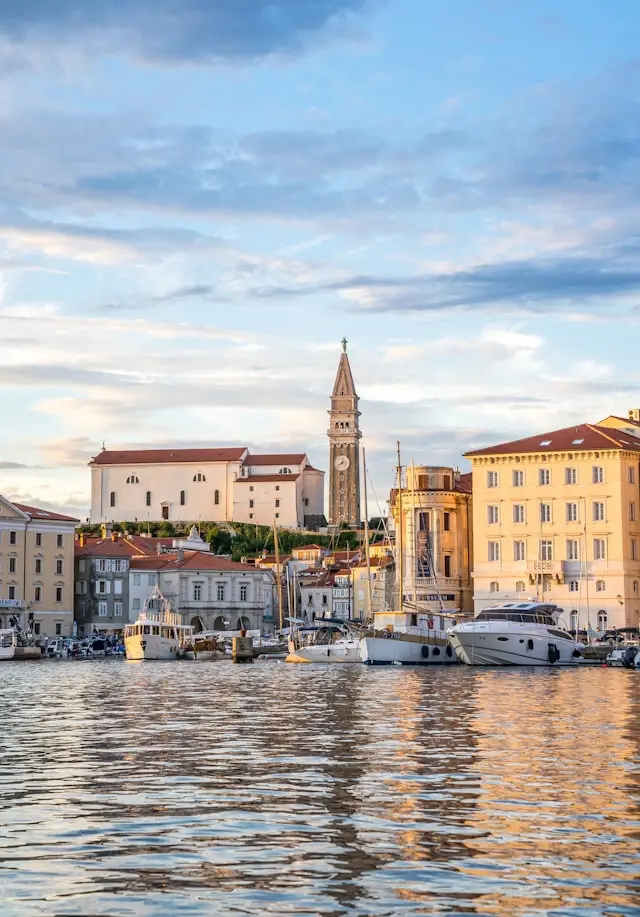
Piran is a small, car-free medieval town on a narrow peninsula at the southern tip of Slovenia's short Adriatic coastline, wedged between Italy and Croatia. Built almost entirely of pale stone, with tightly packed houses, narrow alleys, and a skyline dominated by the bell tower of St. George's Church, it looks and feels like a fragment of Venice that drifted down the coast, a legacy of roughly five centuries of Venetian rule. The town is also officially bilingual, with Slovene and Italian both spoken and used on street signs, reflecting its long-mixed Italian and Slovene population.
Piran's entire old town covers less than a square kilometer, radiating out from Tartini Square, and the whole peninsula can be walked in well under an hour. Unlike the region's larger port of Koper or the beach resort of neighboring Portorož, Piran has kept its historic core largely free of modern development, trading sandy beaches for stone piers, cafés, and one of the best-preserved townscapes on the Adriatic.
Climate & Best Time to Visit
Summer (June–September)
Summer brings hot, dry days, warm sea temperatures good for swimming off the rocks, and Piran's busiest, liveliest atmosphere, with restaurants and the seafront promenade full into the evening. This is also peak season for both crowds and prices, particularly in July and August.
Spring and Autumn (April–May, late September–October)
Shoulder season offers mild, sunny weather well suited to walking the town walls and coastal paths, with noticeably thinner crowds and lower accommodation prices than summer. The sea stays warm enough for swimming into early autumn for those less particular about temperature.
Winter (November–March)
Winters are mild by Slovenian standards thanks to the Adriatic's moderating effect, though it can be windy, damp, and quiet, with many seasonal businesses closed. It's the cheapest and calmest time to see the town's architecture without crowds.

Getting to Piran
Piran has no train station and no airport of its own; the nearest airport is Ljubljana Jože Pučnik Airport, roughly 130 km northeast. There is also no direct rail line to the Slovenian coast, so travelers arriving by train must go to Koper and continue by local bus, a combination that generally takes longer than going directly by bus or car.
The most practical option from Ljubljana is the Arriva intercity bus, which runs directly to Piran in roughly two hours, or via a change in Koper on some services. Piran is also reachable by bus from Trieste, Italy, in under an hour, and in summer, seasonal ferries connect Piran with Venice and, in some seasons, with Rovinj on the Croatian coast.
As Slovenia is part of the European Union and the Schengen Area, most EU/EEA citizens can enter with just a national ID card, while citizens of the US, UK, Canada, Australia, and many other countries can typically visit visa-free for up to 90 days within a 180-day period. Entry rules can change, so it's worth confirming current requirements with official sources shortly before travel.
Transportation in Piran
Walking
Piran's historic center is entirely pedestrian, and its compact size means every major sight, from Tartini Square to the Punta lighthouse, is reachable on foot in ten to twenty minutes. Streets are narrow, stepped in places, and not particularly stroller- or wheelchair-friendly in the oldest quarters.
Parking and the Free Shuttle
Private cars are not allowed into the old town; visitors driving in must leave their car at one of the peripheral garages, most notably Fornače, on the edge of town. A free electric shuttle bus runs frequently between the garages and Tartini Square, making the car-free policy manageable even with luggage.
Regional Buses
Local buses connect Piran with neighboring coastal towns, including Portorož, Izola, and Koper, departing from stops just outside the pedestrian zone, and are a straightforward way to reach beaches or nearby attractions without a car.
Bikes
The old Parenzana railway line, now a long-distance cycling and walking trail linking Slovenia, Italy, and Croatia, passes near Piran and is a popular way to explore the surrounding coast and countryside by bike.
Things to Do in Piran
Tartini Square (Tartinijev trg)
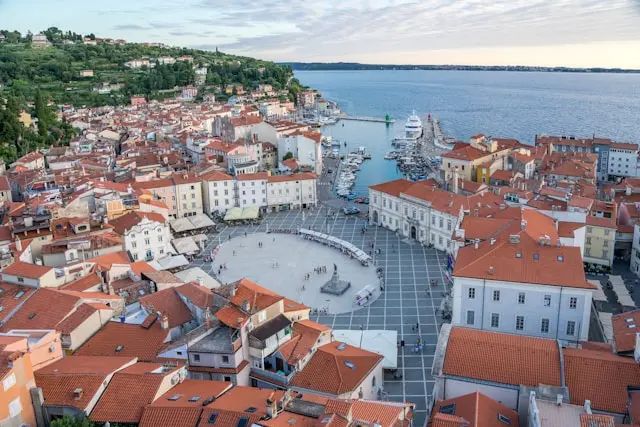
Piran's oval main square, paved in white stone and ringed by Venetian-era buildings, is named after the town's most famous son, violinist and composer Giuseppe Tartini, whose statue stands at its center. It was once the town's inner harbor before being filled in during the early 20th century, and today it's the natural starting point for exploring the old town.
St. George's Parish Church and Bell Tower
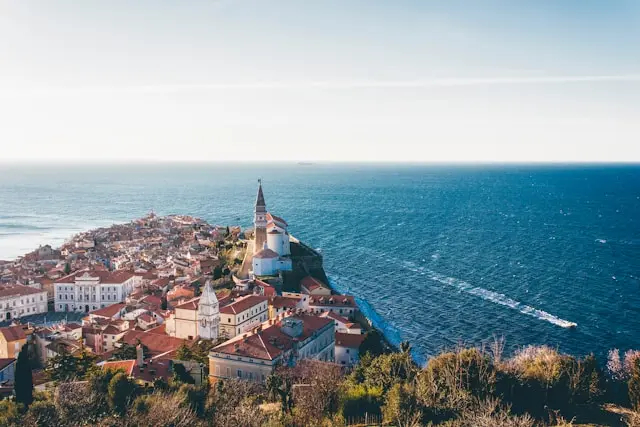
Perched on a hill above the square, this church offers one of the best views in town from the top of its freestanding bell tower, modeled on the campanile of St. Mark's in Venice, reachable by a steep climb up narrow stairs for a small entrance fee.
Punta and the Piran Lighthouse
At the tip of the peninsula, the stone Piran Lighthouse, built in 1818 alongside the round tower of the Church of St. Clement, marks Punta, a favorite spot to watch the sunset with views stretching across the Gulf of Piran toward Italy and Croatia.
Piran Town Walls
A surviving stretch of the town's medieval defensive walls climbs the hillside above the old town and can be walked for panoramic views over the rooftops, the harbor, and the Adriatic beyond.
Sergej Mašera Maritime Museum
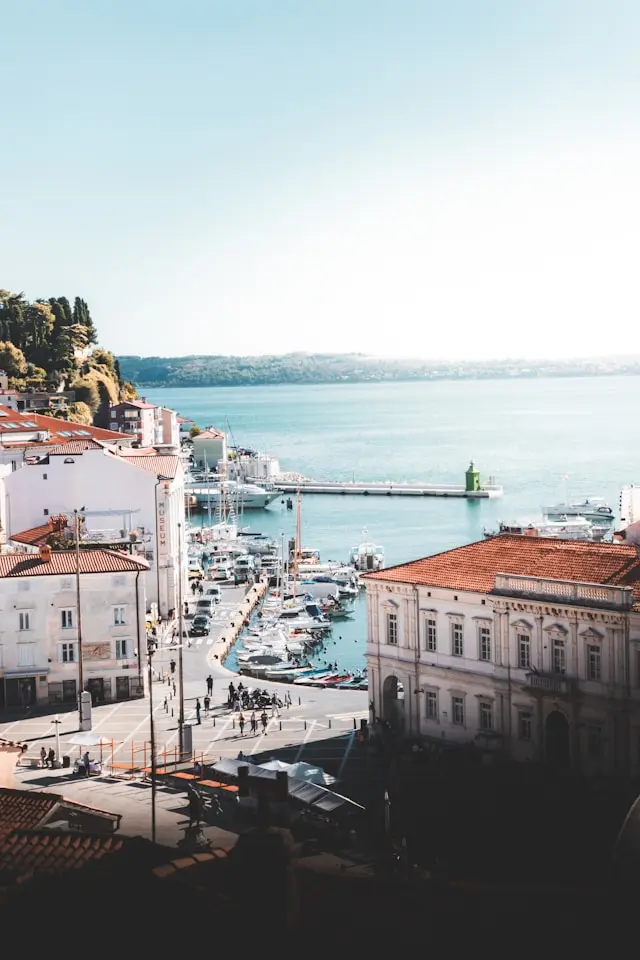
Housed in a 19th-century waterfront palace, this museum traces the region's seafaring, fishing, and salt-making history, with exhibits ranging from ancient Roman amphorae to ship models and antique navigational equipment.
Sečovlje Salina Nature Park
A short trip from the center, this working salt pan has produced salt using traditional methods since medieval times and can be explored on marked paths, with a small museum explaining the harvesting process and a shop selling the region's prized fleur de sel.
Beaches Around Piran
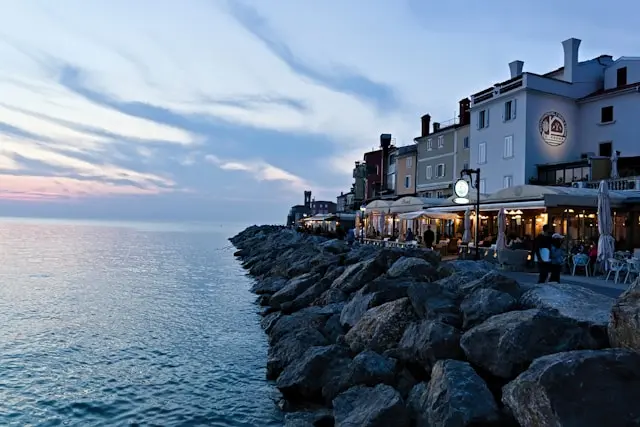
Piran itself has no sandy beach; swimming spots along the promenade and around Punta are flat stone platforms and piers rather than sand, which suits the town's rocky Adriatic coastline. Water shoes are worth packing, since entry points are often stone or pebble rather than soft sand.
Fiesa, about a fifteen-minute walk from the center, has a small pebble beach with calmer, shallower water that suits families, along with a nearby freshwater lake. For a proper sandy beach, Portorož, five to ten minutes away by bus or on foot along the coastal path, is the region's main resort strip, with wide sand, beach clubs, and a livelier, more built-up atmosphere than Piran.

Food in Piran
Piran's food is firmly Adriatic and Italian-influenced: fresh fish and seafood dominate menus, with grilled sea bass, stuffed squid, and seafood pasta among the local staples, often finished with the region's own fleur de sel from the nearby salt pans. Look for smaller, no-frills spots away from the harborfront for better prices, while the restaurants directly on Tartini Square and the waterfront tend to charge a premium for the view.
Istrian influences also show up in local olive oil, wine, and cured meats, and Piran is a good base for trying wines from the surrounding Slovenian Istria region. A floating restaurant in the harbor and family-run konobas (taverns) serving the daily catch are among the more distinctive ways to eat here, alongside simple pizzerias for a cheaper meal.
Accommodation in Piran
Staying inside the historic center puts you within a short walk of Tartini Square, the harbor, and Punta, with rooms in restored old-town buildings offering character but often smaller sizes and no car access right to the door. This area also carries the highest prices, especially in July and August.
Accommodation just outside the pedestrian zone, closer to the Fornače garage and shuttle stop, tends to be more spacious and better value while still being a short walk or shuttle ride from the center. Travelers seeking beach resort amenities alongside easy access to Piran's old town often base themselves in neighboring Portorož instead, trading historic atmosphere for sandy beaches and larger hotels.
Day Trips from Piran
Portorož
Slovenia's main beach resort sits just a few minutes from Piran along the coast, offering sandy beaches, a casino, spa hotels, and a livelier nightlife scene as a contrast to Piran's quieter historic streets.
Koper
Slovenia's largest coastal city and main port, a short bus ride away, has its own Venetian-influenced old town centered on Titov trg (Tito Square), along with the country's rail connection back to Ljubljana.
Izola
A smaller fishing town between Piran and Koper, Izola has a more low-key, local atmosphere, a working harbor, and a growing reputation for good seafood restaurants away from the main tourist crowds.
Trieste, Italy
Just under an hour away by bus, this elegant Italian port city offers grand Habsburg-era architecture, its own historic center, and a very different big-city energy compared to Piran's small scale.
Postojna Cave and Predjama Castle
Around 1.5–2 hours inland, Postojna is one of Europe's largest karst cave systems, explored partly by underground train, and is often paired with nearby Predjama Castle, built directly into a cliff face.
Škocjan Caves
A UNESCO World Heritage cave system around 45 minutes from Piran, Škocjan features dramatic underground canyons and one of the largest known underground chambers in the world, offering a rawer, less commercialized experience than Postojna.
Festivals & Events in Piran
The Piran Saltern Festival, held each August, celebrates the return of saltern families from the nearby Sečovlje salt pans after their traditional summer harvest, with events centered on Tartini Square. Piran's connection to composer Giuseppe Tartini is also marked by classical music concerts and cultural events staged around the town through the summer, taking advantage of the atmospheric setting of the old squares and churches.
Summer more broadly brings a steady calendar of open-air concerts, art exhibitions, and small festivals to Tartini Square and the harborfront, so it's worth checking local listings for what coincides with your visit.

Safety Tips in Piran
- Piran is a very safe town with low crime rates, though normal precautions against petty theft are worth taking in the busiest summer crowds around Tartini Square.
- Swimming areas are mostly rocky rather than sandy, so water shoes help avoid cuts and slips on stone and pebble entry points.
- The old town's narrow, stepped streets can be slippery when wet, so sturdy, non-slip footwear is worth packing.
- Slovenia's general emergency number is 112, which connects to police, fire, and medical services.
- Sun exposure can be intense in summer with little shade directly on the water, so sun protection is important during midday hours.
Budget & Costs in Piran
Piran is one of the pricier destinations on Slovenia's coast, particularly for waterfront dining and accommodation in peak summer, but it's still generally affordable next to comparable towns in nearby Italy or Croatia. A casual seafood meal away from the main square might cost €15–25 per person, while a sit-down dinner with wine on the harborfront can run €35–50 or more.
Museum entry fees are modest, typically €3–5, and simply walking the town, the walls, and the seafront costs nothing. Accommodation is the biggest expense, especially inside the old town in July and August, with meaningfully lower rates available just outside the historic center or in the shoulder seasons.
Local Customs & Etiquette
Piran's bilingual heritage means both Slovene and Italian greetings are understood, and locals generally appreciate visitors attempting either, alongside the fact that English is widely spoken in the tourism industry. A polite greeting such as "dober dan" (good day) or "buongiorno" and a simple "hvala" or "grazie" (thank you) go a long way in shops and restaurants.
Slovenia uses the euro, and cards are accepted in most restaurants and shops, though smaller vendors and market stalls may prefer cash. Tipping around 10% is appreciated for good restaurant service but is not obligatory, and because the old town is car-free, visitors should expect to walk with luggage from the parking garages or bus stop rather than being dropped at their door.

Frequently Asked Questions about Piran
How many days do you need in Piran? +
A single day is enough to see Tartini Square, St. George's Church, the town walls, and Punta, since the old town is small, but staying one or two nights lets you enjoy the quieter evenings after day-trippers leave and add a trip to the Sečovlje salt pans or Portorož.
What is the best time of year to visit Piran? +
June through September is warmest and best for swimming, but also the busiest and priciest; May and late September into October offer mild weather, thinner crowds, and lower prices.
Is Piran expensive? +
It's one of the pricier towns on the Slovenian coast, especially for waterfront dining and summer accommodation, but it remains more affordable than comparable towns in Italy or Croatia, and many of its best sights, like the town walls and squares, are free to see.
Do you need a visa to visit Piran? +
As part of Slovenia, Piran falls under Schengen Area rules; citizens of the US, UK, Canada, Australia, and many other countries can typically visit visa-free for up to 90 days in any 180-day period, though it's worth confirming current requirements before you travel.
Is Piran safe for tourists? +
Yes, Piran has a low crime rate and is considered very safe, with the main practical concerns being slippery stone streets and rocky swimming entry points rather than crime.
How do you get around once you're in Piran? +
The old town is entirely car-free and walkable, a free shuttle connects peripheral parking garages to Tartini Square, and regional buses handle trips to Portorož, Izola, and Koper.
What's the best area to stay in Piran? +
Staying inside the historic center puts you closest to the main sights at the highest price, while rooms just outside the pedestrian zone near the shuttle stop offer more space and value a short walk away; neighboring Portorož suits travelers who want sandy beaches and larger resort hotels.
What should Piran be paired with? +
Piran pairs naturally with Portorož for beach time, with Koper and Izola for a wider look at the Slovenian coast, and with Postojna Cave, Predjama Castle, or the Škocjan Caves for a longer day exploring inland Slovenia.