

Table of Contents
- About Kranjska Gora
- Climate & Best Time to Visit
- Getting to Kranjska Gora
- Transportation in Kranjska Gora
- Things to Do in Kranjska Gora
- Skiing & Winter Sports
- Food in Kranjska Gora
- Accommodation in Kranjska Gora
- Day Trips from Kranjska Gora
- Safety Tips in Kranjska Gora
- Budget & Costs in Kranjska Gora
- Local Customs & Etiquette
About Kranjska Gora
Kranjska Gora is Slovenia's best-known mountain resort town, tucked into the Upper Sava Valley at the far northwestern corner of the country, where Slovenia, Italy, and Austria meet. Ringed by the Julian Alps to the south and the Karawanks range to the north, it has built its identity almost entirely around the mountains: as a ski resort in winter, a hiking and cycling base in summer, and, year-round, the gateway to the Vršič Pass and the wider Triglav National Park.
Unlike Slovenia's historic towns, Kranjska Gora has little in the way of old architecture or grand monuments; its appeal is almost entirely about landscape and access. The compact town center, a scattering of hotels and guesthouses, and easy reach of some of Slovenia's most dramatic alpine scenery make it a practical, low-fuss base for anyone prioritizing mountains over museums.
Climate & Best Time to Visit
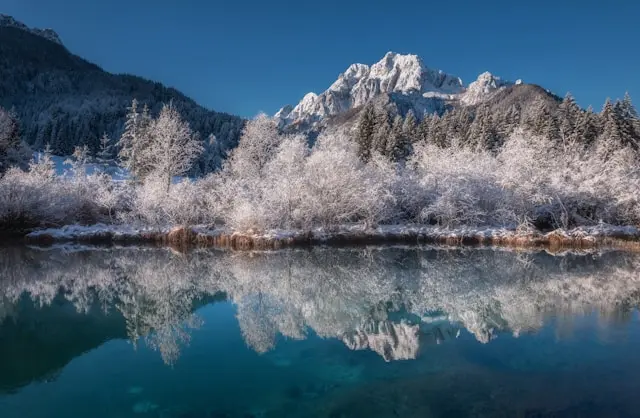
Winter (December–March)
This is Kranjska Gora's headline season, with reliable natural and artificial snow supporting a full ski resort, cross-country trails, and the annual FIS Ski Jumping World Cup Finals at nearby Planica. It's also the busiest and most expensive time to visit, particularly around Christmas, New Year, and February school holidays.
Summer (June–September)
Summer brings warm valley temperatures, long daylight hours, and access to the Vršič Pass, which typically opens once winter snow clears, along with hiking, cycling, and the region's alpine lakes and waterfalls at their best. This is the second-busiest season, especially in July and August.
Spring and Autumn (April–May, October–November)
These shoulder seasons are quieter and cheaper, but come with a catch: the Vršič Pass may still be closed or newly reopened depending on snow, and some seasonal attractions and lifts operate reduced hours or close entirely, so it's worth checking conditions before planning activities around the pass.

Getting to Kranjska Gora
Kranjska Gora has no airport of its own; the nearest is Ljubljana Jože Pučnik Airport, roughly 85 km away, about an hour to an hour and fifteen minutes by car or private transfer. Klagenfurt in Austria and Trieste in Italy are each roughly similar driving distances and can also work as entry points, particularly for visitors already touring the wider Alps region.
There is no direct train to Kranjska Gora; the nearest station is at Jesenice, from where a local bus or taxi covers the final stretch. The most straightforward public transport option from Ljubljana is the direct Arriva bus, which runs several times a day and takes roughly two hours, arriving at a central bus station a short walk from the main square.
As Slovenia is part of the European Union and the Schengen Area, most EU/EEA citizens can enter with just a national ID card, while citizens of the US, UK, Canada, Australia, and many other countries can typically visit visa-free for up to 90 days within a 180-day period. Entry rules can change, so it's worth confirming current requirements with official sources shortly before travel.
Transportation in Kranjska Gora
Walking
The town center itself is small and easily covered on foot, with the bus station, main square, and most hotels within a few minutes of each other.
Car
A car is the most flexible way to explore the wider area, particularly for reaching the Vršič Pass, Zelenci, and the Planica and Vrata valleys at your own pace, and rental cars are available in Ljubljana. Slovenia's motorways require an e-vignette (toll sticker), which is worth arranging before driving on the A2 route from Ljubljana.
Local and Regional Buses
Local buses connect Kranjska Gora with nearby villages and Jesenice, useful for reaching the train network or day-tripping without a car, though schedules can be limited outside peak season.
Bikes
Cycling is popular in the valley, from gentle paths out to Zelenci and Lake Jasna to the well-known Vršič Pass climb, a demanding but celebrated ride for road cyclists.
Things to Do in Kranjska Gora
Vršič Pass
Slovenia's highest mountain road climbs from Kranjska Gora through around 50 hairpin turns to just over 1,600 meters, connecting the Sava valley with the Soča valley on the other side of the Julian Alps. Along the way, the Russian Chapel commemorates World War I soldiers who died building the road, and numerous pull-offs offer sweeping alpine views; the drive takes over 90 minutes with stops, and the road typically closes in heavy winter snow.
Lake Jasna
A pair of small artificial lakes about 2 km from the town center, Lake Jasna is known for its striking turquoise-green water, a bronze ibex statue on its shore, and mountain views that make it one of the most photographed spots in the area. It's an easy walk or short drive from town and a popular stop for swimming, paddleboarding, or simply sitting by the water.
Zelenci Nature Reserve
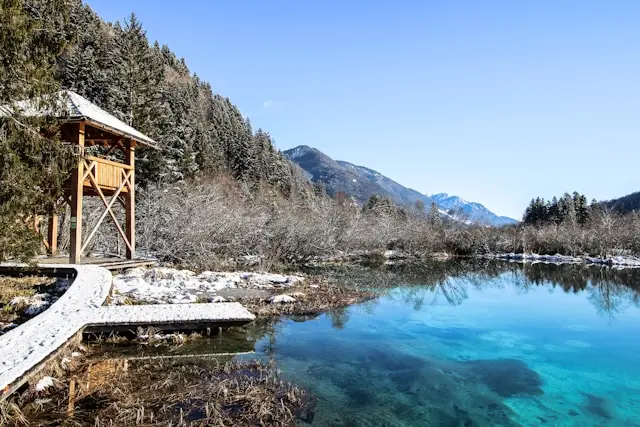
A protected wetland at the source of the Sava Dolinka River, Zelenci is known for its vividly emerald spring waters, wooden walkways, and rich birdlife, reached via an easy walking or cycling path from Kranjska Gora or a short drive toward Rateče.
Planica Nordic Centre
Home to the world's highest ski flying hill and host of the annual FIS Ski Jumping World Cup Finals, Planica is a major destination in winter and offers summer activities too, including walking up to the ski jump platforms and one of the steepest ziplines in the world.
Peričnik Waterfall
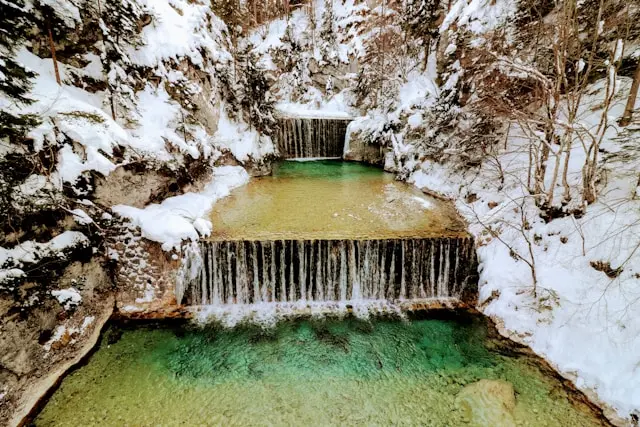
In the Vrata Valley within Triglav National Park, this two-tiered waterfall is one of the most impressive in the region, reached by a scenic but somewhat steep and occasionally wet trail, with a path that passes behind the upper falls.
Tamar Valley
A peaceful glacial valley beyond Planica, Tamar offers an easy, mostly flat walk of around 10 km round trip to a mountain hut, with dramatic views of Jalovec and other high peaks, making it a good option for a rewarding walk without serious elevation gain.
Skiing & Winter Sports
Kranjska Gora is Slovenia's most famous ski resort, with slopes suited to all levels: the Vitranc area offers everything from gentle beginner runs to the steep competition pistes used for the annual Pokal Vitranc World Cup slalom, while Podkoren adds further terrain nearby. Off-piste options range from gentle descents on the Karavanke summits to serious, guide-recommended routes for experienced skiers.
The ski season generally runs from late November to early April, supported by snowmaking on much of the terrain, and the resort also offers cross-country skiing trails through the valley, notably around Planica and Tamar. Outside of skiing, winter visitors can also watch or attend the Ski Jumping World Cup Finals at Planica, one of the sport's marquee annual events.

Food in Kranjska Gora
Kranjska Gora's food reflects its position at the crossroads of Slovenia, Italy, and Austria: expect hearty alpine dishes like goulash, dumplings, and game alongside more Italian-leaning options such as pizza and pasta, a reflection of the town's proximity to the Italian border. A traditional four-layer Slovenian cake combining plum, chestnut, buckwheat, and cottage cheese fillings, representing different regions of the country, is a local specialty worth seeking out.
Restaurants cluster around the main square and larger hotels, with mountain huts (koče) along hiking routes like the Vršič Pass offering simple, hearty meals and drinks for walkers and cyclists. Because the town sits just a few kilometers from Italy, some visitors cross the border to Tarvisio for its weekly Thursday market and generally lower grocery prices.
Accommodation in Kranjska Gora
Central Kranjska Gora, within walking distance of the main square and bus station, offers the most convenient base, with a mix of larger resort hotels, guesthouses, and self-catering apartments. Ski-in/ski-out options exist closer to the Vitranc slopes for visitors prioritizing direct access to the pistes in winter.
Rates rise sharply in peak ski season (December through February) and again in July and August, with the shoulder months offering better value, provided the attractions you want, like the Vršič Pass, are open. Travelers looking for a lower-cost alternative to Kranjska Gora's resort pricing sometimes base themselves in nearby villages or consider Bohinj's Vogel ski area as a cheaper regional comparison.
Day Trips from Kranjska Gora
Soča Valley
Reached via the Vršič Pass, the Soča Valley on the other side of the Julian Alps is known for its brilliant turquoise river, whitewater rafting and kayaking, and towns like Bovec and Kobarid, making it a natural full-day extension of a Vršič Pass drive.
Lake Bled and Lake Bohinj
Both lakes are around 35–40 km away on quiet valley roads without motorway driving, making them an easy day trip for visitors who want to pair Kranjska Gora's mountains with Bled's castle-and-island scenery or Bohinj's quieter alpine lake.
Tarvisio, Italy
Just a few kilometers across an unmanned Schengen border crossing at Rateče, this Italian mountain town offers a change of pace, a weekly market, and its own network of alpine trails and ski slopes.
Ljubljana
Slovenia's capital is roughly 85 km and about an hour to an hour and a half away by car or bus, making it feasible as a long day trip or a stop on the way in or out, with its old town, castle hill, and riverside cafés offering a complete change of scene from the mountains.
Triglav National Park
Kranjska Gora sits at the edge of Slovenia's only national park, home to Mount Triglav, the country's highest peak, and a wider network of valleys and trails, including the Krnica, Krma, and Vrata valleys, all reachable from town for day hikes of varying difficulty.

Safety Tips in Kranjska Gora
- The Vršič Pass involves narrow hairpin turns and no guardrails in places; it's best driven cautiously by confident drivers and is not recommended in poor weather or for those uneasy with mountain roads.
- Mountain weather can change quickly, so check conditions and pack layers before hiking, even on routes that look easy at the trailhead, such as Peričnik or Tamar.
- In ski season, stay within marked and open runs unless skiing with a qualified guide, since off-piste terrain carries avalanche risk.
- Slovenia's general emergency number is 112, which connects to police, fire, and medical services, and also handles mountain rescue coordination.
- Sturdy footwear is worth packing even for summer visits, since several of the area's best short walks, including to waterfalls, involve uneven or occasionally wet terrain.
Budget & Costs in Kranjska Gora
As Slovenia's premier ski resort, Kranjska Gora carries a price premium compared to many other Slovenian destinations, particularly for accommodation and ski passes during peak winter weeks. A simple meal might cost €10–18, while a sit-down dinner with drinks can run €25–40 per person, with mountain hut meals along hiking routes generally cheaper and simpler.
Ski lift passes, equipment rental, and lessons add up quickly in winter and are worth comparing against neighboring resorts if cost is a priority. Outside peak winter and summer weeks, prices ease noticeably, and many of the area's best attractions, including Lake Jasna, Zelenci, and most hiking trails, cost nothing to visit.
Local Customs & Etiquette
As throughout Slovenia, a simple greeting such as "dober dan" (good day) and "hvala" (thank you) is appreciated, even though English and, given the region's location, some Italian and German are also commonly understood. On mountain trails, it's customary to greet other hikers with a simple "hello" or "dober dan" in passing, a small courtesy widely observed in the Julian Alps.
Slovenia uses the euro, and cards are accepted at most hotels, restaurants, and larger shops, though smaller mountain huts along hiking trails may prefer or only accept cash. Tipping around 10% is appreciated for good restaurant service but not obligatory, and given the area's border location, it's not unusual for menus, signage, or staff to switch comfortably between Slovene, Italian, German, and English.

Frequently Asked Questions about Kranjska Gora
How many days do you need in Kranjska Gora? +
Two to three days cover the main sights, including Lake Jasna, Zelenci, and a drive over the Vršič Pass, while a ski trip typically runs a long weekend to a full week depending on how many days on the slopes you want.
What is the best time of year to visit Kranjska Gora? +
December through March is best for skiing and winter sports, while June through September suits hiking, cycling, and driving the Vršič Pass once it's clear of snow; spring and autumn are quieter but come with the risk of the pass or some attractions being closed.
Is Kranjska Gora expensive? +
It's one of Slovenia's pricier destinations, especially for accommodation and ski passes in peak season, though many of its best natural attractions are free to visit and costs ease considerably outside the winter and summer peaks.
Do you need a visa to visit Kranjska Gora? +
As part of Slovenia, Kranjska Gora falls under Schengen Area rules; citizens of the US, UK, Canada, Australia, and many other countries can typically visit visa-free for up to 90 days in any 180-day period, though it's worth confirming current requirements before you travel.
Is Kranjska Gora safe for tourists? +
Yes, it's a safe destination overall, with the main practical risks being mountain-specific: the Vršič Pass's hairpin turns, fast-changing alpine weather, and, in winter, avalanche risk on off-piste terrain.
How do you get around once you're in Kranjska Gora? +
The town center is walkable, a car is the most flexible way to reach the Vršič Pass and outlying valleys, and local buses cover some connections to Jesenice and nearby villages.
What's the best area to stay in Kranjska Gora? +
The central town near the main square offers the most convenient base for restaurants and transport, while hotels closer to the Vitranc slopes suit skiers wanting direct piste access.
What should Kranjska Gora be paired with? +
Kranjska Gora pairs naturally with the Soča Valley over the Vršič Pass, with Lake Bled and Lake Bohinj as nearby day trips, and with Ljubljana as a longer stop on the way in or out of the region.