

Table of Contents
About Cork
Cork is Ireland's second-largest city and the proud capital of the country's largest county, sitting on an island formed by two channels of the River Lee in the southwest of the country. Locals call it "the Rebel City," a nod to its long history of standing apart from Dublin, and many Corkonians will happily tell you it's the "real capital" of Ireland - usually with a grin, but they mean it.
The city center is compact, walkable, and built around water: bridges cross the Lee at every turn, and quays and narrow lanes give it a character distinct from Ireland's other cities. Cork punches well above its size for food, with the English Market at its heart, a lively pub and live-music scene, and a university-town energy from University College Cork (UCC). It's also a natural base for exploring the rest of County Cork, from Kinsale's harbor to the wild coastline of West Cork.
Best Time to Visit & Climate
Cork has a mild, wet, maritime climate typical of Ireland's south coast - think layered clothing and a packable rain jacket in any season. Summers (June to August) are the warmest and driest stretch, with daytime highs typically in the high teens Celsius (around 64–68°F), long daylight hours, and the busiest visitor numbers. Winters (December to February) are mild rather than cold, with temperatures usually staying above freezing, but short days and frequent rain.
Spring and early autumn (April–May and September) are a good middle ground: fewer crowds, decent weather, and events like Cork Midsummer Festival and the Cork International Film Festival bookending the calendar. Rain is possible year-round, so don't build a trip around chasing dry weather - plan for it instead.
- Warmest, driest months: June–August
- Quietest, mildest shoulder season: April–May and September–October
- Pack for rain no matter when you go

Getting to Cork
By Air
Cork Airport (ORK) sits about 6 km south of the city center and handles a range of flights to Britain and continental Europe, plus some seasonal transatlantic and long-haul connections. Many international travelers instead fly into Dublin Airport and continue on to Cork by bus or train, since Dublin has far more long-haul routes.
By Train
Cork's main railway station, Kent Station, is on the Lower Glanmire Road, about a 10-minute walk from the city center. Irish Rail runs frequent direct services from Dublin's Heuston Station, with a journey time of roughly two and a half to three hours, as well as connections to towns across Munster.
By Bus
Parnell Place Bus Station is Cork's main hub for Bus Éireann and other intercity coach services, including direct routes from Dublin Airport. It's an affordable, if slower, alternative to the train, with journey times of around three to three and a half hours from Dublin.
Getting Around Cork
Central Cork is small and flat enough to explore almost entirely on foot - the main shopping streets, the English Market, St. Fin Barre's Cathedral, and UCC are all within easy walking distance of one another. For destinations further out, such as the northside neighborhoods or the airport, Bus Éireann operates the city's local bus network, with routes converging on the city centre and Parnell Place.
- Walking: the most practical way to see the compact city center
- Local buses: Bus Éireann city routes link the centre to the suburbs, university, and airport
- Bike share: shared bikes are available for short hops around the city
- Taxis: metered and widely available, especially around Kent Station and the city centre
Neighborhoods to Explore
City Centre & St. Patrick's Street
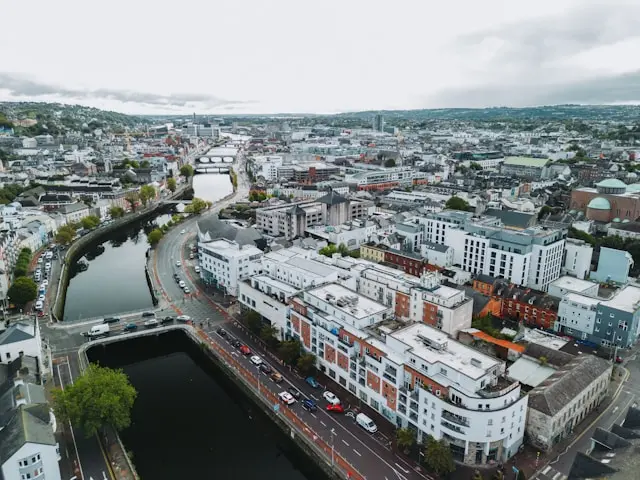
The commercial heart of Cork sits on the island between the Lee's two channels. St. Patrick's Street - known locally as "Pana" - is the main shopping thoroughfare, with the historic English Market and a web of independent shops on the surrounding lanes.
Shandon
North of the river and up a noticeable hill, Shandon is Cork's old northside quarter, home to the Shandon Bells at St. Anne's Church and the Butter Museum. It has a more residential, historic feel than the busier centre.
Victorian Quarter
Centered on MacCurtain Street near Kent Station, this area is known for its restaurants, cafés, and nightlife, and makes a good base for arriving by train.
University College Cork & Sunday's Well
West of the centre, the leafy UCC campus and the riverside Sunday's Well area have a quieter, academic character, with Fitzgerald Park and the Crawford Art Gallery nearby.
Things to Do in Cork
Cork rewards wandering, but a few sights are worth planning around. The English Market, trading continuously since the late 18th century, is the city's most-loved landmark - a covered Victorian-era market hall full of butchers, fishmongers, and stalls selling Cork specialties.
St. Fin Barre's Cathedral, a Gothic Revival landmark with three spires, and Cork City Gaol, a preserved 19th-century prison turned museum, both offer a look at the city's history. The Crawford Art Gallery houses Ireland's national collection outside Dublin, and the Shandon Bells at St. Anne's Church let visitors climb the tower and ring the bells over the city.
- English Market - historic covered food market in the city centre
- St. Fin Barre's Cathedral - Gothic Revival cathedral with striking spires
- Cork City Gaol - restored 19th-century prison with exhibits on its history
- Shandon Bells at St. Anne's Church - climb the tower and ring the famous bells
- Crawford Art Gallery - Cork's leading art museum, free to enter
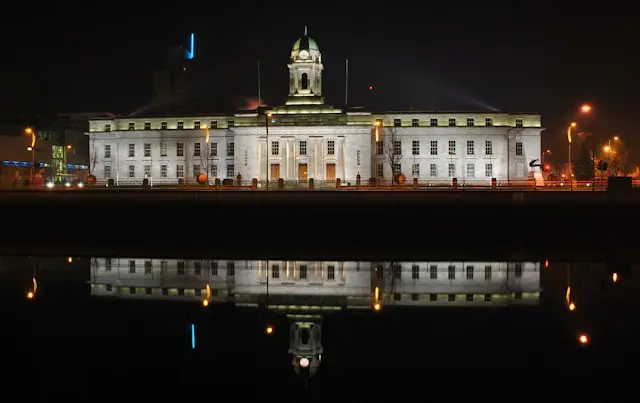
- Cork City Hall - riverside neo-classical building with a distinctive green dome
- Fitzgerald Park - riverside park near UCC, good for a walk or picnic

Food in Cork
Cork's food reputation rivals Dublin's, built on proximity to fresh Atlantic seafood, West Cork dairy and artisan cheese, and a strong farm-to-table culture. The English Market is the best starting point: browse stalls for local specialties like spiced beef (traditionally eaten around Christmas), tripe and drisheen, and the Farmgate Café's upstairs balcony overlooking the market floor.
Beyond the market, MacCurtain Street and the surrounding Victorian Quarter have a dense cluster of restaurants and cafés, while the city's pubs - many of them generations-old family businesses - are as much about food and conversation as they are about pints.
- Try Cork specialties like spiced beef, drisheen, and crubeens
- The English Market is the best single stop for local produce and prepared food
- MacCurtain Street and the Victorian Quarter have Cork's densest restaurant scene
- Seafood is a strength of the city, given its position on Cork Harbour
Day Trips from Cork
Blarney Castle
About 8 km northwest of the city, Blarney Castle is famous for the Blarney Stone, said to grant the gift of eloquence to those who kiss it. The surrounding gardens and grounds are worth a half-day visit on their own.
Cobh
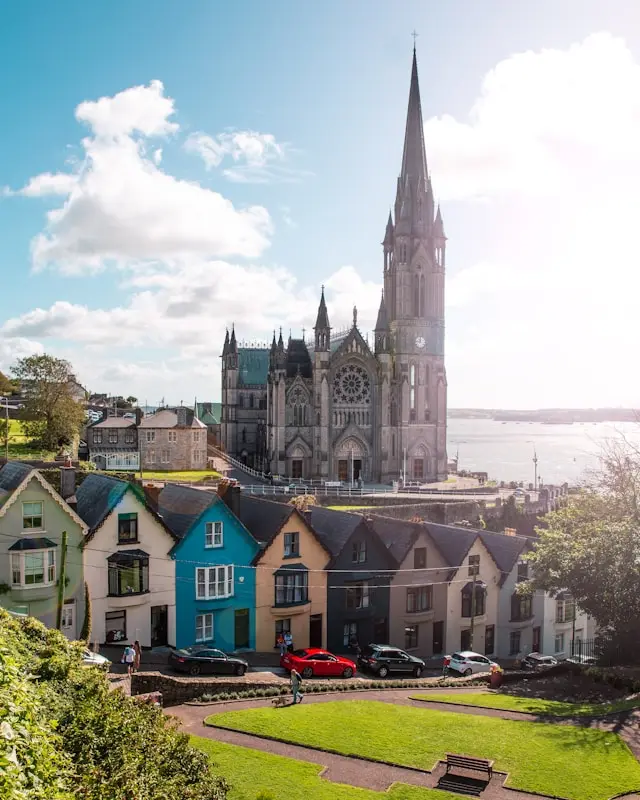
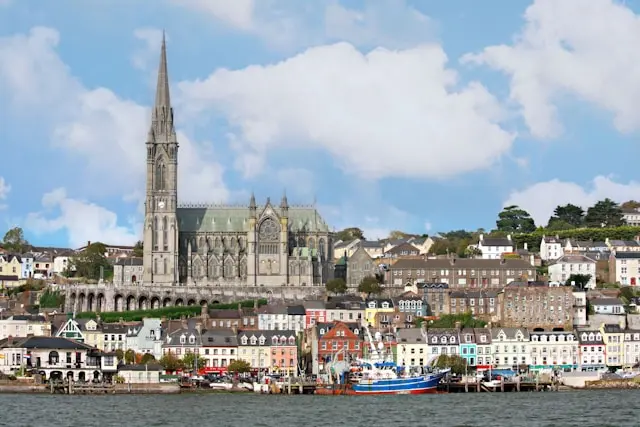
A short train ride from Kent Station, the harbor town of Cobh was the Titanic's final port of call in 1912. The Titanic Experience Cobh and the town's brightly colored waterfront houses make it a popular half-day trip.
Kinsale
A scenic fishing town about 25 km south of Cork, Kinsale is known for its harbor, colorful streets, historic forts, and strong dining scene - it's often called one of Ireland's best food towns in miniature.
Fota Wildlife Park
Located on Fota Island between Cork and Cobh and reachable by train, this open-range wildlife park is a popular family day trip, with animals including giraffes, cheetahs, and lemurs roaming in naturalistic enclosures.

Accommodation in Cork
Staying in the City Centre puts the English Market, St. Patrick's Street, and most sights within walking distance, and suits visitors who want to explore on foot without relying on transport. The Victorian Quarter near Kent Station is a convenient choice for anyone arriving by train, with a strong concentration of restaurants and bars nearby.
For a quieter base, the area around UCC and Sunday's Well offers a more residential feel while still being a manageable walk from the centre. Budget travelers will find hostels and guesthouses clustered around the city centre and near the train and bus stations.
Local Customs & Safety Tips
Cork is generally a safe city for visitors, and the compact centre is easy to navigate on foot, day or night. As in any city, it's sensible to keep an eye on belongings in crowded areas like the English Market or on busy pub streets late at night, and to use licensed taxis rather than unmarked cars.
Tipping isn't obligatory in Ireland but is appreciated: around 10% at restaurants for good service is typical, and rounding up is common for taxis and casual meals. Corkonians are known for being chatty and proud of their city - a light-hearted debate about whether Cork or Dublin is the "real capital" is practically a local tradition, and locals often refer to the city and its people as "Leeside" and "Leesiders."
- Emergency number: 112 or 999
- Tipping around 10% at restaurants is customary but not mandatory
- Keep valuables secure in crowded market and nightlife areas
- Use licensed taxi ranks, particularly late at night
Budget & Costs in Cork
Ireland is a relatively expensive country to visit, and Cork is no exception, though it's generally somewhat cheaper than Dublin. Budget travelers can get by on hostel dorms, market food, and walking or public transport, while mid-range visitors should expect standard Western European city prices for hotels and restaurant meals.
- Budget: hostel dorms, market stalls and cafés, walking over taxis
- Mid-range: three- to four-star hotels, sit-down restaurant meals, occasional taxis
- Splurge: boutique hotels, tasting menus, private day-trip tours to West Cork

Frequently Asked Questions about Cork
How many days do you need in Cork? +
Two to three days is enough to see the city centre's main sights and enjoy its food scene, especially if you add a day trip to Kinsale, Cobh, or Blarney Castle.
What is the best time of year to visit Cork? +
Late spring through early autumn (May to September) offers the mildest, driest weather, though rain is possible year-round, so pack accordingly whenever you go.
Is Cork expensive to visit? +
Cork is generally somewhat cheaper than Dublin but still reflects Ireland's overall high cost of living, so budget for above-average Western European prices on accommodation and dining.
Do I need a visa to visit Cork? +
Ireland's visa requirements depend on your nationality, so check current entry requirements with Irish immigration authorities or your travel provider before booking, since these rules can change.
Is Cork safe for visitors? +
Cork is generally considered a safe city, and its compact centre is easy to walk around, though it's still wise to take standard urban precautions like watching your belongings in crowded areas.
How do you get around Cork without a car? +
Cork's city centre is compact enough to explore on foot, and Bus Éireann's local network covers the suburbs, university area, and airport for anywhere outside easy walking distance.
What's the best area to stay in Cork? +
The City Centre is the most convenient base for sightseeing on foot, while the Victorian Quarter near Kent Station suits travelers arriving by train and looking for a strong choice of restaurants nearby.
What should I pair a Cork trip with? +
Kinsale, Cobh, Blarney Castle, and Fota Wildlife Park are all easy day trips from Cork, and the city also makes a good starting point for exploring the wider West Cork coastline.