

Table of Contents
About Dingle
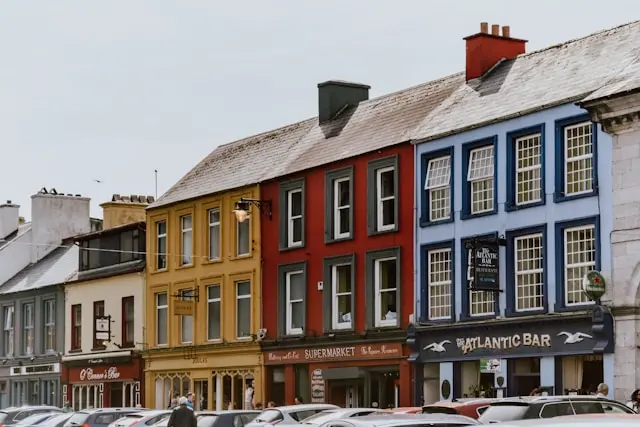
Dingle is a small, colorful fishing town on Ireland's southwest coast, the only town on the Dingle Peninsula in County Kerry. Set on a natural harbor and looking out toward the Atlantic, it's known for brightly painted shopfronts, a working fishing fleet, traditional music pubs, and a reputation as one of the best food towns in Ireland relative to its size.
With a population of under 2,000, Dingle is tiny, but it punches well above its weight as a base for exploring the wider peninsula - a landscape of cliffs, beaches, prehistoric stone forts, and mountain passes along the Wild Atlantic Way. Dingle is also part of the Gaeltacht, meaning Irish is the everyday language of the area alongside English, and you'll see the town's name written as An Daingean on local signage.
Best Time to Visit & Climate
Dingle has a mild but changeable Atlantic climate, cool and wet for much of the year with a relatively narrow temperature range. The warmest months, June through September, typically bring highs in the low-to-mid teens Celsius (around low 60s°F), while November through February is the coldest stretch, with highs generally only reaching the low teens Celsius (around low 50s°F).
Shoulder season - April, May, and September - is widely considered the best time to visit: long daylight hours, fewer crowds on Slea Head Drive, and a more relaxed atmosphere in town than peak summer. Dingle is a seasonal destination, and some tours and attractions scale back outside spring through autumn, so it's worth checking opening times if visiting in winter.
- Best balance of weather and crowds: April, May, and September
- Warmest months: June–September
- Quietest and coolest: November–February, with some services reduced

Getting to Dingle
By Car
Renting a car is the easiest and most flexible way to reach Dingle and explore the peninsula, since public transport options are limited and much of the area's appeal lies in stopping freely along the coast. Dingle is roughly a 90-minute drive from Killarney and about an hour from Tralee.
By Bus
Dingle is accessible by bus from Tralee and Killarney, with onward connections to Dublin, Cork, and Limerick, though services are less frequent than in larger towns.
By Train
There's no direct rail line to Dingle. The nearest station is in Tralee, reachable from Dublin (changing at Mallow) or Cork, with a bus or taxi needed to complete the journey to Dingle.
By Air
Kerry Airport, about 20 km from Dingle, is the closest airport, though flight options are limited. Most visitors fly into Cork, Shannon, or Dublin and continue on by car.
Getting Around Dingle & the Peninsula
Dingle town itself is small and entirely walkable, with the harbor, main shops, and pubs all within a few minutes of each other on foot. Exploring the wider peninsula is a different story: a car is the most practical way to see sites like Slea Head Drive, Conor Pass, and the Blasket Islands viewpoints at your own pace.
- Walking: covers Dingle town in full
- Rental car: the most flexible way to explore Slea Head Drive and Conor Pass
- Bike rental: available in town for cyclists tackling parts of the peninsula
- Guided tours and local drivers: a good option for visitors without a car
Things to Do in Dingle Town
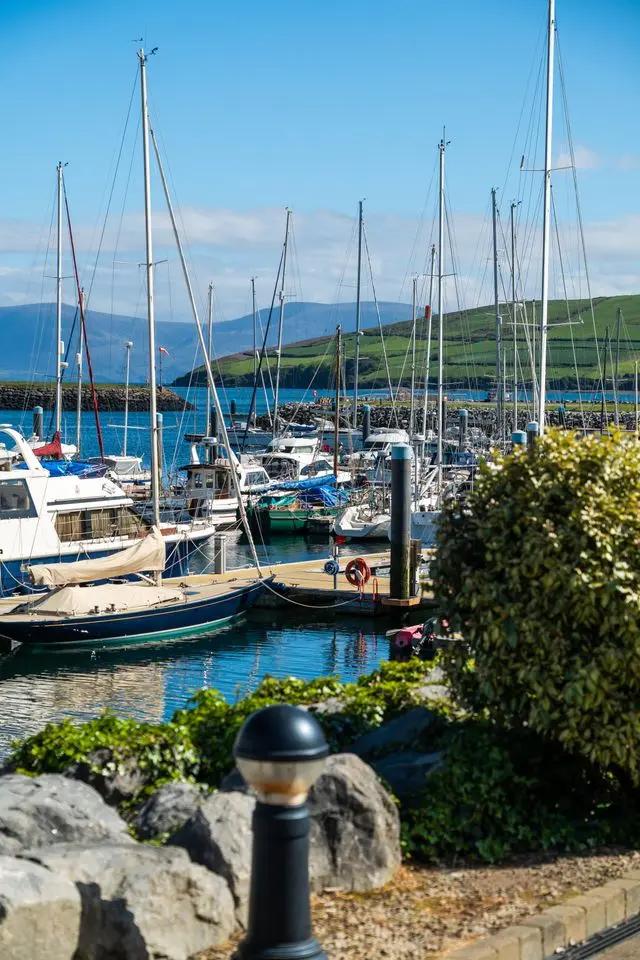
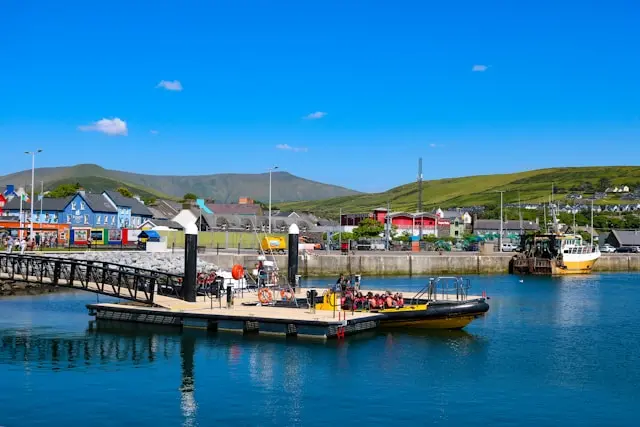
Dingle's small harbor is the heart of the town, lined with working fishing boats and the departure point for boat trips into Dingle Bay. St. Mary's Church and St. Brendan's House offer a look at the town's history, while the surrounding streets are dotted with independent craft shops and galleries.
- Dingle Harbour - working fishing port and starting point for boat trips
- Dingle Distillery - small-batch gin, vodka, and whiskey distillery offering tours
- Colorful Main Street & Strand Street - painted shopfronts, craft shops, and galleries
- St. Mary's Church - historic church in the town center
Slea Head Drive & the Dingle Peninsula
Slea Head Drive
A roughly 46 km signposted loop around the western tip of the peninsula, Slea Head Drive is often considered a highlight of the Wild Atlantic Way and, by some travelers, even more scenic than the more famous Ring of Kerry. Expect at least three hours with stops for coastal viewpoints, beehive huts, and small heritage sites along the route.
Conor Pass
One of Ireland's highest mountain passes, Conor Pass climbs to roughly 456 meters on a narrow, winding road with sweeping views over lakes, waterfalls, and the coastline below. The drive is short - about 12 km from Dingle town - but the tight turns and steep drops mean it's not recommended for nervous drivers.
Inch Beach
A dramatic 5 km stretch of sand on the peninsula's southern side, popular for walking and surfing, with views across Dingle Bay.
Blasket Islands
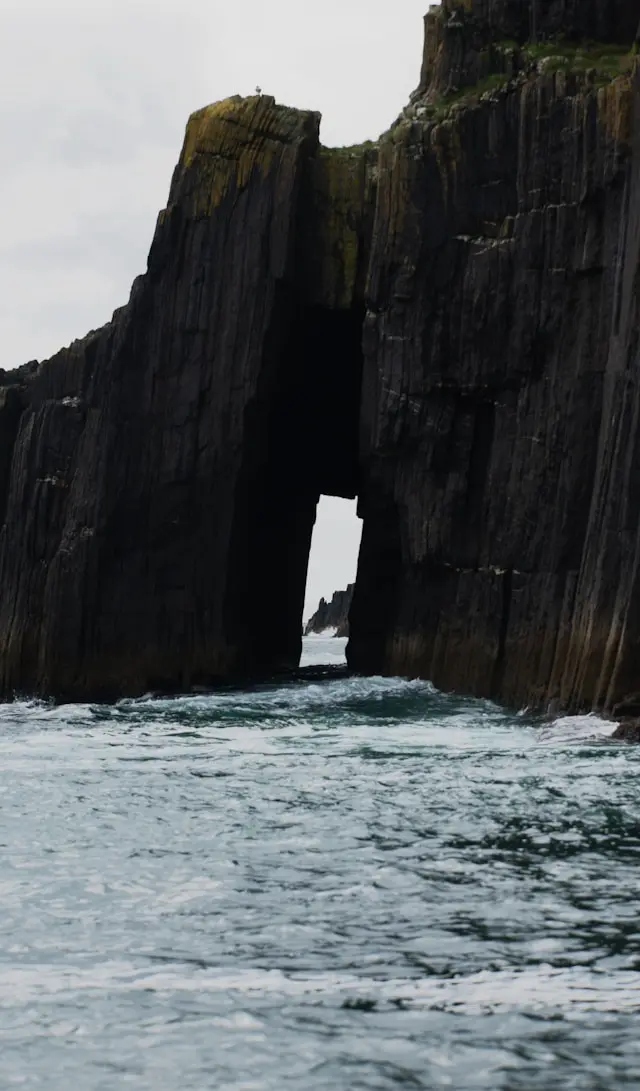
Once home to a small Irish-speaking community, the now-uninhabited Blasket Islands are reachable by boat tour from the peninsula and are known for their dramatic scenery and abundant birdlife.

Food & Pubs in Dingle
Dingle has an outsized reputation for food given its size, built on fresh local seafood landed at its own harbor. The town's pubs are equally well regarded - several double as something else entirely, from hardware stores to grocers, a old Irish tradition still alive in Dingle - and many host regular sessions of traditional Irish music.
- Seafood is a highlight, drawing directly on the local fishing fleet
- Several pubs are also functioning shops, a distinctly Dingle tradition
- Live traditional music sessions are common in the town's pubs most evenings
- Dingle Distillery offers tastings and tours for visitors interested in local spirits
Local Customs & the Gaeltacht
Dingle sits within the Gaeltacht, a designated Irish-speaking region, and it's common to see shopfronts, street signs, and business names in Irish first, sometimes exclusively. English is spoken everywhere and visitors won't have trouble getting around, but the local use of Irish is a genuine part of daily life here rather than a tourist display.
Tipping isn't obligatory in Ireland but is appreciated, with around 10% typical at restaurants for good service. As in much of rural Kerry, locals are generally friendly and happy to chat, and striking up a conversation in a pub is a normal part of the Dingle experience.

Accommodation in Dingle
Staying in Dingle town puts the harbor, restaurants, and pubs within walking distance, and is the most convenient base for visitors without a car who plan to join guided tours of the peninsula. Guesthouses and B&Bs are common both in town and scattered along the peninsula's coastal roads, some offering direct sea views.
Because Dingle is a popular stop on Wild Atlantic Way road trips, accommodation can book up quickly in peak summer, so reserving ahead is worthwhile for visits between June and August.
Safety Tips in Dingle
Dingle is a small, welcoming town and generally very safe for visitors, both in town and while exploring the peninsula. The main safety consideration is the road network itself: routes like Slea Head Drive and especially Conor Pass are narrow, winding, and often shared with tour coaches, cyclists, and livestock, so cautious, attentive driving matters more than in most parts of Ireland.
- Emergency number: 112 or 999
- Drive cautiously on Conor Pass and Slea Head Drive - narrow roads, sharp bends, and sheer drops
- Check weather and road conditions before driving Conor Pass, especially outside summer
- Watch for changeable coastal weather when walking cliff paths or beaches
Budget & Costs in Dingle
As a small but popular tourist town, Dingle's accommodation and dining prices climb in peak summer, when demand along the Wild Atlantic Way is highest. Outside of a rental car, which is close to essential for seeing the peninsula properly, costs are broadly comparable to other rural Irish towns.
- Budget: B&B stays, pub lunches, self-driving the peninsula rather than joining paid tours
- Mid-range: hotel stays in town, seafood dinners, a guided Slea Head or Blasket Islands boat tour
- Splurge: coastal accommodation with sea views, private day tours, distillery tastings

Frequently Asked Questions about Dingle
How many days do you need in Dingle? +
One day covers Dingle town and a drive around Slea Head, but two days is a better fit if you also want time for Conor Pass, Inch Beach, or a Blasket Islands boat trip.
What is the best time of year to visit Dingle? +
April, May, and September offer the best mix of good weather, long daylight hours, and lighter crowds compared to peak summer.
Do you need a car to visit Dingle? +
Dingle town itself is walkable, but a rental car is close to essential for exploring the wider peninsula, including Slea Head Drive and Conor Pass, since public transport options are limited.
Is Dingle expensive to visit? +
Prices rise in peak summer given how popular the peninsula is on Wild Atlantic Way road trips, but overall costs are comparable to other rural towns in County Kerry.
Is Dingle safe for visitors? +
Dingle town is very safe, and the main safety consideration for visitors is careful driving on the peninsula's narrow, winding roads like Conor Pass rather than any concern in town itself.
Is Slea Head Drive or the Ring of Kerry better? +
Both are among Ireland's best scenic drives; Slea Head Drive is shorter and often felt to be more dramatic and less crowded, while the Ring of Kerry covers a larger loop with its own well-known highlights.
What's the best area to stay in Dingle? +
Staying in Dingle town center is most convenient for restaurants, pubs, and tours, while accommodation along the peninsula's coastal roads suits travelers who want direct sea views and don't mind driving in each day.
What should I pair a Dingle trip with? +
Dingle pairs naturally with the rest of the Wild Atlantic Way, and many visitors combine it with Killarney and the Ring of Kerry as part of a broader County Kerry road trip.