

Table of Contents
About Kilkenny
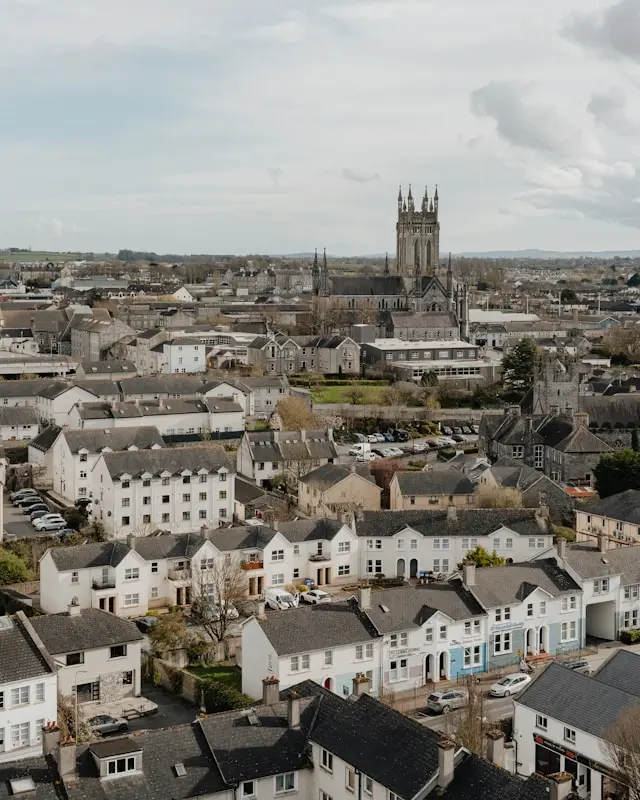
Kilkenny is a small city in southeast Ireland, straddling the River Nore in the province of Leinster. Nicknamed "the Marble City" for the dark limestone once quarried nearby and used throughout its historic buildings, it's widely considered one of Ireland's best-preserved medieval towns and a favorite day trip or overnight stop from Dublin, about an hour and a half away.
The city's compact core is anchored by Kilkenny Castle at one end and St. Canice's Cathedral at the other, connected by the self-guided walking route known as the Medieval Mile. Cobbled lanes, 17th-century passageways known as "slips," old-fashioned shopfronts, and a dense cluster of traditional pubs give Kilkenny a distinct, well-preserved character that's easy to take in over a day or two.
Best Time to Visit & Climate
Kilkenny shares Ireland's mild, temperate climate, with warm-ish summers and cool, wet winters rather than dramatic seasonal extremes. Summer (June to August) brings the mildest temperatures, generally in the high teens Celsius (around 64–68°F), long daylight hours, and the liveliest atmosphere in the city's pubs and outdoor spaces.
Late spring and early autumn offer a good compromise between decent weather and quieter streets, since Kilkenny draws heavy day-trip traffic from Dublin in peak summer. As with the rest of Ireland, rain is possible in any season, so pack a waterproof layer regardless of when you visit.
- Warmest, liveliest months: June–August
- Quieter with still-decent weather: May and September
- Rain gear is worth packing year-round

Getting to Kilkenny
By Train
Kilkenny MacDonagh Station sits on the Dublin–Waterford intercity line, with regular direct trains from Dublin's Heuston Station taking around one and a half hours. The station is a short walk or bus ride from the city center.
By Bus
Regular coach services connect Kilkenny with Dublin and other major towns, offering a budget-friendly alternative to the train with journey times of roughly two hours from Dublin.
By Car
Kilkenny is an easy drive from Dublin via the M9 motorway, taking around ninety minutes, and makes a convenient stop for road trips heading toward Cork or the southeast coast.
By Air
Kilkenny has no airport of its own; most international visitors fly into Dublin Airport and continue on by train, bus, or rental car.
Getting Around Kilkenny
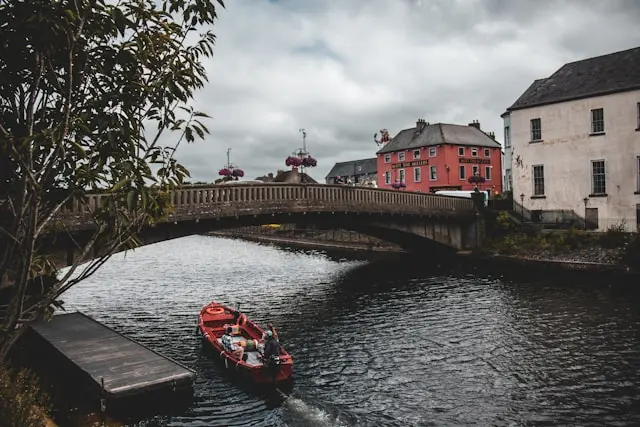
Kilkenny's compact center is built for walking, and nearly every major sight - Kilkenny Castle, St. Canice's Cathedral, the Medieval Mile, and the main shopping streets - is within easy reach on foot. The Medieval Mile itself is a marked, self-guided walking route linking the city's key historic sites.
- Walking: the best way to see the compact city center and Medieval Mile
- Local buses: connect the center to outlying areas like Lyrath
- Bike rental: several marked cycling trails run through the wider county
- Taxis: available around the city center and train station
Neighborhoods to Explore
Medieval Mile
The historic core of the city, running roughly from Kilkenny Castle to St. Canice's Cathedral. This is where most visitors spend their time, among cobbled streets, medieval churches, and the Medieval Mile Museum.
Smithwick's Brewery Area
Centered around the site of the former Smithwick's Brewery and the Smithwick's Experience tour, this part of the city has a lively concentration of pubs and is popular for an evening out.
High Street & The Parade
The city's main commercial spine, lined with independent shops, cafés, and the entrance to Kilkenny Castle's grounds along The Parade.
Things to Do in Kilkenny
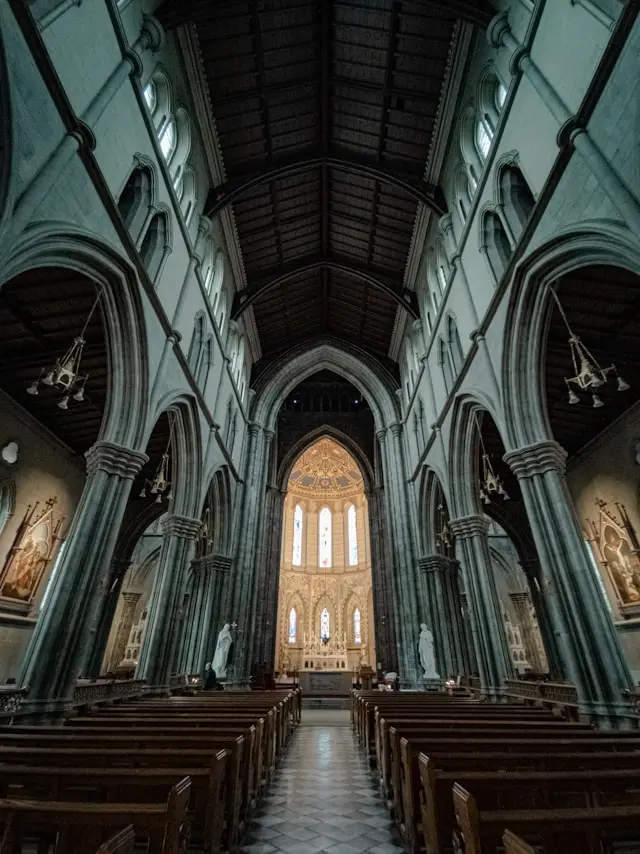
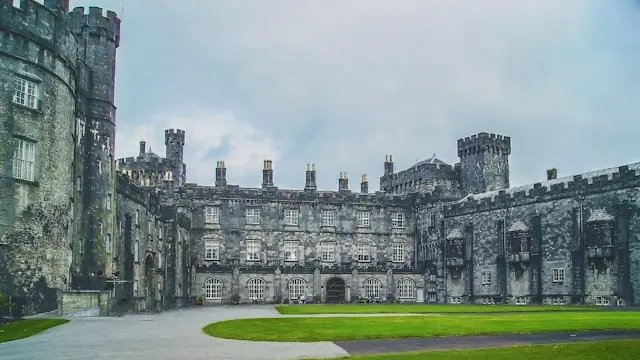
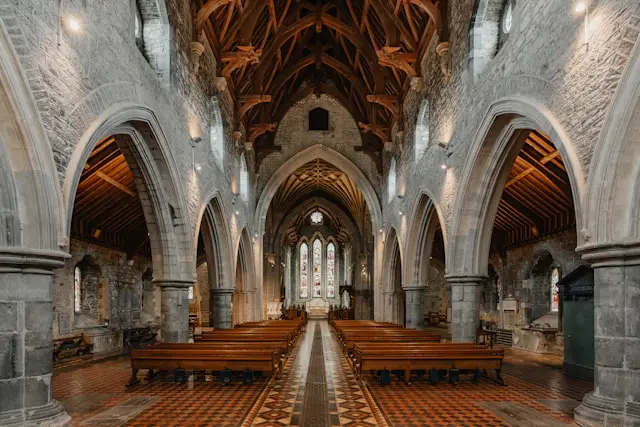
Kilkenny Castle, originally built in 1195 by William Marshal and later remodeled as a grand country house, is the city's centerpiece, with formal parkland open to the public along the river. At the opposite end of the Medieval Mile, St. Canice's Cathedral is a 13th-century Gothic cathedral with an adjoining round tower that visitors can climb for views over the city.
The Medieval Mile Museum, housed in a former 13th-century church, tells the story of the city's history, while the Smithwick's Experience walks visitors through the site of Ireland's oldest brewery, with a tasting at the end. Black Abbey, a 13th-century Dominican friary, and the many 17th-century "slips" - narrow passageways branching off the main streets - round out a walk through the old town.
- Kilkenny Castle - 12th-century Norman castle with riverside parkland
- St. Canice's Cathedral & Round Tower - Gothic cathedral with a climbable medieval tower
- Medieval Mile Museum - city history housed in a former medieval church
- Smithwick's Experience - tour and tasting at the site of Ireland's oldest brewery
- Black Abbey - well-preserved 13th-century Dominican friary
- Kilkenny Design Centre - craft and design shops in the castle's former stable yard

Food & Pubs in Kilkenny
Kilkenny has an outsized reputation for its pubs, many occupying centuries-old buildings along the Medieval Mile and around the former Smithwick's Brewery site - a natural result of the city's long brewing history. Alongside traditional pubs, Kilkenny's food scene ranges from casual cafés to a Michelin-starred restaurant set in a Georgian building overlooking the River Nore.
- Traditional pubs cluster along the Medieval Mile and near the old Smithwick's Brewery
- Look out for locally brewed beers alongside Kilkenny's famous Smithwick's ale
- Independent cafés and bakeries line High Street and the surrounding lanes
- Fine dining options include riverside restaurants using ingredients from the wider Kilkenny region
Day Trips from Kilkenny
Jerpoint Abbey
A well-preserved ruined Cistercian abbey founded in the 12th century, located near Thomastown about 20 minutes from Kilkenny city, known for its detailed medieval stone carvings.
Kells Priory
One of Ireland's largest and most impressive medieval monastic sites, with tower houses and walls enclosing a huge courtyard, a short drive south of the city.
Dunmore Cave
A limestone show cave a short drive north of Kilkenny, with guided tours through chambers of striking rock formations.
Woodstock Gardens
Victorian-era gardens and woodland on a hillside above the Nore Valley near Inistioge, about 35 minutes from the city, with formal terraces, specimen trees, and a waterfall walking loop.

Accommodation in Kilkenny
Staying within the Medieval Mile area puts Kilkenny Castle, St. Canice's Cathedral, and the city's restaurants and pubs all within easy walking distance, and suits visitors without a car. Guesthouses and B&Bs are common just outside the very center, offering a quieter night's stay a short walk from the main sights.
For longer stays or a countryside base, hotels and estates on the edge of the city - including some with golf courses - offer more space and grounds, at the cost of needing a short drive or taxi into the center.
Local Customs & Safety Tips
Kilkenny is a small, well-visited city and generally very safe to explore on foot, including its narrow medieval lanes and passageways. As anywhere with a lively pub scene, it's sensible to keep an eye on belongings on busy nights out, particularly around the Smithwick's Brewery area.
Tipping isn't mandatory in Ireland but is appreciated, with around 10% typical at restaurants for good service. Kilkenny takes hurling, Ireland's traditional Gaelic sport, very seriously - the city and county have one of the strongest hurling traditions in the country, and match days can noticeably affect the mood (and crowds) around town.
- Emergency number: 112 or 999
- Tipping around 10% at restaurants is customary but not mandatory
- Watch for cobblestones and uneven surfaces along the Medieval Mile, especially at night
- Expect busier streets and pubs on major hurling match days
Budget & Costs in Kilkenny
Kilkenny is generally more affordable than Dublin for accommodation and dining, making it a popular overnight stop for travelers looking to stretch their budget while still getting a full city experience. Prices rise somewhat on weekends and during major events, when day-trippers and overnight visitors from Dublin fill the city's hotels and guesthouses.
- Budget: guesthouse or hostel stays, pub lunches, walking the Medieval Mile for free
- Mid-range: mid-tier hotels, sit-down dinners, paid entry to the castle and museums
- Splurge: countryside estate hotels, fine dining, private day tours to Jerpoint Abbey or Kells Priory

Frequently Asked Questions about Kilkenny
How many days do you need in Kilkenny? +
A single day is enough to cover the main Medieval Mile sights, but staying overnight lets you explore at a slower pace and fit in a day trip to Jerpoint Abbey or Kells Priory.
What is the best time of year to visit Kilkenny? +
Late spring through early autumn offers the best sightseeing weather, with May and September striking a good balance between good conditions and smaller crowds than peak summer.
Is Kilkenny a good day trip from Dublin? +
Yes — Kilkenny is about an hour and a half from Dublin by train or car, making it one of the most popular day trips from the capital.
Is Kilkenny expensive to visit? +
Kilkenny is generally more affordable than Dublin, though prices rise on weekends and during major events when demand for accommodation increases.
Is Kilkenny safe for visitors? +
Kilkenny is a small, well-visited city that's generally very safe to walk around, though it's worth watching your footing on its cobbled medieval streets, especially at night.
Do you need a car to visit Kilkenny? +
No — the city center is fully walkable, though a car or organized tour is useful for reaching day-trip sites like Jerpoint Abbey, Kells Priory, or Dunmore Cave.
What's the best area to stay in Kilkenny? +
Staying within or near the Medieval Mile puts the castle, cathedral, and best pubs and restaurants within easy walking distance.
What should I pair a Kilkenny trip with? +
Jerpoint Abbey, Kells Priory, and Dunmore Cave are all easy day trips from the city, and Kilkenny also works well as a stop on a longer route between Dublin and Cork or Waterford.