
Table of Contents
- Introduction
- Best Time to Visit the Amalfi Coast
- How to Get Around in 3 Days
- Where to Stay: Positano, Amalfi or Ravello
- Day 1: Positano & Coastal Views
- Day 2: Amalfi, Atrani & Ravello
- Day 3: Scenic Coast & Hidden Gems
- Best Beaches and Swimming Spots
- What to Eat on the Amalfi Coast
- Estimated 3-Day Budget
- Tips for Avoiding Crowds
- What to Pack for the Amalfi Coast
- Best Viewpoints for Photography
- Conclusion
Introduction
Photos never quite capture the Amalfi Coast. You can see the pastel houses stacked up the cliffs a hundred times online and still feel a little stunned the first time you round a bend on the coast road and the whole scene opens up below you. This stretch of southern Italy packs an unreasonable amount of scenery into about 50 kilometers: lemon groves clinging to terraces, medieval piazzas, and a sea that actually looks as blue as the postcards promise.
This guide is built around what you can realistically do in three days, without spending half of them stuck in traffic. It covers where to base yourself, how to get between towns, what's worth eating, roughly what to expect to spend, and where to stand for the best photos. There's also a full day-by-day itinerary further down if you'd rather just follow a plan than build your own.
Best Time to Visit the Amalfi Coast
If your dates are flexible, aim for late May through mid-June, or September into early October. The sea is warm enough to swim in, the weather sits comfortably in the low-to-mid 20s (Celsius), and you won't be fighting quite as hard for a hotel room or a ferry seat as you would in high summer.
July and August are a different story. This is when the coast is at its busiest and most expensive, and the SS163 coastal road, the single lane connecting most of the towns, can turn a 20-minute drive into an hour-plus crawl. It's still doable, but go in with realistic expectations about crowds and queues.
Winter is the quiet season, and honestly not a bad choice if beaches aren't your priority. Some hotels, restaurants, and the passenger ferries close down or scale back between November and March, so it suits a trip focused on Amalfi and Ravello's towns rather than swimming. Worth double-checking opening dates before you book, since these change from year to year.
How to Get Around in 3 Days
Ferries vs. buses vs. driving
Ferries, which typically run from April through October, are usually the easiest way to move along the coast, connecting Positano, Amalfi, Salerno, and Sorrento with the added bonus of seeing the cliffs from the water instead of a bus window.
SITA Sud buses cover the towns ferries don't reach, like Ravello and Atrani, and they're cheap, but they can get packed shoulder-to-shoulder in peak season, and they're stuck in the same traffic as everyone else.
Renting a car sounds appealing but rarely pays off over just three days. Parking is limited and pricey, the road is narrow with blind hairpin turns, and a bus ticket or short taxi ride gets you the same distance with none of the stress.
A simple 3-day transport plan
- Fly into Naples, then transfer or take the train to Sorrento before continuing to Positano
- Use ferries between Positano and Amalfi whenever they're running
- Take the bus or a short taxi up to Ravello, since it sits well above the water
- Book a private boat or a shared tour for Day 3's fjord and grotto stops
Where to Stay: Positano, Amalfi or Ravello
Positano is the postcard version of the coast, and staying there means waking up in the picture itself. It's also the priciest option and involves a lot of stair-climbing, so it's not the most practical choice if you're hauling a heavy suitcase.
Amalfi town is more down-to-earth and generally cheaper, and it sits at the center of things, which makes day trips to Ravello, Atrani, and beyond fairly painless. It has a working-town feel alongside its cathedral and harbor, and a wider spread of mid-range hotels than Positano offers.
Ravello trades beach access for altitude and quiet. It sits well above the coastline, so every trip down to the water means a bus or taxi ride, but the views and the near-total absence of crowds make up for the inconvenience for a lot of travelers.
For a first visit, basing in Amalfi and day-tripping to Positano and Ravello tends to give you the best mix of cost, convenience, and central location.
Day 1: Positano & Coastal Views
Arriving on the Amalfi Coast
Most trips start at Naples airport, followed by a transfer or train to Sorrento and a ferry or bus on to Positano. Arriving by boat is worth arranging if you can; the town reveals itself gradually as you approach, house by house, and it's a genuinely great first impression.
Exploring Positano's historic center
There's no real route to follow here, just a maze of staircases and narrow lanes lined with boutiques and gelato counters. The best approach is to skip the map and just head downhill toward the water, stopping wherever looks interesting.
Spiaggia Grande and Positano's beaches
Spiaggia Grande, the main beach, mixes free sections with paid beach clubs offering sunbeds and umbrellas. It's also where boats leave for other points along the coast, so it works well as a base for the rest of the day.
Church of Santa Maria Assunta
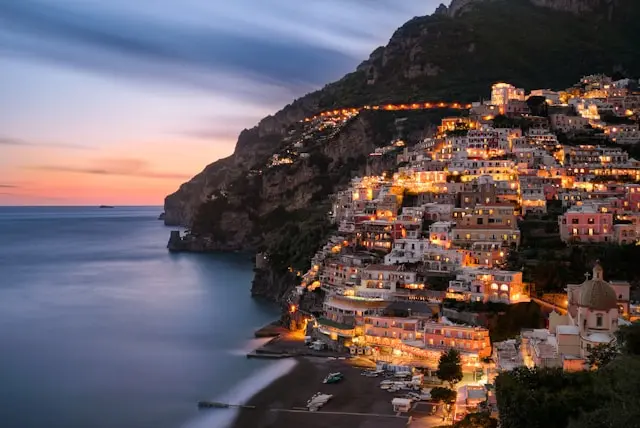
Look for the majolica-tiled dome just above the beach; that's the 13th-century church, home to a Byzantine icon of the Black Madonna. It's a quick stop, free to enter, and worth the five minutes it takes.
Scenic viewpoints over Positano
Head up toward Montepertuso, or find the terraces near Hotel Le Sirenuse, for the classic elevated shot back over Positano's rooftops and the sea. Go early if you can; the light is cleaner before the midday haze sets in.
Shopping for local ceramics and fashion
- Hand-painted ceramics, something of a regional specialty up and down the coast
- Positano-style linen clothing, tied to the town's original 1960s boutique boom
- Locally made leather sandals, often fitted and finished while you wait
Sunset by the Positano waterfront
The beachfront and the terraces of the waterfront bars fill up fast as the sun drops behind the headland, lighting up the pastel buildings. Show up 30 to 45 minutes early to actually get a spot.
Day 2: Amalfi, Atrani & Ravello
Exploring Amalfi town
Amalfi was once a genuine maritime power, one of Italy's medieval republics, and traces of that history are still visible in the Arsenale, the old shipyard now used for exhibitions. Today it's a compact, walkable town built around its cathedral and harbor, far less precious about its charm than Positano.
Amalfi Cathedral and Piazza Duomo
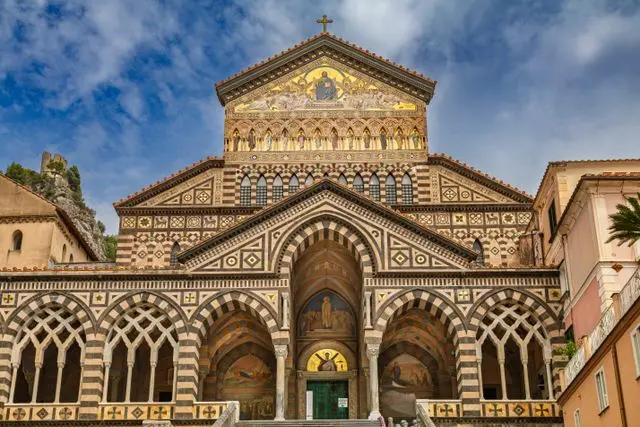
Climb the dramatic staircase from Piazza Duomo up to the Cathedral of Sant'Andrea, where the striped stone facade blends Arab and Norman influences in a way that's unlike anything else on the coast. The ticket usually includes the Cloister of Paradise and the crypt below, so budget extra time for both.
Ancient streets and waterfront
Via Lorenzo d'Amalfi cuts through the old town past paper shops, a nod to Amalfi's history as one of Europe's earliest papermaking centers, and small trattorias tucked between them. The waterfront promenade is a good place to slow down between stops, with easy access back to the boats.
Atrani village
A five-minute bus ride, or a short walk, from Amalfi gets you to Atrani, one of the smallest and least crowded towns on the whole coast. It's built around a tight little piazza just steps from its own beach, and it's often skipped entirely by day-trippers, which is exactly why it feels so much calmer than its neighbor.
Lunch and local Amalfi Coast cuisine
Break for seafood pasta or a wood-fired pizza somewhere between Amalfi and Ravello. Atrani's small trattorias tend to offer better value than the more tourist-facing spots along Amalfi's waterfront, so it's worth timing lunch there if the schedule allows.
Exploring Ravello
Ravello sits roughly 350 meters above sea level, a winding bus or taxi ride up from Amalfi, and it swaps beach access for panoramic views and a long history as a retreat for writers, composers, and artists looking for quiet.
Villa Rufolo and its gardens
Villa Rufolo's terraced gardens date back to the 13th century and look straight out over the coastline from a striking clifftop perch. Each summer they host the open-air concerts of the Ravello Festival, and honestly, the view alone justifies the entrance fee.
Villa Cimbrone and Terrace of Infinity
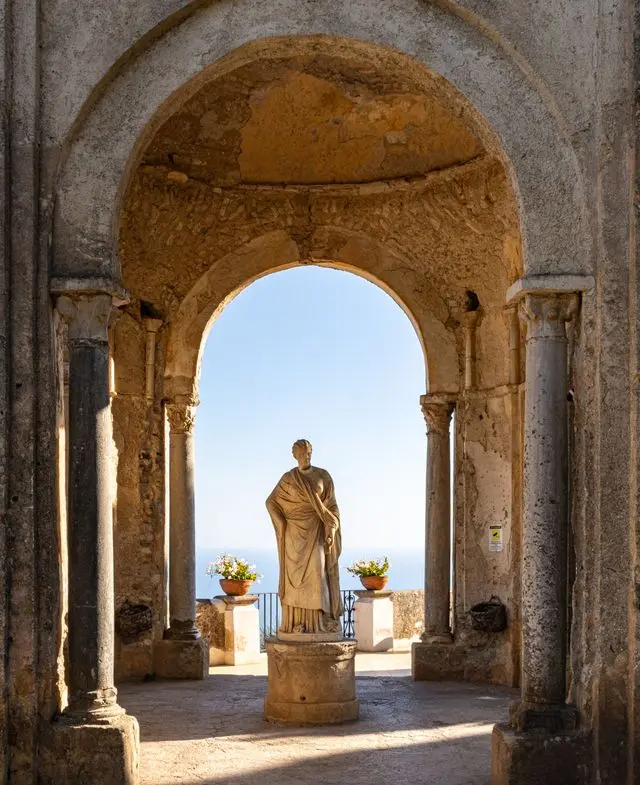
A short walk from Villa Rufolo, Villa Cimbrone's Terrace of Infinity lines a row of classical marble busts along an uninterrupted view of the coast and sea below. It's probably the single most photographed spot in Ravello, and once you're standing there, it's obvious why.
Sunset views from Ravello
Watching the sunset from up here, rather than down at sea level, gives you a completely different view of the coastline. Either villa's terraces or the town's main piazza will do the job without a crowd blocking the view.
Best Beaches and Swimming Spots
Spiaggia Grande in Positano is the coast's most famous beach, and for good reason, though it fills up quickly once the day-trippers arrive. Getting there before mid-morning makes a real difference if you want space to breathe.
Fornillo Beach, a short walk west along a coastal path, is quieter and generally cheaper than Spiaggia Grande, and it's an easy alternative if you'd rather skip the busiest stretch of sand.
Marina Grande in Amalfi, along with the beaches at Maiori and Minori, offer more room and a calmer atmosphere than Positano manages, and Maiori in particular is known for its long sandy shoreline rather than the usual pebbles.
For something quieter still, small coves near Fiordo di Furore or along the stretch between Praiano and Positano are only reachable by boat, so you'll need a half-day rental or tour, but the payoff is clear water with almost nobody around.
What to Eat on the Amalfi Coast
Seafood shows up everywhere here, and scialatielli ai frutti di mare, a thick, hand-cut pasta tossed with mixed shellfish, is close to a menu staple from Positano all the way to Minori.
Lemons are the other constant. The terraced groves above the coast road aren't just for looks; they turn up in limoncello, in lemon-dressed seafood, and in delicate desserts like delizia al limone, which is worth ordering at least once.
Fresh mozzarella and provolone del Monaco, a local cow's milk cheese, pair naturally with the region's simple bruschetta and caprese, usually built around tomatoes grown right on the terraces above.
- Scialatielli ai frutti di mare - handmade pasta with shellfish
- Delizia al limone - lemon sponge cake, a Sorrento-Amalfi specialty
- Fritto misto - fried mixed seafood, common at beachfront kiosks
- Limoncello - the region's signature lemon liqueur
Estimated 3-Day Budget
For one traveler on a mid-range trip, covering a private room, meals, ferries or buses, and a couple of paid attractions, expect somewhere between €600 and €900 total. Season and choice of base town swing this more than almost anything else.
Rough daily breakdown
- Accommodation: €120-€250 per night depending on town and season (Positano runs highest)
- Food: €50-€90 per day across a mix of casual and sit-down meals
- Transport: €20-€40 per day for ferries, buses, or short taxis
- Attractions and tours: €30-€60 per day for villa entries, grotto visits, or a half-day boat
If you're watching costs, staying in Amalfi or Salerno instead of Positano, sticking to buses over taxis, and choosing casual trattorias over waterfront restaurants all add up fast. Ferry and attraction prices shift with the season too, so it's worth a quick check closer to your travel dates rather than relying on last year's numbers.
Tips for Avoiding Crowds
- Go in May, June, or September instead of July and August, when both prices and crowds peak
- Start early; tour buses and cruise-ship day-trippers tend to show up by mid-morning
- Base yourself in Amalfi or Atrani instead of Positano, then day-trip into the busier towns
- Take the ferry over the bus wherever you can, since it skips the coastal road's worst traffic
- Get to Ravello's villas right at opening time, before the tour groups arrive from below
- Swim at Atrani, Minori, or Maiori instead of fighting for a spot on Positano's main beach
What to Pack for the Amalfi Coast
Good walking shoes matter more than swimwear on this trip. Almost every town involves steep staircases and uneven cobblestones, and you'll feel it fast in the wrong footwear.
- Sturdy walking shoes with good grip, plus sandals for the beach
- A light, breathable layer for cathedral and villa visits, since some sites expect covered shoulders
- A reusable water bottle; public fountains are common in most towns
- Sun protection: hat, sunscreen, and sunglasses, given how much time you'll spend outdoors
- A lightweight daypack for carrying beach or hiking gear between towns
- A portable phone charger, handy for photos and navigation on the longer travel days
Best Viewpoints for Photography
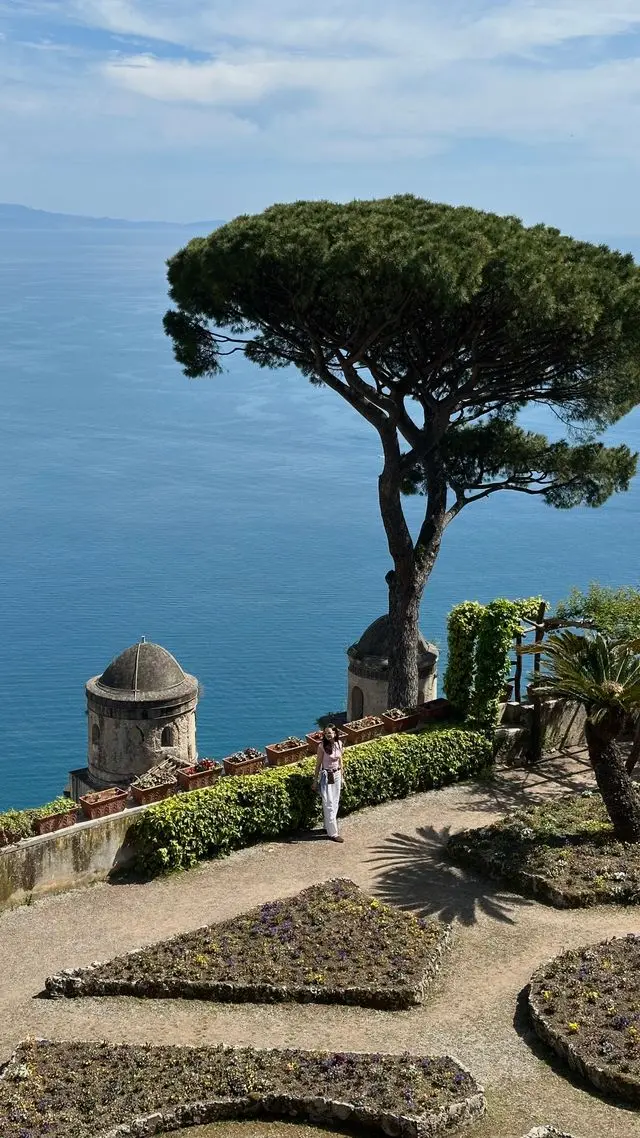
The Terrace of Infinity at Villa Cimbrone in Ravello is the coast's signature shot, with rows of marble busts framing an unbroken view over the sea below.
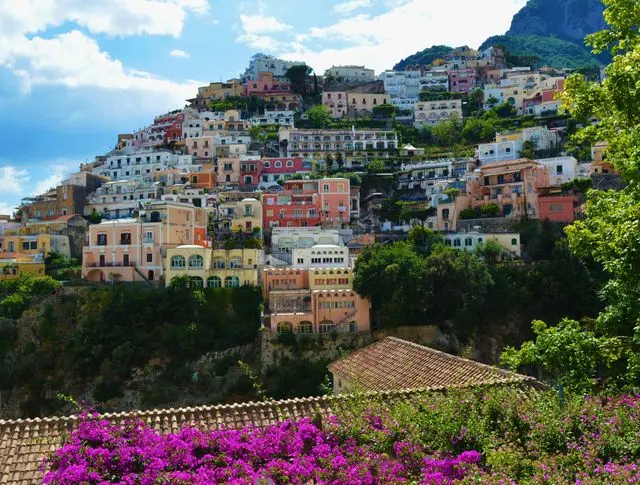
The path above Positano near Montepertuso gives you the classic elevated angle on the town's stacked, pastel houses, and it's best shot early in the morning before the haze rolls in.
Villa Rufolo's gardens in Ravello frame the coastline through arched stonework and manicured terraces, a different angle from Cimbrone's wide-open panorama just down the path.
The arched bridge at Fiordo di Furore, photographed either from the small beach below or the road above, captures one of the coast's more dramatic and far less photographed corners.
Conclusion
Three days is enough to get a real feel for what makes the Amalfi Coast tick, from Positano's cliffside glamour to Ravello's quiet gardens and the fjords and trails most visitors never make time for. The trick is pacing yourself: fewer stops each day, built around the ferry schedule rather than the coastal road, makes for a far more relaxed trip than trying to cram in everything at once.
Whatever towns end up on your list, leave room for an unhurried meal, a proper swim, and at least one sunset seen from above the water. Those are usually the moments people remember long after the itinerary itself is forgotten.
Frequently Asked Questions
What is the best time of year to visit the Amalfi Coast? +
Late May to mid-June and September into early October hit the sweet spot: warm enough to swim, without the peak-summer crowds and prices.
Do I need a car to get around the Amalfi Coast? +
Not really, and most visitors are better off without one. Seasonal ferries and SITA Sud buses cover the coast between Positano, Amalfi, and Ravello without the stress of narrow roads and near-impossible parking.
Which town is the best base for a 3-day trip: Positano, Amalfi, or Ravello? +
Amalfi generally offers the best balance of cost and location, making it easy to day-trip into Positano and up to Ravello. Positano suits travelers who'd rather stay in the most scenic town itself, even at a higher price.
Is 3 days enough time to see the Amalfi Coast? +
It's enough to cover Positano, Amalfi, Atrani, and Ravello, plus a day for hidden gems like Fiordo di Furore and the Emerald Grotto, though a longer trip lets you slow the pace down further.
What is the Path of the Gods and is it hard to hike? +
It's a roughly 7-8 kilometer trail high above the coastline between Bomerano and Nocelle, taking about 3-4 hours. Sturdy shoes are a must, but no technical climbing skills are needed.
How much should I budget for a 3-day Amalfi Coast trip? +
A mid-range budget typically lands between €600 and €900 per person, covering accommodation, meals, local transport, and a couple of paid attractions, though season and base town shift this quite a bit.
What is the best beach on the Amalfi Coast? +
Spiaggia Grande in Positano is the most famous, but Fornillo Beach nearby and the longer sandy stretches at Maiori and Minori are calmer alternatives with far fewer crowds.
Do I need to book the Emerald Grotto or Villa Cimbrone in advance? +
It's not always required, but it's a good idea in peak season, since both spots can involve waiting or limited capacity during the busiest summer months. Checking current hours locally before you go is worth the two minutes it takes.
What should I eat on the Amalfi Coast? +
Look for scialatielli ai frutti di mare, fritto misto, and lemon-based dishes like delizia al limone; all are regional staples tied to the coast's seafood and lemon-growing traditions.
How do I avoid the worst crowds on the Amalfi Coast? +
Travel in shoulder season, start sightseeing early before the day-trip buses roll in, take ferries over road transport when you can, and lean toward quieter towns like Atrani or Minori over the busiest stops.
