

Table of Contents
- About Bansko
- Climate & Best Time to Visit
- Getting to Bansko
- Getting Around Bansko
- Skiing & Winter Sports in Bansko
- Summer in Bansko
- The Old Town & Neighborhoods
- Food in Bansko
- Where to Stay in Bansko
- Day Trips from Bansko
- Digital Nomad Life in Bansko
- Budget & Costs in Bansko
- Local Customs & Etiquette
- Safety Tips in Bansko
About Bansko
Bansko sits at the foot of the Pirin Mountains in southwestern Bulgaria, a town that spent centuries as a modest stockbreeding and trading settlement before growing into the country's leading ski resort. Cobbled lanes lined with stone National Revival-era houses still wind through the old quarter, even as gondola cabins now carry skiers straight from the town center into a mountain range protected as a UNESCO World Heritage site.
What makes Bansko unusual today is its double life. In winter it fills with skiers drawn by Bulgaria's longest runs and famously good-value lift passes. Year-round, it has become one of Europe's most established digital nomad hubs, with coworking spaces and a settled remote-work community giving the town a very different rhythm outside the snow season. Few destinations this size manage to be a serious ski resort, a living historic town, and a remote-work base all at once.
Climate & Best Time to Visit
Winter (December–March)
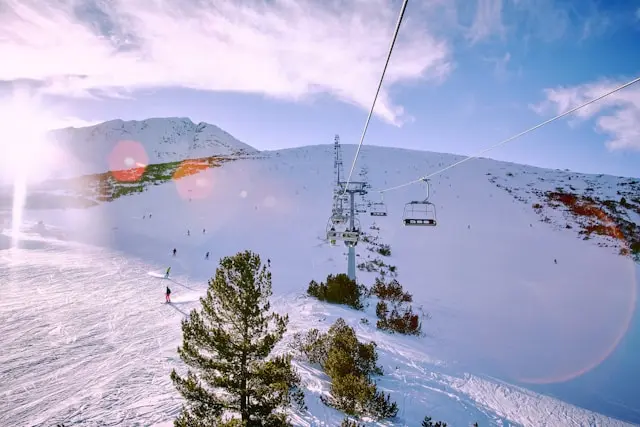
This is Bansko's peak season. The town sits at around 925 meters, but the ski area climbs above 2,500 meters, where snow cover is reliable from December into April. Daytime temperatures in town hover a little above or below freezing, while conditions higher on the mountain are colder and windier. Snowmaking equipment keeps the lower runs skiable even in leaner years.
Spring (April–May)
The ski lifts wind down operations by mid-April, and the shoulder season that follows is quiet, with melting snow, muddy trailheads, and many mountain huts still closed. It is a good stretch for low prices but a poor one for hiking the high country.
Summer (June–September)
Warm, dry weather with daytime highs typically in the 20s°C makes summer the season for hiking, mountain biking, and Bansko's outdoor festival calendar, including the town's well-known August jazz festival. Evenings stay cool thanks to the elevation.
Autumn (October–November)
A quieter, more atmospheric season with cooling temperatures and turning foliage across the valley. Many visitors use it for calmer hikes and off-peak town exploring before winter crowds arrive.
Getting to Bansko
By Air
Sofia Airport is the main gateway, roughly 160 km and about a two-hour drive from Bansko. Plovdiv Airport is a smaller alternative served mostly by budget and charter routes. Travelers coming from Greece sometimes fly into Thessaloniki, around 220 km away, and continue overland.
By Bus or Shared Shuttle
Direct shuttle buses run between Sofia Airport and Bansko, typically taking around two to two and a half hours depending on stops. Public buses also connect Sofia's Central Bus Station to Bansko, a cheaper but slower option that requires first making your way across the capital to the station.
By Car or Private Transfer
Driving from Sofia takes about two hours on good roads. Private transfers are widely available and are booked in advance, with a driver meeting you at arrivals. Renting a car is worth considering if you plan to explore the surrounding villages and mountains independently.
Getting Around Bansko
Central Bansko is compact and walkable; most hotels, restaurants, and coworking spaces are within a 20-minute walk of the main square. The gondola lift connects the town directly to the ski area during winter, cutting out the need for a car if you're staying centrally.
- Walking covers most day-to-day needs in town, including the old quarter, main square, and gondola base station.
- Local and hotel shuttle buses run during the ski season between accommodation further from the center and the gondola.
- Taxis are inexpensive by Western European standards; agree on a fare or confirm the meter before setting off.
- A rental car pays off for day trips to Rila Monastery, Melnik, or the smaller villages of the Pirin foothills.

Skiing & Winter Sports in Bansko
The Ski Area
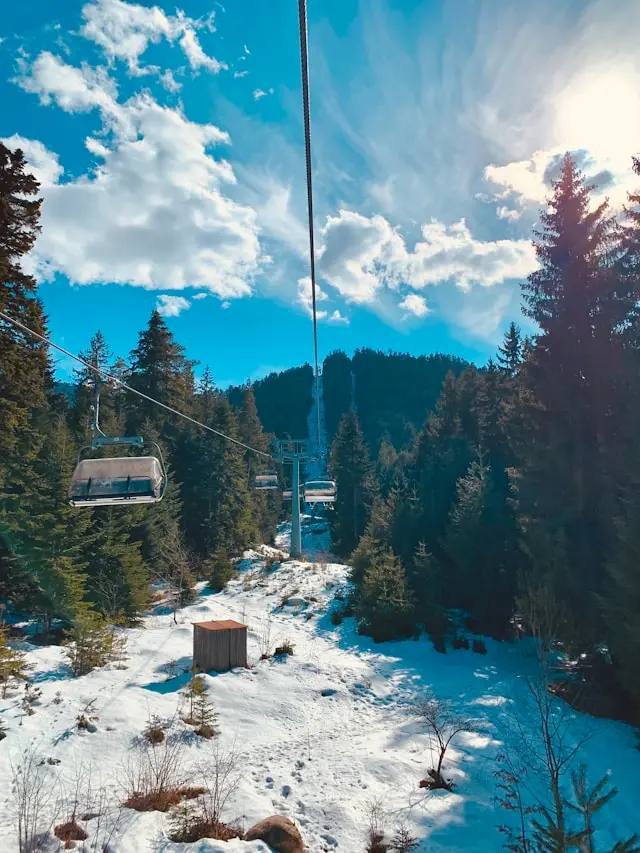
Bansko is Bulgaria's largest and most developed ski resort, with pistes spread across the Chalin Valog and Shiligarnika sectors on the northern slopes of the Pirin range, reaching up toward 2,600 meters. An eight-person gondola over 6 km long lifts skiers from the edge of town to the mid-mountain in around 25 minutes, and marked runs total in the range of 70 to 75 km, including one of the longest continuous descents in the Balkans, dropping back down toward the valley.
Lift Passes & Practicalities
The season generally runs from mid-December to mid-April, extended where needed by an extensive network of snow cannons. The gondola base station gets busy during peak morning hours in high season, so arriving early or waiting until closer to midday helps avoid the longest queues.
Beyond Downhill Skiing
A dedicated fun park and half-pipe cater to freestyle skiers and snowboarders, and floodlit night skiing runs on select evenings each week on one of the valley pistes. Ski schools in town offer lessons for beginners, and cross-country tracks are also available.
Summer in Bansko
Once the snow melts, Bansko becomes a base for exploring Pirin National Park, a UNESCO-listed range of glacial lakes, pine forests, and granite peaks that begins almost at the edge of town. Marked trails climb from the Banderitsa area toward mountain huts and, for experienced hikers, toward Vihren, the range's highest summit.
- Day hikes into Pirin National Park, ranging from gentle valley walks to full-day treks toward alpine lakes and huts.
- Mountain biking on trails around the resort, with several operators renting bikes and running guided routes.
- The Bansko Jazz Festival, held over a week each August in the main square, drawing performers and audiences from across the region.
- Nearby hot springs and spa towns in the Razlog valley, a popular way to unwind after a day outdoors.
The Old Town & Neighborhoods
The Old Town
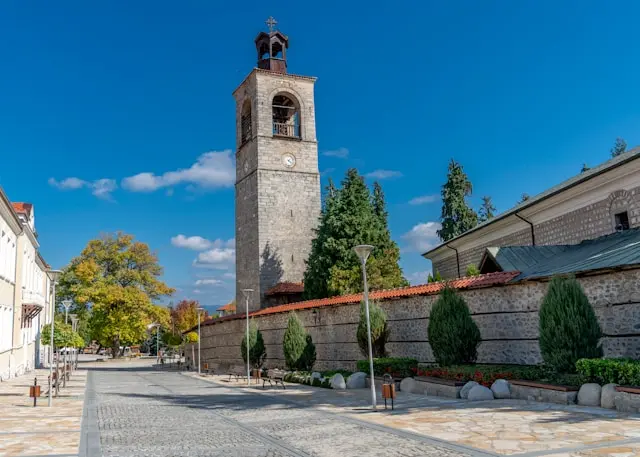
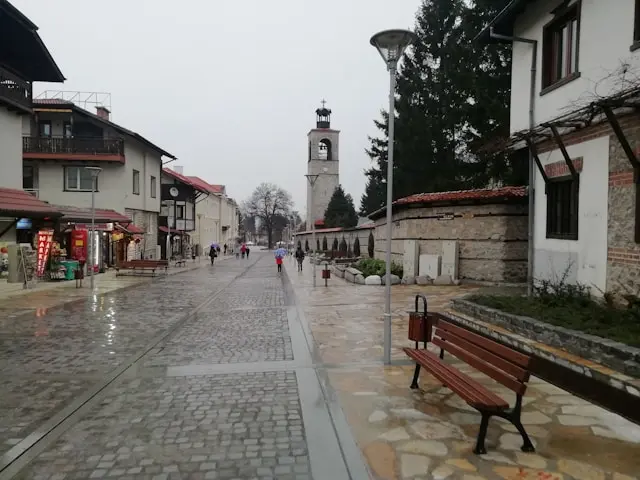
Bansko's old quarter is built around the Holy Trinity Church and its bell tower, with narrow cobbled streets lined by thick-walled stone houses dating to the National Revival period. Many of these houses have been converted into mehanas (traditional taverns) and small guesthouses, and the area is the most atmospheric base for travelers who want walkable charm over ski-in convenience.
Around the Gondola
The neighborhood clustered near the gondola base station is Bansko's newest, built up rapidly over the last two decades with hotels, ski rental shops, and après-ski bars aimed squarely at winter visitors. It's the most convenient area for skiers but the least historic in character.
Central Bansko
Between the two, the streets around the main square mix cafes, restaurants, and the coworking spaces and coliving houses that anchor the town's digital nomad community, making it a practical middle-ground base for visitors who want to walk to both the old quarter and the slopes.

Food in Bansko
Bansko has its own distinct culinary identity within Bulgarian cuisine, built around slow-cooked dishes traditionally served in mehanas with stone walls, wooden beams, and live folk music.
- Kapama – a slow-cooked casserole layering pork, chicken, and sometimes rabbit with sauerkraut, rice, and beets, baked for hours in a clay pot.
- Chomlek – a similar clay-pot dish built in layers of meat, potatoes, and vegetables, simmered until tender.
- Banski starets – a locally cured, air-dried pork specialty unique to the town, typically served as a meze with rakia or wine.
- Parlenka – a flatbread often stuffed with local white cheese and served with lyutenitsa (a roasted pepper relish).
- Shopska salad and banitsa (a filo pastry with egg and cheese) round out most menus as staples of everyday Bulgarian eating.
Wine lists lean on reds and whites from the nearby Struma Valley, home to Bulgaria's Melnik wine region, while rakia, a fruit brandy, remains the customary toast before a meal.
Where to Stay in Bansko
Where to base yourself in Bansko depends largely on whether skiing, old-town atmosphere, or walkability to cafes and coworking spaces matters most.
- Near the gondola: the most convenient choice for skiers, with ski-in/ski-out or near-slope hotels, though it's a longer walk to the old town and generally the priciest area.
- The old town: traditional stone guesthouses and boutique hotels in a quieter, more historic setting, a short walk or shuttle ride from the lifts.
- Central Bansko, around the main square: the most practical all-rounder, close to restaurants, the digital nomad scene, and reasonable walking or shuttle distance to the gondola.
Day Trips from Bansko
Rila Monastery
Bulgaria's largest and most important monastery, a UNESCO World Heritage Site, sits roughly two hours from Bansko by road. Its striped arches and vivid frescoes make it one of the country's most-visited sites, and it's easily combined with a stop in the surrounding Rila mountains.
Melnik & Rozhen Monastery
Melnik, Bulgaria's smallest town, is known for its sandstone cliffs, centuries-old wine cellars, and a compact historic center. It pairs naturally with a visit to nearby Rozhen Monastery, a quieter and less-visited counterpart to Rila set among dramatic sand pyramid formations.
Villages of the Razlog Valley
Smaller villages scattered around the Razlog valley near Bansko offer a slower-paced look at rural Pirin life, along with regional hot springs that make for an easy half-day trip.
Digital Nomad Life in Bansko
Bansko has grown into one of Europe's most established digital nomad destinations, anchored by Coworking Bansko, the space that first drew remote workers to the town, alongside newer options like AltSpace and Nestwork. The result is a community that's unusually large for a town this size: coworking members, colivings, and regular meetups mean it's easy to plug into a social network of remote workers within days of arriving.
The appeal goes beyond infrastructure. Nothing in town is more than about a 20-minute walk away, so nomads move easily between coworking spaces, cafes, coliving houses, and the ski lift without needing a car. Winter brings a work-by-day, ski-by-afternoon rhythm, while summer shifts toward hiking, mountain biking, and an active calendar of community events. Cost of living remains low relative to Western Europe, which continues to draw remote workers who stay for a season and, in some cases, end up basing themselves in the town longer-term.

Budget & Costs in Bansko
- Bulgaria adopted the euro as its official currency, replacing the Bulgarian lev; prices in shops, restaurants, and lift-pass offices are quoted in euros.
- Bansko remains noticeably cheaper than comparable ski resorts in the Alps, both for lift passes and for everyday dining and accommodation.
- Mehana meals, local beer, and rakia are inexpensive by Western European standards, while imported goods and international-style restaurants near the gondola run closer to typical European prices.
- Coworking day passes and monthly memberships are a major budget line for remote workers, alongside accommodation, which is significantly cheaper than in most Western European cities.
- Costs shift with the season: winter rates for lodging and lift passes run highest around Christmas, New Year, and February half-term weeks, while summer and shoulder-season prices are noticeably lower.
Local Customs & Etiquette
Bulgaria has a well-known quirk that catches visitors off guard: the traditional head gesture for "yes" is closer to a side-to-side shake, and "no" is closer to a nod, roughly the reverse of the Western convention. Many people in tourist-facing roles in Bansko have adapted to international norms, but it's worth watching for in more traditional settings.
A modest tip of around ten percent is customary in restaurants and mehanas, and rakia is typically drunk as a toast before a meal rather than throughout it. Dress modestly when visiting churches and monasteries on day trips, covering shoulders and avoiding shorts. Bulgarians in and around Bansko are generally warm and hospitality-oriented, especially once a conversation moves past the initial exchange.
Safety Tips in Bansko
- Bansko is generally a safe destination for travelers, including solo travelers, with low rates of violent crime.
- Keep an eye on belongings in crowded spots such as the gondola queue during peak ski season and the main square during the summer jazz festival, where pickpocketing is the most commonly reported issue.
- Confirm taxi fares or insist on the meter before starting a ride, particularly from the airport or train station.
- Winter driving in the mountains requires caution; roads can be icy and conditions change quickly at altitude.
- Stay on marked runs and trails; the Pirin backcountry carries real avalanche risk, and off-piste skiing should only be done with proper safety equipment and local guidance.
- The general emergency number across Bulgaria is 112.

Frequently Asked Questions about Bansko
How many days do you need in Bansko? +
Three to four days suits most first-time visitors, enough for a couple of days skiing or hiking plus one day trip. A week gives room to add Rila Monastery and Melnik without rushing.
What's the best time to visit Bansko? +
Depends on the goal: December through March for skiing, and June through September for hiking, festivals, and warm-weather activities. Late spring and late autumn are quieter but have fewer open facilities.
Do I need a visa to visit Bansko? +
Bulgaria is part of the EU and the Schengen Area, so entry requirements follow standard Schengen rules; many nationalities, including US, UK, Canadian, and Australian travelers, can enter visa-free for short stays. Requirements vary by nationality, so check current rules before booking.
Is Bansko good for non-skiers? +
Yes. The old town, mehana food scene, hiking, and day trips to Rila Monastery and Melnik give non-skiers plenty to do, particularly outside peak winter weeks when the resort is quieter.
How do I get from Sofia Airport to Bansko? +
The most common options are a direct shuttle bus, a private transfer, or a public bus via Sofia's Central Bus Station, with the trip taking roughly two to two and a half hours by road.
Is Bansko good for digital nomads? +
Yes, it's one of Europe's most established remote-work hubs, with multiple coworking spaces, colivings, a large expat and nomad community, and a low cost of living relative to Western Europe.
What currency is used in Bansko? +
The euro, following Bulgaria's changeover from the Bulgarian lev.
Is Bansko safe? +
Generally yes, with low rates of serious crime. The main precautions are watching belongings in crowds, agreeing taxi fares upfront, and respecting avalanche risk if venturing off-piste in winter.
What day trips pair well with Bansko? +
Rila Monastery and the wine town of Melnik with its nearby Rozhen Monastery are the two most popular options, both feasible as a day trip by car or organized tour.
Do I need a car in Bansko? +
Not for the town itself, which is walkable, but a rental car makes day trips to Rila Monastery, Melnik, and smaller Pirin villages far more flexible than relying on tours or public transport.