

Table of Contents
About Varna
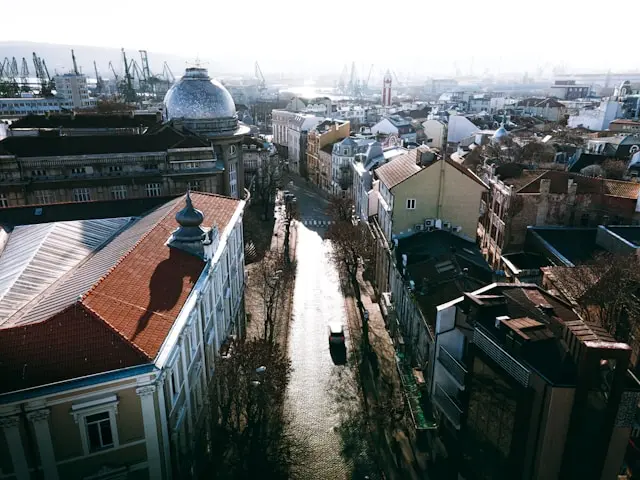
Varna is Bulgaria's third-largest city and its self-styled "sea capital," a busy Black Sea port that's been continuously inhabited since it was founded as the Greek colony of Odessos around 575 BC. That long history runs beneath the modern city in the form of well-preserved Roman baths, while above ground Varna presents a lively mix of pedestrian shopping streets, grand 19th and early 20th-century architecture, and one of Bulgaria's most important archaeological collections, built around the Varna Necropolis, home to what is considered the oldest worked gold in the world.
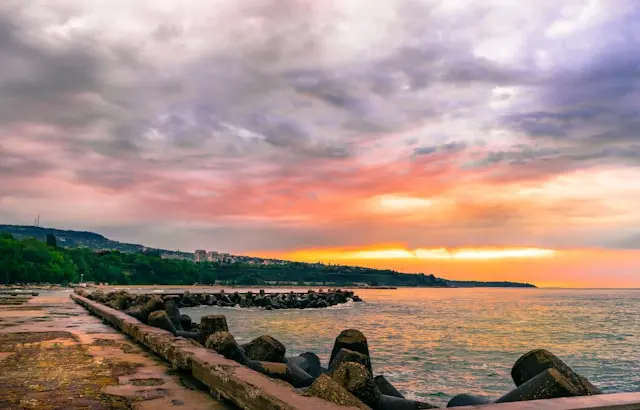
What draws most visitors, though, is the coastline: golden sand beaches back directly onto the Sea Garden, an expansive 19th-century park stretching some 8 km along the shore. In summer, the city's population effectively multiplies as beachgoers flood in from across Bulgaria and abroad, giving Varna a lively, resort-town energy layered on top of its role as a genuine working city and university hub.
Getting to Varna
By Air
Varna International Airport (VAR) is well connected to major European cities with direct flights, making Varna one of the easiest Bulgarian destinations to reach without transiting through Sofia. The airport sits close to the city center, keeping transfer times short.
By Train
Regular train service connects Varna to Sofia and Plovdiv, though journey times are longer than flying, generally several hours depending on the route.
By Bus
Frequent buses link Varna with Sofia, Plovdiv, and other major Bulgarian cities, offering a budget-friendly alternative to flying or the train.
By Car
Varna is reachable by a well-maintained highway network from Sofia and other major cities, useful for travelers planning to explore the wider Black Sea coast or nearby day trips by car.

Getting Around Varna
Central Varna is walkable, and most of the main sights, the pedestrian shopping streets, Roman baths, Archaeological Museum, and Sea Garden, sit within easy reach of each other in the city center. The pedestrian zone around Knyaz Boris I Boulevard makes strolling between cafés, shops, and landmarks straightforward.
Varna's bus network is solid for reaching sights and beaches further from the center, and it's the practical option for exploring the full stretch of the Sea Garden or reaching outlying attractions. Taxis and ride-hailing apps are also widely available and inexpensive.
Things to Do in Varna
Sea Garden (Morska Gradina)
Established in 1878, this expansive park runs along the coastline for roughly 8 km and is the city's signature green space, packed with walking paths, fountains, an open-air theatre, and views over the Black Sea. It's the natural connector between the city center and Varna's main beaches.
Varna Archaeological Museum
Widely regarded as Bulgaria's finest archaeological museum, its collection spans the Stone Age through the medieval period, with its centerpiece being treasures from the Varna Necropolis, a prehistoric burial site discovered in 1972 that yielded what is considered the oldest processed gold artifacts found anywhere in the world.
Roman Thermae (Roman Baths)
Dating to the 2nd century AD, these well-preserved Roman baths sit right in the city center, with clearly labeled areas once used for cold, tepid, and hot bathing, giving a tangible sense of Varna's long history as Odessos.
Cathedral of the Assumption
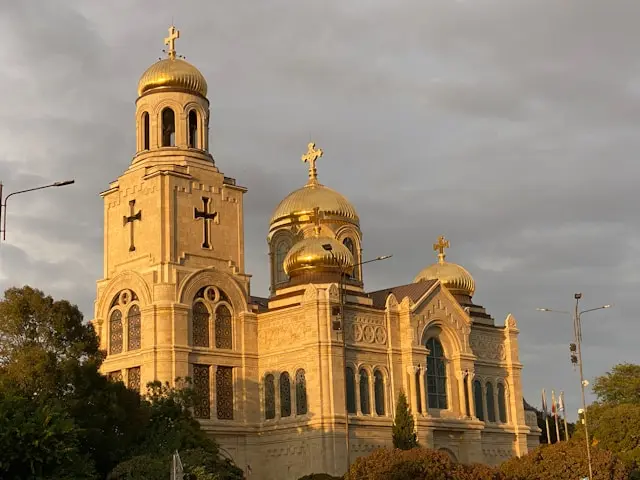
Bulgaria's second-largest church, the Cathedral of the Assumption (Dormition of the Mother of God) is known for its golden domes, stained-glass windows, and ornate walnut woodwork, and remains an active place of worship in the city center.
Pedestrian Old Town Streets
Knyaz Boris I Boulevard and the surrounding pedestrian streets are lined with colorful historic buildings, shops, cafés, and landmarks including the Varna Opera House and the Grand Hotel London, making for an easy self-guided architectural stroll.

Beaches in Varna
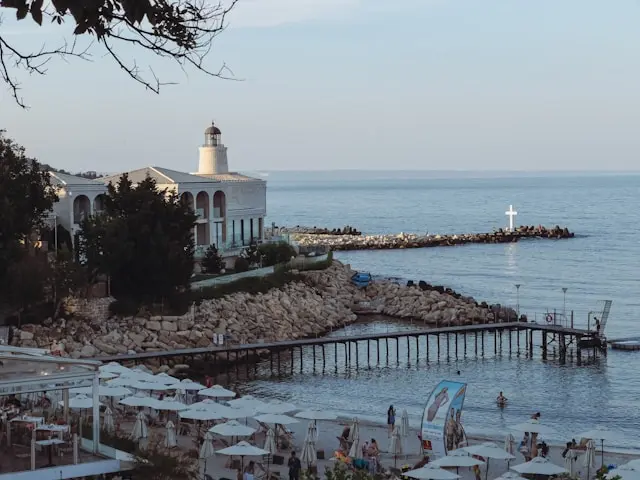
Varna's coastline offers a mix of lively city beaches and quieter stretches further out, with fine golden sand running along much of the Bulgarian Black Sea coast near the city. Varna's Central Beach, adjoining the Sea Garden, is the most convenient option, popular for its beach bars, volleyball courts, and easy access from downtown.
Further along the coast, the well-known resort areas of Golden Sands and Albena lie a short distance north of the city and offer a more developed, resort-style beach experience, popular as day trips or alternative bases for a beach-focused stay.
Food in Varna
As Bulgaria's main Black Sea city, Varna's food scene leans heavily on fresh seafood alongside the country's broader Balkan cooking traditions. Grilled fish and seafood platters are common near the waterfront and Sea Garden, while inland-style dishes like shopska salad, kebapche, and kavarma remain staples throughout the city center.
Varna also has a reputation as a lively food and nightlife city outside the peak beach hours, with a growing café and restaurant scene along the pedestrian streets. Banitsa and ayran remain the classic quick Bulgarian breakfast, available widely from bakeries around the center.

Where to Stay in Varna
Staying in the city center puts the pedestrian streets, Roman baths, museums, and Sea Garden within easy walking distance, and works well for travelers splitting time between sightseeing and the beach. Hotels here range from business-oriented properties to design-forward boutique stays.
Staying directly along the beachfront or in the Sea Garden area suits travelers prioritizing beach time above all else, while basing further out near Golden Sands or Albena works for those planning a more resort-style stay with day trips into central Varna for sightseeing.
Day Trips from Varna
Golden Sands and Albena
These major beach resorts sit a short drive north of Varna and offer a more developed resort atmosphere, popular both as day trips and as alternative places to stay along the coast.
Balchik
A charming seaside town north of Varna, Balchik is known for Balchik Palace, a former royal summer residence with striking botanical gardens overlooking the sea.
Aladzha Monastery
A rock-hewn medieval monastery carved into a cliffside near Golden Sands, Aladzha offers a striking, atmospheric contrast to Varna's city-center sights.
Pobiti Kamani (Stone Forest)
This unusual natural rock formation, sometimes called Bulgaria's Stone Desert, consists of hundreds of stone columns rising from the sandy terrain and makes for an easy half-day trip from the city.
Kamchia
South of Varna, the Kamchia area combines a quieter, less developed beach with a nearby biosphere reserve, appealing to travelers wanting a break from the busier central beaches.

Best Time to Visit Varna
Late spring and September offer some of the most enjoyable conditions: mild temperatures, a still-warm sea, and noticeably smaller crowds than the height of summer. September in particular draws praise for combining comfortable sightseeing weather with sea temperatures still good for swimming.
Summer (June to August) is the peak season for beach time, with temperatures regularly above 30°C and the busiest crowds, drawing over a million visitors to the coast around Varna. Winters are cold, sometimes with snow, and many beach facilities close for the season, making it a quieter time better suited to sightseeing than swimming.
Safety and Practical Tips
- Varna is generally safe, with ordinary city-level caution around belongings on busy beaches and pedestrian streets the main practical concern
- Bulgaria adopted the euro as its official currency on January 1, 2026, replacing the Bulgarian lev; cards are widely accepted, with cash still useful for smaller vendors
- As an EU and Schengen member, Bulgaria follows standard Schengen entry rules for visa-exempt travelers; check current requirements for your passport before traveling
- Summer crowds along the central beach and Sea Garden can be significant, so arriving early in the day helps secure a spot
- Many beach facilities and some attractions scale back or close outside the main summer season, so it's worth checking opening times in advance for a shoulder-season or winter visit
Budget and Costs in Varna
Varna is generally affordable compared to Western European seaside cities, though prices rise noticeably in peak summer when demand for accommodation and beachfront dining is at its highest.
- City-center accommodation is often more affordable than beachfront resort areas like Golden Sands or Albena
- The Archaeological Museum and Roman Thermae both carry modest entry fees, among the better-value sightseeing in the city
- Beach bars and beachfront restaurants along the Central Beach typically cost more than eating a short walk away in the city center
- Traveling in the shoulder season (May-June or September) generally means lower accommodation prices than the July-August peak

Frequently Asked Questions about Varna
How many days do you need in Varna? +
Two to three days covers the city center's museums, Roman baths, and Sea Garden alongside some beach time, with extra days worth adding for trips to Golden Sands, Balchik, or the Stone Forest.
What is the best time of year to visit Varna? +
Late spring and September offer mild weather, a still-warm sea, and smaller crowds, while June through August is peak beach season with the busiest crowds and highest prices.
Is Varna expensive to visit? +
Varna is generally affordable compared to Western European coastal cities, with city-center accommodation typically cheaper than staying directly in resort areas like Golden Sands.
Do I need a visa to visit Varna? +
As an EU and Schengen member, Bulgaria follows standard Schengen entry rules for visa-exempt travelers, but requirements vary by nationality, so it's worth confirming current rules before booking.
Is Varna safe for visitors? +
Yes, Varna is generally safe, with ordinary city-level caution around belongings in crowded beach and pedestrian areas the main practical concern.
How do you get around Varna without a car? +
The city center is walkable, covering the pedestrian streets, Roman baths, and Sea Garden, while the local bus network and taxis cover beaches and sights further out.
What's the best area to stay in Varna? +
The city center offers the most convenient base for sightseeing with easy beach access, while staying near Golden Sands or Albena suits travelers prioritizing a resort-style beach stay.
What currency does Varna use? +
Bulgaria adopted the euro as its official currency on January 1, 2026, replacing the Bulgarian lev, so prices in Varna are now in euros.
What should I pair a trip to Varna with? +
Golden Sands and Albena make easy beach-resort day trips, Balchik adds a scenic palace and gardens, and the Stone Forest offers an unusual natural detour from the city.