

Table of Contents
About Plovdiv
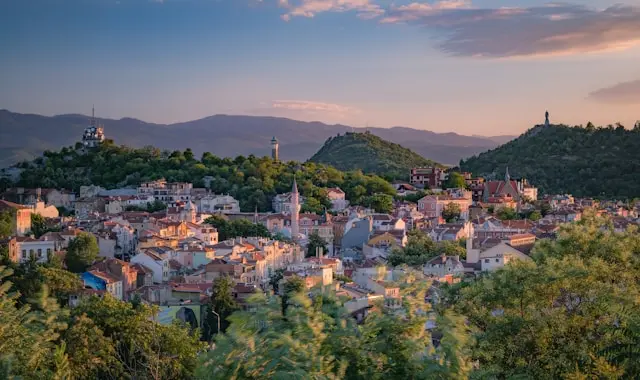
Plovdiv is one of the oldest continuously inhabited cities in Europe, with roots stretching back some six thousand years across a settlement first known as Eumolpias, then Philippopolis under Philip II of Macedon, then Trimontium under Roman rule, and later a major Ottoman center for four centuries. All of that history is still visible and walkable: a 2nd-century Roman theatre cut into a hillside still hosts concerts, cobbled lanes climb past 19th-century Bulgarian Revival mansions with their upper floors jutting out over the street, and the whole historic core sits across three of the seven hills, or tepe, that give the city its distinctive shape.
Named European Capital of Culture in 2019, Plovdiv has grown into Bulgaria's most compelling city for travelers who want layered history without a heavy tourist crush. Its compact core, roughly a kilometer of Old Town, Roman ruins, and the creative Kapana district, can be covered on foot in a day, though the city rewards a slower, two-day pace. Beyond that core, the lower town is an ordinary working city with little particular charm, so most visitors focus their time on the hill and the streets immediately around it.
Getting to Plovdiv
By Air
Plovdiv Airport (PDV) has only limited scheduled service, so most international travelers fly into Sofia Airport (SOF) and continue overland, a journey of roughly 1.5 to 2 hours by road or train.
By Train
Regular trains connect Sofia and Plovdiv in about two hours, arriving at a central station within walking or short taxi distance of the Old Town and Kapana. Rail is a comfortable, straightforward way to make the trip without a car.
By Bus
Frequent buses run between Sofia and Plovdiv, typically taking around 1.5 to 2 hours and offering a cheap, flexible alternative to the train, with departures throughout the day.
By Car
Plovdiv sits about 150 km from Sofia via a well-maintained highway, roughly a two-hour drive. A car is useful for reaching day trips outside the city but isn't necessary for exploring Plovdiv itself, since the historic core is largely pedestrian.
Getting Around Plovdiv
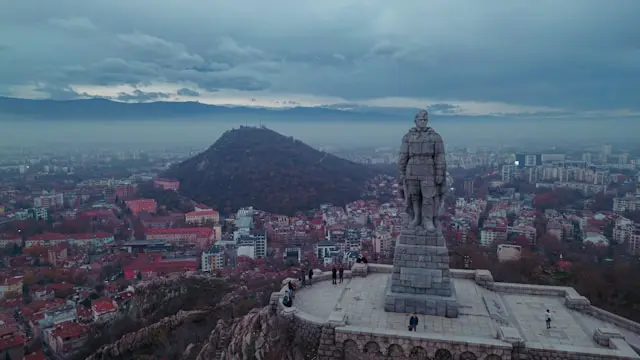
The Old Town, Roman Theatre, and Kapana district all sit within about a kilometer of each other on and around the city's central hill, making walking the natural way to explore, though the Old Town's cobbled lanes and occasional steps are worth bearing in mind for those with mobility concerns.
For the lower, modern parts of the city or day trips just outside it, taxis and ride-hailing apps are widely available and inexpensive. Public buses cover the wider city but are rarely needed for a visit focused on the historic core.

Things to Do in Plovdiv
Ancient Theatre of Philippopolis
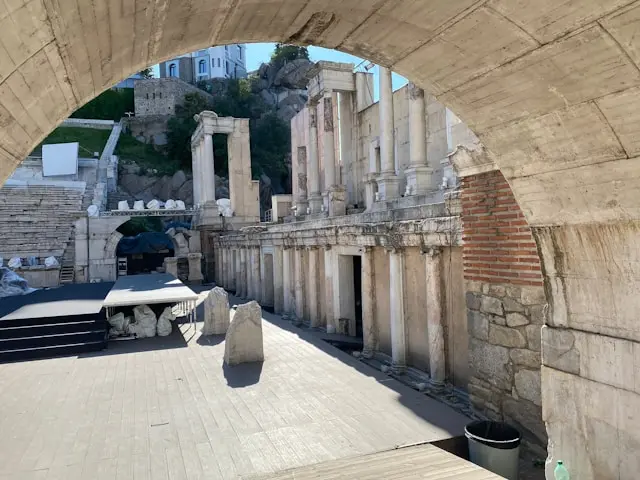
Cut into the hillside in the early 2nd century AD, this Roman theatre survives in remarkably good condition, seating and stage wall intact, and still hosts concerts and open-air opera in summer. It's one of the best-preserved Roman theatres in the Balkans and free to view from outside, with a modest fee to enter and sit on the ancient steps.
Old Town and Bulgarian Revival Houses
The cobbled hill above the theatre holds Plovdiv's finest 19th-century Bulgarian Revival houses, their brightly painted, ornately carved upper floors overhanging the narrow lanes. Several, including the Ethnographic Museum (Kuyumdzhiev House), Balabanov House, and Hindliyan House, are open as house museums showcasing period interiors and frescoed ceilings.
Nebet Tepe
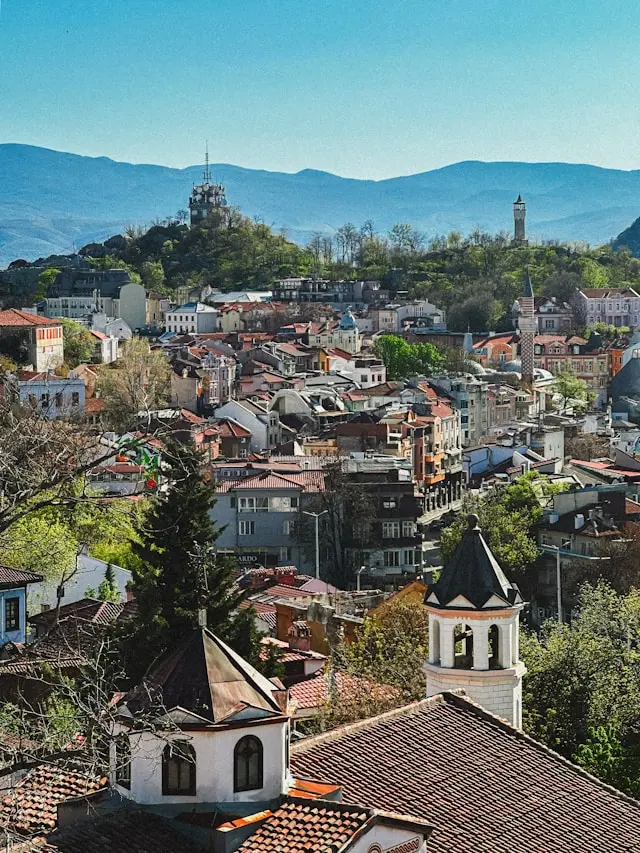
The hilltop site of the city's oldest settlement offers panoramic views over Plovdiv and the surrounding Thracian plain, along with scattered fortification ruins spanning the Thracian, Roman, and Byzantine periods.
Kapana Creative District
Just below the Old Town, Kapana ("The Trap," for its once-tangled street layout) has been revived as Plovdiv's creative quarter, packed with street art, microbreweries, independent boutiques, and galleries, with a different, younger energy than the Old Town above it.
Roman Stadium and Forum Ruins
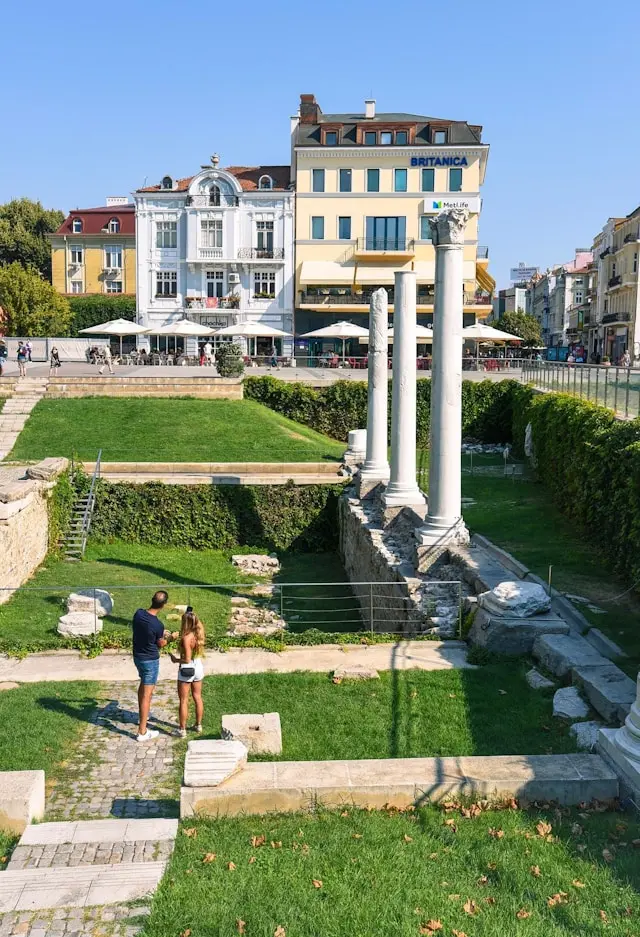
Beyond the theatre, fragments of a Roman stadium are visible along the main pedestrian street, and further Roman forum ruins are scattered through the city center, reminders of Plovdiv's era as Trimontium under Roman rule.
Neighborhoods to Explore
Old Town (Stariya Grad)
Plovdiv's historic core, protected as a national architectural reserve, holds the Roman Theatre, the finest Revival-period houses, and most of the city's museums. It's the most atmospheric and, for accommodation, most expensive part of the city.
Kapana
Immediately north of the Old Town, Kapana blends guesthouses, bars, and creative businesses run largely by younger entrepreneurs, with nightlife and a design-forward feel closer at hand than in the quieter Old Town above it.
Central Plovdiv (Tsentar)
The main pedestrian street and modern city center link the historic hill to the rest of Plovdiv, holding shops, cafés, and the visible Roman stadium ruins along the way.
Food in Plovdiv
Plovdiv's food culture reflects Bulgaria's broader mix of Balkan and Ottoman influences: grilled meats, hearty stews, and fresh salads dominate menus, often eaten in garden restaurants or courtyard settings in the Old Town and Kapana. Banitsa, a flaky pastry usually filled with cheese, is a common breakfast, often paired with ayran, a salted yogurt drink.
Shopska salad, a simple mix of tomatoes, cucumbers, peppers, and grated cheese, is the everyday Bulgarian starter, while heartier mains like kebapche (grilled minced-meat rolls) and kavarma (a slow-cooked meat and vegetable stew) are widely available. Kapana's newer wave of restaurants and microbreweries adds a more contemporary counterpoint to the traditional taverns found around the Old Town.

Where to Stay in Plovdiv
The Old Town is the most atmospheric and priciest place to stay, with small boutique hotels set inside Bulgarian Revival houses, often featuring frescoed ceilings, wooden floors, and courtyards with wisteria or pomegranate trees. Location is unbeatable here, with the Roman Theatre, museums, and top restaurants all within easy walking distance, though room availability is limited and bookings should be made well ahead, especially in summer or during the city's opera festival.
Kapana and the streets just north of the Old Town offer a growing number of independent guesthouses and small hotels, generally at slightly lower prices, with nightlife and creative-district energy closer at hand. Staying anywhere within this compact core keeps the main sights within an easy walk.
Day Trips from Plovdiv
Bachkovo Monastery
One of Bulgaria's oldest and most significant monasteries, set in the Rhodope Mountains south of Plovdiv, makes a popular half-day or full-day trip for its frescoes and mountain scenery.
Rila Monastery
Bulgaria's most famous monastery, a UNESCO World Heritage Site known for its striking frescoes, is a longer day trip, more commonly visited from Sofia but reachable from Plovdiv with an early start.
Perperikon
An ancient Thracian rock-hewn city in the Rhodope Mountains, Perperikon appeals to travelers interested in Bulgaria's pre-Roman history and offers a striking, lesser-visited archaeological site.
Hisarya
A small spa town northwest of Plovdiv known for its mineral springs and Roman-era fortification walls, Hisarya makes for a relaxed half-day trip combining history with a soak.
Sofia
Bulgaria's capital, about two hours away, holds its own sights, including Alexander Nevsky Cathedral, and pairs naturally with Plovdiv on a longer Bulgaria itinerary.

Best Time to Visit Plovdiv
Spring and autumn offer the most comfortable temperatures and the softest light for exploring the Old Town's cobbled streets and the Roman Theatre, generally considered the best overall time to visit.
Summer brings warm weather, a lively Kapana evening scene, and the city's opera and concert season at the Roman Theatre, though it's also the busiest and hottest period. Plovdiv is suitable for travel year-round, with winter offering a quieter, colder alternative for those prioritizing fewer crowds over outdoor comfort.
Safety and Practical Tips
- Plovdiv is generally very safe, with ordinary city-level caution around belongings in crowded areas the main practical concern
- Bulgaria adopted the euro as its official currency on January 1, 2026, replacing the Bulgarian lev; cards are accepted in most places, with cash still useful in smaller cafes and markets
- As an EU and Schengen member, Bulgaria follows standard Schengen entry rules for visa-exempt travelers; check current requirements for your passport before traveling
- The Old Town's cobbled lanes and occasional steps are worth factoring in for travelers with mobility concerns or heavy luggage
- Booking accommodation well ahead is worthwhile in summer and around the city's opera and cultural festival season, given limited beds in the historic core
Budget and Costs in Plovdiv
Plovdiv remains one of the more affordable major cities in this part of Europe, even within its historic core, making it possible to stay for a couple of days without a heavy bill. The Old Town commands the highest accommodation prices in the city, while Kapana and areas just outside the core run somewhat cheaper.
- Entry to the Roman Theatre and most house museums carries a modest individual fee rather than a steep combined ticket
- Meals at traditional taverns and Kapana's newer restaurants are generally inexpensive compared to Western European cities
- Old Town boutique hotels cost more than comparable rooms in Kapana or the wider city
- Day trips to nearby monasteries or Hisarya add modest transport costs but little else beyond food

Frequently Asked Questions about Plovdiv
How many days do you need in Plovdiv? +
One full day covers the core sights at a brisk pace, while two days allows a more relaxed visit with time to properly explore the Old Town's house museums and enjoy Kapana in the evening.
What is the best time of year to visit Plovdiv? +
Spring and autumn offer the most comfortable weather for walking the Old Town, though summer brings the added draw of concerts and opera at the Roman Theatre despite the heat and larger crowds.
Is Plovdiv expensive to visit? +
Plovdiv is generally affordable, even in the Old Town, though boutique hotels inside historic Revival houses cost more than accommodation in Kapana or the wider city.
Do I need a visa to visit Plovdiv? +
As an EU and Schengen member, Bulgaria follows standard Schengen entry rules for visa-exempt travelers, but requirements vary by nationality, so it's worth confirming current rules before booking.
Is Plovdiv safe for visitors? +
Yes, Plovdiv is considered very safe, with ordinary city-level caution around belongings in busy areas the main practical concern.
How do you get around Plovdiv without a car? +
The Old Town, Roman Theatre, and Kapana are all within a compact, walkable core, and taxis or ride-hailing apps cover the rest of the city or transport to day trips.
What's the best area to stay in Plovdiv? +
The Old Town offers the most atmospheric setting inside historic Revival houses at a premium price, while Kapana provides a slightly cheaper, livelier alternative just below it.
What currency does Plovdiv use? +
Bulgaria adopted the euro as its official currency on January 1, 2026, replacing the Bulgarian lev, so prices in Plovdiv are now in euros.
What should I pair a trip to Plovdiv with? +
Sofia is about two hours away and a natural pairing for a longer Bulgaria itinerary, while Bachkovo Monastery and the spa town of Hisarya make easy half-day or full-day additions.