

Table of Contents
About Nessebar
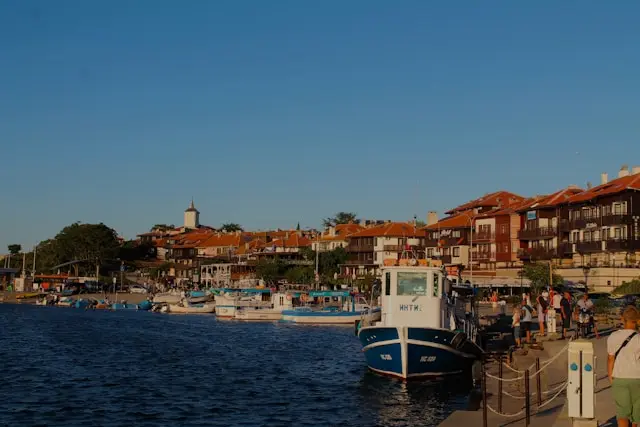
Nessebar sits on a small rocky peninsula jutting into the Black Sea, connected to the mainland by a narrow, human-made isthmus, and holds more than 3,000 years of layered history in a space you can walk end to end in about twenty minutes. Settled first by Thracians, then colonized by Greeks, and later shaped by Roman, Byzantine, and Ottoman rule, the town earned the nickname "the Town of 40 Churches" for its once-dense concentration of medieval churches; around nine to eleven survive intact today, with the ruins of others still visible around the cobbled lanes.
Above the ancient ruins and Byzantine church walls sits a distinct layer of 19th-century Bulgarian National Revival architecture: wooden houses with stone ground floors and overhanging upper stories, many now serving as guesthouses, cafés, and craft shops. Nessebar's Old Town was inscribed as a UNESCO World Heritage Site in 1983, and its position just a few kilometers from the resort strip of Sunny Beach makes it one of the most accessible historic sites on the entire Bulgarian coast, easily combined with a beach holiday rather than requiring a trip of its own.
Getting to Nessebar
By Air
Burgas Airport (BOJ) is the closest, about 35 km away (roughly 40-50 minutes by road), and handles substantial seasonal charter and low-cost traffic in summer given its proximity to the Sunny Beach and Nessebar resort corridor.
By Bus
Regular buses connect Nessebar with Burgas and with Sunny Beach immediately next door; the route between Nessebar and Sunny Beach in particular runs frequently and cheaply given the volume of visitors moving between the two.
By Car
Nessebar sits along the coastal road roughly 35 km northeast of Burgas, an easy drive on generally good roads. The Old Town peninsula itself has very limited parking, so most visitors park in the newer town on the mainland side and walk across the isthmus.
By Boat
A small harbor on the northern side of the Old Town peninsula runs water taxis to the Sunny Beach pier, departing roughly every 45 minutes and taking about ten minutes, a scenic alternative to the bus for the short hop between the two towns.
Getting Around Nessebar
The Old Town is entirely walkable and, given its size, close to impossible to get lost in for long: a loop around the peninsula's main lanes takes well under an hour, even with stops at churches and museums along the way. Cobblestones underfoot make comfortable shoes worthwhile.
For reaching Sunny Beach or Burgas, buses run frequently, a small tourist train connects Nessebar and Sunny Beach in season, and water taxis offer a quick, scenic option from the Old Town's northern harbor. A car is useful mainly for day trips further along the coast, since Nessebar itself needs no vehicle once you've arrived.

Things to Do in Nessebar
Old Town Churches
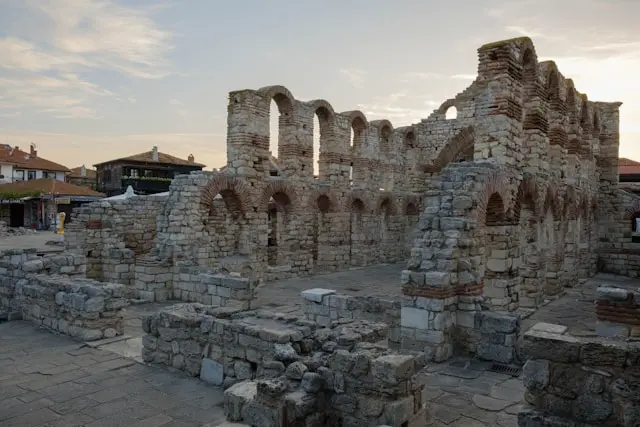
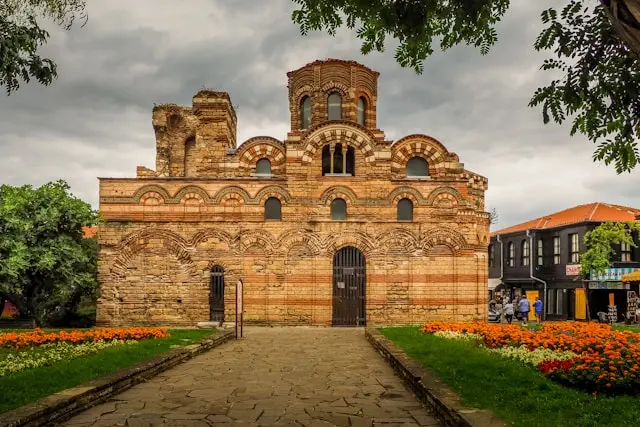
Nessebar's churches span more than a thousand years of construction: the 5th-6th century ruins of St. Sophia (Old Bishopric) are among the oldest, the 11th-century Church of St. Stephen is known for its 16th-century frescoes, and the 14th-century Church of Christ Pantokrator stands out for its decorative brick-and-stone facade patterns. The Church of St. John Aliturgetos, though roofless today, remains one of the most photographed ruins on the peninsula.
Byzantine Fortifications and the Windmill
The remains of the old city walls guard the entrance to the peninsula, and a small wooden windmill on the isthmus has become an unofficial symbol of the town, a favorite photo stop as visitors cross from the mainland.
Archaeological Museum
Located just past the western fortress wall, Nessebar's archaeological museum covers the town's long, layered history from Thracian and Greek settlement through the Byzantine period, with artifacts recovered both on land and from underwater excavations nearby.
Ancient Amphitheatre
The open area beside the Church of St. John Aliturgetos once served as a gathering and performance space and continues to host seasonal concerts and events today, a rare case of an ancient site still used for its original purpose.
Wander the Revival-Era Lanes
Beyond the named sights, simply walking Nessebar's narrow cobbled streets past 19th-century wooden houses, now home to craft shops, galleries, and seaside cafés, is one of the town's central pleasures.
Beaches In and Around Nessebar
Nessebar has two beaches of its own, North Beach and South Beach, both offering golden sand and clear water directly around the peninsula, generally quieter than the resort beaches just next door.
Sunny Beach, Bulgaria's largest and busiest beach resort, sits only a few kilometers north and is reachable by bus, water taxi, or seasonal tourist train, offering a 5 km stretch of sand along with the country's densest concentration of beach bars, water sports, and nightlife.
Food in Nessebar
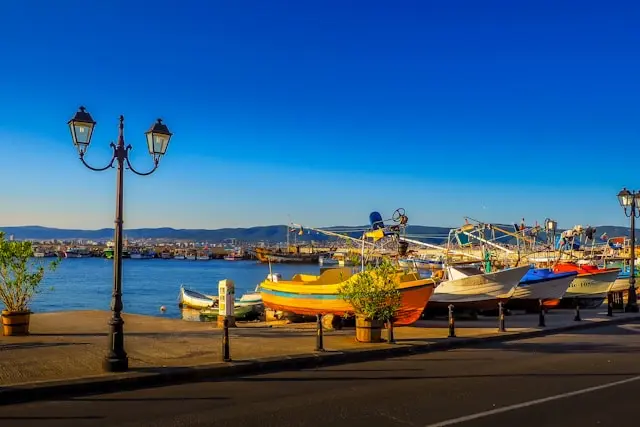
Nessebar's Old Town restaurants lean heavily on fresh Black Sea seafood, often served on terraces overlooking the water, alongside the broader Bulgarian staples of shopska salad, grilled meats, and hearty stews found throughout the country. Wine bars and tasting rooms are common in the Old Town, reflecting the wider Bulgarian Black Sea coast's winemaking tradition.
Given Nessebar's popularity as a day-trip destination from Sunny Beach, waterfront restaurants can be busy and priced accordingly at midday; heading a street or two back from the main lanes, or eating earlier or later, often means better value.

Where to Stay in Nessebar
Staying inside the Old Town means waking up within the UNESCO site itself, with quiet cobbled lanes in the early morning before day-trippers arrive and immediate access to the churches and museums. Guesthouses and small hotels here are limited in number and book up well ahead for summer, generally set inside restored Revival-era houses.
Staying in the newer part of town on the mainland side, or basing in nearby Sunny Beach, offers far more accommodation choice, larger resort hotels, and typically lower prices, with the Old Town then visited as a short trip rather than a place to sleep.
Day Trips from Nessebar
Sunny Beach
Bulgaria's largest beach resort sits immediately next to Nessebar and is easily reached by bus, water taxi, or on foot for the more adventurous, offering a full contrast of high-rise hotels, nightlife, and water parks to Nessebar's historic quiet.
Burgas
Bulgaria's fourth-largest city and a major Black Sea port, about 35 km south, offers its own sea garden, museums, and a livelier city atmosphere for a change of pace from Nessebar's small-town feel.
Sozopol
A quieter, less crowded historic town about an hour south of Nessebar via Burgas, Sozopol offers a similar blend of Old Town charm and beach access without Nessebar's day-trip crowds.
Pomorie
A short drive north, Pomorie is known for its mineral mud spa treatments and salt-pan history, a different kind of coastal town worth a stop for travelers interested in wellness tourism.

Best Time to Visit Nessebar
May through September is the main season, with the warm months bringing swimmable seas, open beach facilities, and full ferry and bus schedules between Nessebar and Sunny Beach. Shoulder months (May-June and September) offer a calmer version of the Old Town, with fewer day-trippers crowding the narrow lanes than during the intense July peak.
Outside the main season, many restaurants, beach facilities, and boat services scale back or close, making Nessebar a much quieter, colder destination better suited to sightseeing than swimming.
Safety and Practical Tips
- Nessebar is generally very safe, with the usual caution around belongings in crowded Old Town lanes during peak season the main practical concern
- Bulgaria adopted the euro as its official currency on January 1, 2026, replacing the Bulgarian lev; cards are widely accepted, with cash still useful for smaller stalls and boat operators
- As an EU and Schengen member, Bulgaria follows standard Schengen entry rules for visa-exempt travelers; check current requirements for your passport before traveling
- The Old Town's cobblestone streets call for sturdy, comfortable footwear
- July in particular draws heavy day-tripper crowds from Sunny Beach, so visiting the Old Town earlier or later in the day helps avoid the busiest hours
Budget and Costs in Nessebar
Nessebar is generally affordable, especially compared to accommodation directly on the Sunny Beach strip, though its limited number of historic Old Town guesthouses commands a premium given high demand in summer.
- Old Town accommodation is pricier and more limited than staying in the newer mainland town or nearby Sunny Beach
- Church and museum entry fees are individually modest, making a full circuit of the sights an inexpensive day
- Waterfront restaurants cost more at peak midday hours than eating a street or two back from the main lanes
- The water taxi to Sunny Beach is a low-cost way to combine an Old Town visit with beach time in a single day

Frequently Asked Questions about Nessebar
How many days do you need in Nessebar? +
A single, unhurried day is enough to cover the Old Town's churches, ruins, and lanes, making Nessebar a popular day trip from Sunny Beach rather than a multi-day base for most visitors.
What is the best time of year to visit Nessebar? +
May through September covers the main season, with the shoulder months of May-June and September offering warmer, swimmable weather with fewer day-trippers than the peak July crowds.
Is Nessebar expensive to visit? +
Nessebar is generally affordable, though Old Town accommodation is pricier and more limited than staying in the newer part of town or in nearby Sunny Beach.
Do I need a visa to visit Nessebar? +
As an EU and Schengen member, Bulgaria follows standard Schengen entry rules for visa-exempt travelers, but requirements vary by nationality, so it's worth confirming current rules before booking.
Is Nessebar safe for visitors? +
Yes, Nessebar is generally very safe, with ordinary caution around belongings in crowded Old Town lanes during peak season the main practical concern.
How do you get around Nessebar without a car? +
The Old Town peninsula is entirely walkable, and buses, a seasonal tourist train, and water taxis connect Nessebar with neighboring Sunny Beach.
What's the best area to stay in Nessebar? +
The Old Town offers the most atmospheric setting inside the UNESCO site itself, though limited and pricier, while the newer mainland town or nearby Sunny Beach offer far more accommodation choice at lower cost.
What currency does Nessebar use? +
Bulgaria adopted the euro as its official currency on January 1, 2026, replacing the Bulgarian lev, so prices in Nessebar are now in euros.
What should I pair a trip to Nessebar with? +
Sunny Beach sits right next door for beach time and nightlife, while Burgas and the quieter historic town of Sozopol make easy additions for travelers exploring the wider Bulgarian Black Sea coast.