

Table of Contents
About Gdańsk
Gdańsk is a historic port city on Poland's Baltic coast, and the largest of the three cities that make up the "Tricity" region alongside Sopot and Gdynia. Once the wealthiest city in the Polish lands as a powerful member of the Hanseatic League, it's known today for its ornately restored Main Town, its long history in the amber trade, and its pivotal role in 20th-century history as the birthplace of the Solidarity movement.
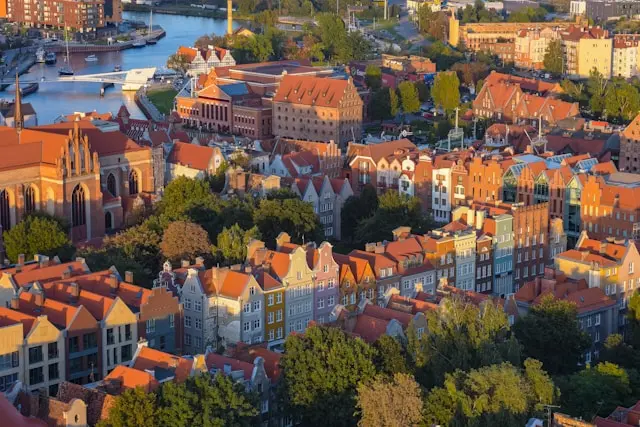
The city's Main Town is a dense cluster of colorful merchant houses, gates, and church towers along the Motława River, largely rebuilt after extensive World War II damage but still recognizably the city that Polish kings once visited to admire the wealth of its Hanseatic burghers. Beyond the historic core, Gdańsk is a genuine working port and university city, with green residential districts, a modern shipyard-turned-museum quarter, and easy rail access to the beach resorts of Sopot and Gdynia.
Best Time to Visit & Climate
Gdańsk has a temperate coastal climate with warm, relatively mild summers and cold, damp winters. Summer (June to August) is peak season, with daytime highs typically in the low-to-mid 20s Celsius (around 70s°F), long daylight hours, and the best weather for the Baltic beaches around Sopot and Gdynia. Winters are cold and gray, with temperatures often near or below freezing and a real chance of snow, though the city's Christmas market brings its own seasonal charm.
Late spring (May) and early autumn (September) offer a good middle ground, with fewer crowds than peak summer and generally pleasant conditions for walking the Old Town. Coastal weather can shift quickly, so a layer for wind and rain is worth packing regardless of season.
- Warmest, busiest months: June–August, best for the beaches
- Good balance of weather and crowds: May and September
- Cold, often snowy winters: December–February

Getting to Gdańsk
By Air
Gdańsk Lech Wałęsa Airport, about 12 km northwest of the city center, handles a wide range of domestic and international routes and is the main gateway to the Tricity region. A PKM rail link connects the airport directly to the SKM commuter network, making it a fast, affordable way into the center.
By Train
Gdańsk Główny, the city's main railway station, sits within easy walking distance of the Main Town and offers fast PKP Intercity connections to Warsaw and other major Polish cities, competitive with flying once airport transfer time is factored in.
By Bus
Long-distance coach services, including FlixBus, depart from near Gdańsk Główny and typically undercut train fares, at the cost of longer journey times, making them a solid budget option for regional and international travel.
Getting Around Gdańsk
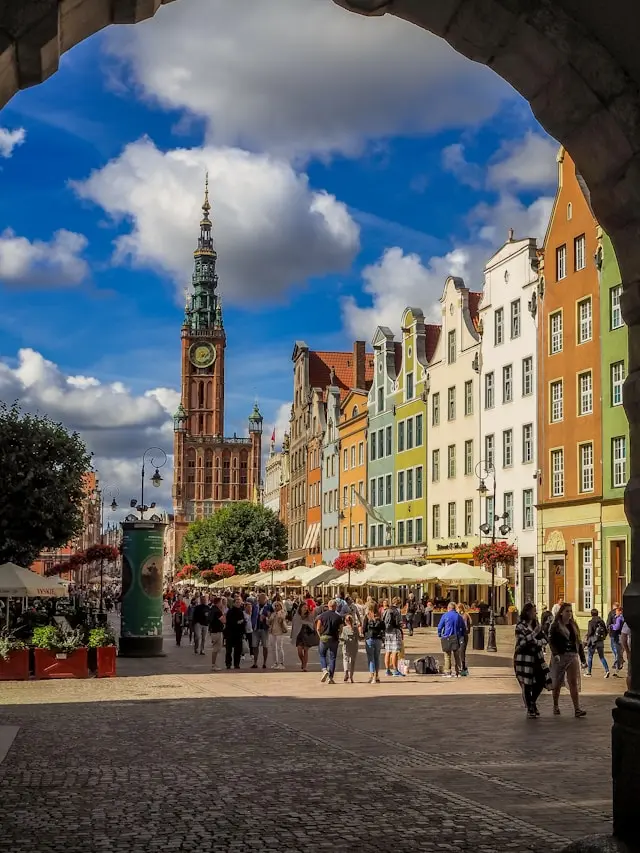
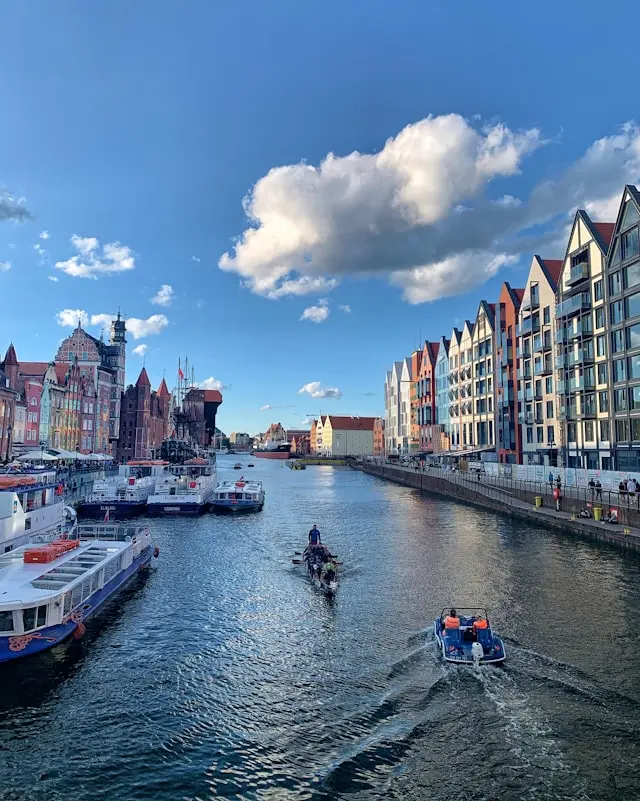
Central Gdańsk, including the Main Town and the canalside walk along the Motława, is compact and largely pedestrianized, making walking the best way to see the historic core. For destinations further out, the city's tram and bus network, run by ZTM, covers all districts, while the SKM commuter train links Gdańsk with the neighboring coastal towns of Sopot and Gdynia.
- Walking: the best way to explore the Main Town and Motława riverfront
- Trams & buses (ZTM): cover the wider city and its residential districts
- SKM commuter trains: connect Gdańsk, Sopot, and Gdynia, useful for day trips along the coast
- Water trams and ferries: seasonal option for reaching Westerplatte and Sopot in spring and summer
Neighborhoods to Explore
Main Town (Główne Miasto)
The historic heart of Gdańsk, home to Długa Street and the Long Market (Długi Targ), Neptune's Fountain, and the city's most iconic Hanseatic architecture. It's the most touristed part of the city and the natural starting point for a first visit.
Granary Island
A former warehouse district across the Motława from the Main Town, now home to the Museum of the Second World War and a growing cluster of restaurants and modern architecture along the riverfront.
Oliwa
A green, residential district a short tram or train ride from the center, known for Oliwa Park, its Baroque cathedral, and a quieter, more local pace than the Main Town.
Wrzeszcz
A lively district close to the airport rail link, popular for its café and restaurant scene, including the redeveloped Garnizon area on the site of a former military garrison.

Things to Do in Gdańsk
The Long Market (Długi Targ) and Długa Street form Gdańsk's showpiece "Royal Way," lined with ornately decorated merchant houses and anchored by Neptune's Fountain, a city icon dating to the early 1600s. St. Mary's Church, one of the largest brick churches in the world, and the Main Town Hall, with its climbable tower, are both close by.
Granary Island's Museum of the Second World War is one of the largest and most comprehensive war museums in Europe, while the European Solidarity Centre, near the historic shipyard, traces the workers' movement that helped bring about the fall of communism across Eastern Europe. For a change of pace, Mariacka Street's amber shops reflect Gdańsk's long-standing nickname as the "World Capital of Amber."
- Długi Targ (Long Market) & Neptune's Fountain - the historic heart of the Main Town
- St. Mary's Church - one of the world's largest brick churches, with a climbable tower
- Museum of the Second World War - major historical museum on Granary Island
- European Solidarity Centre - museum on the Solidarity movement, near the historic shipyard
- Mariacka Street - cobbled lane lined with amber jewelry shops and galleries
- Main Town Hall - Gothic town hall with ornate interiors and a viewing tower
Food in Gdańsk
Gdańsk's food scene draws on classic Polish comfort food alongside its Baltic coastal setting. Pierogi, dumplings stuffed with fillings from potato and cheese to mushroom, are a staple found everywhere from casual milk bars to sit-down restaurants, while żurek, a sour rye soup often served in a hollowed-out bread bowl, is a hearty local favorite.
As a port city, fresh Baltic fish and seafood feature heavily on menus, and the city has a growing craft beer scene alongside more traditional Polish drinking spots. Gdańsk is also home to Goldwasser, a historic herbal liqueur flecked with real gold leaf that's been produced in the city for centuries.
- Pierogi - Poland's signature dumplings, widely available across the city
- Żurek - sour rye soup, often served in a bread bowl
- Baltic fish and seafood, reflecting the city's coastal position
- Goldwasser - a historic gold-flecked herbal liqueur associated with Gdańsk
Day Trips from Gdańsk
Sopot
A short SKM train ride away, Sopot is a resort town known for its long wooden pier - the longest in Europe - sandy beach, and lively nightlife, and is easily combined with a Gdańsk visit.
Gdynia
Also reachable by SKM train, Gdynia offers a contrast to Gdańsk's historic center with its modernist architecture and naval history, including museum ships open to visitors.
Malbork Castle
The largest brick castle in the world and a UNESCO World Heritage Site, Malbork was the headquarters of the Teutonic Knights and is a popular half-day trip by train from Gdańsk.
Westerplatte
The peninsula where the first shots of World War II were fired, Westerplatte can be reached by bus, boat, or organized tour, and includes a monument and the ruins of the original Polish garrison.

Accommodation in Gdańsk
Staying in the Main Town puts nearly all the major sights within walking distance and suits short visits focused on sightseeing, though it's also the busiest and most tourist-priced part of the city. Granary Island, just across the river, offers a quieter, still-central alternative with easy access to the Museum of the Second World War.
For a more local feel or better value, districts like Wrzeszcz offer strong transport links to both the airport and the Main Town, while still being close to a good range of cafés and restaurants. Staying anywhere within walking distance of an SKM station makes day trips to Sopot and Gdynia straightforward.
Local Customs & Safety Tips
Gdańsk is generally a safe city for visitors, with low rates of violent crime and a compact, well-lit historic center. As with any busy tourist area, it's worth keeping an eye on belongings around the Long Market and main train station, particularly in peak summer.
Tipping around 10% is customary at restaurants in Poland, though not obligatory, and rounding up is common for smaller purchases. It's worth remembering that footwear matters here: the Old Town's cobblestones can be slick when wet, so sturdy, comfortable shoes are a practical choice for walking the historic streets.
- Emergency number: 112
- Tipping around 10% at restaurants is customary but not mandatory
- Watch your footing on wet cobblestones in the Main Town
- Keep an eye on belongings in crowded areas like the Long Market and train station
Budget & Costs in Gdańsk
Gdańsk is a relatively budget-friendly European destination, with accommodation, dining, and transport all generally cheaper than in Western European coastal cities. Public transport tickets and museum entry are affordable, and even a comfortable mid-range trip tends to cost noticeably less than a comparable visit to a major Western European capital.
- Budget: hostel or budget hotel stays, milk bar meals, ZTM day tickets for public transport
- Mid-range: three- to four-star hotels, sit-down restaurant meals, museum entry and a Sopot or Malbork day trip
- Splurge: Main Town boutique hotels, fine dining, private guided tours of the historic sights

Frequently Asked Questions about Gdańsk
How many days do you need in Gdańsk? +
Two to three days covers the Main Town's main sights and a day trip to Sopot or Malbork Castle, with an extra day if you want to add Gdynia or Westerplatte.
What is the best time of year to visit Gdańsk? +
Late spring through early autumn (May to September) offers the best weather, with June to August warmest and busiest, and May and September providing a quieter, more comfortable balance.
Is Gdańsk expensive to visit? +
Gdańsk is generally an affordable European destination, with accommodation, food, and transport typically cheaper than in Western European coastal cities.
Do I need a visa to visit Poland? +
Visa requirements depend on your nationality, so check current entry rules for Poland and the Schengen Area with official sources or your travel provider before booking, since these can change.
Is Gdańsk safe for visitors? +
Gdańsk is generally a safe city with low rates of violent crime, though standard precautions around belongings in crowded tourist areas are still worthwhile.
How do you get around Gdańsk without a car? +
Central Gdańsk is walkable, and the city's tram, bus, and SKM commuter train network makes it easy to reach outer districts and nearby towns like Sopot and Gdynia without a car.
What's the best area to stay in Gdańsk? +
The Main Town is most convenient for sightseeing on foot, while Granary Island offers a quieter, still-central alternative, and Wrzeszcz suits visitors who want strong transport links and better value.
What should I pair a Gdańsk trip with? +
Sopot and Gdynia are easy add-ons by commuter train, and Malbork Castle makes a popular half-day trip for those interested in medieval history.