

Table of Contents
About Poznań
Poznań is a historic city on the Warta River in west-central Poland, capital of the Wielkopolska (Greater Poland) region and one of the country's oldest urban centers, dating back to the 10th century. It's often described as one of Poland's most colorful and least touristed major cities, with a compact Old Town that's easy to see on foot and a large student population that gives it a youthful, buoyant atmosphere.
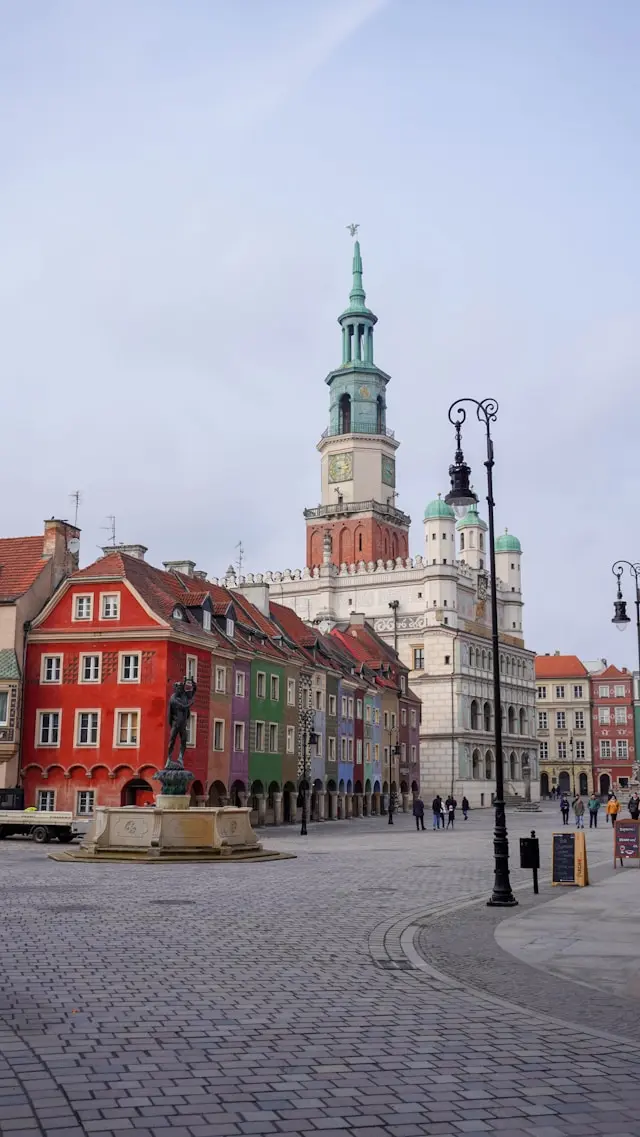
At the city's heart is the Old Market Square, one of the largest in Poland, ringed by pastel merchant houses and famous for the two mechanical goats that emerge from the Town Hall clock tower and butt heads at noon every day - a tradition dating back to 1551. Beyond the square, Poznań spreads across the Warta into a mix of historic Cathedral Island, leafy green space, and increasingly creative outer neighborhoods.
Best Time to Visit & Climate
Poznań has a temperate continental climate with warm summers and cold winters. Summer (June to August) is the most popular season, with daytime highs typically in the low-to-mid 20s Celsius (around 70s°F), long daylight hours, and outdoor cafés spilling onto the Old Market Square. Winters are cold, often at or below freezing, with a reasonable chance of snow.
Late spring (May) and early autumn (September) generally offer a comfortable balance of mild weather and smaller crowds than peak summer, particularly around major international trade fairs, which can fill the city's hotels at certain points in the year. As with much of Poland, layering for changeable weather is a good idea whenever you visit.
- Warmest, busiest months: June–August
- Good balance of weather and crowds: May and September
- Cold winters with occasional snow: December–February
Getting to Poznań
By Air
Poznań–Ławica Airport, about 5 km west of the city center, is one of Poland's oldest airports and handles a range of domestic and international routes. Local bus lines connect the airport to Poznań Główny railway station in around 20 minutes.
By Train
Poznań Główny is a major stop on Poland's rail network, with frequent intercity connections to Warsaw, Wrocław, and other major cities, and is within easy tram or walking reach of the Old Town.
By Bus
Regional and long-distance coach services, including budget operators, connect Poznań with other Polish cities and neighboring countries, offering a cheaper if slower alternative to the train.

Getting Around Poznań
Poznań's Old Town and central squares are compact and best explored on foot, with most major sights within about a 20-minute walking radius of the Old Market Square. For destinations further out, including Cathedral Island and Lake Malta, the city's tram and bus network is extensive and easy to use with a short-term travel ticket.
- Walking: covers the Old Town and most central sights comfortably
- Trams & buses: reach outlying areas like Cathedral Island, Lake Malta, and the outer neighborhoods
- Bike rental: a flat, mostly bike-friendly city, good for reaching Lake Malta or crossing the Warta
- Taxis & rideshare: widely available for late-night travel or the airport
Neighborhoods to Explore
Old Town (Stare Miasto)
Centered on the Old Market Square, this is Poznań's historic core, lined with colorful merchant houses, the Renaissance Town Hall, and a dense cluster of cafés, bars, and restaurants.
Cathedral Island (Ostrów Tumski) & Śródka
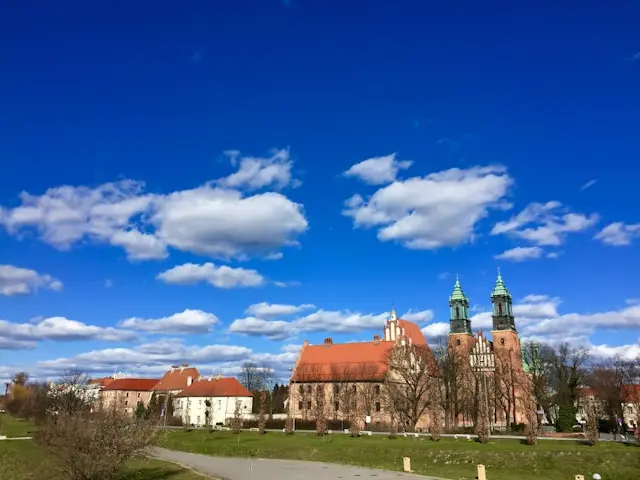
Poznań's oldest settled area, home to the city's cathedral, sits just across the Warta from Śródka, a once-overlooked neighborhood now known for its colorful murals, including a striking 3D piece depicting local history on its market square.
Jeżyce
A leafy, residential district with a village-like feel despite being close to the center, popular for its market hall, independent cafés, and quieter pace than the Old Town.
Wilda
A up-and-coming neighborhood south of the center, home to Stary Browar, a former brewery converted into a striking combination of shopping center and contemporary art space.

Things to Do in Poznań
The Old Market Square (Stary Rynek), with sides stretching 141 meters, is the third-largest market square in Poland and the natural starting point for any visit. Its centerpiece is the Renaissance Town Hall, home to a small history museum and famous for the two mechanical goats that butt heads from its clock tower every day at noon, a tradition unbroken since 1551.
A short tram ride away, Cathedral Island's Poznań Cathedral is one of Poland's oldest churches, while nearby Śródka rewards a wander for its street art. For green space, Lake Malta offers watersports and walking paths, often paired with a visit to the nearby Poznań Zoo, and Cytadela Park, a former Prussian fortress turned public park, includes a military museum with historic aircraft and tanks on display.
- Old Market Square & Town Hall - Renaissance square with the famous noon goat-butting tradition
- Poznań Cathedral (Cathedral Island) - one of Poland's oldest churches
- Śródka - colorful neighborhood known for its striking murals
- Lake Malta & Poznań Zoo - lakeside recreation area paired with the city zoo
- Cytadela Park - former fortress turned park, with a military history museum
- Stary Browar - a former brewery converted into a shopping and art center in Wilda
Food in Poznań
Poznań has its own distinct culinary identity within Poland, most famously St. Martin's croissants (rogal świętomarciński), a rich, crescent-shaped pastry filled with white poppy seed that's a protected regional specialty, traditionally eaten on and around November 11. Duck-based dishes, including duck pierogi, also feature prominently on local menus, reflecting the wider region's culinary traditions.
- Rogal świętomarciński (St. Martin's croissant) - a protected local pastry specialty
- Duck dishes, including duck-filled pierogi, are a regional specialty
- A strong and growing craft beer scene, driven partly by the city's large student population
- The Old Market Square and Jeżyce both have dense concentrations of cafés and restaurants
Day Trips from Poznań
Kórnik Castle
A neo-Gothic castle with an adjoining arboretum, located in the small town of Kórnik about 20 km southeast of Poznań, easily reached by car or local train.
Rogalin Palace
An 18th-century palace and park complex known for its ancient oak trees, some estimated to be centuries old, a short drive from Poznań.
Biskupin
An important archaeological site with a reconstructed Iron Age fortified settlement, offering a look at pre-Roman life in the region, somewhat further afield but a popular day trip for history-minded visitors.

Accommodation in Poznań
Staying in or near the Old Town puts the Market Square and most central sights within easy walking distance, and is the most popular choice for short visits. Note that the square itself can get lively at night, so quieter side streets nearby are worth considering for lighter sleepers.
Jeżyce offers a more residential, neighborhood feel with a still-easy walk into the historic center, while areas near Poznań Główny railway station are convenient for visitors prioritizing transport links over walkability to the Old Town.
Local Customs & Safety Tips
Poznań is generally a very safe city for visitors, with a compact, walkable center and low rates of violent crime. As with any busy tourist area, it's sensible to keep an eye on belongings around the Old Market Square, especially during major events or trade fairs, when the city gets noticeably busier.
Tipping around 10% is customary at restaurants in Poland, though not obligatory. Public transport tickets must be validated on board and are checked regularly, so visitors should keep a valid ticket at all times to avoid fines.
- Emergency number: 112
- Tipping around 10% at restaurants is customary but not mandatory
- Always validate and keep a valid public transport ticket to avoid fines
- Expect higher hotel demand and prices during major international trade fairs
Budget & Costs in Poznań
Poznań is generally an affordable European city break, with prices for accommodation, food, and transport typically lower than in Western European destinations of comparable size. The city's large student population also means a good range of budget-friendly cafés, bars, and casual eateries around the center.
- Budget: hostel or budget hotel stays, casual Polish eateries, single-ride or day transport tickets
- Mid-range: three- to four-star hotels, sit-down restaurant meals, entry to museums and Cytadela Park's attractions
- Splurge: Old Town boutique hotels, fine dining, private guided tours or a day trip to Rogalin or Kórnik

Frequently Asked Questions about Poznań
How many days do you need in Poznań? +
A single full day covers the Old Market Square and Cathedral Island, but two to three days allows time for Lake Malta, Cytadela Park, and a day trip to Kórnik or Rogalin.
What is the best time of year to visit Poznań? +
Late spring through early autumn (May to September) offers the most comfortable weather, with June to August warmest and busiest and May and September a quieter alternative.
Is Poznań expensive to visit? +
Poznań is generally an affordable European city, with accommodation, food, and transport typically cheaper than comparable Western European destinations, though prices rise during major trade fairs.
Do I need a visa to visit Poland? +
Visa requirements depend on your nationality, so check current entry rules for Poland and the Schengen Area with official sources or your travel provider before booking, since these can change.
Is Poznań safe for visitors? +
Poznań is generally a very safe city with low rates of violent crime, and its compact Old Town is comfortable to explore on foot both day and night.
What are the famous goats in Poznań's Town Hall? +
Two small mechanical goats emerge from the Poznań Town Hall clock tower and butt heads twelve times every day at noon, a tradition that dates back to 1551.
How do you get around Poznań without a car? +
Poznań's Old Town is fully walkable, and the city's tram and bus network covers the rest of the city, including Cathedral Island and Lake Malta, without needing a car.
What's the best area to stay in Poznań? +
The Old Town is most convenient for sightseeing on foot, while Jeżyce offers a quieter, more local alternative still within easy walking distance of the center.