
Table of Contents
Overview
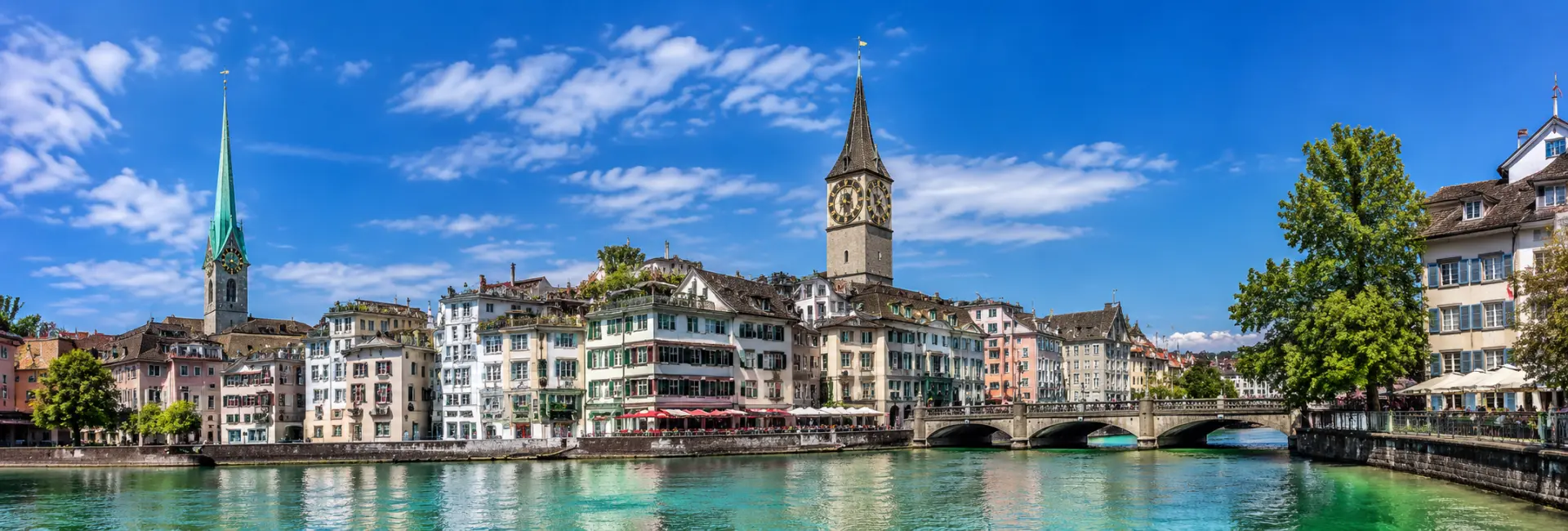
Zurich's Old Town, known locally as the Altstadt, is the historic core of Switzerland's largest city, straddling both banks of the Limmat River between the lake and Zurich's main railway station. Within a compact, largely car-free area, visitors can move from Roman foundations and a medieval hilltop palace site to Reformation-era churches, centuries-old guild halls, and present-day boutiques and cafés, all inside a few blocks.
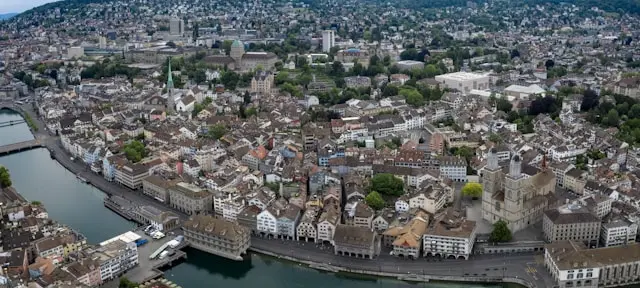
The district is generally split into two halves: the left bank, anchored by the Lindenhof hill, and the right bank, centered on the Niederdorf quarter and the Grossmünster. Rather than a single monument, the Altstadt is best understood as a layered streetscape where each generation built directly on top of the last, making it one of the most rewarding places in the city to explore on foot.
History
Roman and Celtic Origins
The site of today's Old Town was settled long before Zurich existed as a city. The Lindenhof hill, overlooking a natural crossing point on the Limmat, held a Celtic hilltop settlement and later became a Roman customs post known as Turicum, established to monitor river traffic and collect tolls on goods moving along the waterway. By the late Roman period, as the empire's northern frontier came under increasing pressure, a small fortified citadel with towers and thick walls stood on the hill to guard the crossing. Archaeological finds from this era, including an inscribed tombstone naming Turicum, are now held in the Swiss National Museum, with a copy set into a wall near the hill itself.
Medieval Growth
In the early Middle Ages, a royal residence associated with the Carolingian dynasty occupied the same hilltop, cementing Lindenhof's role as the symbolic birthplace of the city and hosting court business tied to the wider Holy Roman Empire before the palace was eventually torn down. Around this core, a market settlement grew on both riverbanks through the 9th to 13th centuries, formalized by the founding of Fraumünster Abbey in 853 and the construction of the Grossmünster's predecessor church, with the two religious houses competing for prestige and influence across the river from one another for generations. Trade guilds became increasingly powerful from the 14th century onward, eventually winning a share of political control over the city and building the riverside guild halls that still line the Limmatquai today, several of which remain in continuous use by their original associations.
The Reformation and Beyond
In the early 16th century, the Grossmünster became the starting point of the Swiss-German Reformation under the preacher and reformer active there from 1519, whose plain, text-focused approach to worship led to the removal of religious imagery from the district's churches and left a lasting mark on their bare, unadorned interiors. The upheaval reshaped daily life across the Old Town, ending centuries of monastic and Catholic ritual centered on the two riverside churches. The Old Town's medieval street pattern survived largely intact even as Zurich industrialized and expanded well beyond its old fortifications in the 19th and 20th centuries, which is why so much of the Altstadt's layout and many of its buildings still reflect centuries of continuous, overlapping use rather than a single historical period.
Recognition / Status
The Old Town is not a single protected monument but a historic urban district whose individual sites carry various heritage protections. The Lindenhof hilltop, with its prehistoric, Roman, and medieval remains, is listed as a Swiss heritage site of national significance, and numerous individual buildings within the Altstadt, including several guild houses along the Limmatquai, hold cantonal or national heritage status as protected cultural property.
While the district as a whole is not inscribed on the UNESCO World Heritage list, it functions as Zurich's de facto open-air heritage showcase, and the city applies strict planning controls to preserve its street pattern, building heights, and historic façades.
Architecture & Streetscape
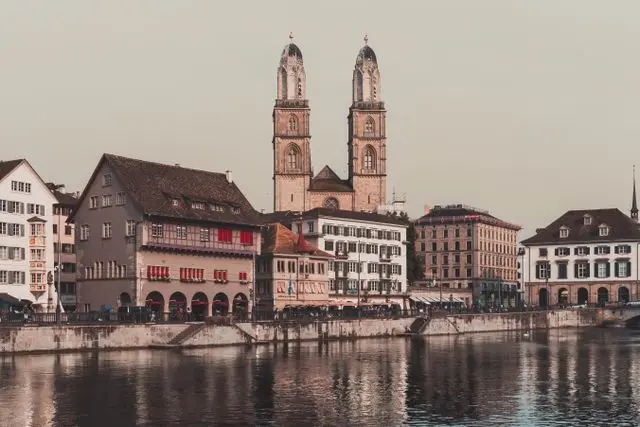
The Altstadt's architecture spans roughly a thousand years within a very small footprint. Romanesque church towers and medieval stone foundations sit alongside Gothic chancels, Baroque-fronted guild houses, and 19th-century townhouses, producing a streetscape that reads as a visible timeline rather than a single unified style.
Narrow, winding lanes climb the slopes on both sides of the river, opening unexpectedly onto small squares, fountains, and courtyards. Along the Limmatquai promenade, a row of former guild halls presents grand, symmetrical façades to the water, while the backstreets of the Niederdorf and the Lindenhof quarter retain a tighter, more organic medieval layout of stepped alleys and irregular building plots.
Key Areas / Sub-districts
Lindenhof and the Left Bank
West of the river, the Lindenhof hill forms a quiet, tree-lined terrace above the water, reached by a short set of steps from the surrounding lanes. The quarter around it mixes narrow medieval streets with upscale shops and is generally calmer than the district's eastern half.
Niederdorf and the Right Bank
East of the Limmat, the Niederdorf is a dense pedestrian zone of alleys, small squares, and closely packed historic buildings. Known locally by its nickname "Dörfli," it functions as a browsing and shopping district by day and becomes one of the city's liveliest nightlife areas after dark.
The Rathaus Quarter and Limmatquai
Running along the river's east bank, the Rathaus quarter takes its name from Zurich's town hall and is defined by the row of historic guild houses facing the Limmatquai promenade. It links the Niederdorf to the Grossmünster and offers some of the district's most photographed river views.
Notable Landmarks
Grossmünster
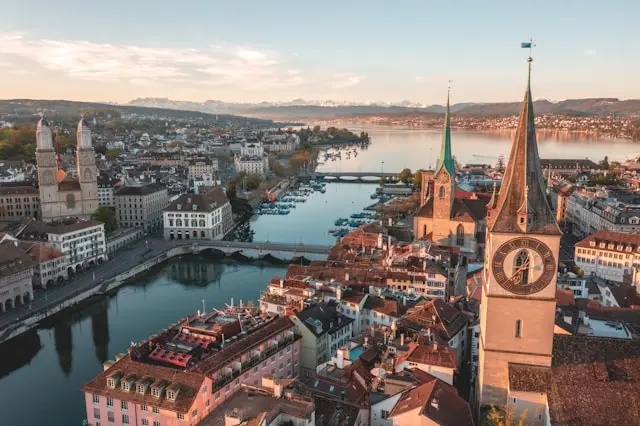
Rising above the right bank with its twin towers, the Grossmünster is the Old Town's most recognizable silhouette and the church where the Swiss Reformation began in the early 1520s. Its Romanesque nave and crypt contrast with a spare, unadorned interior, and one tower can be climbed for a panoramic view over the district and Lake Zurich.
Fraumünster
Founded in 853 on the left bank, the Fraumünster is best known today for its five chancel windows and rose window designed by Marc Chagall in the 1970s, along with an earlier stained-glass window by Augusto Giacometti. A small crypt museum beneath the choir displays remnants of the original medieval abbey.
St. Peter's Church and the Lindenhof
St. Peter's, considered Zurich's oldest parish church, is topped by a clock face wider than any other on a European church tower. A short walk away, the Lindenhof terrace preserves traces of the Roman fort and Carolingian palace that once stood there, alongside a giant outdoor chessboard used by locals today.
Guild Houses and the Rathaus
Along the Limmatquai, a row of former guild halls, including houses built for the spice traders, carpenters, and other medieval trades, showcase Baroque and late-medieval façades and now serve largely as restaurants and event spaces. Several were rebuilt in the 18th century on the footprints of much older medieval houses, so their grand street fronts often conceal a far longer history than their current appearance suggests. Nearby, the Rathaus (town hall) sits directly over the river on its own bridge foundations, a reminder of the guilds' historic political power and of an era when trade associations, rather than a single council, effectively ran the city.
Ways to Experience It
Most visitors explore the Altstadt on foot, since its historic core is compact, largely pedestrianized, and easily covered in a half-day walk that links both riverbanks.
- Self-guided walking route linking Lindenhof, the Niederdorf, and the two main churches
- Guided walking or guild-history tours covering the district's medieval trade politics
- Church visits to the Grossmünster tower and the Fraumünster's Chagall windows
- A river stroll or boat trip along the Limmat and Limmatquai promenade
- Evening exploration of the Niederdorf's bars and restaurants
Best Time to Visit
The Old Town can be visited year-round, since its main draws are outdoor streetscapes and church interiors that remain open regardless of season. Weather still shapes the experience: late spring and early autumn tend to offer mild temperatures for walking without the peak crowds of midsummer.
Summer, especially June through August, brings the heaviest tourist numbers and the liveliest outdoor café and nightlife scene in the Niederdorf. Early mornings, before shops and tour groups fill the lanes, are the quietest time to see the district's squares and riverside views, while a winter visit trades some outdoor comfort for near-empty streets and Christmas market stalls in the surrounding city center.
Visitor Tips
The Old Town has no single entrance or ticket; it can be entered from any surrounding street, most commonly from the main railway station via the Bahnhofstrasse or from Bellevue at the lake end of the Limmatquai.
- Wear comfortable, sturdy shoes; many streets are cobbled and some sections around Lindenhof involve stairs
- Church visits are generally free, though church towers and the Fraumünster's windows often charge a small entrance fee
- Trams 4, 15, and several bus routes stop at the edges of the district; the core itself is best covered on foot
- Shops in the Altstadt typically close earlier on Sundays, so plan shopping visits for weekdays or Saturday
- The Niederdorf gets considerably busier and louder at night, which suits some visitors and not others
FAQs about visiting Old Town (Altstadt), Zurich
What is Zurich's Old Town known for? +
It is known for its well-preserved medieval streets, its role as the birthplace of the Swiss Reformation at the Grossmünster, and landmarks such as the Fraumünster's Chagall windows and the historic guild houses along the Limmatquai.
How much time do I need to see the Old Town? +
A focused walk covering the main churches, Lindenhof, and the Niederdorf takes about half a day, though a full day allows time to linger in cafés, browse shops, and add a guided tour or church tower climb.
Is it free to visit the Old Town? +
Walking through the district and entering most church naves is free, but some attractions, such as church towers or the Fraumünster's stained-glass windows, charge a small entrance fee.
When is the best time to visit? +
Late spring and early autumn offer comfortable weather with fewer crowds than midsummer, while early mornings and winter visits are the quietest times to see the squares and riverside views.
How do I get to the Old Town? +
It sits between Zurich's main railway station and Lake Zurich, within easy walking distance of both, and is also served by several tram and bus lines that stop at its edges.
Is the Old Town suitable for visitors with limited mobility? +
Much of the district is flat and pedestrianized, but some areas, particularly around the Lindenhof hill, involve steps and sloped cobbled streets that can be difficult for wheelchairs or strollers.
What else is nearby the Old Town? +
The Bahnhofstrasse shopping boulevard, Lake Zurich's promenades, and the Swiss National Museum are all within easy walking distance and pair naturally with a visit to the Altstadt.
