
Table of Contents
Overview
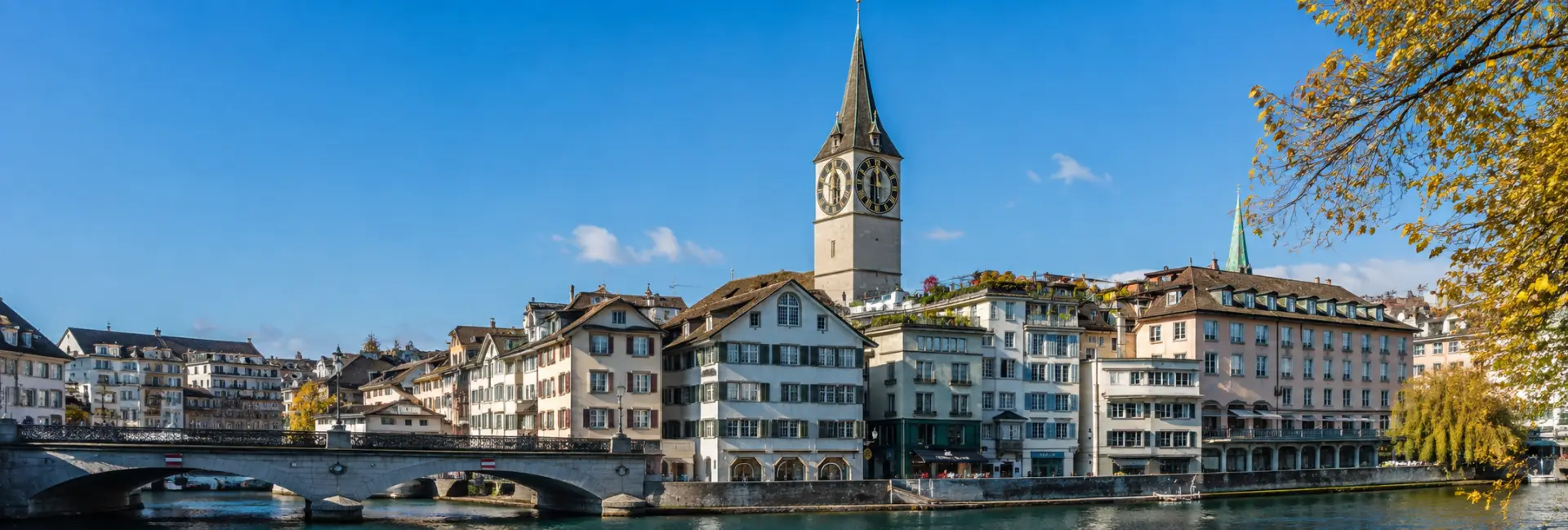
St. Peter's Church (Kirche St. Peter) is one of the four main historic churches in Zurich's Old Town, standing alongside the Grossmünster, Fraumünster, and Predigerkirche. Nestled upon a slight elevation in the narrow, winding alleys of the Altstadt, it is instantly recognizable by its massive clock tower. The church is a quiet, contemplative anchor in the bustling historic center, offering a fascinating glimpse into the city's architectural and religious evolution.
While perhaps less heavily decorated than the stained-glass-filled Fraumünster, St. Peter's holds the distinction of being the oldest parish church in Zurich. Its history is layered, with the current building reflecting centuries of additions, rebuilds, and renovations. The church's most famous feature-its enormous clock face-is not just a local landmark but holds the record for being the largest church clock face in all of Europe, measuring an impressive 8.7 meters in diameter.
Today, St. Peter's remains an active place of worship for the local Reformed congregation. However, it also warmly welcomes visitors seeking to admire its history, its elegant baroque interior, or simply to find a moment of peace away from the busy shopping streets just a few blocks away.
History and Origins
The Oldest Parish in Zurich
Archaeological evidence suggests that the site of St. Peter's has been used for religious purposes since the 8th or 9th century, making it the oldest parish location in the city. The original foundations lay just outside the walls of the ancient Roman customs post known as Turicum. Over the centuries, several different church structures were built and subsequently replaced on this exact spot.
The first documented church on the site dates to the 13th century in the Romanesque style. However, the building seen today is primarily the result of major construction during the 13th century (for the tower) and the early 18th century (for the nave). Interestingly, for much of its history, the church tower and the nave were owned by two different entities. The tower belonged to the city of Zurich-used primarily for fire watching and timekeeping-while the nave belonged to the parish.
The First Protestant Church
St. Peter's holds a significant place in the religious history of Switzerland. In 1705, the old Gothic nave was entirely demolished and replaced by the current baroque structure. This new nave holds the distinction of being the first church built in Zurich explicitly for the Protestant Reformed faith. Its design deliberately broke with Catholic architectural traditions, emphasizing preaching and the spoken word rather than the altar and sacraments.
The Iconic Clock Tower
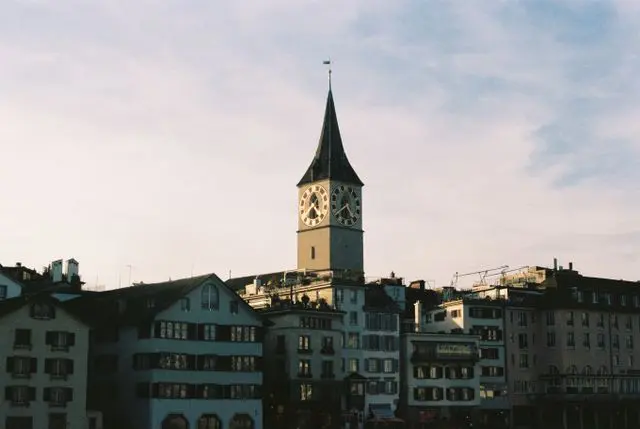
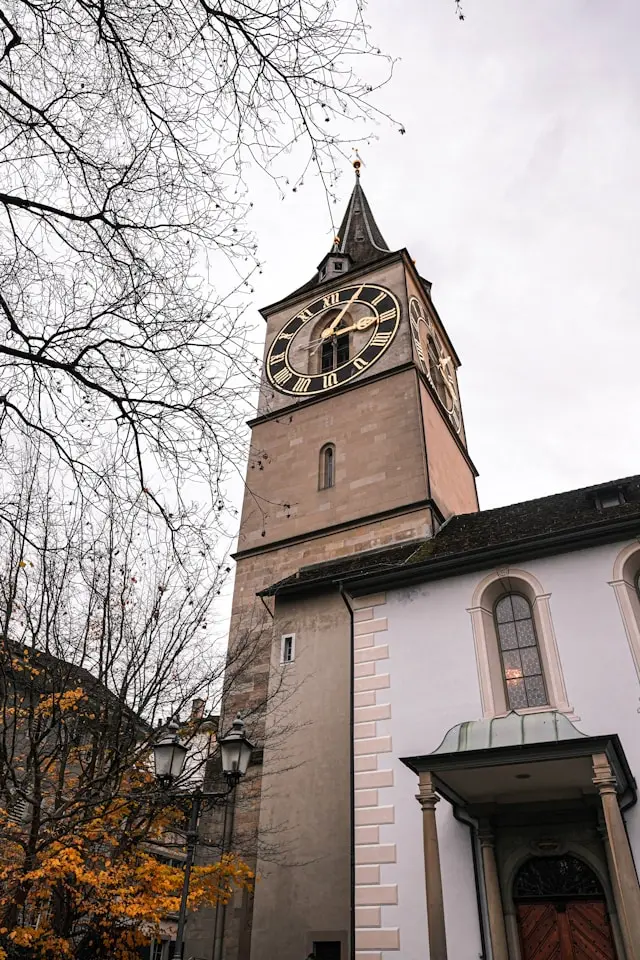
The undisputed highlight of St. Peter's Church is its towering spire and the colossal clock faces that adorn its four sides. The clock was installed in 1538 and was intended to be readable from almost anywhere in the city, serving as the definitive timekeeper for Zurich's citizens and merchants.
The sheer scale of the clock is staggering when viewed up close. Each of the four dials measures 8.7 meters (28.5 feet) in diameter. To put that into perspective, the minute hand alone is 5.73 meters long. For centuries, this clock was the official local time for Zurich, and all other public clocks in the city were synchronized to it. Up until the early 20th century, a fire watchman was stationed in the tower 24 hours a day. From his high vantage point, he would look out over the wooden rooftops of the city, ready to sound the alarm bell at the first sign of smoke.
Architecture and Interior Design
The Exterior
The exterior of St. Peter's is a study in contrasting styles. The heavy, robust Romanesque base of the tower dates back to the early 13th century, while the upper sections and the spire were added later. The nave, constructed in the early 1700s, presents a much lighter, early Baroque facade. Despite these different building phases, the structure feels remarkably cohesive and anchors the charming St. Peterhofstatt square perfectly.
The Baroque Interior
Stepping inside, the interior of St. Peter's is surprisingly bright, spacious, and elegantly restrained. Following the principles of the Reformation, the church lacks the ornate statues, side chapels, and grand altars typical of Catholic churches of the same era. Instead, the focus is drawn to the intricately carved wooden pulpit, which is centrally located so the congregation could clearly hear the sermon.
The nave is characterized by its large, clear glass windows that flood the space with natural light. The vaulted ceiling features delicate, pale stucco work-subtle floral and geometric patterns that provide a sense of refined beauty without being overly ostentatious. The galleries running along the sides were designed to maximize seating capacity for the growing Protestant congregation in the 18th century.
Cultural and Religious Significance
St. Peter's has always been closely intertwined with the civic life of Zurich. Its role as the primary fire-watch tower and the keeper of the city's official time meant it was indispensable to the daily functioning of the town. Furthermore, several prominent figures in Zurich's history are associated with the church.
Most notably, the first mayor of Zurich, Rudolf Brun, who revolutionized the city's government in the 14th century by introducing the guild system, is buried here. His grave is located near the tower wall, cementing the church's status as a site of profound civic and historical importance to the local population.
Ways to Experience It
Self-Guided Visits
St. Peter's is best experienced on a quiet, self-guided visit. The church is open to the public during the day, and entry is free. Visitors can wander through the light-filled nave, admire the stucco ceiling and the beautiful baroque organ, and read the informative plaques that detail the building's long history. The square outside, St. Peterhofstatt, is one of the most picturesque in the city, surrounded by historic buildings and shaded by trees-a perfect spot to sit and admire the giant clock face.
Concerts and Services
The acoustics inside the baroque nave are excellent. St. Peter's frequently hosts classical music concerts, choir performances, and organ recitals, particularly during the summer months and the Advent season. Attending a concert here is a wonderful way to experience the space as it was intended to be used. Additionally, traditional Protestant church services are held every Sunday morning, which are open to respectfully attending visitors.
Best Time to Visit
The church is beautiful at any time of year. Visiting in the mid-morning or mid-afternoon ensures the best natural light streaming through the large windows, illuminating the delicate stucco work on the ceiling. Because it is slightly tucked away from the main thoroughfare of the Limmat river, it rarely feels overwhelmingly crowded. For a special atmosphere, visit during the weeks leading up to Christmas, when the surrounding Old Town is decorated and the church often hosts festive musical events.
Visitor Tips and Etiquette
Respecting the Space
As St. Peter's is an active place of worship, visitors should maintain a quiet and respectful demeanor. Men are generally expected to remove their hats upon entering. Photography is usually permitted for personal use, provided it does not disrupt those who are praying or disturb ongoing services or rehearsals. Flash photography and tripods should be avoided.
Accessibility
The main entrance to the church nave is accessible for wheelchair users and those with limited mobility, though the cobblestone streets leading up to the church through the Old Town can be somewhat uneven. Unfortunately, the historic clock tower itself is not generally open to the public for climbing, so views are restricted to the ground level.
Nearby Attractions
St. Peter's central location makes it an ideal stop on a walking tour of Zurich's Altstadt.
- Lindenhof: Just a short walk up the hill from the church is the Lindenhof, a historic, tree-shaded public square built on the site of a Roman castle, offering fantastic elevated views over the Limmat river and the right bank of the city.
- Fraumünster: A five-minute walk south brings you to the Fraumünster church, famous for its stunning stained-glass windows designed by Marc Chagall.
- Bahnhofstrasse: A block to the west lies Zurich's premier shopping avenue, lined with luxury boutiques, department stores, and cafes.
FAQs about visiting St. Peter's Church Zurich
Is it free to visit St. Peter's Church? +
Yes, entry to the church nave is completely free of charge for all visitors. Donations toward the maintenance of the historic building are welcome but not required.
Can you climb the clock tower for the view? +
No, unlike the towers of the Grossmünster, the clock tower of St. Peter's Church is generally not open to the public for climbing. It is a working tower containing the massive clock mechanism and bells.
Is the clock face really the largest in Europe? +
Yes, the clock face on St. Peter's Church measures 8.7 meters in diameter, which holds the record for the largest church clock face in Europe, easily beating the famous clock face of Big Ben in London (which is 7 meters).
When are the church services held? +
Traditional Reformed Protestant services are typically held on Sunday mornings. During this time, the church is closed to casual tourist visits, though visitors are welcome to respectfully join the congregation for the service.
Are there guided tours available? +
The church itself does not run regular, daily guided tours for individual visitors. However, the church is frequently included as a key stop on general historic walking tours of Zurich's Old Town offered by the city tourism office.
Is the church wheelchair accessible? +
The main nave of the church is accessible, though visitors should be prepared to navigate the uneven cobblestone streets of the surrounding historic district to get there.
How do I get to the church using public transport? +
The church is located in a pedestrianized zone. The easiest way to reach it is to take a tram to the "Paradeplatz" or "Rathaus" stops and walk a few minutes into the narrow streets of the Old Town.
