
Table of Contents
Overview
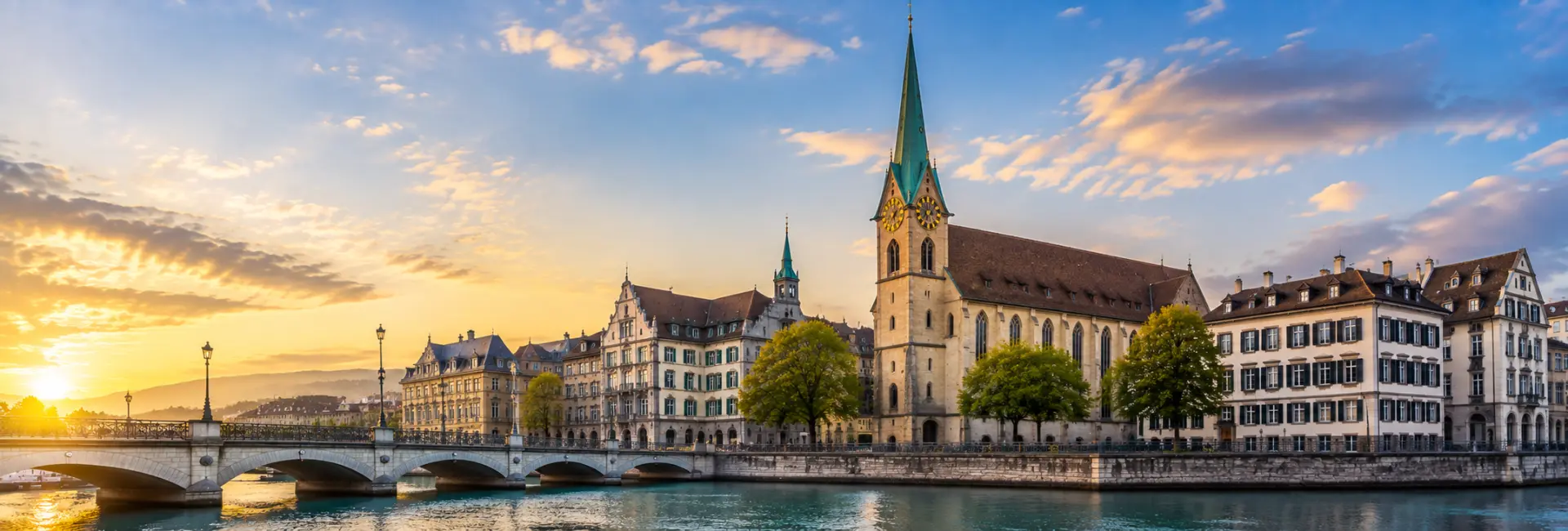
On the western bank of the Limmat, facing the Grossmünster across the water, stands the Fraumünster, a slender-spired church whose quiet exterior gives little away about the power it once wielded over Zurich. For centuries this was not simply a place of worship but the seat of an abbess who governed much of the city in her own right, answerable only to the Holy Roman Emperor himself.
Most visitors today come for a very different reason: five glowing stained-glass windows designed by Marc Chagall in the choir, among the most celebrated works of 20th-century religious art anywhere in Europe. But the building rewards a slower look too, from its Gothic nave and Romanesque crypt to a cloister decorated with frescoes recounting the abbey's legendary founding. Together, the medieval history and the modern art make the Fraumünster one of the more layered stops in Zurich's Old Town, small in footprint but dense in what it has to show.
The church's modest scale is part of its appeal. Unlike a sprawling cathedral where a single artwork can feel like one attraction among many, the Fraumünster's compact choir concentrates attention squarely on the windows, so even a brief visit tends to leave a strong impression. That contrast between an unassuming building and an outsized artistic reputation is much of what draws people across the river to see it.
History: From Imperial Abbey to Reformed Church
A Royal Foundation
The Fraumünster traces its origins to 853, when the East Frankish king Louis the German founded a Benedictine abbey here for his daughter Hildegard, installing her as its first abbess. According to legend, Hildegard and her sister Bertha were led to the site by a deer with glowing antlers while travelling to pray at the graves of Zurich's patron saints, a story later commemorated in the abbey's own frescoes. Louis endowed the convent generously, granting it lands stretching well beyond the city and placing it under his direct protection.
The Age of the Abbesses
In 1045, King Henry III extended the abbey's privileges further, granting its abbess the right to hold markets, collect tolls, and mint coins, effectively making her the ruler of Zurich in all but name. For roughly two centuries the abbesses of the Fraumünster stood at the center of the city's political and economic life, a level of female authority that was unusual anywhere in medieval Europe. Their power gradually receded from the 14th century onward as Zurich's guilds, backed by an increasingly independent city council, reclaimed control over local affairs.
Dissolution and Reformation
The abbey's long institutional life ended in 1524, when Zurich's last abbess, Katharina von Zimmern, voluntarily surrendered the convent to the city during the upheaval of the Reformation led by Huldrych Zwingli. The Fraumünster has functioned as a Reformed parish church ever since, and the surviving abbey buildings were largely demolished in the late 19th century to make way for Zurich's Stadthaus, leaving the church itself as the main physical trace of the once-powerful institution. Von Zimmern's decision to hand over the abbey peacefully, rather than resist the city's growing authority, is often credited with sparing Zurich the kind of violent upheaval that accompanied the Reformation in some other cities, and her name is still commemorated within the church today.
Architecture
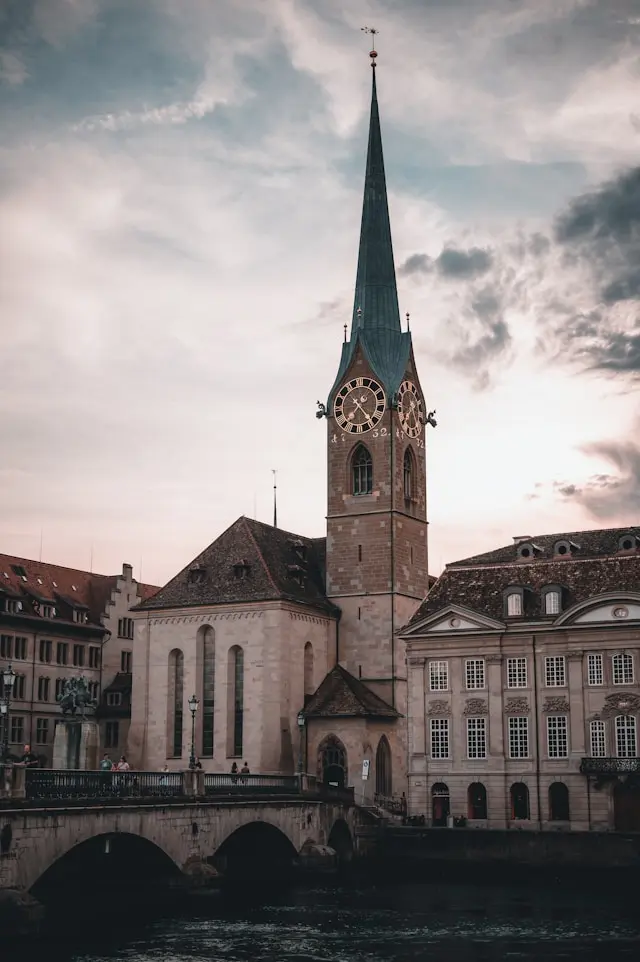
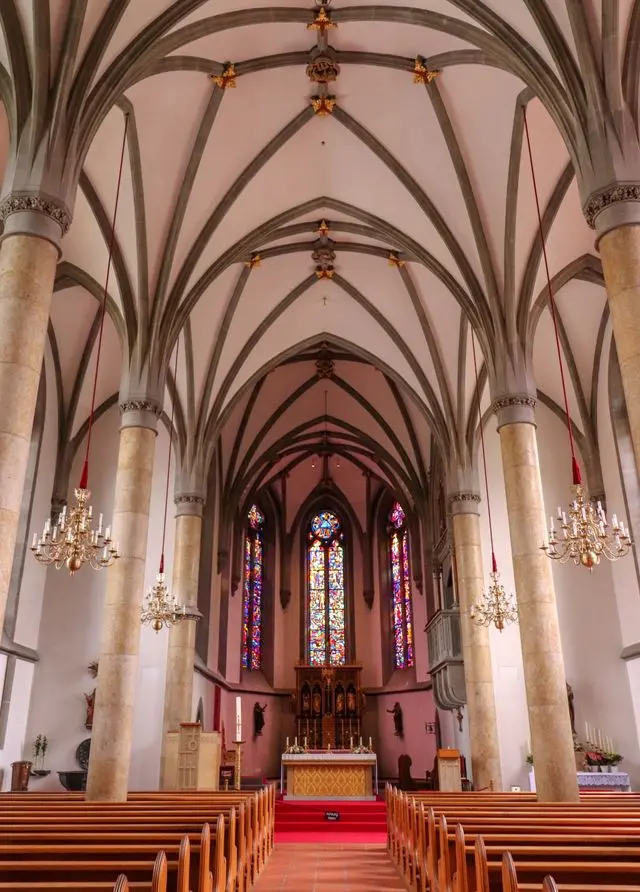
What stands today is not a single building from one era but a layered structure shaped by roughly a thousand years of rebuilding. The oldest surviving portions lie underground in the Romanesque crypt, dating back to the abbey's earliest centuries, while the choir and much of the visible church were reworked in Gothic style during the 13th century under Abbess Judenta Hagenbuch. The result is an interior that reads as restrained Gothic rather than heavily ornamented, in keeping with the plain aesthetic the Reformed church later favored.
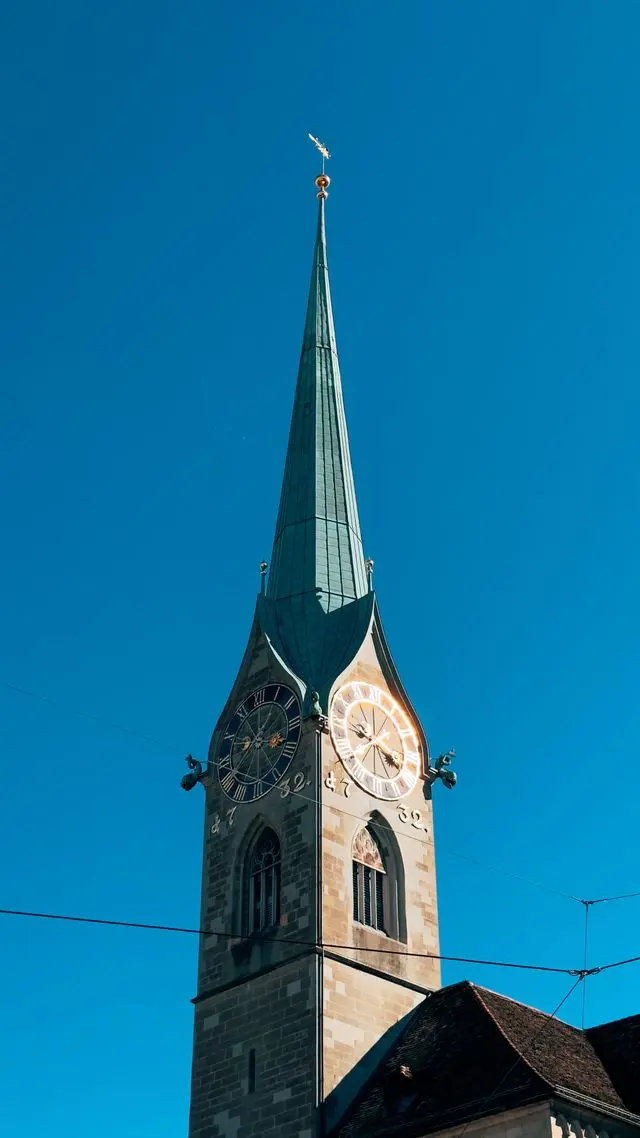
Outside, the building is most easily recognized by its slim green spire, a comparatively modest counterpart to the twin towers of the Grossmünster across the river, and by its position facing directly onto the Münsterhof, one of the largest and most handsome squares in the Old Town. A surviving cloister, tucked beside the church, connects the present building to the footprint of the medieval abbey and now houses some of its most striking artwork.
The Chagall & Giacometti Windows
The church's five choir windows were designed by the Russian-French artist Marc Chagall, then in his eighties, and installed in 1970 following a multi-year collaboration with the French glass painter Charles Marq. Each window uses a distinct dominant color and illustrates its own biblical narrative: the Prophets in yellow and green, the Law in blue and green, Christ's life in deep blue, Zion in fiery red, and the Apostles in violet and gold. Chagall added a smaller rose window in the south transept in 1978, depicting the stages of Genesis around a central image of Noah's Ark.
A second major work of stained glass, predating Chagall's by decades, hangs in the north transept: Augusto Giacometti's "Heavenly Paradise," a large window in warm, fiery tones completed in the 1940s. Between the two artists' contributions, the Fraumünster's windows span two very different visual languages within the same small building, and comparing them side by side is one of the more rewarding things to do during a visit. Chagall reportedly spent hours simply sitting in the empty church before agreeing to take on the commission, and the finished windows are often described as being designed with the specific proportions and light of this particular choir in mind, rather than as a generic scheme that could have gone anywhere.
The Crypt Museum & Other Notable Features
Beneath the choir lies a Romanesque crypt whose foundations reach back to the abbey's founding in the 9th century. Sealed for much of the 20th century, it was reopened to the public in 2016 and now houses a small museum tracing the site's archaeology and the broader history of the Reformation in Zurich.
- A cycle of cloister frescoes by Paul Bodmer, painted between the 1920s and 1940s, illustrating the abbey's founding legend and the martyrdom of Zurich's patron saints
- An organ with 5,793 pipes, the largest in the canton of Zurich, used for regular recitals and services
- The Romanesque crypt museum, combining archaeological remains with exhibits on the abbey and the Reformation
- A memorial to Katharina von Zimmern, the last abbess, who handed the convent over to the city in 1524
Taken together, these features mean the Fraumünster rewards visitors who go beyond the windows: the crypt and cloister in particular hold as much of the site's genuine history as the choir does, even though they draw far less attention from passing tourists.
Ways to Experience It
A visit to the Fraumünster is compact by design: the church itself is small, and most of what draws people can be seen in under an hour. The main event for most visitors is simply standing in the choir in front of the Chagall windows, ideally taking a slow circuit to view each one as the light shifts.
- Self-guided viewing of the Chagall and Giacometti windows in the choir and transept
- A stop in the crypt museum beneath the choir for the site's archaeology and Reformation history
- A look at Paul Bodmer's cloister frescoes depicting the abbey's founding legend
- Organ recitals and choral concerts held periodically in the nave
- Guided tours focused specifically on the Chagall windows, available by advance booking
Best Time to Visit
Because the Chagall windows are the main draw, light matters more here than at most churches: the choir windows are generally at their most vivid on a bright day, and many visitors aim for a late-morning or early-afternoon visit when direct sun brings out their color most fully. Weekday mornings tend to be noticeably quieter than weekend afternoons, when tour groups passing through the Old Town often stop in.
The church keeps shorter hours in the winter months than in summer, and Sunday visits are typically only possible after the morning service has concluded, so checking the current seasonal schedule before planning around a specific day is worthwhile.
Visitor Tips
- A modest admission fee applies for tourist visits to see the windows; entry for prayer and quiet reflection is free
- Photography is generally restricted inside the church to protect the artwork, so check current signage before taking pictures
- The crypt museum is not wheelchair accessible, though the main church has step-free access
- The church sits directly on the Münsterhof square, a short and level walk from Paradeplatz and about ten minutes on foot from the main train station
- Pairing a visit with the Grossmünster just across the Münsterbrücke bridge makes an efficient way to see Zurich's two most famous churches together
- Short-notice closures or reduced hours can occur around services or events, so it's worth confirming opening times on the day of a planned visit
Nearby Attractions
The Fraumünster sits at the edge of the Münsterhof, one of the largest squares in Zurich's Old Town, putting several other landmarks within easy walking distance.
- Grossmünster – Zurich's twin-towered rival church, just across the river via the Münsterbrücke bridge
- Münsterhof – the historic square in front of the church, lined with medieval guild houses
- St. Peter's Church – home to the largest clock face in Europe, a short walk away
- Bahnhofstrasse and Paradeplatz – Zurich's main shopping street and a major transit hub, both nearby
- Lindenhof – a raised terrace with river views, a few minutes' walk to the northwest
FAQs about visiting the Fraumünster
What is the Fraumünster best known for? +
It's best known for the five stained-glass windows Marc Chagall designed for the choir in 1970, along with its history as a powerful medieval abbey once ruled by an abbess with near-sovereign authority over Zurich.
Is there an entrance fee? +
Yes, a modest fee applies for tourist visits to see the windows and crypt, though entry for prayer or quiet reflection is free of charge.
How long does a visit take? +
Most visitors spend 30 to 60 minutes, enough time to view the Chagall and Giacometti windows, walk through the crypt museum, and see the cloister frescoes.
Can I take photos inside? +
Photography is generally restricted inside the church to protect the artwork, so it's worth checking current rules on-site rather than assuming photos are allowed.
Is the Fraumünster accessible for visitors with mobility limitations? +
The main church has step-free access, but the crypt museum beneath the choir is not wheelchair accessible.
How do I get to the Fraumünster? +
It sits directly on the Münsterhof square in the Old Town, a short walk from Paradeplatz and about ten minutes on foot from Zurich's main train station, with several tram lines stopping nearby.
What else is nearby? +
The Grossmünster is just across the river via the Münsterbrücke bridge, and St. Peter's Church, Bahnhofstrasse, and the Lindenhof terrace are all within a few minutes' walk.
Why was the Fraumünster once so powerful? +
From 1045 onward its abbess held rights to mint coins, collect tolls, and hold markets, making her the effective ruler of Zurich until the city's guilds and council gradually reclaimed that authority in the following centuries.
