
Table of Contents
Overview
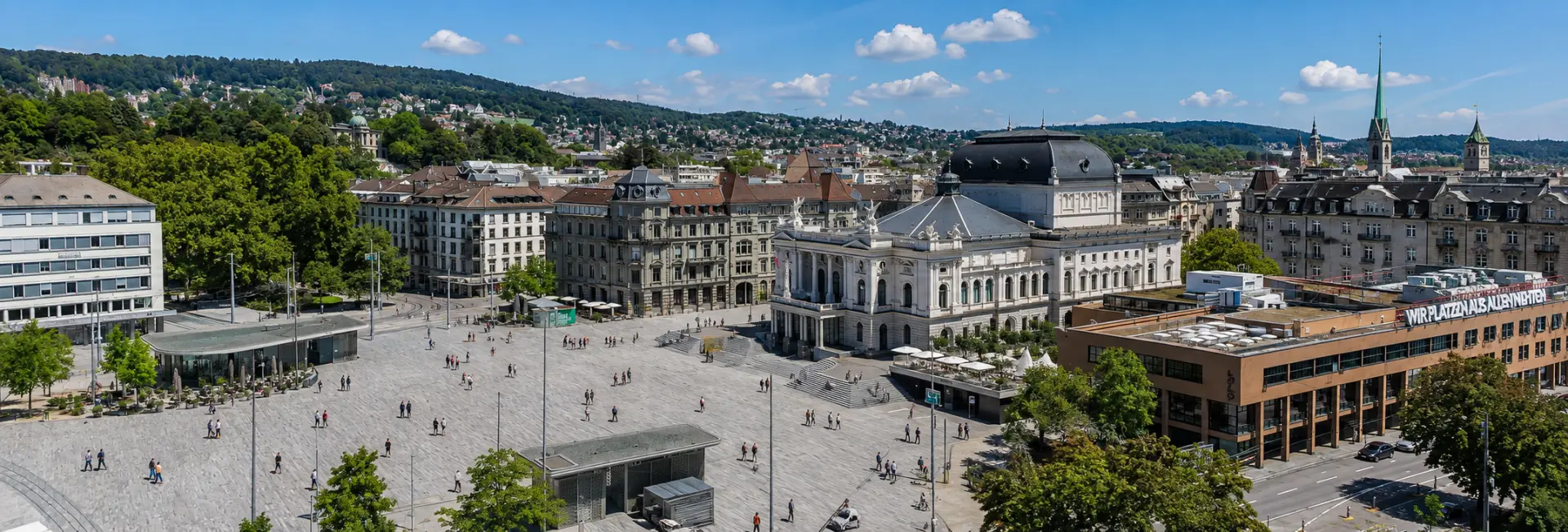
The Zürich Opera House (Opernhaus Zürich) is one of the most prestigious performing arts centers in Europe, standing as a testament to the city's deep commitment to high culture. Located on the expansive Sechseläutenplatz, right by the shores of Lake Zurich, it is a focal point of artistic excellence in Switzerland. The opera house enjoys an international reputation not only for its phenomenal acoustics and stunning architecture but also for the remarkably high caliber of its productions.
Despite being relatively intimate compared to the massive opera houses of Paris or Vienna, the Opernhaus Zürich frequently attracts the world's most renowned singers, conductors, and directors. It serves as the home base for both the Zürich Opera and the prestigious Ballett Zürich. The institution is famous for its adventurous programming, which seamlessly blends beloved classical repertoire with innovative, contemporary stagings and world premieres.
A visit to the Zürich Opera House is a deeply immersive cultural experience. Whether you are attending a lavish, full-scale Wagnerian epic, a delicate Mozart opera, or simply taking a guided architectural tour of the opulent auditorium, the building radiates a profound sense of theatrical magic and historical continuity.
History of the Opera House
Origins and the First Theatre
The history of opera in Zurich dates back much further than the current building. The city's first dedicated theater, the Aktientheater, was established in the 1830s. It became a vital cultural hub, particularly notable for hosting Richard Wagner during his period of exile in Switzerland. Wagner actually conducted there and developed several of his groundbreaking musical theories during his time in Zurich. Unfortunately, the Aktientheater burned down completely in 1890, leaving the city without a primary performance venue.
Construction of the New Opernhaus
Following the fire, the citizens of Zurich moved quickly to build a replacement. The current building was constructed in an astonishingly short period, opening just over a year later in 1891. Originally known as the Stadttheater (City Theatre), it hosted a mix of spoken drama, opera, and musical events. It wasn't until the 1970s, after the spoken theater moved to the new Schauspielhaus, that the building was renamed the Opernhaus Zürich and dedicated exclusively to musical theater and ballet.
Modern Renovation
By the early 1980s, the historic building required significant modernization to meet the technical demands of contemporary productions. Following a highly publicized and controversial local referendum-which famously sparked youth riots over the funding of high culture versus alternative arts-the city ultimately voted to fund the renovation. The opera house was comprehensively restored and expanded between 1982 and 1984, upgrading its stage machinery while meticulously preserving its historic auditorium.
Architecture and Design
The Neo-Baroque Exterior
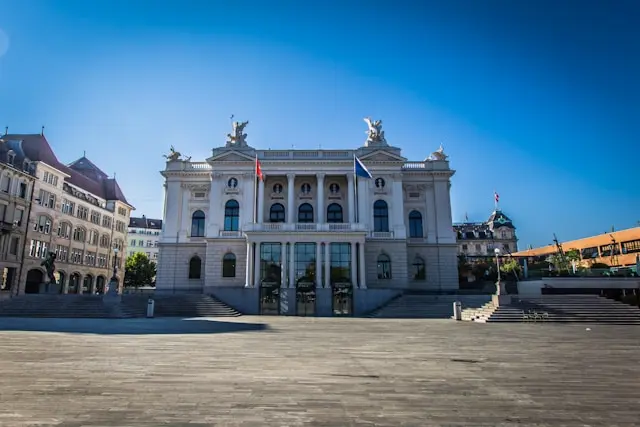
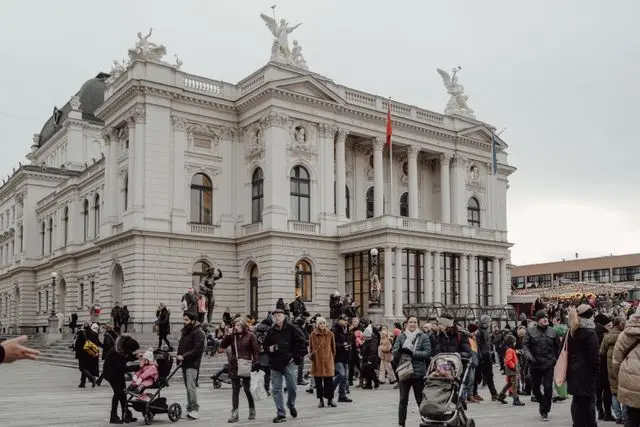
The Zürich Opera House was designed by the renowned Viennese architectural firm Fellner & Helmer, who were responsible for building dozens of theaters across Europe in the late nineteenth century. The exterior is a magnificent example of neo-baroque architecture, built with light-colored stone and featuring a highly ornate, classical facade. The entrance is adorned with grand columns, intricate sculptural reliefs, and busts of famous composers, authors, and playwrights, including Mozart, Wagner, and Schiller, serving as a visual tribute to European cultural history.
The Opulent Auditorium
The true architectural marvel lies within the auditorium. Designed in a traditional horseshoe shape, the hall is relatively small, seating around 1,100 people. This intimate scale is one of the opera house's greatest assets, ensuring that even seats in the upper galleries offer excellent acoustics and a strong sense of connection to the stage. The interior is lavishly decorated in red velvet, gold leaf, and elaborate stucco work, topped with a stunning painted ceiling and a massive, glittering crystal chandelier that evokes the quintessential glamour of European opera.
World-Class Performances and Ballet
The Opernhaus Zürich operates on a repertory system, meaning it performs a rotating schedule of different productions throughout the season. This allows for an incredibly diverse offering, ranging from the baroque masterpieces of Handel to the grand Italian operas of Verdi and Puccini, right through to challenging contemporary works.
In addition to vocal performances, the venue is home to Ballett Zürich, one of Europe's leading ballet companies. Under the direction of celebrated choreographers, the ballet company presents both classical narrative ballets-such as Swan Lake and The Nutcracker-and highly athletic, modern dance pieces. The orchestra playing in the pit, the Philharmonia Zürich, is a world-class ensemble in its own right, ensuring the musical foundation of every performance is flawless.
Ways to Experience It
Attending a Performance
The primary and most rewarding way to experience the Opera House is, of course, to attend a live performance. The season typically runs from September through July. Because of the intimate size of the theater, performances frequently sell out, especially those featuring star soloists or highly anticipated premieres. Booking tickets well in advance is essential. For spontaneous visitors, the box office sometimes releases a limited number of standing-room or restricted-view tickets shortly before curtain time.
Guided Backstage Tours
If you cannot attend a performance, the Opera House offers fascinating guided tours during the day. These tours provide a rare glimpse behind the curtain, exploring the complex stage machinery, the sprawling costume and prop departments, and the rehearsal spaces. It is a fantastic opportunity to appreciate the immense logistical effort and the highly skilled craftsmanship required to mount large-scale theatrical productions.
Best Time to Visit
The performance season dictates the best time to visit. To catch the most anticipated premieres and galas, the opening months of the season in autumn, or the festive period around December, are ideal. During the summer, the Opera House often hosts "Oper für alle" (Opera for All), a spectacular free event where a live performance is broadcast on a massive screen outside in Sechseläutenplatz, drawing thousands of picnicking locals for a communal celebration of music under the stars.
Visitor Tips and Etiquette
Dress Code and Atmosphere
While the atmosphere at the Zürich Opera House is deeply respectful of the art form, the dress code is more relaxed than one might expect. For standard repertoire evenings, smart-casual attire is perfectly acceptable, though many attendees do choose to dress up, particularly for premieres or weekend performances. Formal evening wear is generally reserved for special gala events.
Practical Details
The Opera House is exceptionally well-connected by public transport, located right next to the Stadelhofen train station and the Bellevue tram hub. Arrive at least 30 minutes before the performance begins, as latecomers are strictly not seated until the first intermission. Most operas are performed in their original language, but the theater is equipped with individual electronic screens embedded in the seatbacks, providing subtitles in German and English.
Nearby Attractions
The location of the Opernhaus makes it the perfect anchor for a day of exploring Zurich's lakefront district.
- Sechseläutenplatz: Zurich's largest public square sits directly in front of the Opera House. It is a vibrant gathering place, hosting outdoor cafes, seasonal markets, and the famous Sechseläuten spring festival.
- Lake Zurich Promenade: Just steps away, you can stroll along the Utoquai promenade, offering beautiful views of the water, passing boats, and the distant Alps.
- Kunsthaus Zürich: A ten-minute walk up the hill brings you to Switzerland's largest art museum, making for an excellent pairing of visual and performing arts in a single day.
FAQs about visiting the Zürich Opera House
Do I need to speak German to understand the opera? +
No, you do not. Operas are almost always sung in their original language (frequently Italian, French, or German). Every seat is equipped with a digital subtitle screen that can be set to either German or English, ensuring you can follow the plot perfectly.
How can I buy tickets, and how much do they cost? +
Tickets can be purchased directly through the Opernhaus Zürich website, by phone, or at the physical box office. Prices vary wildly depending on the seat location, the specific production, and the cast, ranging from very affordable standing-room tickets (under 20 CHF) to premium orchestra seats (over 300 CHF).
Is there a strict dress code for attending performances? +
There is no strict, enforced dress code for standard performances. Smart-casual attire is common, though many patrons enjoy dressing elegantly for the occasion. For premieres or New Year's Eve galas, formal wear is highly encouraged.
Are children allowed at the Opera House? +
Yes, children are welcome, and the Opera House regularly programs family-friendly operas, ballets, and children's concerts. However, very young children or infants may not be permitted into standard evening performances due to the length and required quietness of the shows.
Can I visit the Opera House without buying a performance ticket? +
Yes, the Opernhaus offers guided tours that take visitors through the auditorium and the backstage areas during the day. These must usually be booked in advance via their website.
Is the building accessible for visitors with mobility issues? +
Yes, the Opera House is accessible. There are designated wheelchair spaces in the auditorium, accessible restrooms, and elevators to navigate the different levels of the foyers. It is recommended to contact the box office directly when booking to ensure appropriate seating.
What happens if I arrive late to a performance? +
Out of respect for the performers and the audience, latecomers are strictly not permitted to enter the auditorium once the performance has begun. You will be asked to wait in the foyer and watch on monitors until the first official intermission.
