
Table of Contents
Overview
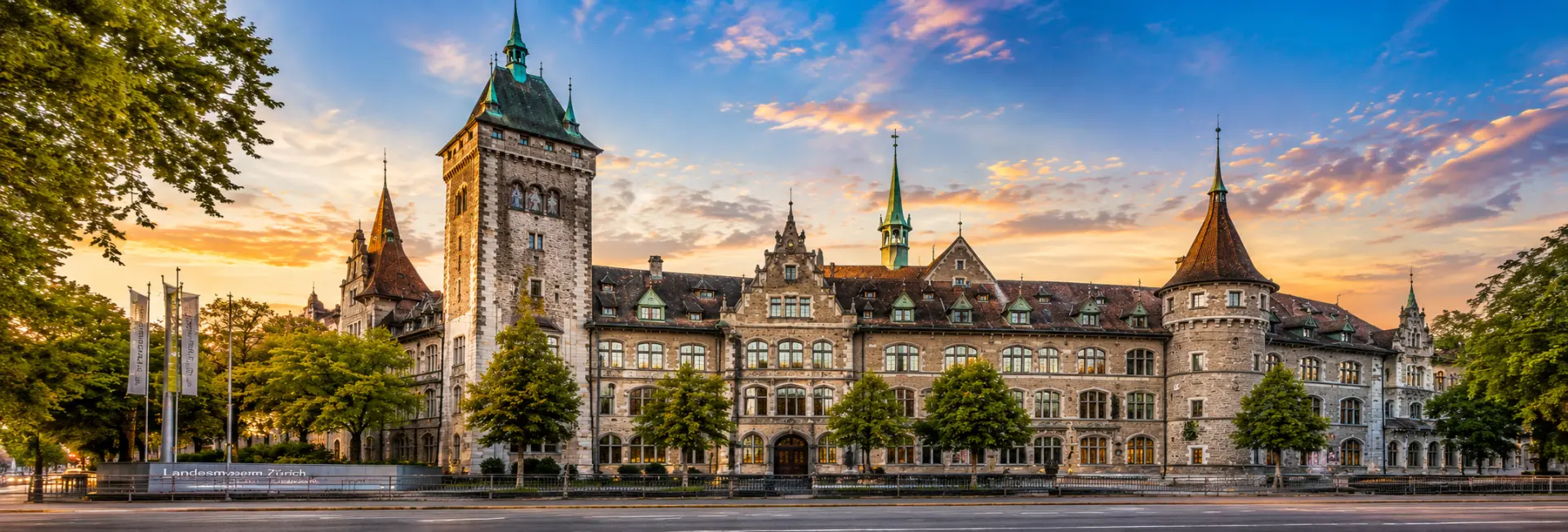
Step out of Zurich's main train station and the first thing many travelers notice is a turreted, castle-like structure rising just across the tracks on a small peninsula between the Sihl and Limmat rivers. This is the Swiss National Museum, known in German as the Landesmuseum, and despite its storybook exterior it houses one of the most comprehensive collections of Swiss cultural history anywhere in the world.
Inside, well over 800,000 objects trace the story of Switzerland from prehistoric lake-dwelling settlements to the present day, spread across period rooms, archaeological displays, and a striking modern wing added in 2016. The museum rewards visitors on two levels at once: as a place to actually learn Swiss history in some depth, and as an architectural destination in its own right, where a 19th-century fantasy chateau sits shoulder to shoulder with an uncompromisingly modern concrete addition.
As the flagship site of a small network that also includes museums in Prangins and Schwyz, the Zurich building serves as the public face of Switzerland's national collecting effort, and its sheer proximity to the train station means it's often one of the very first or last things visitors see on a trip to the city.
History of the Museum
A National Museum for a Young Confederation
Switzerland became a modern federal state only in 1848, and for decades afterward its cultural history remained scattered across individual cantonal collections rather than gathered under one roof. Discussion of a unified national museum began in the 1880s, and in 1891 the federal authorities settled a heated contest between rival cities by awarding the project to Zurich over Lucerne, Basel, and Bern. Zurich's winning case rested partly on an earlier, well-received art and industry exhibition the city had hosted, which helped convince federal lawmakers it had both the civic ambition and the audience to support a national institution.
Building Gull's Castle
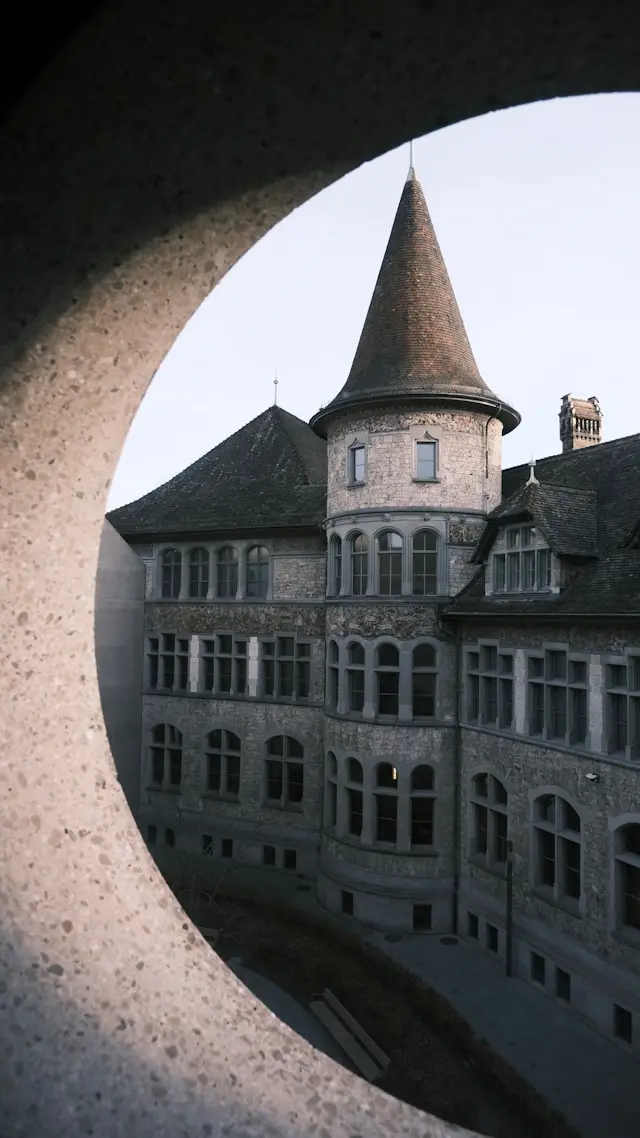
The commission went to a young Zurich architect, Gustav Gull, whose ambitious designs drew on late medieval Swiss architecture and helped launch him into a long and influential career. Construction began in 1892 on what was then the largest building site in the city, and after repeated delays the finished museum was formally opened by the Federal Council on 24 June 1898.
A Long-Overdue Expansion
For most of the 20th century the building was neither substantially renovated nor enlarged, and by the 1990s structural safety concerns had forced partial closures. An international competition launched in 2002 was eventually won by the architecture firm Christ & Gantenbein, whose renovation of the historic building and new exhibition wing were completed in phases between 2009 and 2016, finally giving the museum the space its growing collection had long needed. Proposals to expand the museum had in fact been raised almost every decade since its opening, only to stall repeatedly over funding disputes between federal and cantonal authorities, so the 2016 completion closed out more than a century of intermittent planning.
Architecture & Building
Gustav Gull's original building is deliberately theatrical, modeled loosely on the French Renaissance city chateaus and stitched together from towers, arches, and courtyards borrowed from real medieval buildings around Switzerland. Its footprint traces a wide "U" shape, and observers have long noted that the layout echoes Gull's own initial, a small architectural joke from a designer at the very start of his career.
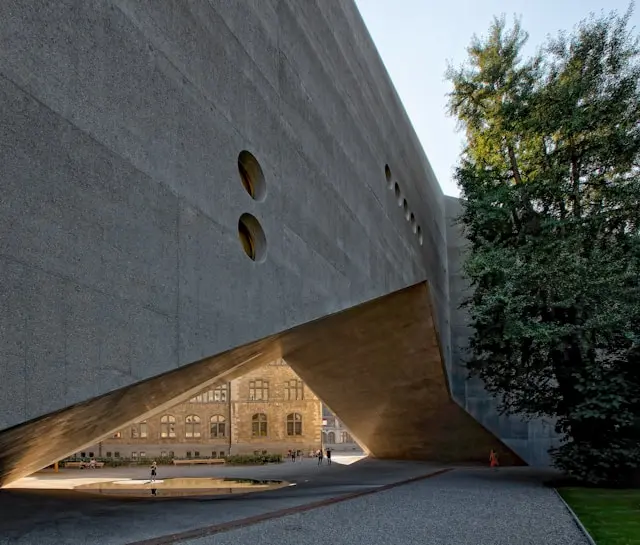
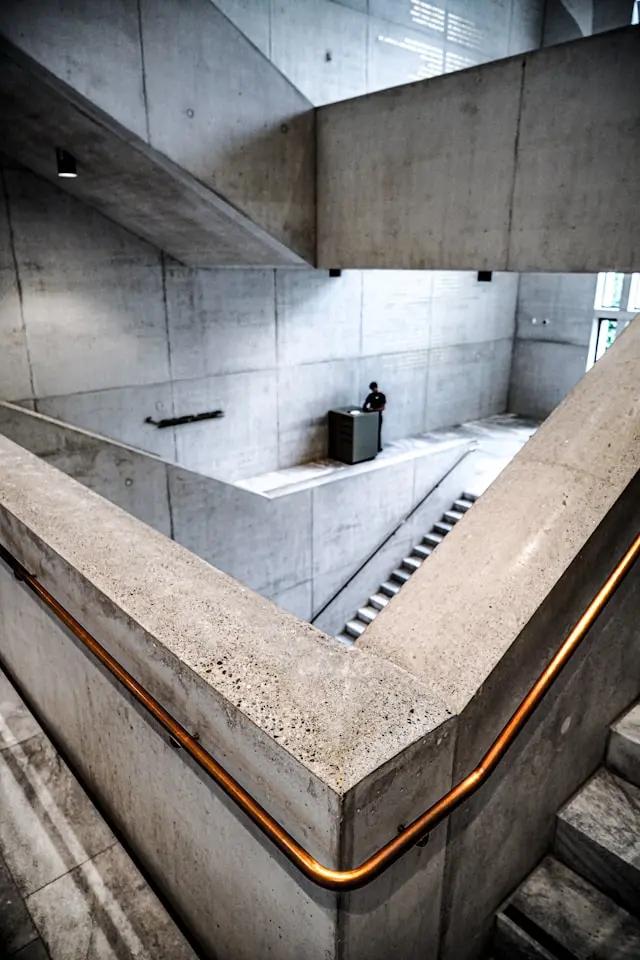
The 2016 extension by Christ & Gantenbein could hardly look more different: a fragmented, sculptural block of raw exposed concrete, its surface broken by small round windows, that closes off the historic courtyard while opening a new relationship with the surrounding Platzspitz park. A dramatic bridge-like structure links old and new, spanning a stretch of water and carrying visitors between the two eras of the building on a single continuous route. Together, the two wings let visitors circle the entire museum for the first time in its history, moving between careful historicist detail and stark contemporary form within a matter of steps. Inside the new wing, that same bridge motif reappears as a monumental staircase leading down to the largest of the exhibition halls, tying the building's exterior language directly to how visitors move through it.
Collections & Exhibits
The museum's holdings run to more than 870,000 objects, and three permanent exhibitions organize the bulk of what's on display. "Archaeology of Switzerland" opens with the country's oldest traces of human settlement, including tools and jewelry from Neolithic lake-dwelling communities. "History of Switzerland" then follows roughly 550 years of development from the late Middle Ages to the present, tracing political, social, and religious change through a chronological sequence of galleries. A third exhibition, simply called "The Collection," gathers around 7,000 objects representing close to a thousand years of Swiss craftsmanship, arranged thematically rather than by date.
- Historic furnished rooms relocated intact from real Swiss houses, churches, and guild halls
- Arms, armor, and militaria spanning the medieval to early modern periods
- Religious art and liturgical objects from across the country's regions and denominations
- Textiles, ceramics, and decorative arts illustrating regional craft traditions
- A dedicated family exhibition where children explore themed rooms such as an Arab palace, a sailing ship, and an old railway carriage
Alongside these permanent displays, the museum runs a rotating program of temporary exhibitions, typically running for several months at a time and often exploring a single theme, object group, or period in greater depth than the permanent galleries allow. These rotating shows frequently draw on loans from other institutions or lesser-seen parts of the museum's own vast holdings, giving repeat visitors a reason to return even after they've seen the permanent collection.
Must-See Highlights
- The Gothic and Renaissance period rooms, reconstructed with original paneling, furniture, and stoves salvaged from historic Swiss buildings
- Prehistoric and early medieval archaeological finds, including jewelry and tools recovered from lake-dwelling settlements and early graves
- The building's own architecture, from Gull's turreted courtyards to the Christ & Gantenbein extension's dramatic staircase and bridge
- The inner courtyard, freely accessible without a ticket and often the venue for concerts or light installations
- The adjoining Platzspitz park, which frames the museum's modern wing along the riverbank
Ways to Experience It
Because the museum is large, most visitors benefit from picking a rough route rather than trying to cover everything in one pass. A common approach is to start with the archaeology galleries near the entrance, move chronologically through the history exhibition, and finish with a loop through "The Collection" or a current temporary exhibition in the newer wing.
- Self-guided exploration of the three permanent exhibitions at your own pace
- Guided tours, available by advance booking, covering the collection or the building's architecture
- Workshops and family-oriented activities in the dedicated children's exhibition
- Rotating temporary exhibitions exploring specific themes or periods in more depth
- Concerts and public events held periodically in the courtyard and auditorium spaces
Best Time to Visit
Given its scale, the museum makes a strong option on a rainy day or early in a Zurich trip, since its exhibitions provide useful historical context for many of the city's other sights. Weekday mornings tend to be noticeably quieter than weekend afternoons, when both tourists and local families are more likely to visit.
The museum stays open later on Thursday evenings than on other days, which can be a good window for a calmer visit after the daytime crowds have thinned. Because a thorough visit to all three permanent exhibitions can take several hours, arriving earlier in the day leaves more room to explore without feeling rushed toward closing time. Seasonal temporary exhibitions can also draw larger crowds during their opening weeks, so visitors chasing a quiet experience may prefer to wait a few weeks after a major new show opens.
Visitor Tips
- The museum is closed on Mondays and open Tuesday through Sunday, with extended hours on Thursday evenings
- Admission is a modest fee for adults, with free entry for children and teenagers and for Swiss Travel Pass or Zurich Card holders
- The inner courtyard between the old and new buildings is freely accessible even without a museum ticket
- Ticket admission includes access to a bistro, gift shop, and library within the building
- The museum sits directly across from Zurich's main train station, making it one of the most convenient sights in the city to reach on arrival or departure
- Given the size of the collection, allowing at least two to three hours makes for a more comfortable visit than a quick pass-through
Because the museum shares its site with a working railway hub, luggage lockers at the adjacent station make it a practical stop for travelers passing through Zurich with bags in tow rather than settling into a hotel first.
Nearby Attractions
The museum's location beside the main station puts much of central Zurich within easy reach on foot.
- Platzspitz park – the riverside park immediately behind the museum, popular for a stroll along the water
- Zurich Hauptbahnhof – the city's main train station, directly across the street
- Bahnhofstrasse – Zurich's principal shopping boulevard, a short walk to the south
- Old Town (Altstadt) – the historic core of the city, including the Grossmünster and Fraumünster, within a 10 to 15 minute walk
- Kunsthaus Zürich – the city's leading art museum, a further walk or short tram ride away
FAQs about visiting the Swiss National Museum
What is the Swiss National Museum known for? +
It's known for its enormous collection of Swiss cultural history, spanning prehistoric archaeology to the present day, housed in a fairytale-castle building right next to Zurich's main train station.
How much does it cost to visit? +
Adult admission is a modest fee, generally around 10 Swiss francs, while children, teenagers, and holders of a Swiss Travel Pass or Zurich Card enter free.
How long should I plan to spend there? +
Because the collection spans three permanent exhibitions plus rotating temporary shows, most visitors set aside at least two to three hours to see the highlights without rushing.
Is the museum suitable for children? +
Yes, a dedicated family exhibition lets children explore themed, interactive rooms such as an old ship and a historic train carriage, and it's included in the standard admission ticket.
What are the opening hours? +
The museum is open Tuesday through Sunday, closed on Mondays, and stays open later on Thursday evenings than on other days.
How do I get there? +
It sits directly across from Zurich's main train station, making it reachable on foot from almost anywhere in the city center, with numerous tram and bus stops nearby.
Is the building itself worth seeing, or just the exhibits? +
Both: the original 1898 castle-like structure by Gustav Gull and the striking 2016 concrete extension by Christ & Gantenbein form a striking architectural contrast that many visitors find as interesting as the collection itself.
What's nearby if I want to combine my visit with other sights? +
Platzspitz park sits right behind the museum, and it's an easy walk from there into Zurich's Old Town to see landmarks like the Grossmünster and Fraumünster.
