Table of Contents
Overview
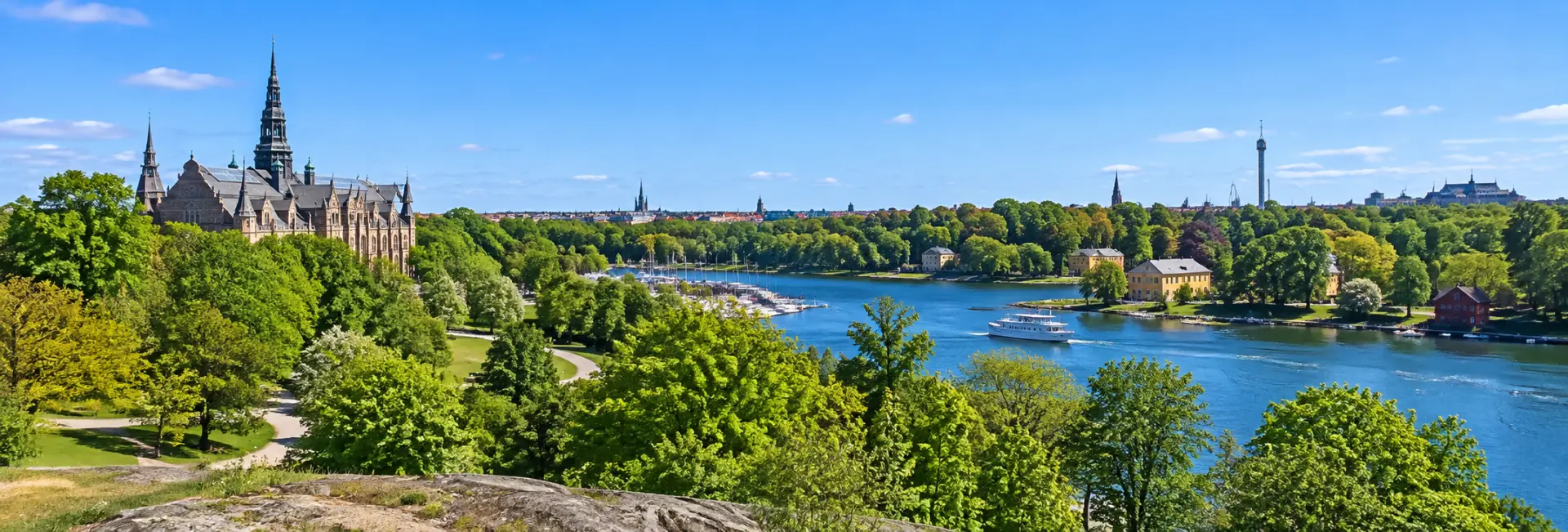
The Royal National City Park, known in Swedish as Kungliga nationalstadsparken, is a sweeping band of green space that runs through the heart of Stockholm, taking in former royal hunting grounds, formal palace gardens, wild forest, and open water along the way. Established in 1995, it was the world's first park of its kind, created specifically to protect an urban landscape rather than a remote wilderness.
Covering roughly 27 square kilometers across the municipalities of Stockholm, Solna, and Lidingö, the park stretches from Ulriksdal in the north, through Haga and Brunnsviken, down to Royal Djurgården in the south. Within its boundaries sit four royal palaces, dozens of museums, an amusement park, centuries-old oak forests, and habitats for deer, foxes, and more than a hundred species of breeding birds, all within a few kilometers of central Stockholm's busiest streets.
History
Centuries of Royal Ground
Long before it became a protected national park, much of this land had already been royal territory for centuries: Djurgården served as a hunting ground for the crown from the 15th century, while Haga and Ulriksdal grew into royal palace grounds in later periods. This long history of royal ownership is part of why the landscape survived largely undeveloped even as Stockholm grew rapidly around it.
A Campaign to Protect the Land
Calls to protect Djurgården specifically date back as far as the turn of the 20th century, when the Swedish Riksdag first raised concerns, though officials at the time argued that the royal right of disposal already offered sufficient protection. The modern push for a formal national park began with a proposal from the WWF and other voluntary organizations, aiming to safeguard the historic royal parks of Djurgården, Haga, and Ulriksdal together with their surroundings. The idea quickly won the backing of King Carl XVI Gustaf and the Office of the Governor, which oversees the royal palaces and parks.
A Royal Inauguration
The Swedish Parliament established the park in 1994, and it was formally opened on May 19, 1995, when King Carl XVI Gustaf released three doves from Ulriksdal Palace. The doves were named Värna, Vårda, and Visa, meaning Protect, Preserve, and Display, the three guiding principles behind the park's creation. The park marked its 30th anniversary in 2025.
Recognition & Status
As the world's first national city park, the Royal National City Park holds a distinctive legal status: rather than protecting untouched wilderness, its designation exists specifically to safeguard a historic, populated urban landscape from development, balancing nature conservation with the presence of palaces, museums, and residential areas within its boundaries.
The park is recognized as ecologically significant for the wider Stockholm metropolitan area, supporting habitats and species that would otherwise struggle to survive so close to a major capital. It is also considered one of Scandinavia's largest tourist attractions, drawing visitors both for its cultural institutions and for the sheer scale of accessible green space it offers within the city.
Key Areas
Royal Djurgården
The park's southern end and cultural heart, Royal Djurgården is home to around 22 museums, concert venues, theaters, and restaurants, alongside long stretches of forest, meadow, and waterfront. It functions as both the park's busiest section and one of Scandinavia's most visited attractions in its own right.
Haga and Brunnsviken
Further north, the park takes in Haga Park and the lake Brunnsviken, an area shaped by 18th-century royal landscaping ambitions and now known for its English-style parkland, historic garden follies, and lakeside walking paths.
Ulriksdal
At the park's northern boundary lies Ulriksdal Palace and its surrounding grounds, a former royal residence that also marks the spot where the park's opening ceremony doves were released in 1995.
Norra Djurgården and Gardet
To the east, the park extends into Norra Djurgården and the open fields of Gardet, a more residential and institutional stretch that includes Stockholm University and neighbors the Karolinska Institutet and the Royal Institute of Technology just outside the park's borders.
Flora & Fauna
The park supports a striking range of wildlife for a site so close to a capital city center, including deer, hares, foxes, and even moose within its wilder stretches. Bird life is similarly rich, with roughly 100 species known to breed within the park's boundaries.
Plant diversity is just as notable, with around 800 varieties of flowering plants recorded across the park, alongside some 1,200 species of beetle. Ancient oak trees are a particular hallmark of the landscape: one, at King Karl XI's fishing cottage on Djurgården, has grown almost into the building itself, while Prince Eugen's oak at Waldemarsudde is recognized as the largest oak in the entire park.
Ways to Experience It
The park's scale means visitors typically experience only a section of it at a time, whether that's a short walk through Djurgården's museums or a multi-day exploration of its northern reaches on foot or by bike.
- Walking - extensive trails connect Djurgården, Haga, and Ulriksdal, suited to anything from a short stroll to a full day's hike
- Cycling - a practical way to cover the park's wider distances, particularly between its northern and southern sections
- Museum-hopping - Djurgården alone holds enough museums for several separate visits
- Swimming - secluded swimming spots are tucked throughout the park's lakes and waterways in summer
- Wildlife and birdwatching - the park's meadows, forests, and wetlands offer opportunities to spot deer, foxes, and a wide range of breeding birds
Best Time to Visit
Summer brings the park to its fullest life, with grazing animals in the meadows, swimming spots in use, and the longest daylight hours for extended walks or bike rides between its northern and southern ends. It is also, unsurprisingly, the busiest season, particularly around Djurgården's museums and amusement park.
Spring and autumn offer a quieter way to experience the park's natural side, with wildflowers and birdlife especially active in spring, and the ancient oak woodlands taking on strong color in autumn. The park also has a season in Stockholm's skiing calendar, with some of its trails used for cross-country skiing when snow allows in winter.
Visitor Tips
Given the park's size, it's worth deciding in advance which section to focus on rather than attempting to see all of Djurgården, Haga, and Ulriksdal in a single visit. Public transport and cycling are generally more practical than driving for moving between the park's different areas.
- Pick one section per visit - Djurgården for museums and culture, Haga or Ulriksdal for a quieter, more natural experience
- Bring a bike if planning to cover ground between the park's northern and southern sections in a single day
- Look out for centuries-old oak trees scattered throughout the park, several of which are notable landmarks in their own right
- Pack for changeable weather, since much of the park involves walking with limited shelter
- Check individual museum and palace opening hours separately, since the park itself has no single set of visiting hours
Nearby Attractions
Because the park stretches across such a large area, "nearby" attractions vary considerably depending on which section is being visited, but several major Stockholm sights sit directly within or beside its boundaries.
- Vasa Museum and Skansen - both within the Djurgården section of the park
- Haga Park - known for its 18th-century garden follies and lakeside walks
- Ulriksdal Palace - a former royal residence at the park's northern edge
- Gamla Stan - Stockholm's old town, a short trip from the park's southern Djurgården entrance
FAQs about visiting the Royal National City Park
What is the Royal National City Park known for? +
It's known for being the world's first national city park, established in 1995 to protect a stretch of historic royal parkland running through the heart of Stockholm, including Djurgården, Haga, and Ulriksdal.
How big is the park? +
It covers roughly 27 square kilometers across the municipalities of Stockholm, Solna, and Lidingö, stretching from Ulriksdal in the north to Djurgården in the south.
How long should I plan for a visit? +
A single section, such as Djurgården's museums, can be covered in a day, but exploring the full length of the park, including Haga and Ulriksdal, is better spread across multiple visits or a longer day of walking or cycling.
Is the park free to visit? +
Yes, the park itself and its trails are free and open to the public, though individual museums, palaces, and attractions within it charge their own admission.
What wildlife might I see in the park? +
Deer, hares, foxes, and moose all live within the park, alongside around 100 species of breeding birds and a wide variety of butterflies and other insects.
When was the park established? +
It was created by the Swedish Parliament in 1994 and formally opened on May 19, 1995, by King Carl XVI Gustaf.
Can I cycle through the park? +
Yes, cycling is a popular and practical way to move between the park's different sections, particularly given the distance between its northern and southern ends.
What's the best area to visit if I only have a few hours? +
Royal Djurgården is the most accessible and culturally dense section, home to most of the park's museums, restaurants, and the Gröna Lund amusement park.