Table of Contents
Overview
Fotografiska is Stockholm's leading destination for contemporary photography, occupying a striking brick customs house on the Södermalm waterfront. Rather than a fixed permanent collection, the museum runs an ever-changing program of exhibitions, giving repeat visitors a genuine reason to come back throughout the year.
Since opening in 2010, it has grown from a single Stockholm building into part of an international network of photography museums, while its home city location remains defined by two things: consistently ambitious exhibitions and a rooftop restaurant with one of the best views in the city.
History of the Museum
Founded by Two Brothers
Fotografiska was founded in Stockholm in 2010 by Swedish entrepreneurs Jan and Per Broman, who set out to build a world-class venue dedicated entirely to photography. The museum opened to the public on May 21, 2010, with an exhibition of Annie Leibovitz's work, "A Photographer's Life: 1990-2005," which immediately set the tone for the ambitious international programming that followed.
From a Single Museum to a Global Network
Under the Bromans, Fotografiska expanded beyond Stockholm, opening a location in Tallinn and later in New York in 2019, though the New York branch closed in 2024. German entrepreneur Yoram Roth began investing in the organization in 2017 and became its owner in 2020, going on to open further Fotografiska museums in Berlin and Shanghai in 2023, with an Oslo location planned for 2028. Despite that growth, the Stockholm museum remains the network's founding location and marked its 15th anniversary with a dedicated exhibition running from October 2025 into February 2026.
Architecture & Building
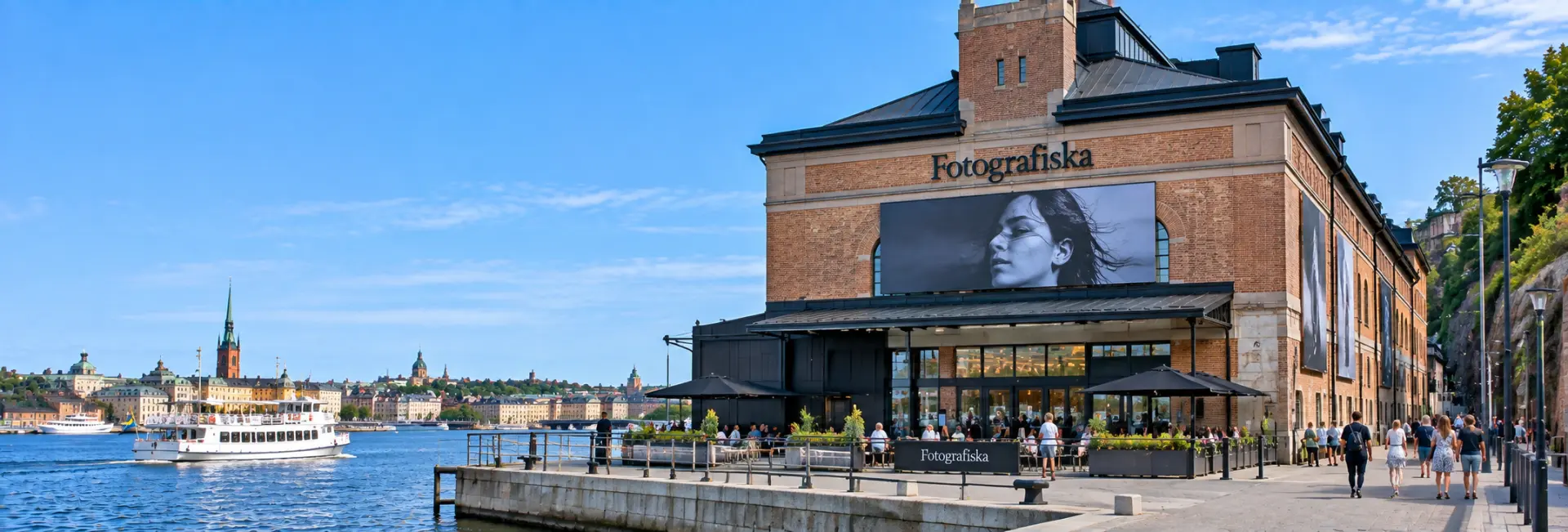
The museum is housed in Stora Tullhuset, the former Royal Customs House, an Art Nouveau brick building constructed between 1906 and 1910 to a design by the Swedish architect Ferdinand Boberg. Its imposing facade of arched windows and red brick still defines a stretch of the Stadsgården waterfront, giving the museum a distinctive silhouette from across the water in Gamla Stan and Djurgården.
While the building's original brick exterior has been carefully preserved, its interior was extensively reworked to fit the museum's needs, resulting in around 2,500 square meters of exhibition space spread across multiple floors. The conversion kept much of the industrial character of the original customs house - exposed brick, large windows, and generous ceiling heights - while adapting it for large-scale photographic and multimedia exhibitions.
Collections & Exhibits
A Rotating, Not Permanent, Program
Rather than displaying a fixed collection, Fotografiska organizes roughly fifteen to twenty exhibitions each year, mixing a handful of major international shows with a wider range of smaller ones. A single admission ticket covers everything on display at the time of a visit, so the experience can vary considerably depending on when you go.
Photographers Who Have Featured
Over the years the museum has shown work by some of photography's most recognized names, including Annie Leibovitz, Robert Mapplethorpe, Nick Brandt, David LaChapelle, and Martin Parr, alongside emerging artists given a platform they might not find elsewhere. The programming deliberately spans genres, from fashion and portrait photography to socially engaged photojournalism and staged artistic work.
- Major international touring exhibitions from globally recognized photographers
- Smaller shows spotlighting emerging and lesser-known artists
- Multidisciplinary and digital media installations alongside traditional prints
- A regularly refreshed program, meaning no two visits are quite the same
Must-See Highlights
Because the exhibitions themselves change so often, the building's own character is one of the few constants worth seeking out deliberately. The main stairwell and exhibition halls retain enough of the original customs house detailing that it's worth pausing between galleries to take in the architecture itself, not just what's hanging on the walls.
The rooftop restaurant is arguably as much a highlight as the exhibitions, with floor-to-ceiling windows framing views across the water toward Djurgården and central Stockholm. It has picked up awards for its sustainability-focused menu, and even visitors who move quickly through the galleries often linger here.
Whichever exhibitions happen to be on during a visit, checking the current lineup in advance is worthwhile, since a major touring show by a well-known photographer can be reason enough on its own to plan a trip around.
Ways to Experience It
Most visitors move through the galleries independently at their own pace, with a single admission ticket granting access to every exhibition running at the time. A visit can range from under an hour for a quick pass through the highlights to a half-day when combined with the restaurant and shop.
- Weekly guided tours of the current exhibitions, included with admission and available on a drop-in or pre-booked basis
- Private group tours for schools, companies, or larger parties
- Photography courses and workshops held on-site for those wanting hands-on instruction
- A concept store stocking photography books, prints, and design objects
- Late opening hours most nights, making it a practical evening activity rather than only a daytime stop
Best Time to Visit
Fotografiska keeps unusually late hours for a museum, typically open into the evening and even later on Thursdays through Saturdays, which makes it one of the few major Stockholm museums well suited to an after-dinner visit. Visiting in the evening also tends to mean smaller crowds than the middle of a weekend day.
Because the museum's draw is tied closely to whichever exhibitions are currently running, timing a visit around a specific touring show is often more useful than picking a particular season. The museum stays open essentially year-round, closing only on a couple of specific holidays.
Visitor Tips
All payments inside the museum are made by card, so it's worth having one on hand rather than relying on cash. The building is fully accessible, with ramps at the entrances, lifts in both stairwells, and accessible toilets on the ground floor and in the café.
- Check the current exhibition lineup online before visiting, since the program changes throughout the year
- Dogs are not allowed inside, unlike some other Stockholm attractions
- The nearest transit hub is Slussen, a short walk away with both metro lines and multiple bus routes
- Late weekday evenings tend to be quieter than weekend afternoons
- Book a table at the rooftop restaurant in advance if a view is a priority, especially around sunset
Nearby Attractions
Fotografiska sits on the eastern edge of Södermalm, within easy walking distance of several of Stockholm's other well-known sights along the waterfront and up into the Södermalm hillside.
- Katarinahissen - a steel lift near Slussen offering panoramic views over Gamla Stan and the harbour
- Stadsmuseet (Stockholm City Museum) - a Baroque-era building at Slussen covering the city's history
- Mårten Trotzigs gränd - Stockholm's narrowest alley, tucked into nearby Gamla Stan
- Fjällgatan - a hillside viewpoint a short walk up from the waterfront
FAQs about visiting Fotografiska
What is Fotografiska known for? +
It's a contemporary photography museum known for its rotating program of major international exhibitions, set inside a converted early 1900s customs house on Stockholm's waterfront.
Does Fotografiska have a permanent collection? +
No, the museum doesn't keep a fixed permanent collection; instead it runs roughly fifteen to twenty temporary exhibitions a year, so what's on display changes throughout the year.
How long should I plan for a visit? +
A focused look at the current exhibitions can take under an hour, but many visitors spend two hours or more once time in the shop and rooftop restaurant is included.
Is Fotografiska open in the evening? +
Yes - it's open later than most Stockholm museums, typically into the evening on most nights and later still from Thursday through Saturday, making it a good option after dinner.
Do I need to book tickets in advance? +
It isn't strictly necessary outside of major touring exhibitions, but booking online ahead of time can help avoid a queue, particularly for a high-profile show.
Is the restaurant worth visiting even without seeing the exhibitions? +
The rooftop restaurant is popular in its own right for its waterfront views, though access requires a museum admission ticket rather than functioning as a standalone restaurant.
How do I get to Fotografiska? +
The museum is a short walk from Slussen, which is served by both the green and red metro lines as well as several bus routes.
Is the museum accessible for visitors with mobility needs? +
Yes - the building has ramps at its entrances, lifts in both stairwells, and accessible toilets on the ground floor and in the café.