
Table of Contents
Introduction
Stockholm is built across fourteen islands where the Baltic Sea meets Lake Mälaren, and that geography shapes nearly everything about visiting the city. Water is never far away, whether you're crossing a bridge into the medieval old town or boarding a ferry to a nearby island. The result is a capital that feels compact and walkable in its center yet opens up into archipelago, forest, and open-air museums within a short boat ride.
First-time visitors often expect a quiet, orderly Scandinavian city and find something livelier: cobblestone alleys packed with cafes, striking modern museums, a design-forward food scene, and long summer evenings that keep the streets busy well past 9pm. Winters bring a different mood, with candlelit windows, Christmas markets, and the chance to see the city under snow. This guide covers the sights, neighborhoods, and experiences that make up a well-rounded Stockholm visit, along with practical notes for making the most of your time.
Gamla Stan: Stockholm's Old Town
Gamla Stan is Stockholm's medieval core and usually the first stop for visitors. Founded in the 13th century, it sits on its own small island connected to the mainland by a handful of bridges, and its narrow, winding streets are largely closed to car traffic, which makes it one of the most pleasant parts of the city to explore on foot.
Stortorget and the Old Square
Stortorget is Gamla Stan's central square, ringed by tall, colorfully painted merchant houses dating from the 17th and 18th centuries. It's also the site of the Stockholm Bloodbath of 1520, a mass execution that still shapes the square's history, and today it hosts a Christmas market each December.
The Royal Palace
The Royal Palace, home to over 600 rooms, is the official residence of the Swedish monarch and one of the largest palaces in Europe still used for its original purpose. The changing of the guard takes place in the outer courtyard several times a week and is free to watch, while the State Apartments, Treasury, and Royal Armoury are open to ticket holders.
Storkyrkan Cathedral
Storkyrkan, Stockholm's oldest church, dates back to 1306 and has hosted royal weddings and coronations for centuries. Inside, look for the wooden sculpture of St. George and the Dragon, one of the most significant pieces of medieval art in Scandinavia.
- Wander the narrow lanes of Mårten Trotzigs Gränd, Stockholm's narrowest street
- Browse handicraft shops and galleries along Västerlånggatan
- Watch the Royal Guard change outside the Palace (schedule varies by season)

World-Class Museums
Stockholm has an unusually high concentration of well-funded, well-designed museums for a city its size, and several are worth building an itinerary around rather than squeezing into a single afternoon.
The Vasa Museum
The Vasa Museum houses the Vasa, a royal warship that sank on its maiden voyage in 1628 after sailing less than a mile from shore. Salvaged largely intact in 1961 after more than 300 years underwater, it's now the only surviving 17th-century ship of its kind anywhere in the world, and the museum built around it is consistently ranked among Scandinavia's most visited attractions.
ABBA The Museum
ABBA The Museum is an interactive tribute to Sweden's best-known pop export, with recreated recording studios, stage costumes, and booths where visitors can record their own performance alongside virtual versions of the band. Most visits run about two hours, and tickets are timed, so booking ahead is worthwhile in peak season.
Fotografiska
Fotografiska, in Södermalm, is one of Europe's leading contemporary photography museums, with exhibitions that rotate several times a year and a top-floor restaurant offering sweeping harbor views. It's a good option for an evening visit, since it typically keeps later hours than most other city museums.
Djurgården: Parks, Palaces, and Play
Djurgården is a former royal hunting ground turned public park, and it's where much of Stockholm's museum and leisure scene is concentrated. The island is largely green space, criss-crossed by walking and cycling paths, with the Djurgården Canal running along one side.
Skansen
Skansen, founded in 1891, is the world's oldest open-air museum, with historic buildings relocated from across Sweden and a zoo focused on Nordic wildlife, including moose, brown bears, and lynx. It works well as a half-day outing for families and gives a sense of Swedish rural life before industrialization.
Gröna Lund
Gröna Lund is Stockholm's amusement park, in operation since 1883, and combines century-old wooden roller coasters with modern rides. It's seasonal, typically open from spring through early autumn, so check operating dates before planning a visit.
Waldemarsudde
For a quieter stop, Waldemarsudde is the former home and art collection of Prince Eugen, set in landscaped gardens on the water. It's less crowded than Djurgården's bigger attractions and a good choice if you want a slower pace.

City Hall and the Best Viewpoints
Stockholm rewards visitors who seek out elevated views, and several of the best are free or low-cost.
Stockholm City Hall
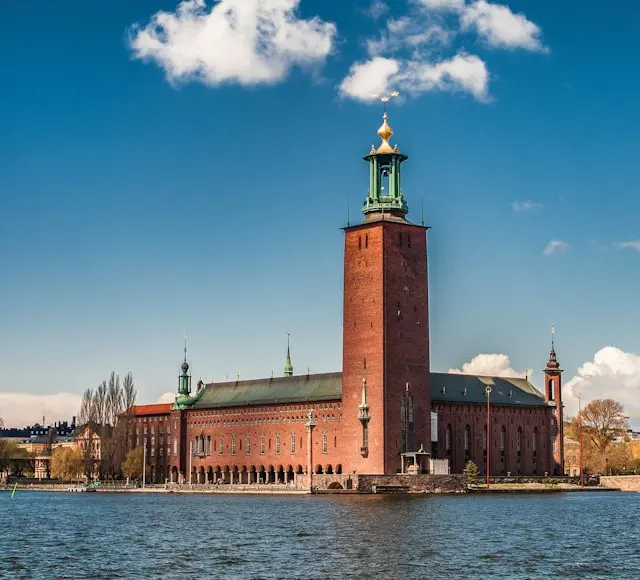
Stockholm City Hall, completed in 1923, is best known as the venue for the annual Nobel Prize banquet, held in its Blue Hall. Guided tours take visitors through the Golden Hall, decorated with over 18 million gold mosaic tiles, and the tower can be climbed separately for panoramic views over Lake Mälaren.
Fjällgatan and Monteliusvägen
Fjällgatan, a clifftop street in Södermalm, offers one of the classic postcard views of Gamla Stan and the harbor, and it's free and open at all hours. Monteliusvägen, a walking path along a nearby ridge, offers a similar vantage point and is especially popular around sunset.
Katarinahissen
Katarinahissen, the historic lift at Slussen, connects the waterfront to a high walkway with harbor views toward Gamla Stan. The viewing platform at the top is free to access.
Exploring the Stockholm Archipelago
The Stockholm archipelago stretches east from the city into the Baltic Sea and includes roughly 30,000 islands and skerries, ranging from populated communities to bare granite outcrops. It's one of the easiest ways to see a completely different side of Stockholm without a long trip.
Popular Day-Trip Islands
Vaxholm, about an hour from the city center by ferry, is a fortified island town with wooden houses, cafes, and a 16th-century fortress that once guarded the sea approach to Stockholm. Sandhamn and Grinda are further out and popular for hiking, swimming, and overnight stays in summer.
- Ferries depart regularly from Strömkajen, near the Grand Hotel, and from Slussen
- Summer is the most reliable season for full ferry schedules; winter service to some islands is reduced
- An archipelago boat card can be worthwhile for visitors planning multiple island stops
Even a short cruise without disembarking gives a strong sense of the archipelago's scale, passing between forested islands and summer cottages that most visitors never see from land.

Food, Fika, and Local Culture
Swedish food culture centers on fika, a daily ritual of coffee paired with a pastry, usually a cinnamon bun (kanelbulle), taken as a deliberate pause rather than a quick refuel. It's a useful concept for visitors too, since it builds natural rest stops into a day of sightseeing.
What to Eat
Beyond fika, look for classic Swedish dishes like meatballs with lingonberry jam, gravlax (cured salmon), and toast skagen, a shrimp and dill open-faced sandwich. Södermalm and Östermalm both have strong dining scenes, from casual bistros to several Michelin-recognized restaurants.
Markets and Neighborhoods
Östermalms Saluhall is a historic indoor food market good for a sit-down lunch, while Södermalm's streets are lined with independent cafes, vintage shops, and bars that give a sense of contemporary Stockholm life outside the main tourist areas.

Where to Stay
Where to base yourself in Stockholm depends mainly on how much you value atmosphere versus convenience, since the city's neighborhoods each offer a distinctly different feel.
Gamla Stan and City Center
Staying in or right around Gamla Stan puts you inside the postcard scenery, with cobblestone streets and the Royal Palace on your doorstep, though rooms here tend to be smaller and pricier. The adjacent Norrmalm and City districts offer easier access to the central train station and a wider range of hotel sizes and budgets, at the cost of some old-town charm.
Södermalm
Södermalm suits travelers who want a more local, neighborhood feel, with independent cafes, vintage shops, and some of the city's best viewpoints a short walk from most accommodations. It's well connected by metro but sits slightly further from the main sightseeing cluster than the city center.
Östermalm
Östermalm is Stockholm's upscale residential district, known for wide boulevards, designer shopping, and the historic Östermalms Saluhall food market. It tends to be quieter in the evenings and works well for travelers prioritizing comfort over nightlife.
- Book well ahead for summer travel (June through August), when demand and prices peak
- Hotels near Centralstationen (Central Station) are convenient for day trips by train or airport transfers
- Waterfront hotels along Riddarfjärden or Nybroviken often come at a premium but offer some of the best views in the city

Practical Tips for Visiting
Stockholm has a reputation for being expensive, and it generally lives up to it, particularly for hotels, restaurants, and alcohol. Planning around free attractions and self-catering some meals can meaningfully reduce costs.
- The Stockholm Pass or similar city cards can be worth it if you plan to visit several paid museums in a short period; run the math against individual ticket prices for your specific itinerary
- The city's metro, the Tunnelbana, is itself a minor attraction, with many stations featuring large-scale murals and rock-cut art installations
- Summer (June through August) brings long daylight hours and the busiest crowds; late spring and early autumn offer a good balance of mild weather and thinner crowds
- Winter visits mean short daylight hours but a strong Christmas market season and the chance of seeing snow over the old town
- Gamla Stan's cobblestones and Stockholm's many bridges make comfortable walking shoes more useful than in most cities
Conclusion
Stockholm works well for visitors who like a mix of history, design, and nature within easy reach of each other. A few days can cover Gamla Stan, one or two major museums, and a short archipelago trip, while a longer stay allows time to explore individual islands, seasonal events, and Södermalm's neighborhood pace at a more relaxed speed.
Whatever the length of the trip, it's worth building in unstructured time. Some of the best parts of Stockholm, a quiet street in Gamla Stan, a bench along Fjällgatan, a ferry ride with no particular destination, reward wandering more than a tightly packed schedule ever could.
Frequently Asked Questions
How many days do you need in Stockholm? +
Three to four days covers the main sights comfortably, including Gamla Stan, a couple of museums, and a short archipelago trip; five or more allows a slower pace and time for day trips further afield.
Is Stockholm expensive to visit? +
Yes, Stockholm is one of the pricier European capitals for hotels, dining, and alcohol, though many of its best attractions, including Gamla Stan and several viewpoints, are free to enjoy.
What is the best time of year to visit Stockholm? +
Late spring through early autumn offers the mildest weather and longest daylight hours, while summer is busiest; winter brings shorter days but a festive Christmas market season and a chance to see the city under snow.
Do I need to book museum tickets in advance? +
For popular sites like the Vasa Museum and ABBA The Museum, booking ahead is recommended in peak summer months to avoid long lines or sold-out time slots.
Is Stockholm easy to get around without a car? +
Yes, the city center is very walkable, and the Tunnelbana metro system connects most neighborhoods efficiently; ferries handle transport to Djurgården and the archipelago islands.
What's a good way to see the Stockholm archipelago on a short visit? +
A half-day or full-day boat trip to a nearby island like Vaxholm gives a solid taste of the archipelago without requiring an overnight stay.
Is Stockholm suitable for a family trip? +
Yes, attractions like Skansen's zoo, Gröna Lund amusement park, and the hands-on exhibits at ABBA The Museum are geared toward families with children of various ages.
What should I know about Swedish dining customs? +
Fika, a coffee-and-pastry break, is a genuine daily ritual rather than a tourist gimmick, and tipping is appreciated but not obligatory since service is typically included in the bill.