Table of Contents
Overview
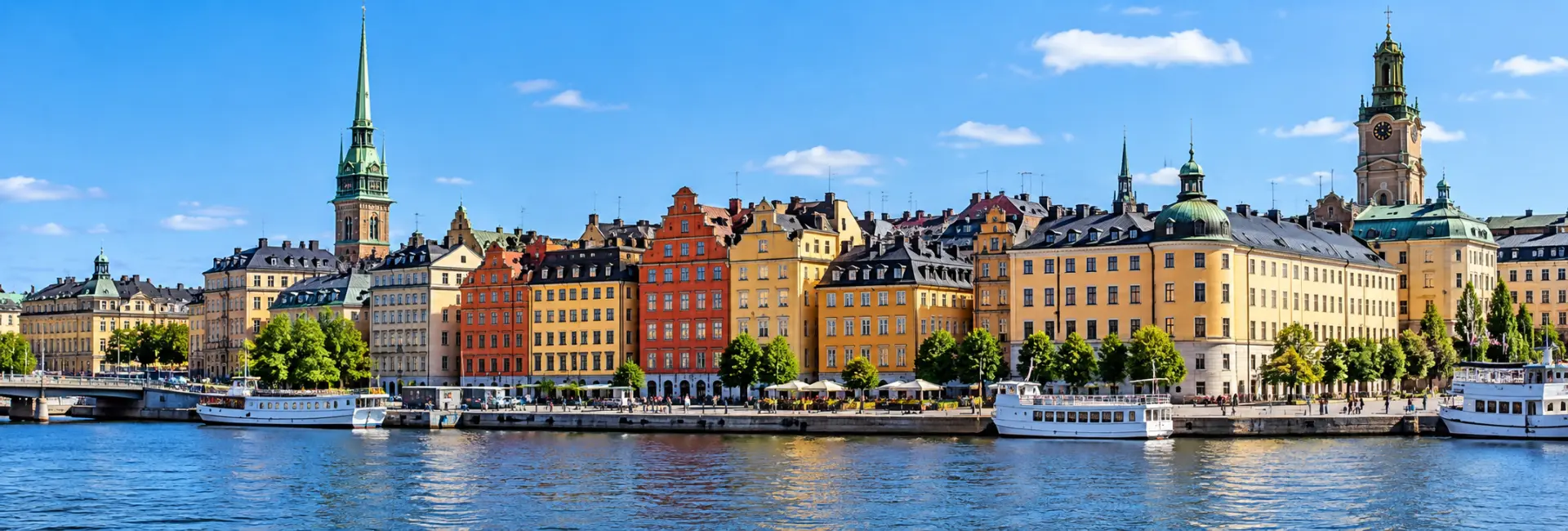
Gamla Stan is the historic heart of Stockholm, a compact island neighborhood where the Swedish capital first took shape in the thirteenth century. The name simply means "Old Town", and the area lives up to it. Cobbled lanes wind between tall merchant houses painted in ochre, rust red, and soft yellow, and the street plan still follows a medieval pattern that later development has left largely intact.
The district sits on the small island of Stadsholmen and is connected to the rest of the city by several bridges. It is small enough to cross on foot in roughly twenty minutes, yet it holds an extraordinary concentration of history: the Royal Palace, Stockholm's oldest church, the Nobel Prize Museum, a medieval square with a dark past, and the narrowest alley in the city.
Gamla Stan is not a museum piece, though. People still live, work, and worship here, and the Swedish monarch still keeps an official residence at the palace. The best way to enjoy it is to combine the famous sights with slow wandering along the quieter side streets, where small shops, cafes, and courtyards reveal the everyday character of the neighborhood.
History
A Fortified Settlement on a Strategic Strait
Stockholm appears in written records for the first time in 1252, and tradition credits the statesman Birger Jarl with establishing the fortified settlement on Stadsholmen. The location was a deliberate choice. The island sits where Lake Mälaren narrows toward the Baltic Sea, so whoever controlled it could watch, tax, and defend the trade flowing between central Sweden and the wider world.
A fortress rose on the island's high ground and later became known as Tre Kronor, or Three Crowns. A walled town of timber and stone houses grew up around it, and by the end of the thirteenth century Stockholm had become the largest city in Sweden.
The Hanseatic Era
From the fourteenth century onward, German merchants from the Hanseatic trading network settled here in large numbers and built warehouses, churches, and grand town houses. Stockholm shipped out iron, copper, and timber and brought in goods from across northern Europe. German influence left its mark on the city's commerce, its architecture, and even its vocabulary, and the German Church still stands in the district as a reminder of that partnership.
The Stockholm Bloodbath of 1520
In November 1520, after Danish King Christian II gained control of Stockholm, dozens of Swedish nobles and townspeople were executed in the main square. The event, known as the Stockholm Bloodbath, shocked the country and fed the uprising that brought Gustav Vasa to the throne in 1523. The square where it happened is now the neighborhood's most photographed spot, which gives its cheerful facades a sobering backstory.
Fire and Rebuilding
During the seventeenth century, when Sweden was a major European power, nobles and officials built impressive palaces across the island and on neighboring Riddarholmen. Then, on 7 May 1697, fire destroyed most of the Tre Kronor castle. Architect Nicodemus Tessin the Younger designed a Baroque replacement on the same site. War and the architect's death slowed construction, but the royal family was able to move into the new palace in 1754, and its exterior has changed little in appearance since.
Decline and Revival
As Stockholm grew onto surrounding islands and the mainland, Gamla Stan lost its role as the commercial center, and by the early twentieth century parts of it had become crowded and run down. Renewed appreciation for the neighborhood's heritage led to careful restoration, and it is now widely regarded as one of the best preserved medieval city centers in Europe.
Architecture & Streetscape
The most striking feature of Gamla Stan is its layout. Streets are narrow, irregular, and often curved, and many lanes drop away in flights of stone steps because the island rises to a low ridge at its center. The medieval plan has survived remarkably well, which is why walking here feels so different from the broader streets of central Stockholm.
Colors and Facades
Most buildings present seventeenth and eighteenth century facades, plastered and painted in warm tones that glow in the soft northern light. Many are older than they look, having been altered and refaced repeatedly over the centuries, so a single block can hold several eras of building history at once.
Baroque, Gothic, and Neoclassical Landmarks
The district's big buildings each speak a different architectural language. The Royal Palace is a monumental Baroque design inspired by Roman palaces. Storkyrkan, the cathedral, keeps a medieval hall church interior with brick vaulting behind a Baroque exterior added in the eighteenth century. The former Stock Exchange building on Stortorget, completed in the 1770s, is a refined example of Swedish neoclassical style. Across the water on Riddarholmen, the royal burial church is recognizable by its lacy cast-iron spire.
Look up as you walk. Gables, painted signs, wall anchors, and old doorways often carry more character than the shop windows below them.
Key Streets & Squares
Stortorget
Stortorget, the "Grand Square", is the oldest square in Stockholm and the natural starting point for any visit. Its tall, colorful gabled houses frame a small cobbled space that was the center of the medieval town. It is also where Sweden's oldest Christmas market has been held since 1837.
Västerlånggatan
This long pedestrian street runs along the western side of the island and is the busiest route in the district, lined with souvenir shops, sweets, and casual eateries. It is lively and convenient, but it represents only one side of Gamla Stan.
Stora Nygatan and Prästgatan
Running through the middle of the island, these calmer streets offer more atmosphere and fewer crowds. Independent shops, antique dealers, and quiet corners make them a good counterweight to the main tourist drag.
Österlånggatan
On the eastern side, Österlånggatan is known for restaurants, bars, and historic dining rooms, with steep lanes climbing away from it toward the center of the island.
Järntorget and Köpmantorget
Järntorget, at the southern end, was once the place where iron was weighed and traded, and it now serves as a relaxed open space with cafes. The small Köpmantorget, or Merchant's Square, sits between two slopes near the eastern waterfront and features a statue of Saint George and the Dragon.
Notable Landmarks
The Royal Palace
Standing on the site of the medieval Tre Kronor castle, the palace is the official residence of the Swedish monarch and one of the largest royal palaces in Europe still in use, with more than 600 rooms. Visitors can explore the State Apartments and the Royal Chapel, along with museums covering the Royal Armoury, the treasury and crown jewels, and the history of the old Tre Kronor castle. Outside, the Changing of the Guard draws a crowd in the courtyard.
Storkyrkan (Stockholm Cathedral)
Dedicated in 1306, Storkyrkan is the oldest church in Stockholm and the traditional setting for royal weddings and coronations. Its most celebrated treasure is the wooden sculpture of Saint George and the Dragon from 1489, a dramatic medieval work that fills a large part of the interior.
Nobel Prize Museum
Opened in 2001 to mark the centenary of the Nobel Prize, the museum occupies the old Stock Exchange building on Stortorget. It tells the stories of laureates in science, literature, peace, and economics through personal objects, films, and changing exhibitions. The Swedish Academy, which selects the Nobel laureate in literature, also has its home in the same building.
Riddarholmen and Riddarholmen Church
Just across a short bridge, the tiny island of Riddarholmen was once lined with the palaces of the Swedish nobility. Its church serves as the resting place of many Swedish monarchs, and nearby stands Birger Jarl's Tower, a surviving piece of the medieval fortifications. Very few people live here, so the atmosphere is quiet compared with the main island.
Mårten Trotzigs gränd
Stockholm's narrowest alley is only about 90 centimeters wide at its tightest point and is climbed by a steep staircase of some thirty-six steps. It is named after a wealthy German merchant who traded in iron and copper in the late sixteenth century. It is free to walk and easiest to photograph early or late in the day.
Ways to Experience It
Gamla Stan rewards different kinds of visitors, and how you approach it depends on how much time you have and what draws you in.
- Self-guided walk: A loop taking in Stortorget, the palace exterior, Storkyrkan, and the main lanes takes about ninety minutes at a comfortable pace, more if you stop for coffee.
- Guided walking tour: Tours typically run two to two and a half hours and range from general history walks to evening ghost and legend routes that focus on the district's darker stories.
- Palace and museum visit: Adding the palace museums and the Nobel Prize Museum can stretch a visit to three or four hours, so consider dedicating a full morning or afternoon.
- Changing of the Guard: The ceremony around midday at the palace is a popular spectacle, though it is also when the district is at its busiest.
- Fika and food stops: Traditional bakeries and small cafes make natural breaks for coffee and a cinnamon bun, especially on the quieter streets.
- Seasonal events: In late November and December, the Christmas market on Stortorget adds stalls, lights, and mulled wine to the scene.
Best Time to Visit
By Season
Summer brings long northern evenings when the pastel facades stay golden late into the night, but it is also the busiest and most crowded season. Spring and early autumn are often the sweet spot, with pleasant light, thinner crowds, and easier access to the sights. Winter is cold but atmospheric, and the Christmas market on Stortorget, which runs from late November until shortly before Christmas, makes December especially memorable. January and February are quiet, and the district feels most like a real neighborhood then.
By Time of Day
Early morning is the best time for photography and for having the lanes almost to yourself. Around midday, the guard ceremony and lunch crowds fill Västerlånggatan and the main squares. Evening is a second good window, when the crowds thin, the lamps come on, and the restaurants along Österlånggatan are at their liveliest.
Visitor Tips
- Getting there: Gamla stan has its own metro station on the Red and Green lines, on the western edge of the island, and you can also walk in over the bridges from the neighboring parts of the city.
- Footwear matters: Cobblestones, slopes, and stone steps make comfortable, sturdy shoes a good idea, and they can be slippery in wet or icy weather.
- Look beyond Västerlånggatan: The most popular street is convenient, but Stora Nygatan, Prästgatan, and the smaller lanes are usually more rewarding.
- Watch your budget: Prices for meals, drinks, and souvenirs run higher here than elsewhere in Stockholm. A meal in a neighboring district often offers better value.
- Confirm opening details: Opening hours, ticket prices, and ceremony times for the palace, cathedral, and museums change from season to season, so check the official websites before you go.
- Bags at the palace: Large bags and backpacks generally have to be left in lockers at the palace visitor entrance, so travel light if you plan to go inside.
- Accessibility: Many of the main sights offer step-free access, but the streets themselves are uneven and hilly, so allow extra time for a slower pace.
- Pair it with the wider city: Gamla Stan sits next to Riddarholmen, Södermalm, and central Stockholm, so it combines easily with a stroll along the water toward City Hall.
FAQs about visiting Gamla Stan
What is Gamla Stan and why is it famous? +
Gamla Stan is Stockholm's medieval Old Town, built on the island of Stadsholmen. It is famous for its cobbled lanes, colorful historic buildings, the Royal Palace, Storkyrkan cathedral, and the Nobel Prize Museum.
How long should I spend in Gamla Stan? +
A quick walking loop takes about ninety minutes, while two to three hours lets you wander at a relaxed pace. If you want to go inside the palace and museums, plan for three to four hours or more.
Is Gamla Stan free to visit? +
Yes, walking the streets and squares costs nothing. The palace, the museums, and some other sights charge admission, and prices change, so check current details on the official sites.
How do I get to Gamla Stan? +
The easiest option is the metro to Gamla stan station on the Red and Green lines. You can also walk over the bridges from central Stockholm or from Södermalm, and most people find the district only a short stroll from the city center.
When is the best time to visit Gamla Stan? +
Early morning and evening are the calmest times of day, and spring and early autumn tend to be less crowded than summer. December is popular for the Christmas market on Stortorget.
Where is Stockholm's narrowest alley? +
Mårten Trotzigs gränd, in the middle of Gamla Stan, is the narrowest alley in the city at around 90 centimeters wide. It is a short walk from Stortorget and free to enter.
Is Gamla Stan suitable for families and visitors with limited mobility? +
Children usually enjoy the guard ceremony, the Royal Armoury, and the narrow alleys. The cobblestones, steps, and slopes can be tiring for strollers and wheelchairs, though many main sights offer step-free access, so it is worth planning your route in advance.
Is it worth eating in Gamla Stan? +
It is fine for a coffee, a fika break, or lunch, but restaurants in the tourist core tend to charge more. Quieter side streets and nearby districts often give better value, especially for dinner.
What can I combine with a visit to Gamla Stan? +
Riddarholmen is a short walk away, and Södermalm and central Stockholm are close by. Many visitors also continue along the waterfront to Stockholm City Hall.