Table of Contents
Overview
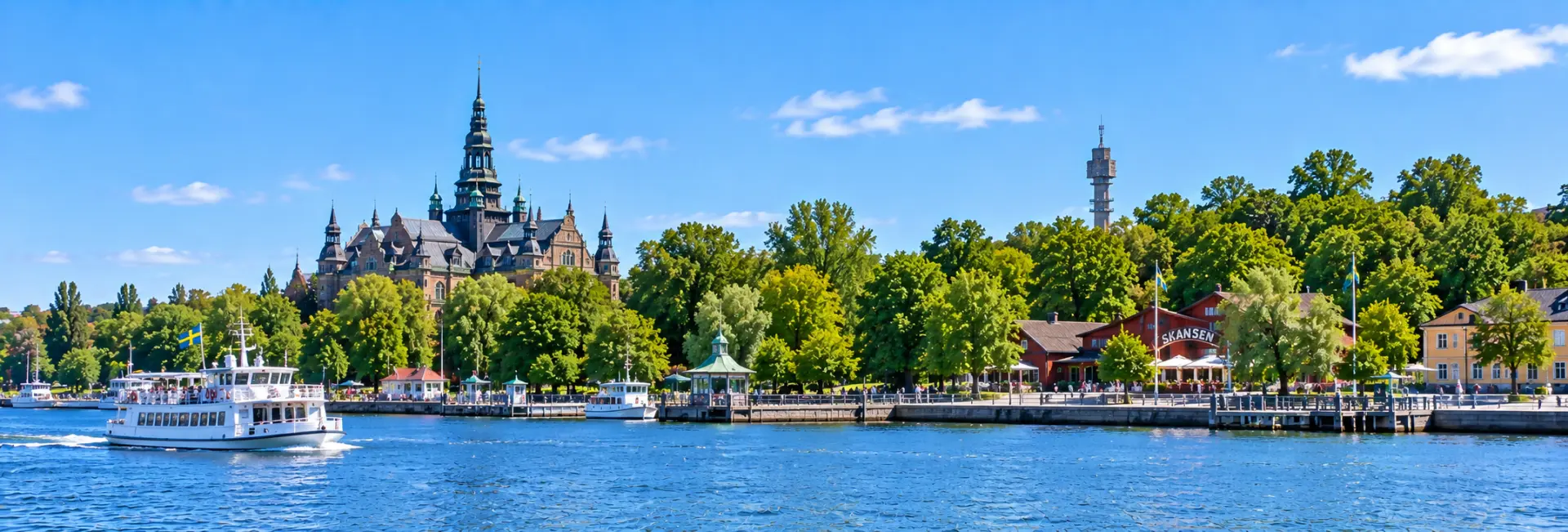
Djurgården, or Kungliga Djurgården ("the Royal Game Park"), is an island in the heart of Stockholm that manages to hold nature, royal history, and some of the city's best-known museums within a single, easy-to-walk stretch of parkland. Its name is a direct hint at its origins: for centuries it was reserved for royal hunting rather than public recreation.
Today the island draws more than ten million visitors a year, split roughly between those heading straight for its museums and amusement park and those simply out for a walk along the water. Few places in Stockholm pack so much variety - from a 17th-century warship to Sweden's most famous pop export - into such a compact, tree-lined space.
History
From Royal Hunting Ground to Public Park
The Swedish Crown has held rights to Djurgården since the 15th century, and for much of that time the island functioned exactly as its name suggests - a stocked hunting ground for deer and other game reserved for the monarch and court. It began opening up to the wider public during the 16th century, gradually shifting from a private royal reserve into one of the city's favorite outdoor spaces.
A Magnet for Tourists Since the 1800s
By the late 18th and 19th centuries, Djurgården had become a fashionable destination for Stockholmers seeking fresh air, entertainment, and culture, a role that only grew as the island's landmark institutions were founded one after another: Gröna Lund amusement park in 1883, followed by Skansen, the open-air museum, in 1891. The island's transformation from private hunting park to public cultural hub is one of the clearest examples in Stockholm of royal land being handed over, piece by piece, to civic life.
Today the island is still formally overseen by the Royal Djurgården Administration, part of the Royal Court of Sweden, and since 1995 it has formed a core part of Ekoparken, the world's first national city park.
Key Areas & Attractions
Djurgården's attractions cluster along its western and central stretches, close enough together that most can be reached on foot from one another.
- Vasa Museum - home to the Vasa, a nearly fully intact 17th-century warship that sank on its maiden voyage in 1628 and was salvaged more than three centuries later
- Skansen - the world's oldest open-air museum, combining historic Swedish buildings moved from across the country with a zoo of native Nordic wildlife
- ABBA The Museum - an interactive tribute to Sweden's best-known pop group, tracing their rise from local acts to global stardom
- Gröna Lund - Sweden's oldest amusement park, founded in 1883, mixing classic and modern rides with a waterfront setting
- Nordiska Museet (Nordic Museum) - a grand building devoted to Swedish cultural history, from folk costume to design
- Prins Eugens Waldemarsudde - the former residence of Prince Eugen, now an art museum set in gardens overlooking the water
- Rosendal Palace - a 19th-century royal summer retreat furnished in the Empire style
- Junibacken - a children's museum built around the stories of Astrid Lindgren
Several smaller museums, including the Spritmuseum (Museum of Spirits) and the Maritime Museum, add further options for visitors who want to go beyond the island's headline attractions.
Nature & Green Spaces
Away from the museum queues, Djurgården is defined just as much by its landscape: broad meadows, stands of old oak trees, and quiet waterfront paths that circle much of the island. Rosendals Garden, an organic public garden near Rosendal Palace, is a popular stop for a slower visit, with produce grown on site and outdoor seating for coffee or lunch.
A network of walking routes crosses the island, including the so-called "Love Path" through some of its most secluded woodland and a longer route tracing the canal that separates Djurgården from Skeppsholmen and the city center. Because the island belongs to Ekoparken, the Royal National City Park, its meadows and older trees are protected from development, which is part of why the landscape has changed so little even as the museums around it have multiplied.
Ways to Experience It
Djurgården is best explored on foot, and a full day allows time for one or two major museums plus a walk along the water. Visitors short on time often pick a single anchor attraction, such as the Vasa Museum or Skansen, and build the rest of the day around it.
- Walking - the island's paths, including the waterfront route and the wooded "Love Path," suit a slow, self-guided visit
- Tram 7 - a heritage tram line that loops through the island's main sights, useful for hopping between museums
- Cycling - bikes can be rented near the bridge onto the island, a practical way to cover more ground
- Boat tours - sightseeing cruises and the Royal Canal Tour take in Djurgården's shoreline from the water
- Guided walks - apps and organized tours cover the island's royal history in more depth than a casual stroll would
Best Time to Visit
Summer is Djurgården's busiest and most festive season, with long daylight hours, outdoor seating at cafes, and Gröna Lund running its full schedule of rides and concerts. It's also when the island is at its most crowded, particularly around the Vasa Museum and Skansen in the middle of the day.
Visiting in spring or early autumn trades some of that energy for smaller crowds and still-comfortable weather for walking. Winter brings a quieter, starker version of the island - many outdoor rides at Gröna Lund close for the season, but Skansen and the indoor museums remain open, and the island's Christmas market adds a seasonal draw in December.
Visitor Tips
Djurgården's museums each charge separate admission, so it's worth deciding in advance which one or two are the priority rather than trying to fit in everything in a single visit. Tickets for the most popular attractions, especially the Vasa Museum in summer, are worth booking online ahead of time to avoid a long wait at the door.
- Wear comfortable shoes - distances between attractions are walkable but add up over a full day
- Public transport, the tram, or a short walk across the bridge from Skeppsholmen are more practical than driving, since on-island parking is limited
- Combine an indoor museum with time outdoors to break up a day that could otherwise feel museum-heavy
- Check individual museum websites for current hours, since some attractions - particularly Gröna Lund - run reduced or seasonal schedules outside summer
- A visitor's center near the bridge onto the island offers maps, tourist information, and bike rental
Nearby Attractions
Djurgården sits just across the water from central Stockholm, making it easy to pair with a day in the city rather than treating it as a separate trip.
- Skeppsholmen - a smaller island nearby with additional museums and a quieter, less crowded feel
- Gamla Stan (Old Town) - Stockholm's historic core, a short journey away by tram, bus, or ferry
- Östermalm - a district bordering Djurgården, home to further museums in the area known as Museiparken
- Strandvägen - a grand waterfront boulevard linking central Stockholm to the bridge onto Djurgården
FAQs about visiting Djurgården
What is Djurgården known for? +
It's a royal park island in central Stockholm known for concentrating several of the city's top museums - including the Vasa Museum, Skansen, and the ABBA Museum - alongside an amusement park and extensive green space.
How much time should I set aside for Djurgården? +
A single major museum plus a walk can be done in half a day, but a full day lets you combine one or two museums with time outdoors, and repeat visitors often return over several trips to work through the island's full range of attractions.
Is Djurgården free to visit? +
The island itself, its parks, and its walking paths are free and open to the public, though individual museums and Gröna Lund's amusement park charge their own separate admission.
How do I get to Djurgården? +
The island is reached on foot or by tram over a short bridge from the city center, as well as by bus and seasonal ferry services from spots like Slussen and Nybroplan.
Is Djurgården suitable for families? +
Yes - Skansen's zoo, Junibacken's children's exhibits, and Gröna Lund's rides make it one of Stockholm's most family-friendly destinations, alongside quieter options like the gardens for a slower day.
What's the best time of year to visit? +
Summer offers the fullest experience, with all attractions and outdoor seating open, though spring and early autumn bring smaller crowds; winter is quieter still, with some outdoor attractions closed for the season.
Can I visit more than one museum in a day? +
It's possible, especially if the museums are close together, but most visitors find that focusing on one or two attractions in depth is more satisfying than rushing between several in a single day.
What's nearby if I want to see more of Stockholm? +
Gamla Stan, Skeppsholmen, and the Östermalm district are all a short tram, bus, or walking trip away, making it easy to extend a Djurgården visit into a wider day in the city.