Table of Contents
Overview
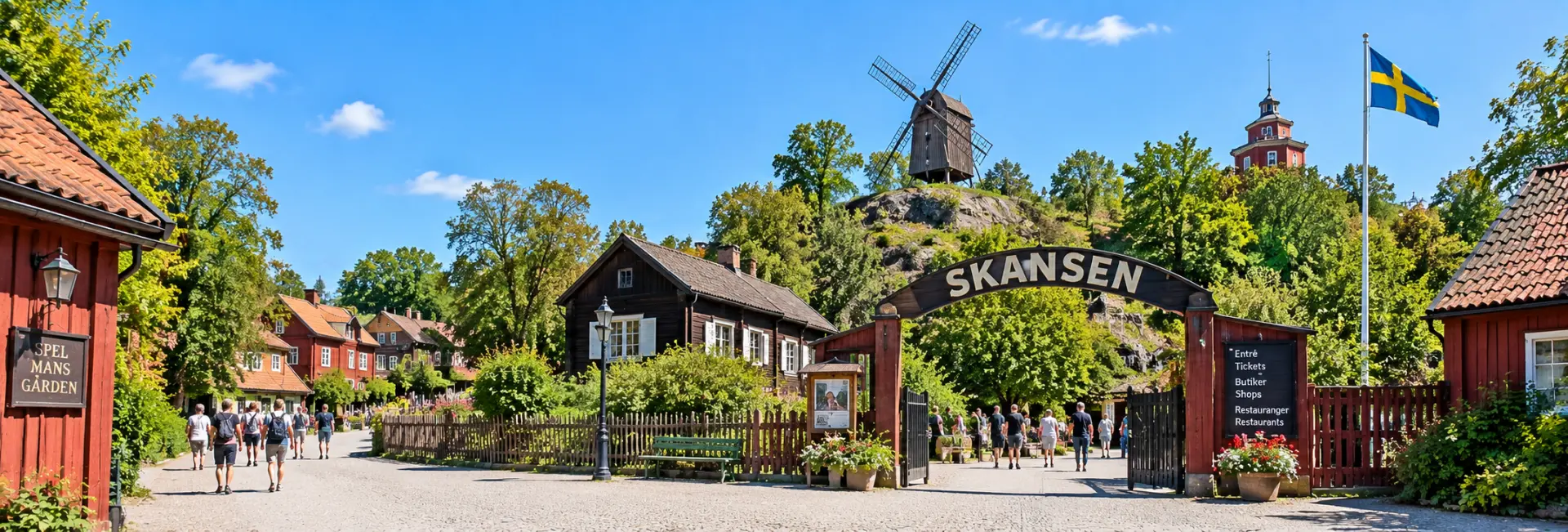
Skansen is Stockholm's open-air museum, set on a wooded hill on the island of Djurgården, and it is often described as the oldest museum of its kind in the world. Instead of showing history behind glass, it lets visitors walk straight into it. Around 150 houses, farmsteads, workshops, and churches from all over Sweden have been moved here and rebuilt, creating a miniature version of the country as it looked before the industrial age.
What sets Skansen apart is that it is alive. Costumed guides greet visitors in the historic buildings, craftspeople demonstrate traditional skills, and the grounds are home to Nordic wildlife, from brown bears and wolves to elk and seals. Add gardens, cafes, playgrounds, and a busy calendar of festivals, and the park becomes several attractions in one.
It appeals to a wide range of visitors. History lovers can trace how Swedes lived in different regions and centuries, families can combine animals and play areas with a gentle introduction to the past, and anyone curious about Swedish traditions can see Midsummer, Lucia, and Christmas celebrated in their most classic form. Many people plan half a day here, and it is easy to stay longer.
History
A Museum Born from Change
Skansen was opened on 11 October 1891 by Artur Hazelius, a teacher, folklorist, and scholar who had already founded the Nordic Museum on Djurgården. Hazelius had watched Swedish rural life change quickly as industrialization, migration, and new ways of living spread across the country. He worried that traditional buildings, crafts, and customs would disappear before anyone had recorded them.
Moving Houses Across the Country
His solution was bold. He acquired land on the hill known as Skansenberget and began relocating whole buildings from different parts of Sweden. At first, some of the houses were furnished with dolls dressed in regional costumes, but real people soon replaced them, demonstrating spinning, weaving, and other crafts. Hazelius wanted a living museum, guided by the idea that understanding the past helps people understand themselves.
A Model for Others
Hazelius was inspired by an earlier collection of relocated buildings near Oslo, but Skansen grew into the model that shaped open-air museums across Northern Europe. The Swedish word skansen has even become a generic term for such museums in many languages. What began as a handful of houses on a small plot has expanded roughly tenfold, to about 30 hectares, and now attracts more than a million visitors a year.
Growing and Changing
Over the decades, the museum added a zoo of Nordic animals, gardens, a funicular railway that has carried visitors up the hill since 1897, and an evolving programme of festivals. Today it operates as both a museum and a zoo, keeping traditional skills alive while serving as a popular green space for Stockholm residents.
Historic Buildings & Key Areas
Sweden from South to North
The buildings at Skansen are arranged roughly according to where they came from in Sweden, running from the south of the park toward the north. Even the plants and landscaping around each group of buildings follow local traditions, so a stroll across the hill feels a little like traveling through the country. The collection spans centuries, with structures dating from the Middle Ages to the early twentieth century.
Farmsteads and Rural Life
Farmhouses, barns, and outbuildings show how people in different regions lived and worked, from the tools they used to the way they stored food and kept animals. Guides in period clothing explain daily routines, and in some buildings you can see fires burning or bread baking. The Mora Farmstead is part of the annual Midsummer week story, when cattle are herded up to a summer pasture.
Seglora Church
One of the best-loved buildings is Seglora Church, an eighteenth-century log church from western Sweden that was moved to Skansen. Its charming details include a clock painted on the tower, a story of local thrift. It is still used for concerts and is a popular setting for weddings, including drop-in ceremonies during summer.
The Town Quarter
The Town Quarter recreates a small Swedish town of the nineteenth century, with a post office, shops, a bakery, homes, and workshops. Here craftspeople demonstrate traditional skills such as glassblowing, pottery, weaving, and baking, and visitors can watch them work and sometimes buy the results.
Bollnäs Square
At the center of the park, Bollnäs Square is a gathering place for events and performances. It is here that the big seasonal celebrations, including the Christmas market, come together.
Nordic Animals & the Zoo
Skansen is also a zoo, and its animals are closely tied to the theme of the museum. The collection focuses on Scandinavian wildlife and traditional domestic breeds, with about seventy-five species and breeds in total. Enclosures are large and designed to resemble natural habitats, which gives the animals room to behave as they would in the wild.
Wildlife of the North
Visitors can see brown bears, wolves, lynx, wolverines, elk, reindeer, and seals, along with birds such as the eagle owl. These are animals that have shaped Nordic culture and folklore for centuries, and the zoo gives them proper context alongside the historic farmsteads.
Farm Animals and Lill-Skansen
Traditional Swedish farm animals live in and around the historic farmsteads, and the children's zoo, Lill-Skansen, offers a hands-on area for younger visitors with small animals and play spaces. It is a great place for families who want a break from walking.
Skansen Aquarium
The park also includes an aquarium with reptiles, tropical fish, and other exotic animals, alongside displays about the Baltic Sea. The aquarium is run separately from the rest of the park, so it has its own ticket, and combined tickets are available.
Festivals & Traditions
Few places in Sweden celebrate the country's traditions as thoroughly as Skansen. The park has been holding festivals for well over a century, and many are recognized as national institutions.
- Walpurgis and National Day: Spring celebrations mark the end of winter and, in early June, Sweden's National Day, often with music, dance, and traditional costumes.
- Midsummer: The most famous event of the year. Visitors help raise the maypole, make flower garlands, and join ring dances led by folk dancers and fiddlers over the Midsummer weekend.
- Summer sing-along and concerts: In summer, the park's stages host concerts and dance evenings, including the popular Tuesday sing-along broadcast on national television.
- Autumn Fair: On the last weekend of September, the park recreates a nineteenth-century harvest fair, with market stalls and traditional roles played by costumed staff.
- Lucia: The Lucia procession on 13 December has been celebrated here since 1892, with a candle-crowned Lucia leading singing attendants.
- Christmas market: A tradition since 1903, held on weekends from the first Sunday of Advent until the fourth. It offers festive food, crafts, decorations, carols, and open fires.
- New Year's Eve: A national tradition since 1895, in which a famous poem is read aloud at midnight and celebrated with fireworks.
Ways to Experience It
Wander at Your Own Pace
The simplest approach is to explore freely, following the paths through the hilly park and stopping wherever something catches your eye. Signs and staff in the buildings provide context, and you can easily spend an hour or two in the historic areas alone.
Take Part in Demonstrations
Craft demonstrations, cooking, baking, and glassblowing make the past tangible. Talking with the costumed guides is one of the highlights, as they are often happy to explain how tools and household objects were used.
Ride the Funicular
Skansen's funicular railway, in operation since 1897, offers a scenic way up the hill and is especially good for families or anyone who prefers to avoid the steepest paths.
Combine the Museum and the Zoo
Because the zoo and the historic areas share the same grounds, it is easy to alternate between them. Many visitors follow the animals first, then head to the buildings, or plan a lunch break between the two.
Time Your Visit with an Event
Coming during a festival adds atmosphere, with performances, food stalls, and special activities layered on top of the regular attractions.
Best Time to Visit
By Season
Skansen is open every day of the year, and each season offers something different. Spring brings Walpurgis and National Day celebrations, while summer is the high season, with Midsummer, long evenings, and outdoor concerts. Early autumn is quieter and colorful, with harvest activities and the Autumn Fair. Winter has its own charm, with the Christmas market, the Lucia procession, and New Year's Eve at the top of the list.
By Time of Day
Weekday mornings are generally the calmest time, especially in summer and during the Christmas market, when weekend afternoons can be crowded. Many visitors plan on three to four hours, but the site is large enough to fill a longer day. On event days, the park can stay lively into the evening.
Visitor Tips
- Wear comfortable shoes: The park is set on a hill, paths can be uneven, and you will do a lot of walking, so sturdy footwear is a good idea.
- Dress for the weather: Most of the attractions are outdoors, so bring layers and a rain jacket in cooler months.
- Check hours and prices: Opening hours and ticket prices change by season and during special events such as the Christmas market, and hours are shorter on Christmas Eve and New Year's Eve. Confirm details on the official website before you go.
- Buy the aquarium separately: The aquarium has its own admission, so decide in advance whether you want a combined ticket.
- Plan for food: There are restaurants, cafes, and picnic-friendly spots around the park, which makes it easy to spend a full day here.
- Getting there: Tram line 7 stops nearby, and the funicular provides a hillside route into the park. It is also possible to walk from central Stockholm, though it is a longer stroll than to the museums nearer the bridge.
- Book ahead for busy dates: For Saturday afternoons during the Christmas market or other major events, buying tickets online in advance can reduce waiting time.
- Accessibility: The terrain is hilly, so wheelchair users and families with strollers should plan routes carefully and consider using the funicular.
Nearby Attractions
Skansen sits in the heart of Djurgården, so it fits naturally into a day with other major attractions on the island.
- Vasa Museum: Home to a nearly intact seventeenth-century warship that sank on its maiden voyage in 1628 and was raised in 1961.
- Nordic Museum: The cultural history museum founded by Skansen's own founder, Artur Hazelius, showing everyday life in Sweden through objects, clothing, and traditions.
- Gröna Lund: A historic amusement park with rides, concerts, and waterfront views.
- Junibacken: A storybook world devoted to the characters of Astrid Lindgren, ideal for families with young children.
- Djurgården's parks and waterfront: Green paths, canal views, and quiet corners make for a relaxing walk between attractions.
FAQs about visiting Skansen
What is Skansen? +
Skansen is Stockholm's open-air museum on Djurgården, where around 150 historic buildings from across Sweden have been rebuilt. It also includes a zoo of Nordic animals, craft workshops, gardens, and a full calendar of seasonal festivals.
How long should I spend at Skansen? +
Plan for at least three to four hours, and consider half a day or more if you want to see the buildings, the zoo, and a demonstration or two without rushing. On festival days, many people stay even longer.
Is Skansen open all year? +
Yes, the park is open every day of the year, though hours are shorter on some holidays such as Christmas Eve and New Year's Eve. Prices and hours vary by season, so check the official website before you go.
Is Skansen good for children? +
Yes, it is one of Stockholm's most family-friendly attractions. Children enjoy the animals, the children's zoo, the playgrounds, the costumed guides, and the seasonal activities.
What animals can I see at Skansen? +
The zoo focuses on Nordic wildlife and domestic breeds, including brown bears, wolves, lynx, wolverines, elk, reindeer, seals, and owls. There are also traditional farm animals around the historic farmsteads.
Is the aquarium included in the Skansen ticket? +
No, the aquarium is run separately and has its own admission. Combined tickets are available if you want to visit both.
What is the best time of year to visit? +
Summer offers Midsummer and outdoor concerts, autumn is calmer with harvest events, and December is popular for the Christmas market and Lucia celebrations. Weekday mornings are generally the least crowded at any time of year.
How do I get to Skansen? +
Take tram line 7 to Djurgården and walk to the entrance, or use the funicular railway that runs up the hill. Walking from the city center is possible too, but it takes longer than to the museums nearer the bridge.
Can I combine Skansen with other attractions? +
Yes, the Vasa Museum, the Nordic Museum, Gröna Lund, and Junibacken are all nearby on Djurgården, so Skansen combines well with other sights on the island.