Table of Contents
Introduction
Paris rewards planning, but it also punishes over-planning. Try to see everything and you'll spend your trip sprinting between metro stations instead of actually experiencing the city. This guide lays out a realistic 3-day itinerary for a first visit, grouping sights by neighborhood so you're not crisscrossing Paris to save twenty minutes at each stop.
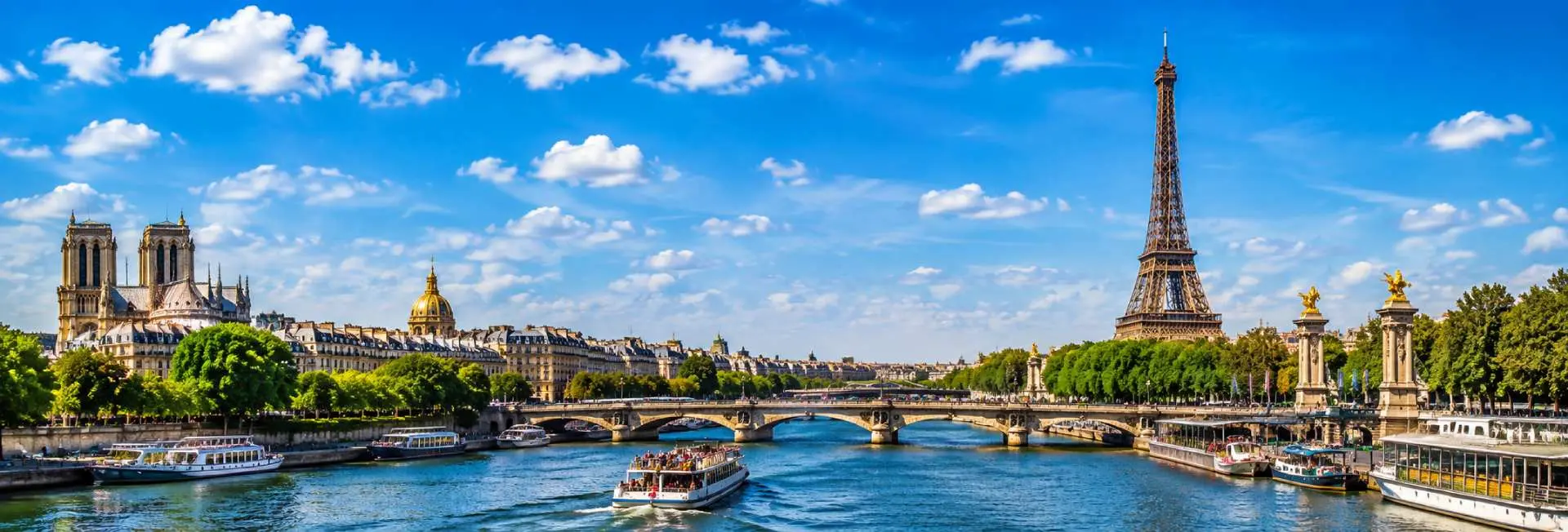
Three days is enough time to cover the essentials - the Eiffel Tower, the Louvre, Notre-Dame's exterior, Montmartre - while leaving room to sit at a café and watch the city go by, which is arguably the most Parisian thing you can do. Each day below is built around a walkable cluster of neighborhoods, with a mix of major landmarks and smaller local spots.
Before You Go: Practical Essentials
Booking Tickets in Advance
Paris's major sights use mandatory timed-entry booking, and walk-up tickets are unreliable in peak season. Book the Eiffel Tower and the Louvre online at least a few weeks ahead if you're traveling in spring, summer, or around major holidays. The Musée d'Orsay also requires timed entry due to ongoing renovation of its entrance areas, expected to run through 2028 (the galleries themselves remain fully open throughout).
What Things Cost
- Eiffel Tower: roughly €14.80 for stairs to the second floor up to about €36.70 for summit access by elevator, with youth and child discounts available.
- Louvre: €22 for EU/EEA residents, €32 for non-EU visitors; free for under-18s and EU residents under 26.
- Musée d'Orsay: around €16 online (€12 for Thursday evening entry after 6pm); free for under-18s and EU residents under 26, and free for everyone on the first Sunday of the month.
Prices and booking rules shift year to year, so confirm current figures on each museum's official site before you travel.
When to Go Each Day
Mornings (opening time) and evenings tend to be quieter at every major sight. The Louvre is closed on Tuesdays and the Musée d'Orsay is closed on Mondays, so plan around those closures rather than losing a museum day to bad luck.
Where to Stay: Choosing Your Neighborhood
Le Marais (3rd/4th Arrondissement)
Central, walkable, and close to both the Louvre and Notre-Dame, Le Marais is one of the most convenient bases for a first visit. It's packed with boutiques, cafés, and nightlife, which makes it lively but also a bit noisier at night than some other options.
Saint-Germain-des-Prés (6th Arrondissement)
A Left Bank neighborhood within easy walking distance of the Louvre, the Musée d'Orsay, and the Latin Quarter. It tends to be quieter and more upscale than Le Marais, with historic cafés and tree-lined streets, though hotel prices run higher.
Near the Eiffel Tower (7th Arrondissement)
Staying close to the Eiffel Tower puts you near one major landmark but somewhat farther from the Louvre, Montmartre, and Le Marais. It's a good pick if you want quiet, residential streets and don't mind a metro ride to reach the rest of the city.
Montmartre (18th Arrondissement)
Montmartre has a village-like feel and some of the best views in the city, but it's farther from the Louvre and Île de la Cité, and its hilly streets mean more walking uphill with luggage. It suits travelers prioritizing atmosphere over central convenience.
For a first-time visit built around this itinerary, Le Marais or Saint-Germain-des-Prés generally cut down the most travel time between sights, since both sit within walking distance of at least two of the three days' main stops.
Day 1: Icons of Paris
Morning: Eiffel Tower and Trocadéro
Start at the Eiffel Tower itself, ideally with a booking for opening time to beat both the crowds and the midday heat in summer. If you'd rather skip the elevator queue, the stairs to the second floor are a budget-friendly option and still give you a real view over the city. Afterward, cross to the Trocadéro esplanade on the opposite side of the Seine for the classic postcard shot of the tower.
Afternoon: Along the Seine to the Arc de Triomphe
Walk or take the metro toward the Champs-Élysées, working your way up toward the Arc de Triomphe. Climbing to the top of the arch is optional but worthwhile if you have the stamina - it's a different, lower-key view than the Eiffel Tower's, looking straight down the twelve avenues that radiate from the roundabout below.
Evening: Seine River Walk or Cruise
End the day with a stroll along the Seine or a short river cruise. Many boats depart near the Eiffel Tower and pass most of Day 2's landmarks lit up at night, which is a good way to preview the rest of your trip.
Day 2: Art, History, and the Left Bank
Morning: The Louvre
Book an early time slot for the Louvre - it's the most-visited museum in the world, and a 9am entry avoids the worst of the crowds. Don't try to see all 35,000 works; pick one or two wings (the Denon wing for the Mona Lisa and Italian Renaissance paintings is the common first stop) and go deep rather than wide.
Midday: Île de la Cité and Notre-Dame
From the Louvre, it's a short walk to Île de la Cité, the island in the Seine where Notre-Dame Cathedral stands. Notre-Dame reopened to visitors after its 2019 fire and restoration, though visiting hours and access rules can change, so check current visitor information before you go. Even from the outside, the cathedral and the surrounding Île de la Cité streets are worth the detour.
Afternoon: Latin Quarter and Musée d'Orsay
Cross into the Latin Quarter for lunch among its narrow streets, then head to the Musée d'Orsay, housed in a former train station and home to the world's largest collection of Impressionist and Post-Impressionist art. If your schedule allows a Thursday visit, the evening slot after 6pm is quieter and cheaper.
Evening: Saint-Germain-des-Prés
Wind down in Saint-Germain-des-Prés, a Left Bank neighborhood known for historic cafés and bookshops. It's a good area for a relaxed dinner after two museum-heavy stops.
Day 3: Montmartre and Local Paris
Morning: Sacré-Cœur and Montmartre
Head north to Montmartre, the hilltop neighborhood best known for the white-domed Sacré-Cœur Basilica. Arrive early to see the basilica and its surrounding streets before tour groups fill them. The steps up to Sacré-Cœur offer one of the best free panoramic views in Paris.
Midday: Place du Tertre and Montmartre Streets
Wander the small streets around Place du Tertre, where street artists set up easels, and explore the quieter residential lanes nearby. This is also where much of the film Amélie was set, and several filming locations are within a short walk.
Afternoon: Le Marais
Take the metro down to Le Marais, a neighborhood mixing medieval architecture with independent boutiques, galleries, and some of the city's best falafel and pastries. It's a good area for slower exploration without a fixed checklist of sights.
Evening: A Final Parisian Dinner
Close out the trip with dinner somewhere that isn't on a tourist-focused main street - a side street in Le Marais or the Latin Quarter usually turns up better food at a fairer price than restaurants directly facing a major landmark.
What to Eat: Parisian Dishes to Try
Paris rewards eating with some intention rather than just grabbing whatever's closest to a landmark, where prices tend to be higher and quality lower. A few dishes and spots to look for over your three days:
- Croissant and pain au chocolat: best from a neighborhood boulangerie rather than a hotel breakfast buffet - look for a line of locals in the morning as a good sign.
- Steak-frites: a classic bistro order, widely available and a reliable choice for a first proper sit-down dinner.
- French onion soup (soupe à l'oignon): a good starter on a cooler evening, especially in a traditional bistro in the Latin Quarter or Le Marais.
- Falafel in Le Marais: the rue des Rosiers area is known for it, and it's a fast, affordable option between sightseeing stops.
- Crêpes: both savory (galettes, often buckwheat) and sweet versions are sold from stands and small creperies across the city - a good quick option in Montmartre.
- Cheese and wine: many bistros offer a cheese course or a simple wine-and-cheese pairing, worth working into at least one dinner.
- Macarons and pastries: Saint-Germain-des-Prés and Le Marais both have well-known pâtisseries; going to a specific shop rather than a generic tourist stand makes a noticeable difference in quality.
As a general rule, restaurants directly facing a major landmark tend to charge more for less; walking two or three streets back usually finds better food at a fairer price.
Getting Around: Metro Basics
Paris's metro system is dense enough that most of this itinerary can be done on foot with occasional metro hops. As of 2026, single Metro/RER tickets are digital, loaded onto a reusable Navigo Easy card or a smartphone app, and cost a little over €2.50 per ride. Paper tickets are no longer sold.
- Single ride (metro/RER/train): roughly €2.55.
- Single ride (bus/tram): roughly €2.05.
- Navigo Jour (unlimited travel for one calendar day): around €12.30.
- Paris Visite pass (multi-day, unlimited, includes airport zones): starts around €30.60 for one day, with discounts for longer durations.
For a 3-day trip with several museum visits and neighborhood walks per day, a short-stay Paris Visite pass or a Navigo Easy card topped up as you go usually works out simpler than tracking individual tickets. Confirm current fares before you travel, since transport pricing is adjusted at the start of each year.
Conclusion
Three days won't show you everything Paris has to offer, and that's fine - it's a city built for repeat visits. This itinerary front-loads the landmarks most first-timers want to see while leaving enough breathing room to actually enjoy them, rather than just checking them off a list.
If you leave with one afternoon spent doing nothing in particular - sitting at a café, walking along the Seine without a destination - you'll likely remember it as fondly as the Eiffel Tower or the Louvre.
FAQs about Paris Trip
Is 3 days enough time to see Paris? +
Three days is enough to cover the major landmarks — the Eiffel Tower, the Louvre, Notre-Dame, Montmartre — at a comfortable pace, though you won't see everything the city offers. It works well as a first orientation trip.
Do I need to book tickets in advance for the Eiffel Tower and Louvre? +
Yes, both use mandatory or strongly recommended timed-entry booking, and walk-up availability is unreliable during peak season. Book online at least a few weeks ahead for spring and summer visits.
What's the best order to visit the Louvre and Musée d'Orsay? +
Either order works, but many visitors prefer the Louvre first since it's larger and benefits from a full morning, then the Musée d'Orsay in the afternoon or a Thursday evening when it's less crowded and slightly cheaper to enter.
Is the Paris Metro easy for first-time visitors to use? +
Yes. The network is dense and well-signed, and tickets are now digital, loaded onto a phone or a reusable Navigo Easy card rather than paper tickets. A day or multi-day pass is usually simpler than buying individual rides.
Which days are the Louvre and Musée d'Orsay closed? +
The Louvre is closed on Tuesdays and the Musée d'Orsay is closed on Mondays, so the two closures don't overlap — plan whichever museum fits the day you have available.
Is Montmartre worth visiting if I only have 3 days? +
Yes. Beyond Sacré-Cœur's view over the city, Montmartre's quieter streets offer a different pace than the Eiffel Tower or Louvre areas, and it pairs well with Le Marais as a lower-key final day.
Where's the best neighborhood to stay for a first visit? +
Le Marais and Saint-Germain-des-Prés are generally the most convenient, since both are within walking distance of at least two of this itinerary's three days. Staying near the Eiffel Tower or in Montmartre offers a different atmosphere but adds more metro travel to reach the other sights.
What food should I make sure to try in Paris? +
Beyond croissants and steak-frites, look for a proper bistro dinner with a cheese course, falafel in Le Marais, and pastries from a dedicated pâtisserie rather than a tourist-area stand. Eating a few streets back from a major landmark usually gets better food for less money.
How much should I budget per day for sightseeing in Paris? +
Museum and landmark entries alone can run roughly €50–€70 per person per day if you're visiting the Eiffel Tower and one major museum, before food and transport. Booking combo tickets or passes for multiple sites can reduce the total.