Table of Contents
Overview
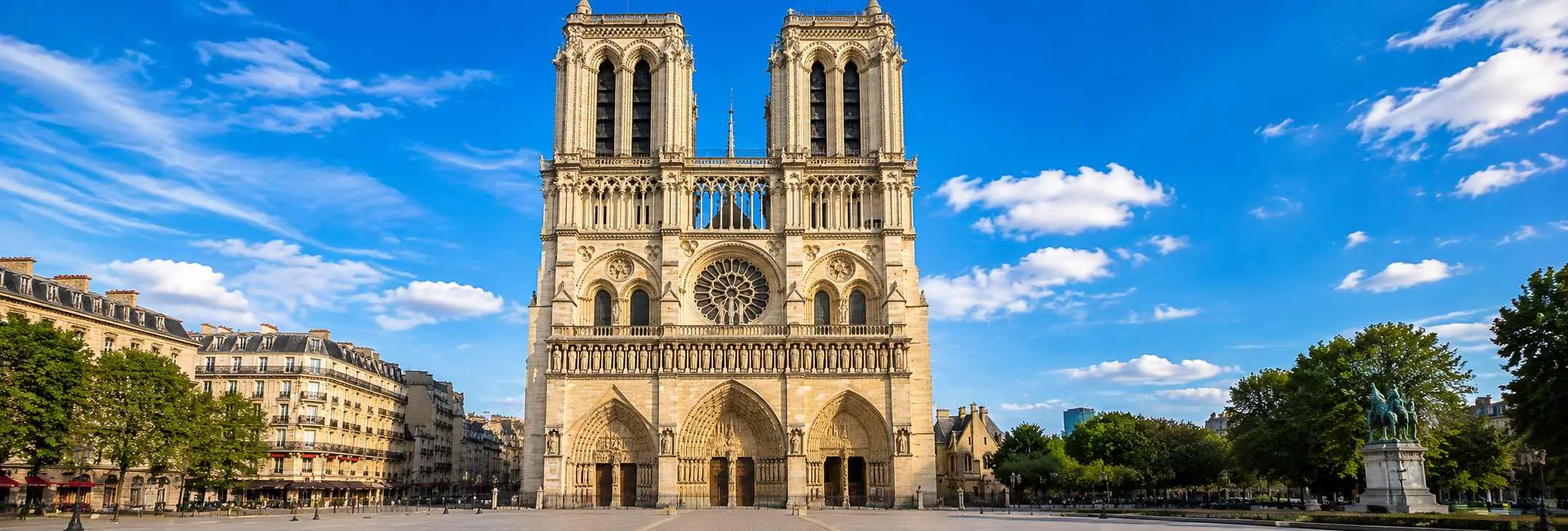
Notre-Dame de Paris stands on the Île de la Cité in the heart of the city, one of the most celebrated examples of French Gothic architecture in the world. After a fire in April 2019 destroyed its spire and much of its roof structure, a five-year restoration brought the cathedral back to life, and it reopened to the public in December 2024. Today it once again welcomes millions of visitors and worshippers each year.
History
Construction began in 1163 under Bishop Maurice de Sully and continued for nearly two centuries, reaching completion in 1345. Because building spanned so many decades, the cathedral displays the full evolution of Gothic style, from early Gothic to the later Flamboyant Gothic period. Over its more than 860-year history, Notre-Dame has witnessed royal coronations, revolutionary upheaval, and major national ceremonies. On April 15, 2019, a fire tore through the building, destroying its iconic spire and the centuries-old oak roof structure known as "the forest." A painstaking five-year restoration effort involving hundreds of artisans, carpenters, and stonemasons followed, and the cathedral reopened on December 7, 2024.
Key Facts & Figures
- Construction period: 1163 to 1345, spanning nearly two centuries
- Interior capacity: can hold more than 6,000 worshippers
- Steps to the top of the towers: 387
- Annual visitors: around 13 million, making it one of the most visited sites in Paris
- Reopened to the public on December 7, 2024, after a five-year restoration
- Located at the site of a former Roman temple to Jupiter on the Île de la Cité
Architecture & Interior
The cathedral's Latin cross layout, soaring vaulted ceilings, and flying buttresses are hallmarks of Gothic engineering. The restored vaulted ceiling rises to nearly ten meters and is supported by dramatic stone arches. Inside, the famous rose windows, some dating to the 13th century, cast colored light across the nave, especially striking in the morning and afternoon sun. Outside on the square, a bronze marker denotes "point zero," the point from which all road distances in France are officially measured.
Opening Hours & Admission
Entry to the cathedral itself is free for all visitors, with no tickets required, though a free timed-entry reservation is strongly recommended during busy periods to avoid long waits.
- Monday to Friday: 7:50 AM to 7:00 PM (until 10:00 PM on Thursdays)
- Weekends: 8:15 AM to 7:30 PM
- The Bell Towers, reopened in September 2025, require a separate paid ticket priced around €16
- The Archaeological Crypt beneath the square in front of the cathedral is open separately and typically closed on Mondays and certain holidays
Best Time to Visit
- Early morning (7:50–9:30 AM weekdays, 8:15–9:30 AM weekends): the quietest window, often nearly empty
- 10:00 AM to 4:00 PM: the busiest period, especially on weekends and holidays
- Thursday evenings from 7:00 to 10:00 PM: the single quietest window of the week
- Off-peak months from November to March generally have shorter queues than the April–October high season
How to Get There
Notre-Dame Cathedral sits on the Île de la Cité in central Paris. The nearest metro stations are Cité, Saint-Michel, and Hôtel de Ville, all within a short walk of the cathedral square.
Nearby Attractions
- Sainte-Chapelle: a nearby Gothic chapel famed for its stained-glass windows
- The Latin Quarter: historic streets and cafés just across the river
- Île Saint-Louis: a charming neighboring island known for its shops and ice cream
- The Seine riverbanks: popular for walks and boat tours near the cathedral
Visitor Tips
- Reserve a free timed-entry slot online in advance during peak season to skip long queues
- Book bell tower tickets a week or more ahead, as they sell out quickly
- Photography without flash is permitted inside the cathedral
- Dress modestly out of respect, as it remains an active place of worship
- Visit in the afternoon for the best light through the rose windows
Frequently Asked Questions
Is Notre-Dame Cathedral free to visit? +
Yes, entry to the main cathedral is free, though a timed-entry reservation is recommended in peak season.
When did Notre-Dame reopen after the fire? +
It reopened to the public on December 7, 2024, after a five-year restoration.
Do I need a ticket for the towers? +
Yes, the Bell Towers require a separate paid ticket, priced at around €16.
What is the best time to avoid crowds? +
Early mornings on weekdays or Thursday evenings after 7 PM tend to be the quietest.
How long does a typical visit take? +
Most visitors spend 30–60 minutes inside the cathedral, plus additional time for the towers or crypt if visited.