

Table of Contents
About Paris
Paris doesn't need much of an introduction, but it does reward people who look past the postcard version of it. Yes, the Eiffel Tower and the Louvre are worth your time. But the city's real charm tends to show up in smaller moments, such as a bakery queue at 7 a.m., a used bookstall along the Seine, or the way light hits the zinc rooftops in late afternoon.
The city is split into 20 arrondissements that spiral outward from the center like a snail shell, starting at the Louvre in the 1st and winding out to the edges near the Peripherique ring road in the 20th. Each one has its own personality, which is part of why deciding what to see in Paris is harder than it looks. The answer depends heavily on which Paris you are after: grand and monumental, artsy and bohemian, quiet and residential, or some mix of all three.
Paris is also a city best explored on foot and by transit rather than by car. It is compact by big city standards, since you can walk from the Louvre to Notre-Dame in about 15 minutes, but the traffic, one way streets, and near total absence of parking make driving more trouble than it is worth for most visitors.
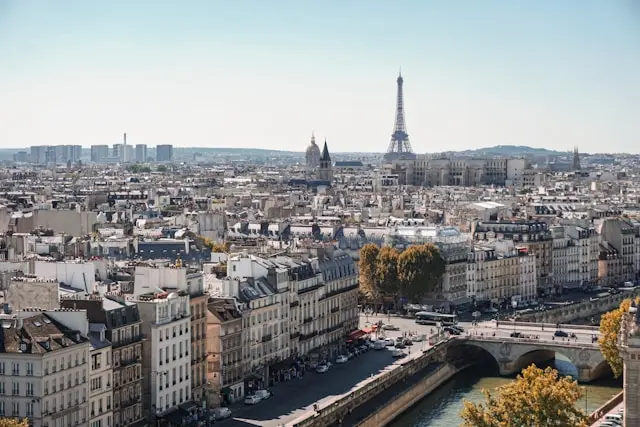
Climate in Paris
Paris has a temperate oceanic climate that is mild, a bit damp, and rarely extreme in either direction. That said, each season gives you a noticeably different city.
- Spring, from March to May, is the classic postcard season with chestnut trees blooming and terraces filling up again. Temperatures are generally between 10 and 18 degrees Celsius, or 50 to 64 degrees Fahrenheit. It also rains fairly often, so pack a compact umbrella rather than relying on sunny day optimism.
- Summer, from June to August, is warm and sometimes hot, with temperatures that can push past 30 degrees Celsius, or 86 degrees Fahrenheit, during heatwaves. This is a growing issue in recent years and is worth noting since many older Parisian buildings and budget hotels do not have air conditioning. August is also when many Parisians leave the city for their own holidays, so some smaller restaurants and shops close for weeks at a time.
- Autumn, from September to November, is arguably the most underrated season, with fewer crowds, golden light, and comfortable walking weather in September and early October before it turns cooler and greyer.
- Winter, from December to February, is cold but rarely brutal, hovering around 3 to 8 degrees Celsius, or 37 to 46 degrees Fahrenheit, with short days and a decent chance of grey skies more than snow. It is also when the city feels most local, since tourist numbers drop significantly outside the Christmas market period.
If you are choosing when to go, late April to early June and mid September to mid October tend to offer the best balance of weather, daylight, and manageable crowds.
Getting to Paris
Most international visitors arrive through one of two airports.
- Charles de Gaulle, about 25 kilometers northeast of the city, handles the majority of long haul and international flights. The RER B train connects it to central Paris in roughly 45 to 50 minutes, and it is generally the most reliable option when traffic is bad.
- Orly, closer to the city on the southern side, handles more European and domestic routes. The Orlyval shuttle connects to the RER B as well, or you can take the tram and metro combination.
A third, smaller airport, Beauvais, is used by some budget carriers, but it is over an hour outside Paris and mainly worth it if the fare savings are substantial.
For travelers already in Europe, Paris is also extremely well connected by train. The high speed TGV network puts London, via Eurostar in about two hours and fifteen minutes through the Channel Tunnel, along with Brussels, Amsterdam, and several German and Swiss cities, within a few hours of central Paris, arriving directly into stations like Gare du Nord or Gare de Lyon with no airport transfer required.
Entry requirements depend heavily on your nationality and change periodically, so it is worth checking current visa and Schengen area rules directly with the French consulate or an official government source shortly before you travel, rather than relying on older blog posts.

Transportation in Paris
Once you are there, the Metro is the backbone of getting around, with 16 lines, dense coverage, and trains that run frequently from around 5:30 a.m. until roughly 1:15 a.m., a bit later on Friday and Saturday nights. Signage is clear, and most Parisians will help if you look lost with a map in hand.
For ticketing, the Navigo Easy card, a reloadable contactless card, has largely replaced paper tickets and is the simplest option for most visitors. You can load it with single tickets or a package of trips and tap in at any station. If you are staying a full week, a Navigo Decouverte weekly pass covering unlimited travel can work out cheaper than buying individual rides.
Buses cover routes the Metro does not, and they are a genuinely nice way to see the city above ground rather than underground. Line 69, for instance, runs past the Louvre, Notre-Dame, and Pere Lachaise.
RER trains, a faster and more spread out regional network, are what you will use for the airports, Versailles, and Disneyland Paris.
Walking is often the best way to experience central neighborhoods, since many major sights sit within a 20 to 30 minute walk of each other along the Seine.
Velib bike share stations are all over the city if you are comfortable cycling in traffic, and e-scooters and taxis, or ride hailing apps, fill in the gaps late at night when the Metro has stopped running.
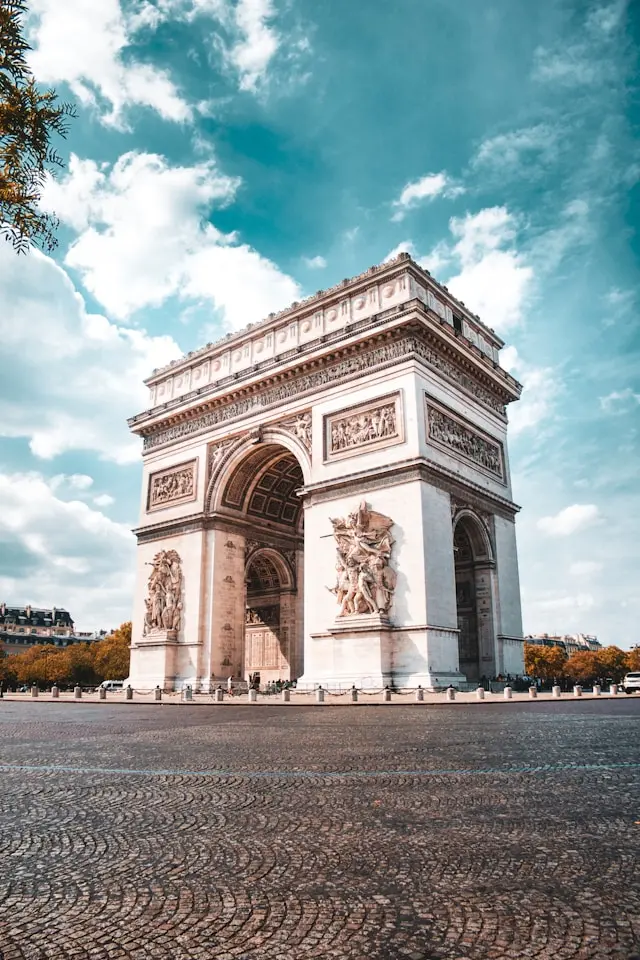
Things to Do in Paris
Paris has more sights than any single trip can reasonably cover, so it helps to think in terms of a handful of anchors rather than an exhaustive checklist.
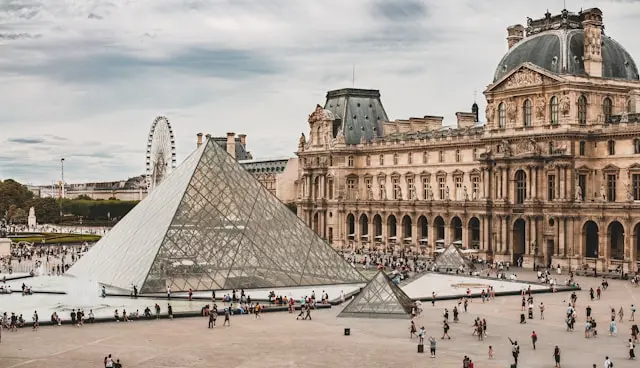
- The Louvre, home to the Mona Lisa and an enormous collection spanning ancient to nineteenth century art, is worth a half day at minimum. Booking a timed entry ticket online in advance saves significant queue time.
- The Eiffel Tower is best visited either early morning or after sunset, when the crowds thin and the tower is lit up. Booking tickets online ahead of time avoids the long walk up queues.
- Notre-Dame Cathedral, still undergoing restoration work in parts following the 2019 fire, remains a striking sight from the outside and along the Seine.
- Musee d'Orsay, housed in a former railway station, holds one of the best Impressionist and Post-Impressionist collections anywhere, and pairs well with a Louvre visit on a different day.
- Sacre-Coeur and Montmartre offer sweeping views over the city along with a village-like atmosphere of cobbled streets and artists' squares.
- The Arc de Triomphe and Champs-Elysees make for a good combination, with the option to climb the arc for a rooftop view down the avenue.
- Sainte-Chapelle, tucked inside the same complex as the old Palais de Justice, has some of the most striking stained glass windows in the city and is often overlooked by first time visitors.
Rather than trying to see everything, it usually works better to pick two or three major sights per day and build in time to simply walk between them.
Neighborhoods to Explore
Paris rewards exploring beyond the major sights, and each arrondissement has its own character worth building into an itinerary.
- Le Marais, spanning the 3rd and 4th arrondissements, mixes medieval streets with trendy boutiques, historic Jewish quarter food spots, and a lively LGBTQ scene, making it one of the most walkable and photogenic areas.
- Saint-Germain-des-Pres, in the 6th, is known for its literary cafe history, upscale shopping, and proximity to the Luxembourg Gardens.
- Montmartre, in the 18th, retains a village feel with steep cobbled streets, artist squares, and views over the rooftops from Sacre-Coeur.
- Canal Saint-Martin, in the 10th, has a younger, more local energy, with canal-side cafes, independent shops, and a strong food and nightlife scene.
- Belleville, in the 20th, is one of the most multicultural parts of the city, known for street art, an emerging food scene, and panoramic views from Parc de Belleville.
- The Latin Quarter, around the 5th, is home to the Sorbonne, narrow medieval streets, and a dense concentration of bookshops and casual restaurants.
If time is limited, picking two or three neighborhoods to wander through slowly tends to leave a stronger impression than trying to tick off every district on a map.

Food in Paris
Paris takes food seriously without necessarily being showy about it, and some of the best meals you will have are unglamorous, such as a proper croissant from a neighborhood bakery, a budget friendly lunch menu at a corner bistro, or a wedge of cheese from an open air market.
- Boulangeries are everywhere, and quality varies more than you would expect. A baguette labeled tradition is usually a step up from a standard one, made without additives and with a longer fermentation.
- Bistros are the backbone of everyday Parisian dining, with classic dishes like steak frites, duck confit, and onion soup, usually offering a fixed price lunch menu that is better value than ordering a la carte.
- Markets like Marche d'Aligre or the many neighborhood street markets are worth a visit even if you are not cooking, since they are a good window into how people actually eat here.
- Cafes operate on their own etiquette. Prices are often lower at the counter than seated at a table, and lingering over a single coffee for an hour is completely normal and expected.
- Reservations matter more than travelers often assume, especially for well regarded or smaller restaurants. Booking a day or two ahead, or even the same morning, can save you from being turned away at the door.
Do not feel obligated to chase Michelin stars on every trip. Some of the most memorable Paris meals come from unassuming spots with no sign, no website, and a regular crowd of locals.
Accommodation in Paris
Where to stay in Paris depends a lot on what kind of trip you are after.
- The 1st through 4th arrondissements, covering the Louvre, Le Marais, and Ile de la Cite, put you at the historic center, walkable to major sights, but with prices to match and streets that get busy with tourists.
- The 6th and 7th arrondissements, covering Saint-Germain-des-Pres and the area near the Eiffel Tower, are elegant, quieter, and still central, a good fit if you want charm without total chaos.
- The 9th and 10th arrondissements, around Canal Saint-Martin and Opera, tend to be more affordable while still being well connected, with a younger and more local feel.
- The 11th and 12th arrondissements, around Bastille and Nation, offer good value and an increasingly popular dining and nightlife scene, a bit further from the tourist core.
- The 18th arrondissement, covering Montmartre, has real atmosphere and hillside views, though it is further from central sights, and some pockets around Pigalle are best navigated with normal city awareness at night.
In terms of accommodation type, boutique hotels and small family run properties are common in central neighborhoods, while apartment rentals can be a good option for longer stays or if you want a kitchen. Whichever you choose, book well ahead for spring and summer travel, since good places in central arrondissements fill up months in advance.
Day Trips from Paris
If you have an extra day or two, a few destinations are close enough to fit in without an overnight stay.
- Versailles, the Palace of Versailles and its gardens, is about 40 minutes by RER C from central Paris. Go early, since it gets crowded fast, and the gardens alone are worth setting aside several hours for.
- Giverny, Claude Monet's house and water lily gardens, is roughly 75 minutes away by train and bus, or a direct train to Vernon followed by a short shuttle. It is best visited between April and October when the gardens are in bloom.
- Disneyland Paris, about 40 minutes by RER A, is a straightforward day trip if you are traveling with kids, or worth a full two days if you want to properly cover both parks.
- Fontainebleau is a quieter, less visited alternative to Versailles, with a genuinely impressive chateau and surrounding forest good for a walk.
- Chartres, around an hour by train, is known for its cathedral's stained glass, and offers a nice change of pace from Paris's density.
Most of these are doable independently by train without needing an organized tour, which also tends to be cheaper and more flexible.
Safety Tips in Paris
Paris is, on the whole, a safe city for travelers, and violent crime against tourists is rare. The more realistic concern is petty theft, such as pickpocketing on crowded Metro lines, near major sights, and in tourist heavy areas like the vicinity of the Eiffel Tower or Sacre-Coeur.
A few practical habits go a long way.
- Keep bags zipped and worn in front of you in crowds, especially on the Metro during rush hour.
- Be wary of common distraction scams, such as petition signers, found ring tricks, or people offering unsolicited help at ticket machines.
- Stick to official taxi stands or licensed ride hailing apps rather than unmarked cars offering rides.
- Keep an eye on drinks at bars, as with most major cities.
- Certain areas, like parts of Barbes or Chateau Rouge late at night, warrant the same street smart awareness you would apply in any big city after dark, not avoidance, just attentiveness.
If something is stolen, Paris has designated police stations used to handling tourist reports, and most travel insurance requires a police report for claims.

Budget & Costs in Paris
Paris can be done on a range of budgets, though it is generally on the pricier side for Europe.
- Budget travelers can get by on modest daily spending by staying in hostels or budget hotels further from the center, eating at bakeries and market stalls, and relying on the Metro and free museum days, since many national museums are free on the first Sunday of the month from October through March.
- Mid-range travelers have the most flexibility, with comfortable hotels, a mix of bistro meals and the occasional splurge, paid museum entry, and normal transit use.
- Higher end travelers will find no shortage of ways to spend more, from fine dining and boutique hotels in the 1st or 6th arrondissements to private tours and shopping along Avenue Montaigne.
A few money saving habits that work regardless of budget include the Paris Museum Pass, which pays for itself quickly if you are visiting several paid sights, choosing lunch menus that are almost always better value than dinner at the same restaurant, and requesting tap water in restaurants, which is free and completely normal to ask for instead of bottled water.
Local Customs & Etiquette
A little etiquette awareness goes a long way in Paris, and it is less about rigid rules than about basic courtesy that locals genuinely notice.
- Always greet first. Walking into a shop, cafe, or even asking someone for directions without saying bonjour first can come across as brusque. It costs nothing and changes the tone of the interaction noticeably.
- Attempt French, even briefly. Asking if someone speaks English goes over much better than launching straight into English. Most Parisians speak at least some English and will switch once they see you have made the effort.
- Dining pace is slower. Meals, especially dinner, are meant to be lingered over. Waitstaff will not rush you, and asking for the bill usually requires you to actively request it.
- Dress a notch more put together than typical tourist casual, particularly for dinner. It is not about formality so much as blending in a bit more comfortably.
- Volume matters. Conversations in public spaces, restaurants, and on transit tend to be quieter than in many other countries, and it is one of the more noticeable cultural differences visitors mention.
None of this is about rigid formality. It is closer to the kind of everyday courtesy that makes any interaction go more smoothly, anywhere.
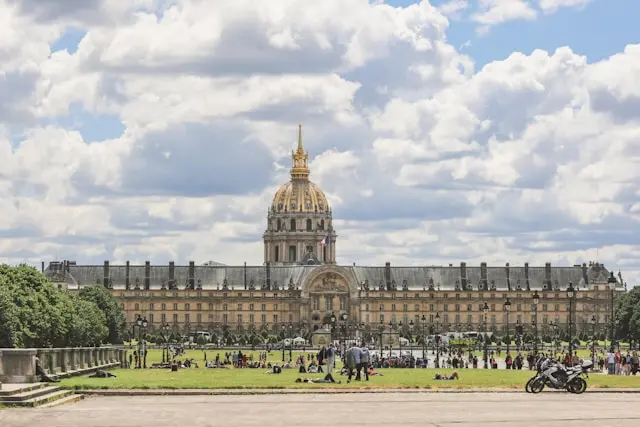
Suggested Itineraries
One Day in Paris
Start early at the Louvre or Musee d'Orsay before crowds build, walk along the Seine to Notre-Dame and Ile de la Cite, grab lunch in the Latin Quarter, then head to the Eiffel Tower for late afternoon and sunset. If you have energy left, Montmartre and Sacre-Coeur make a nice evening close, with views over the city as it lights up.
Three Days in Paris
- Day one covers the Louvre, Ile de la Cite, the Notre-Dame exterior, the Latin Quarter, and an evening Seine walk.
- Day two covers the Eiffel Tower, the Champs-Elysees, the Arc de Triomphe, and either the Musee d'Orsay or the Orangerie in the afternoon.
- Day three covers Montmartre in the morning, the Marais neighborhood for lunch and shopping, and either Versailles as a half day add-on or a slower afternoon in a park like the Luxembourg Gardens.
One Week in Paris
The extra days give you room to slow down and add day trips without feeling rushed. Versailles or Giverny can fill one day, deeper neighborhood exploration such as Canal Saint-Martin, Belleville, or the 11th arrondissement can fill another, and there is enough flexibility to revisit a museum you loved or simply sit in a cafe and watch the city go by, which is arguably the most Parisian thing you can do with a free afternoon.

Common Questions About Visiting Paris
Is Paris expensive? +
It is on the pricier end for Europe, but costs scale well with effort. Market food, lunch menus, and free museum days can keep a trip reasonable even with a modest budget.
How many days do you need in Paris? +
Three to four days covers the major sights comfortably, while a week lets you add day trips and slow down without feeling like you are racing a checklist.
Is Paris safe for solo travelers? +
Generally yes. The main risk is petty theft rather than violent crime, and standard city awareness, such as keeping bags secured and staying attentive in crowds, covers most concerns.
What is the best time of year to visit? +
Late April through early June and mid September through mid October tend to offer the best mix of good weather, daylight, and manageable crowds.
Do I need to speak French? +
No, but a few basic phrases and a friendly greeting before switching to English go a long way with locals.
Is the Metro easy to use for visitors? +
Yes. It is dense, frequent, and well signposted, and a reloadable Navigo Easy card makes getting around straightforward from day one.