

Table of Contents
About Rome
Rome is a city where the past is not tucked away in museums so much as scattered across everyday life. It is entirely normal to walk past a two thousand year old ruin on the way to buy groceries, or to find a Renaissance fountain tucked into a residential square with no fanfare at all. Few cities anywhere pack this much layered history into a walkable center.
The historic core sits within the ring road known as the Grande Raccordo Anulare, but most visitors spend the bulk of their time within a much smaller area centered on the Tiber River, stretching from the Vatican in the west to the Colosseum in the east. This central zone is compact enough to explore largely on foot, though Rome's cobblestone streets and hills mean comfortable shoes matter more here than in most cities.
Rome rewards slowing down. Between the density of ancient ruins, Renaissance and Baroque churches, and a food culture built around long, unhurried meals, trying to move too fast tends to work against the city rather than with it.
Climate in Rome
Rome has a Mediterranean climate, meaning generally mild, wet winters and hot, dry summers, with far less rainfall overall than northern European capitals.
- Spring, from March to May, is one of the most pleasant times to visit, with temperatures generally between 12 and 22 degrees Celsius, or 54 to 72 degrees Fahrenheit, and gardens and outdoor cafes coming back to life after winter.
- Summer, from June to August, is hot and can be intense by midday, with temperatures often reaching 30 to 35 degrees Celsius, or 86 to 95 degrees Fahrenheit. August in particular sees many Romans leave the city, and some smaller, family run restaurants close for a portion of the month.
- Autumn, from September to November, offers warm, comfortable days early on before cooling into more typical Mediterranean rains by late November, and is generally considered one of the best seasons to visit given the lighter crowds.
- Winter, from December to February, is mild compared to much of Europe, with temperatures generally between 5 and 13 degrees Celsius, or 41 to 55 degrees Fahrenheit, though damp and occasionally raw on overcast days.
April through June and September through October tend to offer the best combination of comfortable weather and manageable crowds, while July and August, though popular, can be genuinely taxing given the heat.
Getting to Rome
Most international visitors arrive through one of two airports.
- Leonardo da Vinci Fiumicino Airport, about 30 kilometers southwest of the city, is Rome's main international hub. The Leonardo Express train runs directly to Termini station in about 32 minutes, while a slower regional train connects to other central stations at a lower cost.
- Ciampino Airport, closer to the city on the southeast side, handles many budget carriers. It is not connected by rail, so a bus transfer to Termini, taking roughly 40 minutes, is the standard option.
For travelers already in Europe, Rome is well connected by high speed rail, with Trenitalia's Frecciarossa and Italo trains linking it to Florence in about 90 minutes, Milan in around 3 hours, and Naples in roughly an hour, arriving into the centrally located Termini station.
Entry requirements depend on nationality and are subject to change, so it is worth confirming current visa and Schengen area rules directly with an official Italian or EU government source shortly before traveling.

Transportation in Rome
Rome's public transport network is smaller and less extensive than in cities like London or Paris, partly because extensive subway construction keeps running into archaeological finds, but it still covers the essentials well.
The Metro has three lines, A, B, and C, which cover major areas but do not reach every central sight directly, since much of the historic center predates any possibility of underground construction. Trains generally run from around 5:30 a.m. until 11:30 p.m., with a later finish on Friday and Saturday nights.
Buses and trams fill in the gaps extensively and are often necessary to reach areas the Metro does not cover, including much of the historic center itself.
A single ticket, valid for 100 minutes across buses, trams, and the Metro, is the standard way to pay, and multi-day passes can be worthwhile if you are making frequent trips.
Walking is often the most practical way to get around central Rome, since many major sights, including the Pantheon, Trevi Fountain, and Piazza Navona, sit within a compact, largely pedestrian friendly area.
Taxis are metered and best hailed from official taxi stands rather than the street, while ride hailing apps have more limited availability in Rome compared to some other major European cities.
Things to Do in Rome
Rome's major sights are dense enough that a short walk can take you from ancient ruins to a Baroque fountain to a Renaissance basilica without much effort.
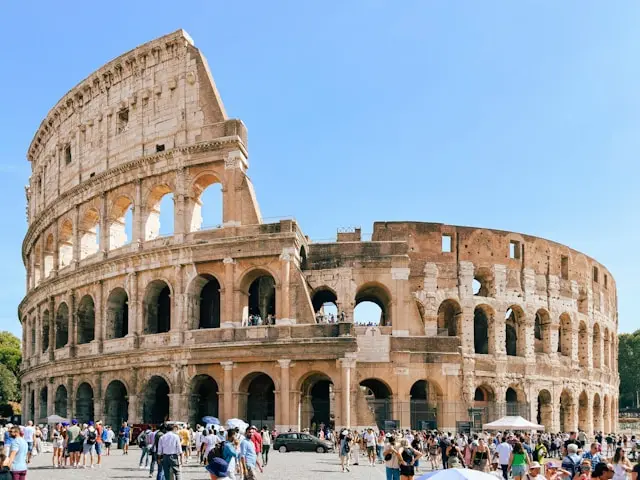
- The Colosseum, along with the adjacent Roman Forum and Palatine Hill, forms the heart of ancient Rome and is best visited with a pre-booked timed entry ticket, since queues without one can run for hours.
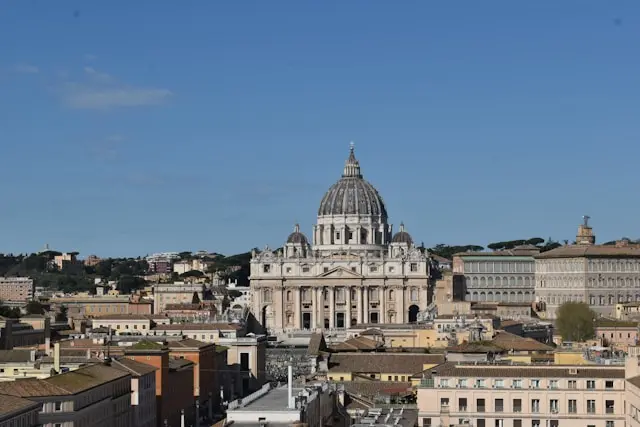
- Vatican City, home to St Peter's Basilica and the Vatican Museums including the Sistine Chapel, is technically a separate sovereign state and warrants a half day at minimum, ideally with an early or pre-booked entry to avoid the heaviest crowds.
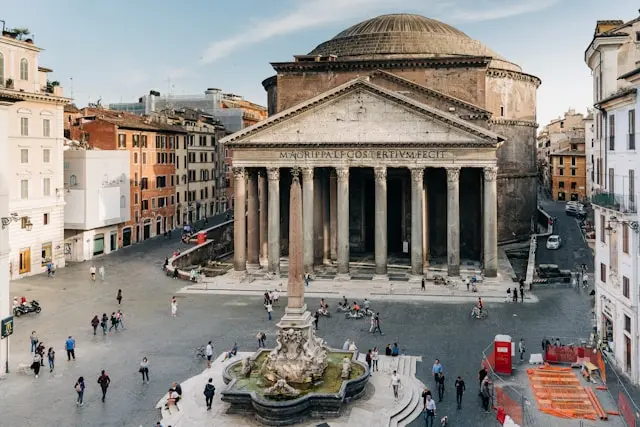
- The Pantheon, one of the best preserved buildings from ancient Rome, is free to enter and remains striking both for its scale and its still functioning oculus in the dome.
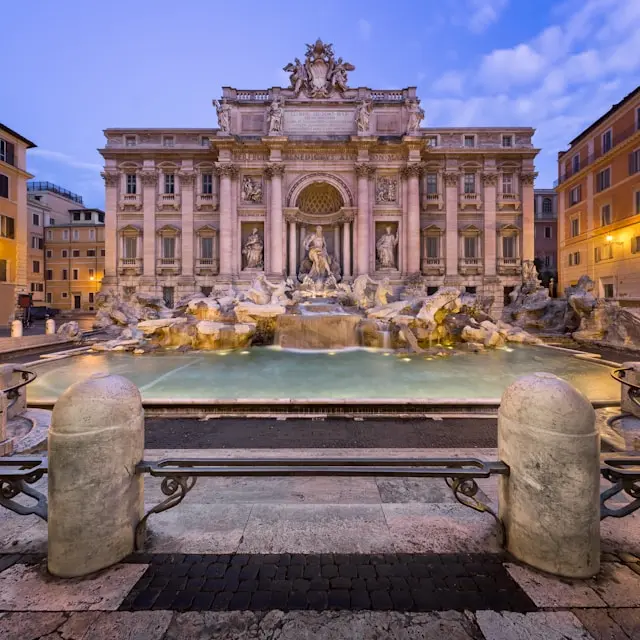
- The Trevi Fountain, best visited early morning or late evening to avoid the density of crowds during the day, is the largest Baroque fountain in the city and a classic stop regardless of the time you go.
- Piazza Navona, built over the site of an ancient stadium, is lined with cafes and street artists and makes a pleasant place to pause between sights.
- The Borghese Gallery, set inside the Villa Borghese gardens, holds an outstanding collection of sculpture and painting and requires advance booking due to limited timed entry slots.
Given how tightly packed the historic center is, it is entirely possible to see several major sights on foot in a single day without relying on transport at all.
Neighborhoods to Explore
Beyond the major monuments, Rome's neighborhoods each carry a distinct character worth building time into an itinerary for.
- Trastevere, on the west bank of the Tiber, is known for its narrow cobbled streets, ivy covered buildings, and a lively evening scene of trattorias and wine bars, making it a favorite for both locals and visitors after dark.
- Monti, near the Colosseum, has a boho, artisan feel with vintage shops and small independent restaurants, offering a quieter contrast to the tourist density just a few minutes away.
- The Jewish Ghetto, one of the oldest Jewish quarters in Europe, is known for its distinctive Roman Jewish cuisine and centuries of layered history along narrow streets near the Tiber.
- Testaccio, a working class neighborhood historically built around Rome's old slaughterhouse district, has become a genuine food destination, home to a well regarded market and some of the city's most authentic Roman trattorias.
- Prati, near the Vatican, is a more upscale, orderly residential area with wide boulevards and good shopping, offering a calmer base than the historic center.
Spending an evening in Trastevere or an afternoon wandering Monti tends to leave a stronger impression of everyday Roman life than time spent exclusively around the major monuments.
Food in Rome
Roman cuisine is distinct from the broader idea of Italian food many visitors arrive expecting, built around a handful of simple, technique driven dishes rather than an endless variety of options.
- The four classic Roman pastas, cacio e pepe, carbonara, amatriciana, and gricia, all rely on just a handful of ingredients done well, and trying them at a few different trattorias is a good way to get a feel for the variation between kitchens.
- Pizza al taglio, sold by weight from rectangular trays in casual shops, is a common and inexpensive lunch option distinct from the round, sit-down pizza more associated with Naples.
- Supplì, fried rice balls with a molten mozzarella center, are a classic Roman street food snack worth grabbing from a good friggitoria.
- Aperitivo culture, an early evening tradition of a drink accompanied by light snacks, is a relaxed way to ease into the evening before a later Roman dinner, which often does not start until 8 or 9 p.m.
- Markets like Testaccio Market or Campo de' Fiori are good spots to see and sample local produce, cheese, and cured meats even if you are not cooking.
Avoiding restaurants with picture menus and touts standing outside trying to pull in tourists near major sights is one of the more reliable ways to steer toward better food.

Accommodation in Rome
Where to stay in Rome depends largely on how much walking you are prepared to do and what kind of atmosphere you want in the evenings.
- The historic center, around the Pantheon and Piazza Navona, puts you within walking distance of most major sights, with charm to match, though prices and noise levels are both on the higher end.
- Trastevere offers atmosphere and a strong dining scene right outside your door, at the cost of some evening noise from its lively bar and restaurant crowd.
- Monti is a good middle ground, central and walkable to the Colosseum and Forum, with a slightly calmer, more local feel than the historic center proper.
- Prati, near the Vatican, is quieter and more residential, well suited if Vatican sights are a priority, though a bit further from the ancient center.
- Termini station area offers the most budget friendly options and excellent transport connections, though the immediate area around the station itself is less charming than other parts of the city.
Rome's historic center has narrow streets and limited vehicle access, so it is worth checking whether your accommodation can be reached easily on foot with luggage, particularly if arriving late in the evening.
Day Trips from Rome
Rome's central location in Italy makes several worthwhile destinations accessible as day trips.
- Tivoli, about an hour outside Rome, is home to both Villa d'Este, known for its elaborate Renaissance gardens and fountains, and Hadrian's Villa, an enormous ancient Roman archaeological complex.
- Ostia Antica, roughly 30 minutes from central Rome, offers extensive, well preserved ancient Roman ruins with far fewer crowds than the Colosseum or Forum, making it a good alternative for those interested in ancient history.
- Naples, about an hour away by high speed train, offers a completely different pace and food culture, along with access to Pompeii, though it works better as an overnight trip if you want to properly cover both.
- Orvieto, around 80 minutes by train, is a hilltop town in Umbria known for its striking cathedral and underground caves, offering a quieter, more rural contrast to Rome.
- The Castelli Romani towns south of Rome, including Frascati and Castel Gandolfo, are known for local wine and lake views and make for an easy half or full day trip by regional train or bus.
Most of these destinations are reachable independently by regional or high speed train, though Ostia Antica and the Castelli Romani in particular are well suited to a more relaxed, self guided day.
Safety Tips in Rome
Rome is generally safe for travelers, and violent crime against tourists is rare. The more common concerns are pickpocketing and overcharging scams, particularly around major sights and on crowded public transport.
A few practical habits go a long way.
- Keep bags zipped and worn in front of you on crowded buses and Metro lines, especially routes that run near major tourist sights like the Colosseum and Termini station.
- Be cautious of unofficial guides or vendors near major attractions offering unsolicited tours or bracelets, since these frequently lead to pressure for payment.
- Confirm prices before ordering at restaurants near heavily touristed areas, since some add unadvertised cover charges or inflate prices for unwary visitors.
- Use licensed white taxis from official stands rather than unmarked cars offering rides.
- Stay alert around Termini station, particularly at night, which sees a higher concentration of petty crime than most other parts of the city.
If something is stolen, Italian police stations can issue an official denuncia, or police report, which is generally required for any travel insurance claim.

Budget & Costs in Rome
Rome is moderately priced compared to other major European capitals, generally less expensive than London or Paris, though costs still add up quickly around the busiest tourist areas.
- Budget travelers can manage well by staying near Termini or in hostels, eating pizza al taglio and standing at bar counters for coffee, and taking advantage of free entry to sights like the Pantheon and many churches.
- Mid-range travelers have a wide range of comfortable options, with reasonably priced trattorias, standard hotel accommodation, and paid entry to major sights like the Colosseum and Vatican Museums.
- Higher end travelers will find plenty of ways to spend more, from historic center boutique hotels to fine dining and private skip the line tours of major attractions.
A few habits help stretch a budget regardless of spending level, including standing rather than sitting at a coffee bar, since table service often carries a significant markup, booking major sights like the Colosseum and Vatican Museums in advance to avoid both queues and last minute price increases, and taking advantage of the many free churches and piazzas that make up much of the city's charm.
Local Customs & Etiquette
Roman etiquette leans warm and expressive, but there are still a handful of customs worth knowing before you go.
- Cappuccino is generally considered a morning drink, and ordering one after a meal, particularly after lunch or dinner, will mark you clearly as a tourist. Espresso is the standard after eating.
- Dress codes are enforced at churches and Vatican sites, requiring shoulders and knees to be covered for entry, so it is worth carrying a light scarf or layer even in warm weather.
- Meal times run later than in many countries, with lunch typically starting around 1 p.m. and dinner rarely beginning before 8 p.m., and many restaurants simply are not open in the gap between.
- Greeting with a simple buongiorno or buonasera before starting a conversation, even in English, is appreciated and tends to set a friendlier tone for any interaction.
- Asking for substitutions or major changes to a dish is less common in traditional trattorias, where dishes are generally served as the kitchen intends them.
Beyond these specifics, a relaxed, unhurried approach to meals and daily rhythms tends to fit naturally with how the city itself operates.
Suggested Itineraries
One Day in Rome
Start early at the Colosseum and Roman Forum before the midday heat and crowds build, then walk toward the Pantheon for lunch nearby. Spend the afternoon around Piazza Navona and the Trevi Fountain, and close the evening with dinner and a wander through Trastevere.
Three Days in Rome
- Day one covers the Colosseum, Roman Forum, and Palatine Hill in the morning, followed by the Pantheon, Piazza Navona, and the Trevi Fountain in the afternoon and evening.
- Day two covers Vatican City, including St Peter's Basilica and the Vatican Museums, which is worth dedicating a full day to given the scale of the site.
- Day three covers a slower exploration of Trastevere and Monti, with the option to add the Borghese Gallery in the morning if booked in advance.
One Week in Rome
The extra days allow for day trips such as Ostia Antica, Tivoli, or the Castelli Romani, along with more time to explore neighborhoods like Testaccio and the Jewish Ghetto at a slower pace, and enough flexibility to build in a rest day centered on nothing more than a long lunch and an afternoon walk along the Tiber.

Common Questions About Visiting Rome
Is Rome expensive? +
It is moderately priced for a major European capital, generally less expensive than London or Paris, though costs rise quickly in the most heavily touristed areas near major sights.
How many days do you need in Rome? +
Three days covers the major sights comfortably, while a week allows time for day trips like Ostia Antica or Tivoli and a slower pace through the city's neighborhoods.
Is Rome safe for solo travelers? +
Generally yes. The main risk is pickpocketing and minor scams rather than violent crime, and staying alert in crowded tourist areas covers most concerns.
What is the best time of year to visit? +
April through June and September through October tend to offer the best combination of comfortable weather and manageable crowds, while July and August can be intensely hot.
Do I need to book the Colosseum and Vatican in advance? +
Yes, strongly recommended. Both sites see long queues without a pre-booked timed entry ticket, and advance booking often works out cheaper than buying on the day as well.
Is public transport easy to use for visitors? +
It is more limited than in some other major capitals, since the historic center is best covered on foot, but buses, trams, and the three Metro lines fill in the gaps reasonably well for longer distances.