Table of Contents
Overview
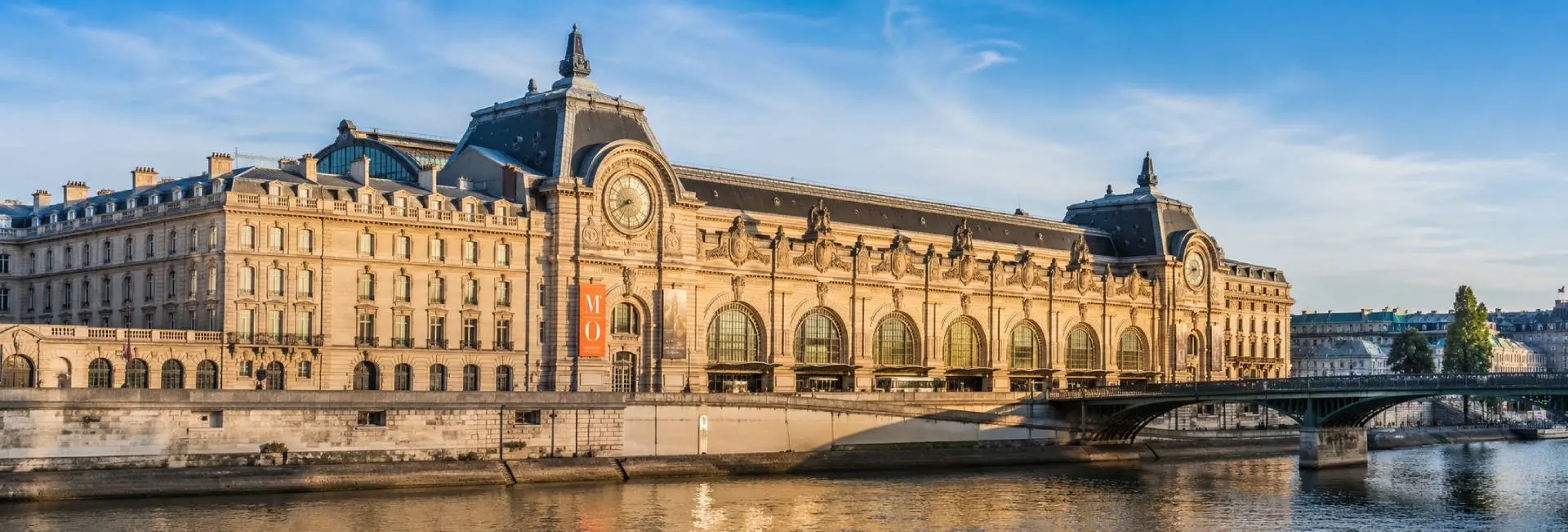
The Musée d'Orsay sits on the Left Bank of the Seine, directly across from the Tuileries Garden, inside a building that spent its first four decades as a working train station. Today it holds the world's most complete collection of Impressionist and Post-Impressionist art, spanning French creativity from 1848 to 1914.
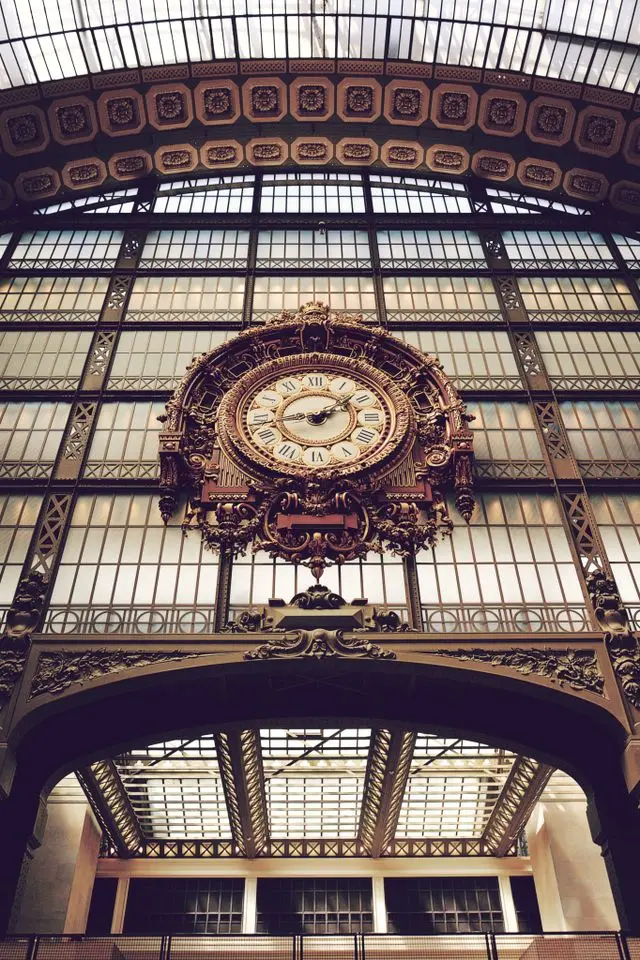
What sets the Orsay apart from other major museums is the setting itself. Visitors move through soaring glass-roofed halls and past oversized station clocks while viewing paintings by Monet, Van Gogh, Renoir, and Degas, so the building's own history as a monument to industrial-age Paris becomes part of the experience rather than a backdrop to it.
History
From Railway Terminus to Cultural Landmark
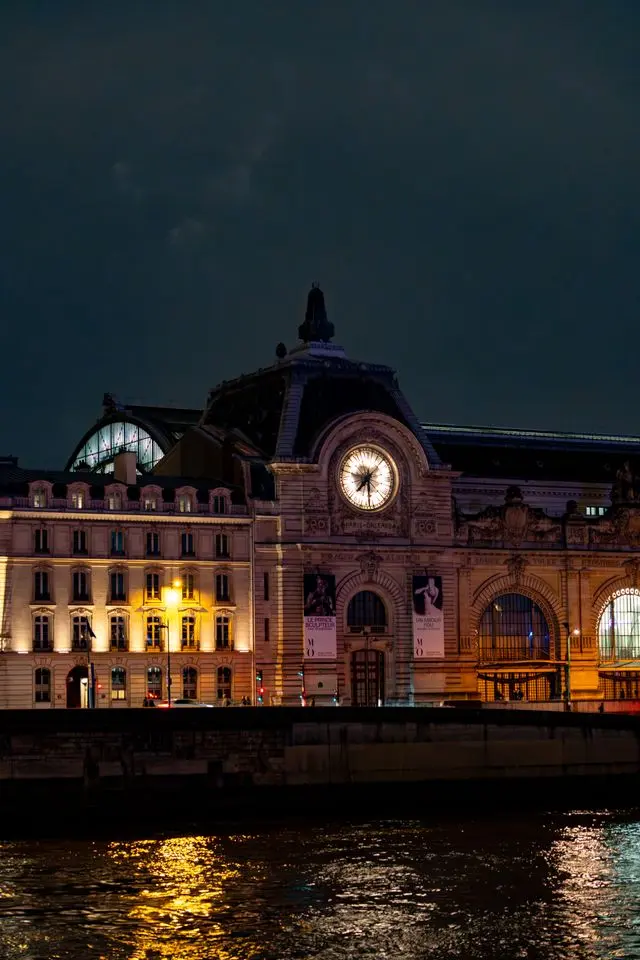
The building began as the Gare d'Orsay, a railway station and hotel commissioned for the 1900 Exposition Universelle. Architects Victor Laloux, Lucien Magne, and Émile Bénard designed it to serve trains arriving from southwestern France, and it opened to the public on 28 May 1900 as the first electrified urban terminal station in the world.
The station used roughly 12,000 tons of metal in its construction, more than the Eiffel Tower required, though the structure was faced in stone so it would blend with the elegant buildings along the Seine rather than look like an industrial shed.
Decline and a Narrow Escape from Demolition
As trains grew longer through the early twentieth century, the station's short platforms became impractical, and mainline services stopped using it by 1939. Over the following decades the building served odd purposes, including a wartime parcel center for prisoners, a set for film productions, and briefly an auction house, while falling into general disrepair.
By the 1970s the site faced serious demolition proposals, with plans floated for a modern hotel or office block. Public campaigns to save the historic structure gained momentum, and in 1978 President Valéry Giscard d'Estaing approved its conversion into a museum dedicated to nineteenth-century art.
Rebirth as a Museum
The conversion was led by the French architectural firm ACT, while Italian architect Gae Aulenti designed the interior, reshaping the old train shed into a dramatic central nave lined with galleries. The Musée d'Orsay opened its doors in December 1986, giving the Impressionist works previously scattered across smaller Paris museums a permanent, purpose-built home.
Recognition & Status
The Musée d'Orsay stands within the Banks of the Seine, a UNESCO World Heritage Site inscribed in 1991 that protects a stretch of riverfront running through central Paris alongside landmarks such as the Louvre, Notre-Dame, and the Eiffel Tower.
Beyond its heritage listing, the museum is consistently ranked among the most visited art museums on earth, drawing several million guests each year and placing second in France only to the Louvre.
- Part of the UNESCO-listed Banks of the Seine heritage zone since 1991
- One of the most visited museums in the world, and the second most visited in France
- Holds the largest public collection of Impressionist and Post-Impressionist paintings anywhere
Architecture & Design
The Musée d'Orsay is a showcase of Beaux-Arts architecture, blending a stone façade with an ambitious iron-and-glass structure underneath, a combination meant to satisfy both civic elegance and modern railway engineering when it was built for the 1900 World's Fair.
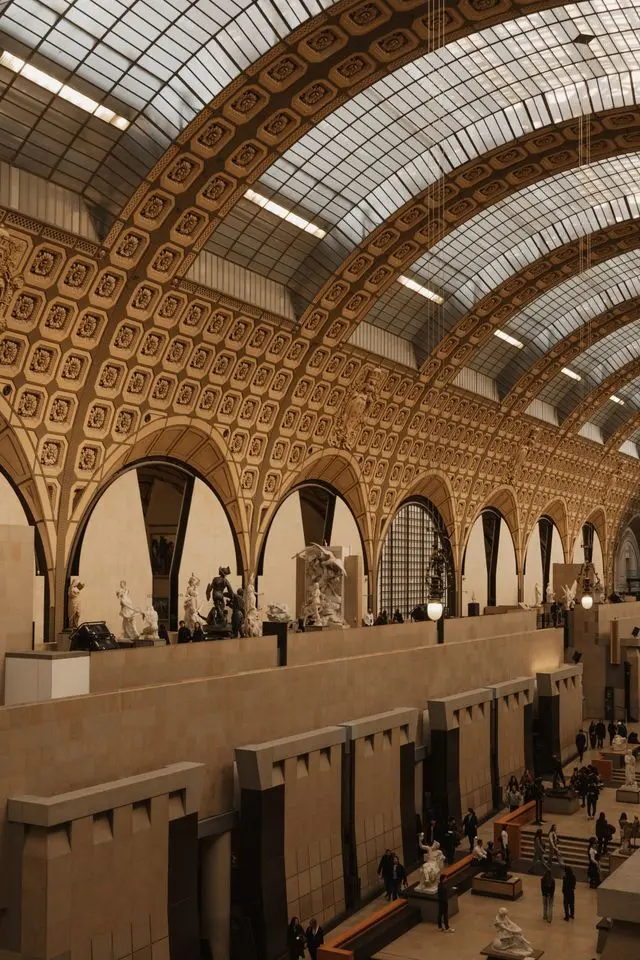
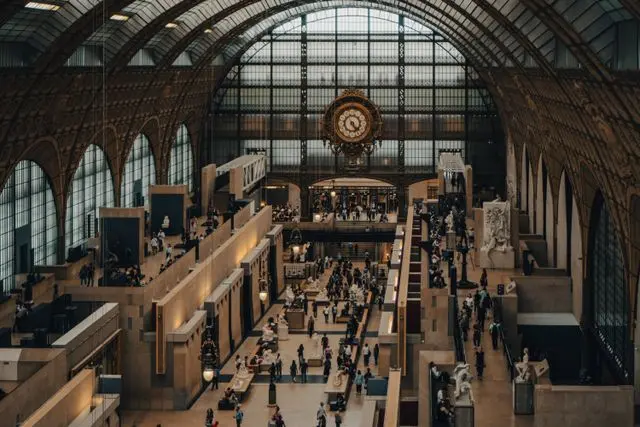
Its defining feature is the vast central nave, once filled with train platforms and now lined with sculpture, lit by an enormous curved glass roof that floods the building with natural light. Two oversized station clocks survive from the building's railway days, and one of them, visible from the top-floor café, frames a view across the Seine toward the Louvre and Sacré-Cœur.
When the building was converted, architect Gae Aulenti introduced stone-clad gallery walls and structured circulation routes that work with the original ironwork rather than hiding it, so the museum reads as a dialogue between its two identities rather than a disguise of one by the other.
Key Areas & Floors
The museum is organized across three main levels, loosely arranged by period and movement, which makes it far easier to navigate purposefully than its size might suggest.
Ground Floor
The ground floor centers on the grand nave, filled with nineteenth-century sculpture, and side galleries devoted to early Realism and Academic painting, including works that caused controversy when they were first exhibited.
Middle Level
The middle level covers Naturalism, Symbolism, and the Art Nouveau and decorative arts movements, alongside a terrace overlooking the nave below.
Top Floor
The top floor is the museum's main draw, housing the core Impressionist and Post-Impressionist galleries. This is where most visitors head first, and where the dedicated Van Gogh, Monet, Renoir, and Degas rooms sit side by side beneath the original glass roof.
Collection Highlights
The Orsay's holdings trace the arc from Realism through Impressionism to early Post-Impressionism, with individual rooms dedicated to the artists who defined each movement.
- Édouard Manet's Olympia and Luncheon on the Grass, two paintings that scandalized Parisian audiences for their frank realism
- Claude Monet's series works, including views of Rouen Cathedral and his Poppy Field, tracing his study of shifting light
- Pierre-Auguste Renoir's Bal du Moulin de la Galette, a large-scale scene of a Montmartre dance hall
- Vincent van Gogh's Starry Night Over the Rhône and Bedroom in Arles, both centerpieces of the dedicated Van Gogh room
- Edgar Degas's ballet paintings and his sculpture La Petite Danseuse de Quatorze Ans
- Jean-François Millet's The Gleaners and Gustave Courbet's Burial at Ornans, landmark works of French Realism
- Gustave Caillebotte's The Floor Scrapers, an early and unconventional depiction of working-class labor
The permanent collection also extends to photography, decorative arts, and architectural models, giving a fuller picture of French visual culture in the second half of the nineteenth century beyond painting alone.
Ways to Experience It
Most visitors explore the museum independently, using a floor plan or the museum's app to head straight for the top-floor Impressionist galleries before working back through the earlier movements.
- Self-guided visits using free floor plans or the official museum app
- Audio guides available in multiple languages, covering the collection's major works
- Guided group tours focused on Impressionism or the building's architectural history
- Combined tickets with the nearby Musée de l'Orangerie, home to Monet's large-scale Water Lilies
- Extended Thursday evening hours, which allow for a quieter visit after the daytime crowds thin out
Best Time to Visit
The Musée d'Orsay is busiest on Tuesdays, when the Louvre is closed and visitors shift across the river, as well as on weekends when both tourists and local visitors turn out. Wednesdays and Fridays tend to be calmer days to visit.
Within any given day, arriving right at opening or heading in during the late afternoon offers the clearest galleries. On Thursdays the museum stays open until 9:45pm, and the hour or two before closing is often the emptiest stretch of the week for the top-floor Impressionist rooms.
- Quietest days: Wednesday and Friday
- Busiest day: Tuesday, due to the Louvre's weekly closure
- Best times of day: opening time or the final two hours before closing
- Best season: spring and autumn, for milder weather and lighter tourist traffic than summer
Visitor Tips
A little planning goes a long way at the Orsay, since its popularity means unbooked visitors can face long waits, particularly in summer and around midday.
- Book timed-entry tickets online in advance to skip standard queues
- Large luggage and trolley bags are not permitted inside; small bags can be left at the free cloakroom
- Photography without flash or tripods is allowed throughout the permanent collection
- Entry is free for visitors under 18 and for EU residents aged 18 to 25
- Allow at least two to three hours to see the highlights, or half a day for a thorough visit
- The museum is fully accessible, with priority access and companion entry for visitors with disabilities
Nearby Attractions
The Orsay's riverside location puts several of Paris's other major sights within easy walking distance, making it simple to combine with a broader day of sightseeing.
- Tuileries Garden, directly across the Seine, ideal for a stroll after the visit
- The Louvre, roughly a fifteen-minute walk away
- Musée de l'Orangerie, home to Monet's large-format Water Lilies panels
- Musée Rodin, a short distance south, set in a historic mansion and garden
- Seine river cruises departing from nearby piers, offering views of the museum from the water
Common Questions About Musée d'Orsay
What is the Musée d'Orsay best known for? +
It holds the world's largest collection of Impressionist and Post-Impressionist paintings, including major works by Monet, Van Gogh, Renoir, and Degas, displayed inside a converted Belle Époque railway station.
How much time should I plan for a visit? +
Two to three hours is enough to see the main highlights on the top floor, while a half-day visit allows time to explore the ground and middle floors as well.
Is the Musée d'Orsay free to enter? +
Standard tickets are paid, though entry is free for visitors under 18 and for EU residents aged 18 to 25, and many museum passes covering Paris attractions include admission.
What is the best time to visit to avoid crowds? +
Aim for a Wednesday or Friday, arrive right at opening, or visit during the extended Thursday evening hours; Tuesdays are the busiest day since the Louvre is closed and visitors shift across the river.
How do I get to the Musée d'Orsay? +
The museum is on the Left Bank opposite the Tuileries Garden, reachable via RER Line C at the Musée d'Orsay station, Metro Line 12 to Solférino, or several bus routes that stop nearby.
Is the museum suitable for kids or visitors with accessibility needs? +
Yes, all entrances are step-free, accessible restrooms are available on the main levels, and visitors with disabilities receive priority access along with free entry for one companion.
What should I combine with a Musée d'Orsay visit? +
The Tuileries Garden and the Louvre are both within easy walking distance, and a combined ticket with the Musée de l'Orangerie is a natural pairing since it houses Monet's large-scale Water Lilies.
What common mistakes should first-time visitors avoid? +
Turning up without a timed ticket, arriving on a Tuesday, and trying to see the entire museum in one rushed pass are the most common issues; focusing on the top-floor Impressionist galleries first tends to work better than moving floor by floor from the ground up.