
Table of Contents
- Introduction
- Berlin – Germany's History and Culture on Display
- Munich – Bavarian Tradition Meets Fairy-Tale Scenery
- Hamburg – A Harbour City Built on Water and Music
- Frankfurt – Skyscrapers Standing Beside Medieval Streets
- Cologne – Gothic Grandeur Along the Rhine
- Planning Tips: Getting Between Cities and Choosing a Base
- Conclusion
Introduction
Germany rarely fits into a single postcard image, and that's exactly what makes it such a rewarding first trip. In one country, you can walk beneath a soaring Gothic cathedral, wander a Bavarian square that feels lifted from a storybook, and stand in a converted warehouse district turned concert hall. Each major city carries its own rhythm and history, so a well-planned route does more to shape the trip than any single sight.
This guide walks through five cities that consistently reward first-time visitors: Berlin, Munich, Hamburg, Frankfurt, and Cologne. For each, you'll find the landmark attractions worth building a day around, along with practical guidance on where to base yourself depending on your budget and travel style.
Berlin – Germany's History and Culture on Display
As Germany's capital, Berlin carries the weight of the 20th century more visibly than any other city on this list. Division, reunification, and reinvention have all left their mark here, and that layered past sits comfortably alongside a modern, creative energy that draws millions of visitors each year.
Top Attractions
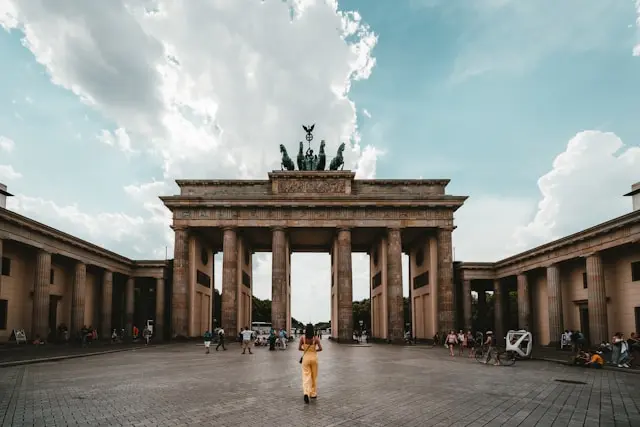
Berlin wears its history openly, and few places capture that better than the Brandenburg Gate, an 18th-century monument that has witnessed everything from imperial parades to the fall of the Berlin Wall. A short walk away, Museum Island holds five major museums on a single stretch of the Spree River, including the Pergamon Museum and its reconstructed ancient architecture. For a more sobering perspective, sections of the Berlin Wall still stand at the East Side Gallery, now covered in murals painted by artists from around the world after 1989.
- Brandenburg Gate and the nearby Reichstag building with its glass dome
- Museum Island's cluster of world-class collections
- East Side Gallery and Checkpoint Charlie for Cold War history
- Alexanderplatz and the TV Tower for panoramic city views
Accommodation
Mitte is the district most first-time visitors choose, since it puts the Brandenburg Gate, Museum Island, and Alexanderplatz within easy walking distance, though rooms here run on the pricier side. Travelers who want a livelier, more local feel often base themselves in Friedrichshain or Kreuzberg instead, both a short ride from the center and known for their street art, cafés, and nightlife. Budget travelers can find hostels clustered around Friedrichshain, while Prenzlauer Berg suits families looking for a quieter, leafier setting with easy transit links.
Munich – Bavarian Tradition Meets Fairy-Tale Scenery
Munich offers a very different pace and personality from Berlin. This is the heart of Bavaria, where traditional culture, from beer halls to alpine day trips, sits alongside a wealthy, well-preserved old town that makes it an easy city to fall in love with on a first visit.
Top Attractions
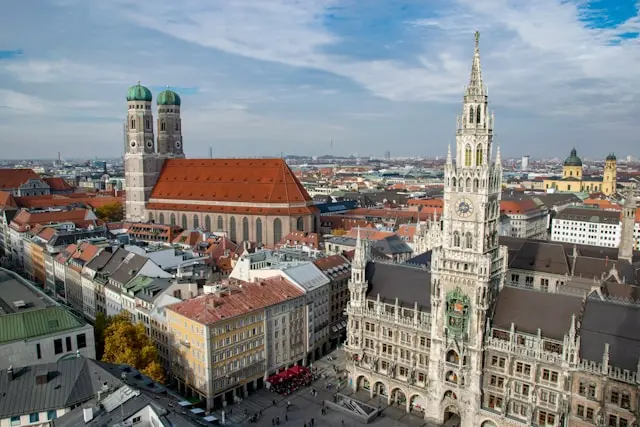
Munich's Altstadt centers on Marienplatz, where crowds gather several times a day to watch the Rathaus-Glockenspiel chime out its mechanical figures. From here it's a short stroll to the Frauenkirche's twin domed towers and the sprawling stalls of the Viktualienmarkt food market. Munich is also the natural base for a day trip to Neuschwanstein Castle, the 19th-century hilltop castle built for King Ludwig II that later inspired Disney's own castle designs. Beyond the postcard sights, the city's beer hall culture, centered on institutions like the Hofbräuhaus, remains a genuine slice of Bavarian life rather than just a tourist show.
- Marienplatz and the Rathaus-Glockenspiel show
- Neuschwanstein Castle, roughly a two-hour trip from the city
- The Residenz, former palace of Bavarian monarchs
- Traditional beer halls and beer gardens like the Hofbräuhaus
Accommodation
The Altstadt around Marienplatz is the classic first-timer's base, putting the Frauenkirche, Viktualienmarkt, and Residenz within walking distance, though it comes at a premium and gets especially expensive during Oktoberfest in late September. Maxvorstadt offers a calmer, more budget-friendly alternative with easy access to Munich's museum quarter, while Schwabing suits travelers who prefer leafy residential streets over the bustle of the center. Those arriving by train often choose the area near Hauptbahnhof for its convenience, though it's worth booking a hotel a few streets back from the station itself for a quieter night's sleep.
Hamburg – A Harbour City Built on Water and Music
Hamburg trades castles and Cold War history for water and industry. As Germany's largest port city, it has built its identity around shipping, trade, and, more recently, a striking wave of modern architecture that has turned its old warehouse district into one of the country's most photographed corners.
Top Attractions
Hamburg's identity is tied to its port, and nowhere shows that better than Speicherstadt, the historic warehouse district of red-brick buildings laced with canals, now recognized as a UNESCO World Heritage Site. Rising above it is the Elbphilharmonie, a striking glass concert hall built atop a former cocoa warehouse, whose public viewing platform offers free harbour views even without a concert ticket. The harbour itself remains active and walkable, with boat tours departing regularly from the Landungsbrücken piers, and music fans will recognize St. Pauli's Reeperbahn as the neighborhood where the Beatles played some of their earliest shows.
- Speicherstadt's UNESCO-listed warehouse district and canals
- Elbphilharmonie concert hall and its free public viewing deck
- Hamburg Harbour boat tours from the Landungsbrücken
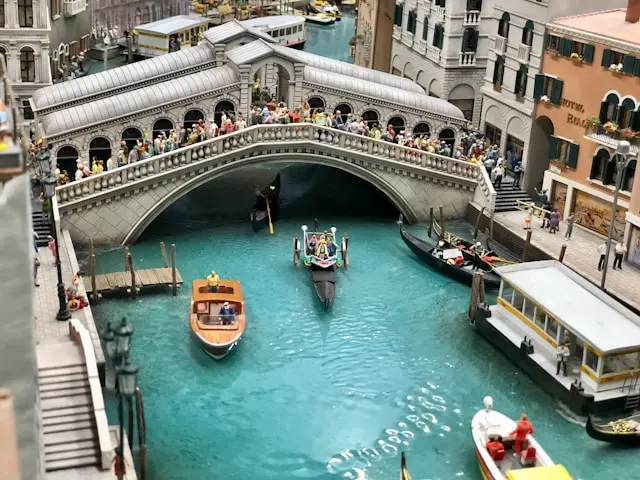
- Miniatur Wunderland, the world's largest model railway exhibit
Accommodation
The city center, covering the Altstadt and Neustadt districts, is the most practical base for a first visit, keeping the town hall, main shopping streets, and Alster Lake all within walking distance. HafenCity, right beside Speicherstadt, suits travelers who want to wake up close to the Elbphilharmonie and the modern waterfront. For nightlife, St. Pauli near the Reeperbahn offers the liveliest evenings, while St. Georg, just east of the main station, is known for its boutique hotels and welcoming, LGBTQ+-friendly atmosphere.
Frankfurt – Skyscrapers Standing Beside Medieval Streets
Frankfurt is often treated as a layover rather than a destination, but its compact center rewards a proper visit. The city pairs Germany's most prominent financial skyline with a carefully rebuilt medieval core, making it feel like two very different cities within walking distance of each other.
Top Attractions
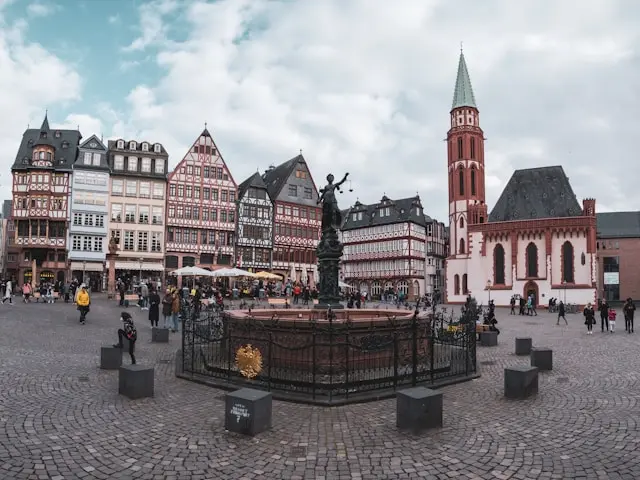
Frankfurt often surprises first-time visitors, since its skyline of glass towers sits just minutes from the reconstructed half-timbered houses of Römerberg, the city's medieval square and long-standing civic center. Nearby, the twin-towered Frankfurt Cathedral has hosted coronations of Holy Roman Emperors, while the Main Tower offers an observation deck with sweeping views over the financial district that gives the city its "Mainhattan" nickname. Across the river, the Sachsenhausen district is where locals go for Apfelwein, Frankfurt's traditional apple wine, served in traditional taverns along the Museumsufer.
- Römerberg square and its reconstructed medieval houses
- Frankfurt Cathedral and its historic coronation hall
- Main Tower observation deck over the financial district
- Sachsenhausen's Apfelwein taverns and riverside Museumsufer
Accommodation
The Altstadt and Innenstadt together form the most convenient base, placing Römerberg, the cathedral, and the main shopping street Zeil within easy reach on foot. Westend offers a quieter, more upscale alternative close to the financial district and the Palmengarten botanical gardens. Bahnhofsviertel, near the main train station, has become a trendier option in recent years with design-forward hotels, though some streets nearer the station itself carry a rougher, more visible nightlife scene after dark. Sachsenhausen is worth considering for travelers who want to be near the traditional tavern scene and riverside museums rather than the business core.
Cologne – Gothic Grandeur Along the Rhine
Top Attractions
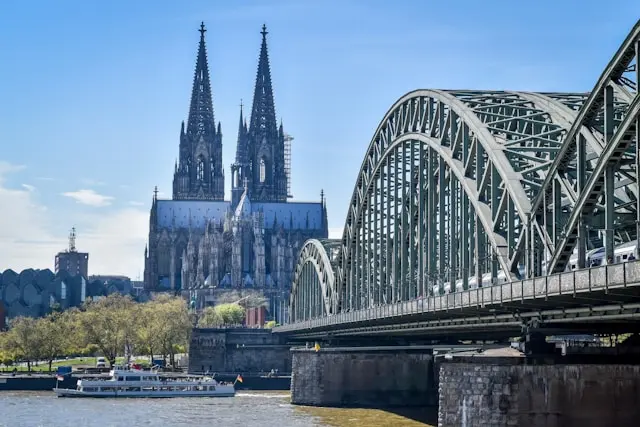
Cologne Cathedral dominates the skyline the moment you step out of the main train station, its twin spires making it one of the tallest cathedral facades in the world and a rare structure to survive the extensive wartime destruction of the surrounding old town. Just behind it, the Altstadt's rebuilt lanes lead down to the Rhine, where riverboat cruises and the photogenic, padlock-covered Hohenzollern Bridge draw a steady stream of visitors. Cologne's museum scene is also strong for a city its size, with the Museum Ludwig covering modern art and the Chocolate Museum offering an unusually hands-on look at cocoa production, right on the riverbank.
- Cologne Cathedral, one of Europe's tallest Gothic structures
- The Altstadt's rebuilt old town streets and riverside promenade
- Hohenzollern Bridge and its thousands of padlocks
- Museum Ludwig and the Chocolate Museum along the Rhine
Where to Stay
Altstadt-Nord, Cologne's historic center, is the top choice for first-time visitors, keeping the cathedral, main museums, and shopping streets like Hohe Strasse within walking distance. The Belgian Quarter, just beyond the old town, is favored by travelers who want a livelier evening scene with bars and restaurants clustered around Brüsseler Platz. Ehrenfeld offers a more local, less touristy alternative popular with younger travelers, while Deutz, across the Rhine, provides good-value hotels with some of the best skyline views of the cathedral itself.
Planning Tips: Getting Between Cities and Choosing a Base
All five cities are well connected by Germany's high-speed ICE trains, which makes a multi-city itinerary far easier than renting a car. Frankfurt Airport is the country's main international gateway and a convenient starting or ending point given its central location, while Berlin and Munich also have well-served international airports of their own.
- Book central accommodation early, especially around Oktoberfest in Munich (late September) or Christmas markets in December, when prices in every city climb sharply
- Validate any city or regional public transport ticket before boarding, since Germany's honor-system trains and trams do carry random ticket checks
- A short two- to three-night stay per city is usually enough to see the highlights, leaving room to fit all five into a two-week trip
Conclusion
Berlin, Munich, Hamburg, Frankfurt, and Cologne each offer a genuinely different slice of Germany, from Cold War history and Bavarian tradition to modern harbour architecture and Gothic grandeur. Rather than trying to see everything in one visit, picking two or three of these cities and giving each enough time to explore properly will make for a far more memorable first trip than rushing between all five.
Frequently Asked Questions
How many days should I spend in Germany for a first trip covering these cities? +
Roughly ten to fourteen days works well if you want to include most or all five cities, allowing two to three nights in each and enough travel time between them by train.
Is it better to fly into Frankfurt or Berlin for a first Germany trip? +
Frankfurt is often more convenient thanks to its central location and major international airport, but Berlin works just as well if it's your first or last stop, since both cities have extensive train connections to the rest of the country.
Do I need to rent a car to visit these five cities? +
No, Germany's ICE high-speed rail network connects Berlin, Munich, Hamburg, Frankfurt, and Cologne directly and frequently, making trains a faster and less stressful option than driving between cities.
What's the best time of year to visit Germany for a first trip? +
Late spring through early autumn offers the mildest weather for sightseeing, while December is popular for Christmas markets and late September into October suits travelers wanting to experience Munich's Oktoberfest.
Is Neuschwanstein Castle easy to visit as a day trip from Munich? +
Yes, it's a common day trip from Munich by train and bus, taking roughly two hours each way, though booking a timed entry ticket in advance is recommended since it's one of the most visited sites in Bavaria.
Which city is best for first-time visitors with limited time? +
Berlin and Munich are usually the top picks for a short trip, since each offers a dense concentration of major sights within a compact, walkable center.
Are these cities suitable for families traveling with children? +
Yes, all five have family-friendly attractions such as Hamburg's Miniatur Wunderland, Cologne's Chocolate Museum, and Berlin's interactive museums, along with reliable public transport that makes getting around manageable with kids.
Should I book accommodation in the city center or a quieter neighborhood? +
City-center neighborhoods offer the most convenience for first-time sightseeing, but quieter districts just outside the center, such as Prenzlauer Berg in Berlin or Schwabing in Munich, often provide better value and a calmer night's rest while remaining well connected by transit.
