Table of Contents
Overview
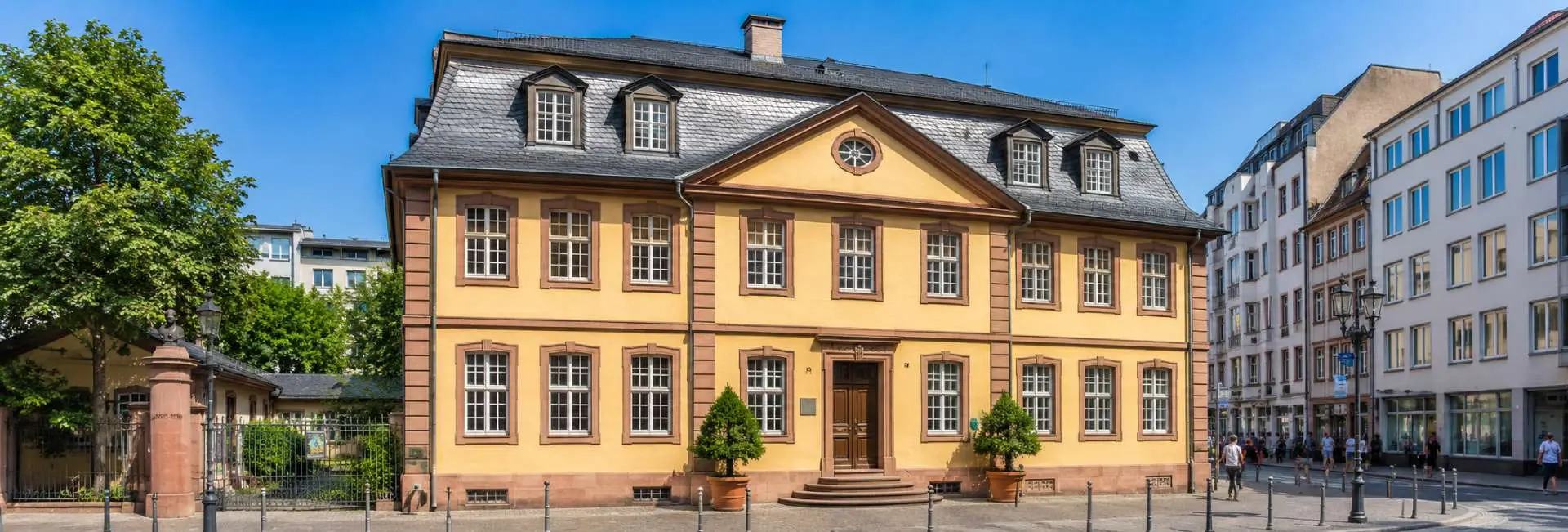
The Goethe House (Goethe-Haus) is the birthplace and childhood home of Johann Wolfgang von Goethe, one of the most influential figures in German literature. Located on Großer Hirschgraben in Frankfurt's old town, the house has been carefully reconstructed to reflect how it looked when the Goethe family lived there in the 18th century.
Visitors walk through furnished rooms, original artifacts, and the very spaces where Goethe wrote some of his earliest works, before continuing next door into the adjoining Goethe Museum and its collection of period art. Together, the two sites offer one of the most complete pictures anywhere of the world Goethe grew up in.
History
A Family Home in Old Frankfurt
The house at Großer Hirschgraben dates back to the early 17th century. Goethe's father, Johann Caspar Goethe, later renovated and expanded the property into a spacious home befitting a prosperous Frankfurt merchant family. Johann Wolfgang von Goethe was born there in 1749, and the family continued to live in the house for decades afterward.
It was within these rooms that Goethe spent his childhood and youth, absorbing the intellectual and cultural life of the household, and it was here that he began writing, producing early drafts of works including "Götz von Berlichingen," "The Sorrows of Young Werther," and the opening sections of "Faust."
Destroyed in the War, Rebuilt from Memory
In 1944, the house was almost completely destroyed during an Allied bombing raid on Frankfurt, along with much of the surrounding old town. What stands today is the result of a painstaking postwar reconstruction carried out between 1947 and 1951, based on historical drawings, archival records, and the recollections of those who had known the original interiors.
Many original furnishings and objects had been removed for safekeeping before the bombing and were later returned, allowing the rebuilt house to be furnished with genuine period pieces rather than replicas alone.
Inside the House: Rooms and Highlights
The Writing Room
Among the most visited spaces is the room where Goethe wrote as a young man. Seeing the actual desk and setting where his earliest literary works took shape gives the visit a personal, tangible connection to his creative beginnings.
The Music Room
The family's music room houses a rare pyramid piano dating to 1745, a striking example of period instrument-making and a reminder of how central music was to upper-middle-class household life in 18th-century Frankfurt.
The Puppet Theatre
On the upper floor, visitors can see the puppet theatre that captivated Goethe as a child, a detail often credited with sparking his lifelong fascination with storytelling and drama.
Family Living Quarters
Throughout the house, reconstructed living spaces, including kitchens, parlors, and bedrooms, illustrate the daily rhythms of a well-to-do Frankfurt family, offering context beyond Goethe's own literary achievements.
The Goethe Museum and Painting Collection
Directly adjoining the historic house is the Goethe Museum, home to an extensive collection of paintings, graphics, and busts spanning the late Baroque through Romanticism and Biedermeier periods. The collection illustrates the artistic world Goethe moved through and the creative circles he influenced.
- Works by Frankfurt painters of the late Baroque era
- Paintings connected to German Romanticism, including pieces by Caspar David Friedrich
- Works by Johann Heinrich Füssli, Angelica Kauffmann, and members of the Tischbein family
- Temporary and special exhibitions exploring Goethe's era and legacy
Cultural Significance
The Goethe House is regarded as one of the most important memorial sites dedicated to a German writer, drawing admirers from around the world who come to see the environment that shaped one of Europe's most significant literary figures.
Its careful postwar reconstruction also gives the house added meaning as a symbol of cultural continuity, a deliberate effort to preserve Frankfurt's heritage after the destruction of the Second World War.
Ways to Experience It
The house and museum can be visited independently or as a combined experience, and the site is generally set up to accommodate both first-time visitors and dedicated Goethe enthusiasts.
- Self-guided tours through the historic house, with room-by-room information available
- Access to the adjoining Goethe Museum's art collection, typically included with the same ticket
- Rotating special exhibitions exploring specific aspects of Goethe's life and work
- Information and guidance available in multiple languages for international visitors
Visitor Tips
- Plan for roughly 45 minutes to an hour to see the house and museum together
- The historic house has multiple floors and narrow staircases with no elevator, so it may be difficult for visitors with mobility limitations; the adjoining modern museum building is generally more accessible
- Check the official website before visiting for current opening hours, ticket prices, and any special exhibitions, as these details can change
- Visiting on weekdays or earlier in the day tends to mean smaller crowds, particularly in peak tourist season
- The on-site gift shop is worth a stop for book lovers and those wanting a keepsake tied to Goethe's work
Nearby Attractions
The Goethe House sits in the heart of Frankfurt's old town, making it easy to combine with several other major sights on foot.
- Römerberg and the historic Römer city hall
- Frankfurt Cathedral (Kaiserdom)
- Paulskirche, a landmark of German democratic history
- The Museumsufer district along the Main River, home to several of Frankfurt's leading museums
FAQs about Goethe House (Goethe-Haus)
What is the Goethe House? +
It is the reconstructed birthplace and childhood home of the German writer Johann Wolfgang von Goethe, located in Frankfurt's old town and now run as a literary museum alongside the adjoining Goethe Museum.
Is the current building the original house Goethe lived in? +
The house was almost completely destroyed in a 1944 air raid during World War II. It was rebuilt between 1947 and 1951 using historical records and recollections, and many original furnishings that had been saved beforehand were returned to the reconstructed rooms.
How much time should I plan for a visit? +
Most visitors spend around 45 minutes to an hour touring the house and the adjoining museum, though those with a deeper interest in Goethe or the art collection may want longer.
Is the Goethe House accessible for visitors with mobility needs? +
The historic house has multiple floors and narrow original staircases with no elevator, which can make it difficult to navigate. The neighboring modern museum building is generally more accessible, with ramps and elevators available.
Do I need a ticket, and is it included with anything else? +
Yes, a ticket is required, and it typically covers both the historic house and the adjoining Goethe Museum. Since prices and any bundled offers can change, it's best to check the official website before your visit.
Is the Goethe House suitable for children? +
It can be enjoyed by children, especially those interested in history or storytelling, though the experience is more text- and history-driven than interactive, so it tends to resonate more with older children and teens than very young kids.
What else can I see nearby? +
The house is within easy walking distance of Römerberg, Frankfurt Cathedral, Paulskirche, and the Museumsufer museum district, making it simple to combine with a broader day of sightseeing in the old town.
Do I need to know Goethe's work beforehand to enjoy the visit? +
No, the house is designed to be accessible to visitors with little or no prior knowledge of Goethe, with room-by-room context provided throughout, though fans of his writing will likely get extra meaning from seeing where specific works were written.