Table of Contents
Overview
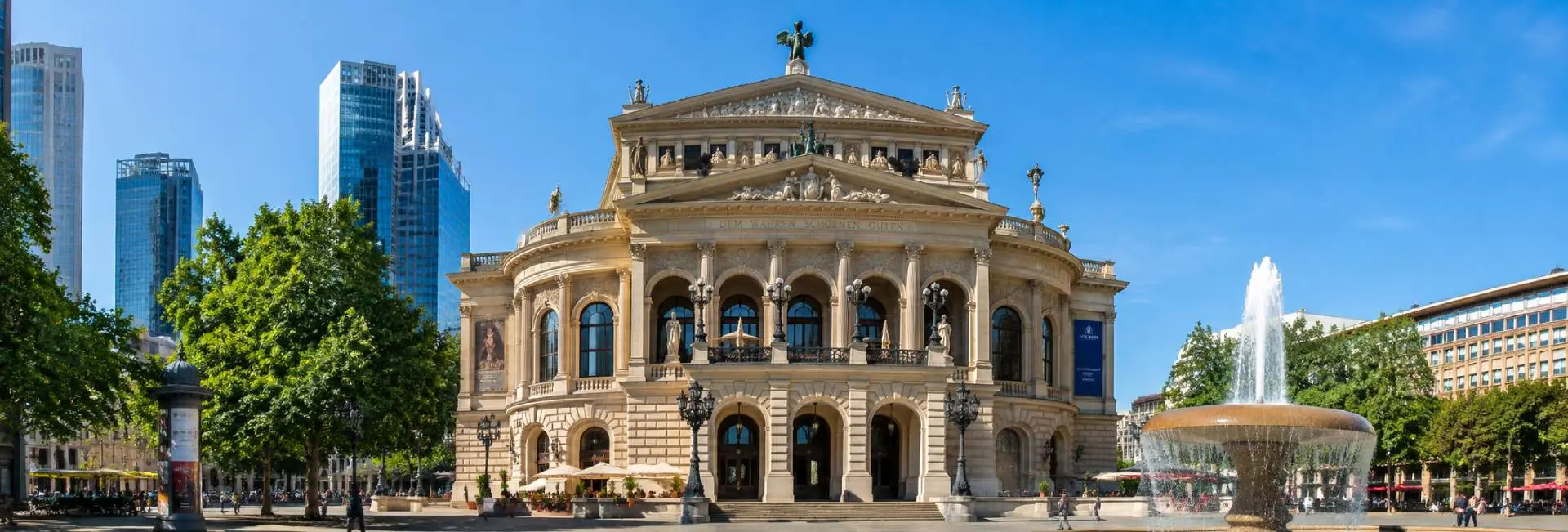
The Alte Oper, or "Old Opera House," is one of Frankfurt's most recognizable landmarks, standing on Opernplatz in the heart of the city's Innenstadt district. Built in the late 19th century as a grand opera house, it was gutted by wartime bombing and stood as a ruin for decades before being painstakingly rebuilt as a concert and congress venue.
Today the building no longer hosts opera - despite its name - but instead serves as one of Germany's premier stages for classical music, jazz, pop, and large-scale events, drawing well over 300 performances a year while remaining one of the city's most photographed pieces of architecture.
History
Origins and Construction
Frankfurt's original opera house was designed by Berlin architect Richard Lucae and built between the early 1870s and 1880, financed largely through contributions from a group of wealthy local citizens rather than the state. Construction was overseen by the firm of Philipp Holzmann.
The building opened on 20 October 1880 with a performance of Mozart's "Don Giovanni," attended by roughly 2,000 guests including German Emperor Wilhelm I. Its lavish interior, grand staircase, and then state-of-the-art stage technology quickly made it one of the most respected opera houses in the country.
Destruction in World War II
For around 60 years the opera house anchored Frankfurt's cultural life, hosting major premieres including Carl Orff's "Carmina Burana" in 1937. That era ended in March 1944, when Allied air raids reduced the building to a burned-out shell during the bombing of Frankfurt.
The ruin remained standing for more than three decades, earning the nickname "Germany's most beautiful ruin" as its ornate facade continued to loom over the square even as the interior lay in rubble.
Reconstruction and Reopening
Rebuilding the opera house was not a foregone conclusion - city officials debated redeveloping the site entirely, and it took the local council roughly two decades to approve a full reconstruction. Sustained pressure from Frankfurt's citizens ultimately won out.
Restoration work ran from the mid-1970s into 1981, preserving the historic facade while rebuilding the interior as a modern concert and congress center rather than a traditional opera stage. The Alte Oper reopened on 28 August 1981, beginning its current life as one of Europe's leading concert venues.
Architecture & Design
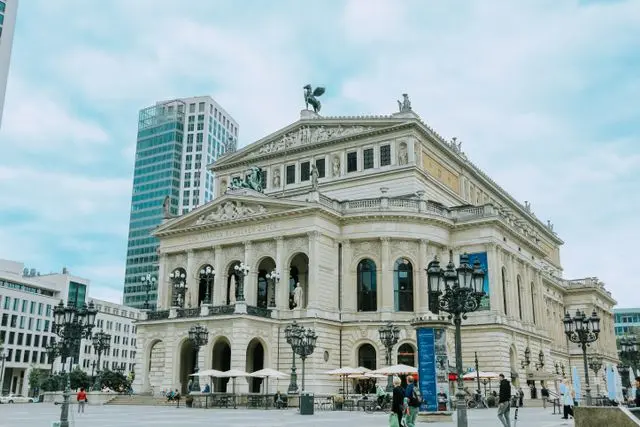
The Alte Oper was built in a lavish neo-Renaissance style, drawing on Italian High Renaissance palazzo design and reflecting the confident, ornate "Wilhelminian" architecture typical of Germany's Gründerzeit era. The building rises around 34 meters and dominates the square that bears its name.
Its facade is richly decorated with sculpture, including figures symbolizing the muses of art and music, and carries the inscription "Dem Wahren Schönen Guten" - "To the True, the Beautiful, the Good" - across its pediment, a motto that still greets every visitor who approaches the building.
Inside, the building's centerpiece is its grand entrance staircase, historically nicknamed the "Imperial Staircase" after the emperor who once climbed it. While the postwar reconstruction modernized much of the interior for contemporary event use, key historic elements of the facade and entrance were carefully preserved or restored to match the original design.
Inside the Alte Oper
Großer Saal (Great Hall)
The Großer Saal is the building's main auditorium and one of the largest concert halls in Germany, seating around 2,500 people. It is renowned for its acoustics and hosts the bulk of the Alte Oper's orchestral concerts, from resident ensembles to visiting international orchestras.
Mozart-Saal
The smaller Mozart-Saal seats around 700 and is used for chamber music, recitals, and more intimate performances, offering a closer, more concentrated listening experience than the Großer Saal.
The Salons
A series of smaller salons throughout the building - named after composers such as Liszt, Telemann, and Schumann - serve as additional event spaces, meeting rooms, and reception areas during concerts and congresses.
Cultural Significance
Even though the Alte Oper no longer stages opera, it remains central to Frankfurt's musical identity. Its stage has hosted major historical premieres, including Carl Orff's "Carmina Burana," and it continues to host resident and visiting orchestras performing everything from Beethoven to contemporary works.
The building also functions as a symbol of civic resilience for Frankfurt. Its decades as a bombed-out ruin, followed by a citizen-driven campaign to rebuild it, have made the Alte Oper as much a story about the city's postwar recovery as it is a story about architecture or music.
- Site of the 1880 premiere-era world of German opera under Emperor Wilhelm I
- Hosted the world premiere of Carl Orff's "Carmina Burana" in 1937
- Rebuilt through sustained public pressure rather than official planning
- Now a symbol of Frankfurt's cultural and architectural revival after WWII
Ways to Experience It
Most visitors experience the Alte Oper either by attending a live performance or by admiring the building and its surrounding square without going inside.
- Attend a concert - classical, jazz, pop, or musical programming runs most of the year
- Join a guided tour of the building's history, architecture, and restoration, when scheduled
- Simply walk the exterior and Opernplatz square, which is free and open at any time
- Combine a visit with the surrounding cafes and shopping streets for a half-day outing
Best Time to Visit
The Alte Oper's main concert season runs from September through June, when its full program of orchestral concerts, recitals, and other performances is in full swing - this is the best window for catching a show in the Großer Saal or Mozart-Saal.
Over summer, the concert calendar thins out but the surrounding Opernplatz often hosts open-air events, while the Christmas season brings special festive programming both inside the building and on the square outside.
Visitor Tips
- Book concert tickets in advance, especially for popular orchestral programs, as good seats sell out
- The nearest public transit stops are the Alte Oper U-Bahn station and the Taunusanlage S-Bahn station, both about a two-minute walk away
- Wheelchair-accessible seating is limited, so travelers with accessibility needs should book ahead directly with the venue
- Arrive early to explore Opernplatz and grab a coffee at one of the surrounding cafes before a performance
- The building is beautifully illuminated at night, making evening visits especially rewarding for photography
Nearby Attractions
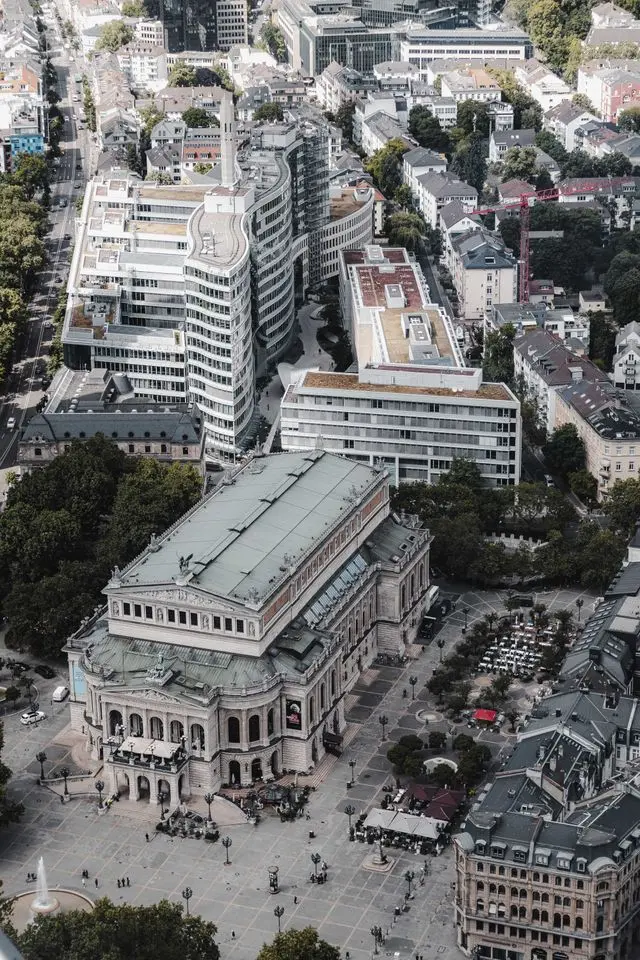
- Opernplatz - the lively square in front of the building, home to cafes and the Lucae-Brunnen fountain
- Rothschildpark - a small green space just steps from the Alte Oper, good for a short walk after a concert
- Opernturm - a modern skyscraper standing near the historic opera house, a striking architectural contrast
- Zeil - Frankfurt's major shopping street, an easy walk from Opernplatz
- Römerberg - Frankfurt's historic old town square, roughly a 15-minute walk away
FAQs about Old Opera House (Alte Oper)
What is the Alte Oper in Frankfurt? +
The Alte Oper is a historic 1880 opera house that was destroyed in World War II and rebuilt as a concert and congress venue, reopening in 1981. Despite its name, it no longer stages operas.
Can you visit the Alte Oper without attending a concert? +
Yes. The exterior and the surrounding Opernplatz square are free to explore at any time, and guided interior tours are occasionally offered when scheduled in advance.
Is the Alte Oper still used as an opera house? +
No. Since its 1981 reopening it has functioned as a concert and congress center, hosting orchestral concerts, recitals, jazz and pop shows, and events rather than opera performances.
How do you get to the Alte Oper? +
The closest stops are the Alte Oper U-Bahn station and the Taunusanlage S-Bahn station, both roughly a two-minute walk from the building, making it easy to reach from central Frankfurt.
When is the best time to visit? +
The main concert season runs from September to June. Summer and the Christmas period bring lighter indoor programming but often add open-air events on Opernplatz.
Is the Alte Oper accessible for visitors with mobility needs? +
Wheelchair-accessible seating is available but limited, so it's best to book well in advance directly with the venue; guided tours may not be fully accessible.
What should I combine a visit with? +
Opernplatz's cafes, the nearby Rothschildpark, the Zeil shopping street, and the historic Römerberg old town square are all within easy walking distance and pair well with a visit.