Table of Contents
Overview
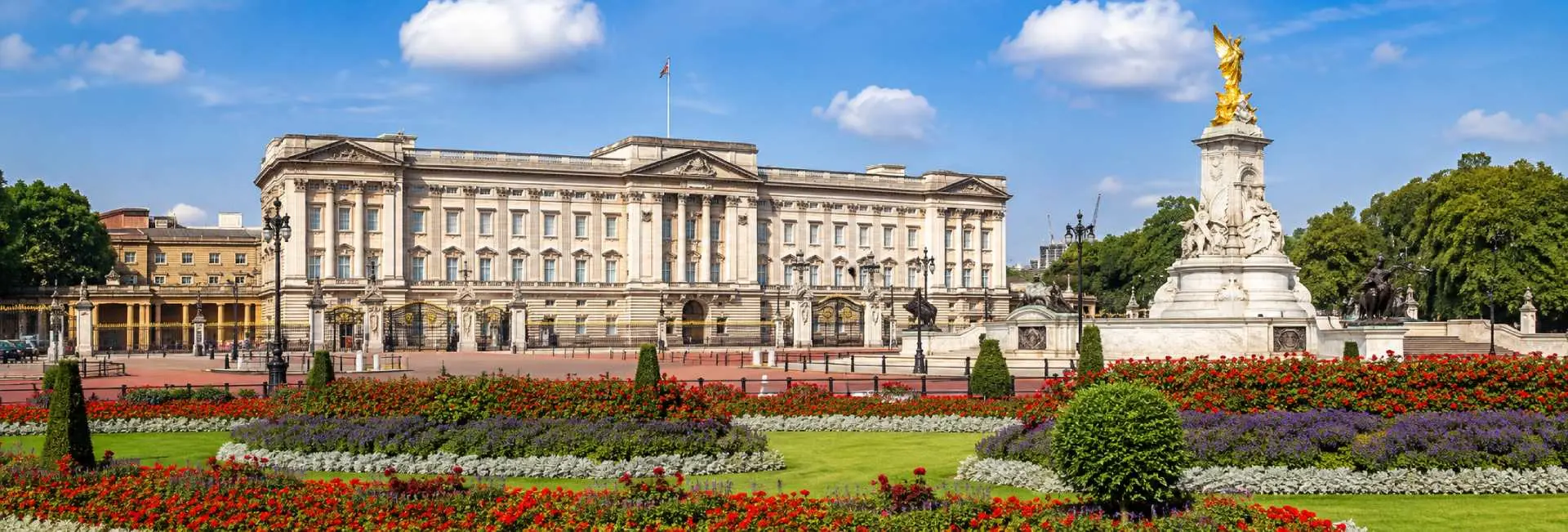
Buckingham Palace is the official London residence and administrative headquarters of the British monarch, standing at the western end of St James's Park in the heart of Westminster. It is one of the few working royal palaces left in the world, hosting state banquets, official receptions, and the King's weekly audiences even as its grand State Rooms open to visitors each summer.
With 775 rooms spread across roughly 830,000 square feet, the palace is less a single building than a self-contained royal estate, complete with its own post office and clinic. For visitors, it offers a rare mix of living history, world-class art, and pageantry that few other London landmarks can match.
History
From Townhouse to Royal Retreat
The site's story begins in 1703, when architect William Winde designed Buckingham House as a private townhouse for John Sheffield, the Duke of Buckingham. It was a grand residence, but not yet a palace, and it stood on land that had been part of the Manor of Ebury since the Middle Ages.
In 1761, King George III purchased the house for Queen Charlotte, intending it as a quiet family retreat away from the formality of St James's Palace. Renamed "The Queen's House," it became home to the royal couple and most of their fifteen children.
Becoming a Palace
The transformation into a true palace began under George IV in the 1820s, when he commissioned architect John Nash to remodel the building on a far grander scale. Nash reshaped the gardens, expanded the east wings, and designed a triumphal arch at the entrance that was later relocated and now stands as Marble Arch.
George IV never lived to see the work finished. It fell to Queen Victoria, who moved in in 1837, to become the first monarch to actually reside at Buckingham Palace, marking the start of its role as the official royal residence it remains today.
The 20th Century and Beyond
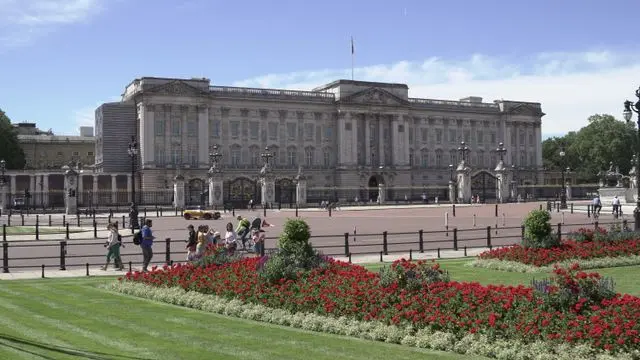
The East Front, the palace's most recognisable face overlooking The Mall, was redesigned in 1913 by Sir Aston Webb to serve as a backdrop for the Queen Victoria Memorial. During the Second World War, the palace was hit by German bombs nine times; King George VI and Queen Elizabeth famously chose to remain in residence throughout the Blitz rather than leave London.
In the mid-1990s, the State Rooms were opened to the public for the first time, initially to help fund the restoration of Windsor Castle after a major fire. That summer opening has continued ever since. Today the palace remains the King's official residence, even though his day-to-day home is Clarence House, and it continues to be held in trust for the nation rather than owned personally by the monarch.
Architecture & Design
Buckingham Palace's exterior tells the story of its piecemeal evolution rather than a single architectural vision. Nash's neoclassical remodelling under George IV set the overall scale and grandeur, while Edward Blore completed the east-facing front in the 1840s to enclose the courtyard. Sir Aston Webb's 1913 refacing gave the building the pale Portland stone facade recognised around the world today.
Inside, the palace balances state functions with everyday royal life. Grand ceremonial spaces such as the Ballroom, used for state banquets, sit alongside private apartments, offices for royal staff, and even a swimming pool and cinema, reflecting the palace's dual role as both monument and functioning household.
Inside the Palace: State Rooms & the Royal Collection
The State Rooms
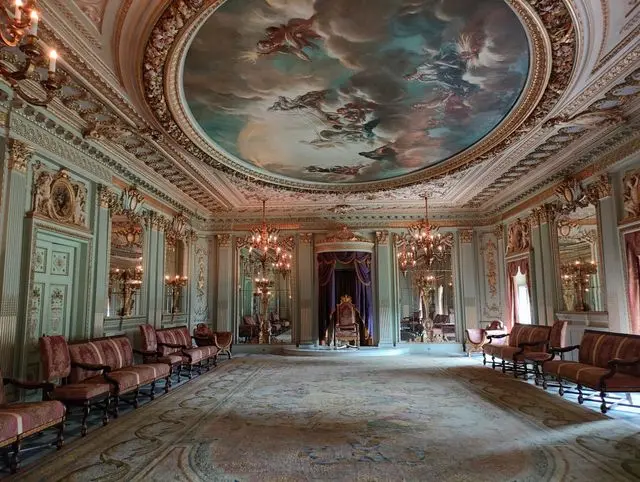
Nineteen State Rooms form the heart of a State Rooms visit, used throughout the year for investitures, state banquets, and receptions before opening to the public each summer. Highlights include the Throne Room, often recognised from royal wedding photographs, the Ballroom, the largest room in the palace, and the White Drawing Room, one of its most opulent interiors.
Art and the Royal Collection
The State Rooms double as a gallery for part of the Royal Collection, one of the largest and most significant art collections in the world. Visitors can see works by masters including Rembrandt, Rubens, Van Dyck, and Canaletto, displayed in the same rooms where they have hung for generations rather than in a conventional museum setting.
The Changing the Guard
The Changing the Guard is one of the most watched free spectacles in London, taking place outside the palace as new sentries formally take over duties from the outgoing guard. The ceremony blends military precision with centuries of tradition, and only soldiers who have served with distinction are selected for the post.
- Takes place regularly outside the palace forecourt, drawing large crowds especially in summer
- Combines marching bands, foot guards, and formal handover rituals dating back centuries
- Arriving early secures a clear view along the railings before the crowds build
Buckingham Palace Gardens
Behind the palace lies a 39-acre private garden, one of the largest private gardens in London, featuring a lake, mature trees, and sweeping lawns that host the King's summer garden parties. For most of the year the gardens remain private, but visitors touring the State Rooms in summer can walk through part of the grounds at the end of their visit, taking in a rear view of the palace rarely seen from the street.
Ways to Experience It
Self-Guided State Rooms Tour
The standard way to visit is a self-guided walk through the State Rooms with a multimedia guide, covering the history, art, and architecture at your own pace before finishing with a stroll through the garden.
Guided Tours and Combined Tickets
For a deeper introduction, guided walking tours pair a stroll past St James's Palace and along The Mall with skip-the-line entry to the State Rooms. Combined tickets covering the Royal Mews and The King's Gallery are also available for visitors who want a fuller day of royal sights.
Year-Round Options
Outside the summer opening, the Royal Mews and The King's Gallery remain open on separate tickets for most of the year, offering a way to experience royal history at Buckingham Palace even when the State Rooms themselves are closed.
Best Time to Visit
The State Rooms open to the public for a limited summer season, typically running from early July to late September, so a visit inside the palace itself has to be planned around this window. The Royal Mews and King's Gallery, by contrast, are open across much of the rest of the year.
- Early morning entry, at the first slot of the day, is consistently the quietest time to visit
- Late morning to early afternoon is peak time, especially around the Changing the Guard
- Weekday mornings, particularly Tuesday to Thursday, tend to be calmer than weekends
- Weekends and the opening week of the summer season see the heaviest crowds
Visitor Tips
- Book State Rooms tickets well in advance, since timed entry slots for July and August often sell out weeks ahead
- Arrive within your allotted entry window, as admission is strictly timed
- Allow two to three hours to properly see the State Rooms, or a full day if combining them with the Royal Mews and King's Gallery
- Wheelchair users and visitors with accessibility needs can arrange step-free access by booking in advance through the Royal Collection Trust
- Check the official Royal Collection Trust website close to your visit, since exact dates, hours, and ticket prices can shift year to year
Nearby Attractions
Buckingham Palace sits within easy walking distance of several other major London landmarks, making it simple to combine with the rest of a royal-themed day out. St James's Park and Green Park border the palace on either side, offering a scenic route toward Westminster Abbey, the Houses of Parliament, and St James's Palace along The Mall.
FAQs about Explore Buckingham Palace
What is Buckingham Palace famous for? +
It is the official London residence and administrative headquarters of the British monarch, known for its grand State Rooms, the Royal Collection of art it houses, and the daily Changing the Guard ceremony held outside its gates
When can you visit the inside of Buckingham Palace? +
The State Rooms are open to the public only during a summer season, typically running from early July to late September; the Royal Mews and King's Gallery, however, are open on separate tickets for most of the rest of the year.
How much time do you need to visit Buckingham Palace? +
Plan for two to three hours to comfortably see the State Rooms, or a full day if you're combining them with the Royal Mews and The King's Gallery.
Do you need to buy tickets in advance? +
Yes, all State Rooms visits use timed entry tickets that should be booked ahead, since summer slots, especially in July and August, sell out quickly; on-the-day tickets exist but are unreliable.
How do you get to Buckingham Palace? +
The palace is a short walk from several Underground stations, including Victoria, Green Park, and Hyde Park Corner, with London Victoria as the nearest train station and several bus routes stopping nearby on Buckingham Palace Road.
Is Buckingham Palace suitable for kids and visitors with accessibility needs? +
Families are well catered for with multimedia guides and dedicated facilities, and the State Rooms are fully wheelchair accessible with step-free access and accessible toilets available when booked in advance.
What's the best time of day to avoid crowds? +
The first entry slot of the morning is consistently the quietest, while late morning through early afternoon gets busiest, partly due to crowds gathering nearby for the Changing the Guard.
Can you see the Changing the Guard for free? +
Yes, the ceremony takes place outside the palace and can be watched from the street for free, though arriving early is recommended to get a clear view along the railings.
Is Buckingham Palace still the King's official residence? +
Yes, it remains the official residence and administrative headquarters of the monarch, even though King Charles III's primary day-to-day home is currently Clarence House.