Table of Contents
Overview
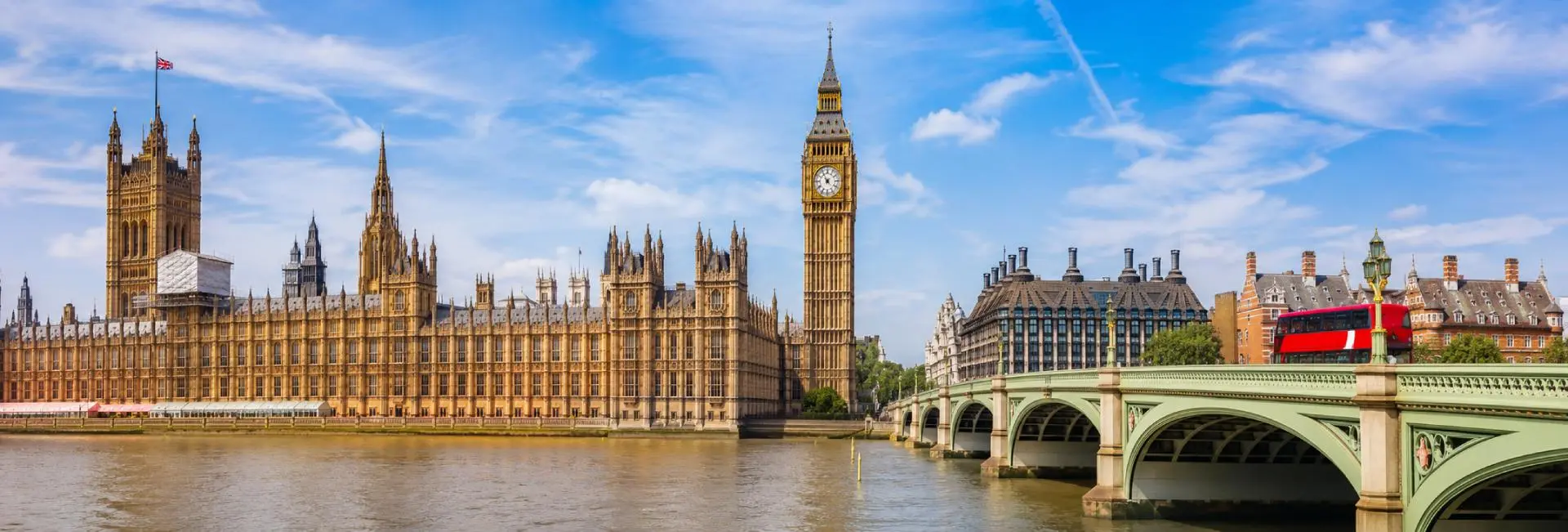
Rising above the north end of the Palace of Westminster on the banks of the River Thames, Elizabeth Tower is one of the most recognizable structures in the world. Most visitors know it simply as Big Ben, though that name technically belongs only to the huge bell that hangs inside and strikes the hour.
Completed in 1859, the tower has stood watch over London for more than 160 years, surviving wartime bombing, mechanical breakdowns, and a major modern restoration. Its four illuminated clock faces and the deep tone of its bell have become shorthand for London itself, appearing in film, television, and news broadcasts as an instantly understood symbol of the city.
History
Origins After the Fire
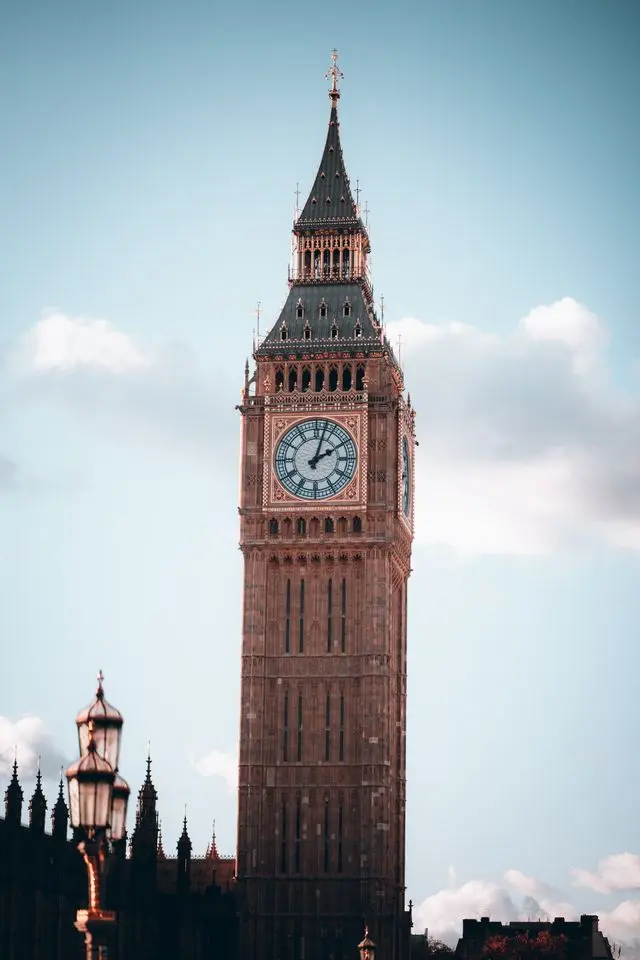
The story of the tower begins with disaster. In October 1834, a fire tore through the old Palace of Westminster, destroying most of the medieval building that had housed Parliament for centuries. When architect Charles Barry won the competition to design a replacement, his winning scheme called for a grand clock tower at one end of the new palace.
Barry brought in designer Augustus Pugin, a leading figure of the Gothic Revival movement, to work out the tower's detailed appearance. Pugin's design, finished shortly before his death in 1852, gave the tower its ornate, pointed Gothic character.
Construction and the Bell's Troubles
Construction of the tower began in the 1840s and took over a decade to complete. The bell destined to strike the hours proved just as difficult to get right: an early casting cracked during testing, and the replacement bell also cracked shortly after installation in 1859. Rather than recast it a second time, engineers rotated the bell and adjusted the hammer, and the cracked bell has rung out, with its distinctive tone, ever since.
The Twentieth and Twenty-First Centuries
The tower survived German bombing raids during the Second World War with only minor damage to its clock faces, and it continued to chime through the Blitz. In 1976, a mechanical failure caused serious internal damage and silenced the bell for several months. More recently, the tower underwent its most extensive conservation project between 2017 and 2022, during which the clock faces, stonework, and cast-iron roof were carefully restored.
Architecture & Design
Elizabeth Tower stands roughly 96 metres (316 feet) tall and is built on a square base measuring about 12 metres on each side. The lower two-thirds of the structure is brick faced with sand-coloured stone, while the upper section is a lighter, more elaborate spire framed in cast iron.
Gothic Revival Detail
Pugin's design is dense with decorative stonework, pinnacles, and tracery typical of the Perpendicular Gothic style. The tower was conceived as a companion to the rest of the Palace of Westminster, echoing the same architectural language used throughout Barry's design for the building.
Inside the Tower
A narrow spiral staircase of several hundred steps connects the ground floor to the belfry and beyond, passing the clock mechanism room along the way. Near the top, a small lantern called the Ayrton Light shines whenever either chamber of Parliament is sitting after dark, letting Londoners know that business is underway inside.
The Great Clock and the Great Bell
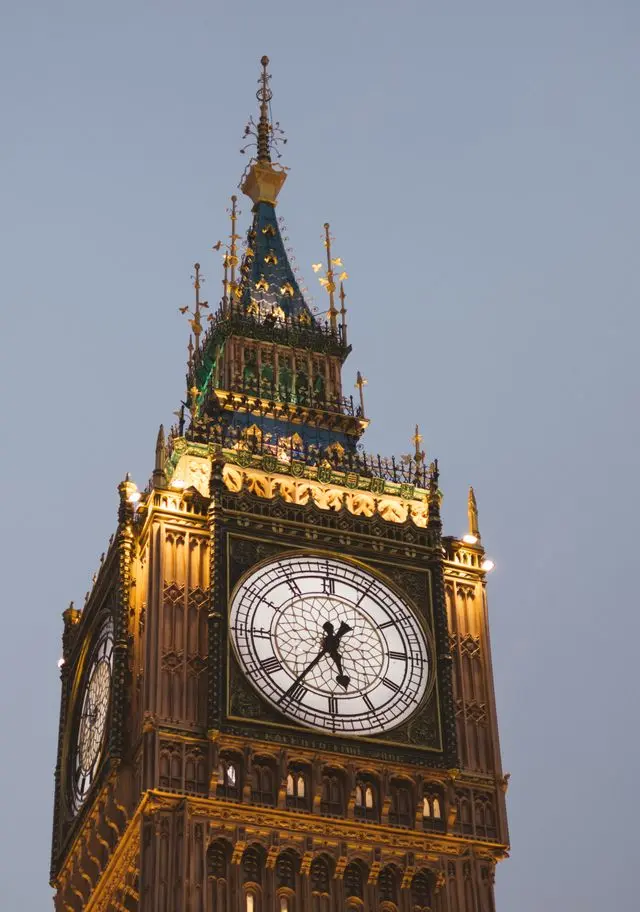
When it was completed, the clock inside the tower was the largest and most accurate four-faced striking clock in the world, and its mechanism is still regarded as a landmark of Victorian engineering. Each of the four dials is set in an iron frame filled with hundreds of pieces of opal glass, lit from within so the clock is legible day and night.
- The Great Bell, popularly called Big Ben, weighs well over 13 tonnes and sounds the note E.
- Four smaller quarter bells chime a short melody every fifteen minutes before the hour strikes.
- The clock's accuracy is fine-tuned using old pre-decimal pennies placed on the pendulum, a method still used today.
- The minute hands measure over four metres long, while the hour hands are just under three metres.
Recognition & Status
Elizabeth Tower is part of the Palace of Westminster, which together with Westminster Abbey and St Margaret's Church forms a UNESCO World Heritage Site recognized for its historical and architectural importance. The tower itself is also individually listed as a Grade I building, the highest level of protection given to structures of exceptional national interest in England.
Originally known simply as the Clock Tower, it was renamed Elizabeth Tower in 2012 to mark the Diamond Jubilee of Queen Elizabeth II, cementing its place as both a working landmark and a royal tribute.
Symbolism on the Tower
The tower's stonework is deliberately loaded with national symbolism. Carved shields repeat around the structure representing each nation of the United Kingdom, a visual reminder that Parliament governs on behalf of the whole country, not just England.
- A rose represents England.
- A thistle represents Scotland.
- A shamrock represents Northern Ireland.
- A leek represents Wales.
A Latin inscription runs beneath the clock face asking for the safekeeping of Queen Victoria, a nod to the monarch who reigned when the tower was built.
Best Time to Visit
Early morning is the quietest time to photograph the tower, before tour groups and commuter crowds build up around Westminster Bridge. Late afternoon and evening bring a different reward, as the clock faces and stonework are illuminated against the darkening sky.
Visiting in winter means shorter days and earlier illumination, while summer evenings offer warmer, more comfortable conditions for lingering outside. Whatever the season, arriving close to the top of the hour lets visitors hear the bell strike, one of the most memorable parts of any visit.
Ways to Experience It
Because Elizabeth Tower sits within an active government building, options for seeing it up close are more limited than at many other London landmarks, which is part of what keeps the experience feeling special.
- View it for free from Westminster Bridge, Parliament Square, or along the South Bank, all popular spots for photos.
- UK residents can apply through their Member of Parliament for a guided tour inside the tower, though slots book up months ahead and visitors must be over 11 years old.
- Join a Houses of Parliament tour, which covers the palace's state rooms and history even though it does not go inside the clock tower itself.
- Take an evening river cruise on the Thames for a dramatically lit view of the tower after dark.
Visitor Tips
- The best exterior photo angles are from the far side of Westminster Bridge, looking back toward the tower and the Houses of Parliament.
- Security around Parliament is tight, so allow extra time if planning to enter the palace grounds for a tour.
- Interior tower tours are not open to non-UK residents, so international visitors should plan to enjoy the tower from the outside.
- Nearby Westminster Underground station makes the area easy to reach without a car.
- Bring layers, as the riverside location can be windier and cooler than the rest of central London.
Nearby Attractions
Elizabeth Tower sits at the heart of one of London's most attraction-dense neighbourhoods, making it easy to combine with other major sights in a single outing.
- Westminster Abbey, just across the road, is the coronation church of British monarchs.
- The London Eye offers sweeping views back across the river toward the tower.
- St James's Park provides a green, relaxed stop within easy walking distance.
- Churchill War Rooms and Westminster Bridge are both a short walk away for more history and photo opportunities.
Common Questions About Big Ben
Is Big Ben the name of the tower or the bell? +
Technically Big Ben is only the Great Bell inside the tower, while the structure itself is officially called Elizabeth Tower, though most people use the two names interchangeably.
Can visitors go inside Big Ben? +
Interior tours are possible but only for UK residents, who must apply through their Member of Parliament well in advance; non-UK residents can only view the tower from outside.
Is it free to see Big Ben? +
Yes, viewing the tower from Westminster Bridge, Parliament Square, or the South Bank costs nothing and is one of London's most popular free activities.
How tall is Elizabeth Tower? +
The tower stands roughly 96 metres, or about 316 feet, tall, with several hundred steps leading from the ground floor up to the belfry.
What is the best spot to photograph Big Ben? +
Westminster Bridge, particularly the south side looking back toward Parliament, gives the classic wide view of the tower alongside the river and the London Eye.
Does Big Ben still work today? +
Yes, following its extensive 2017 to 2022 restoration, the Great Clock and bell are back in full working order and the tower's stonework and roof have been refreshed for years to come.
What does the Ayrton Light signal? +
A small lantern near the top of the tower is lit whenever the House of Commons or House of Lords is sitting after dark, letting people outside know Parliament is in session.
What's the closest Tube station to Big Ben? +
Westminster station sits right at the base of the tower, making it the easiest way to reach the area by public transport.
How long does it take to see Big Ben? +
Viewing the exterior and taking photos typically takes 20 to 30 minutes, though many visitors linger longer to explore Parliament Square and the surrounding riverside.