Table of Contents
Overview
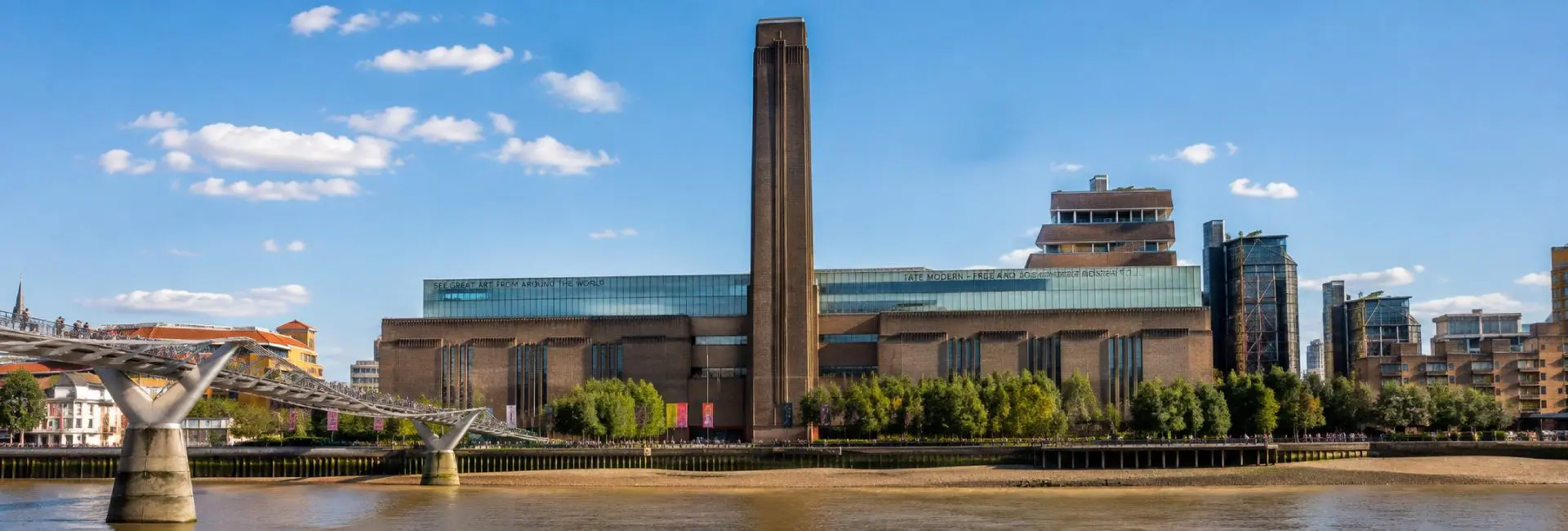
Tate Modern is Britain's national gallery of modern and contemporary art, occupying the former Bankside Power Station on the south bank of the River Thames. Its raw industrial architecture, paired with a collection spanning Picasso and Matisse to today's leading contemporary artists, has made it one of the most visited modern art museums in the world.
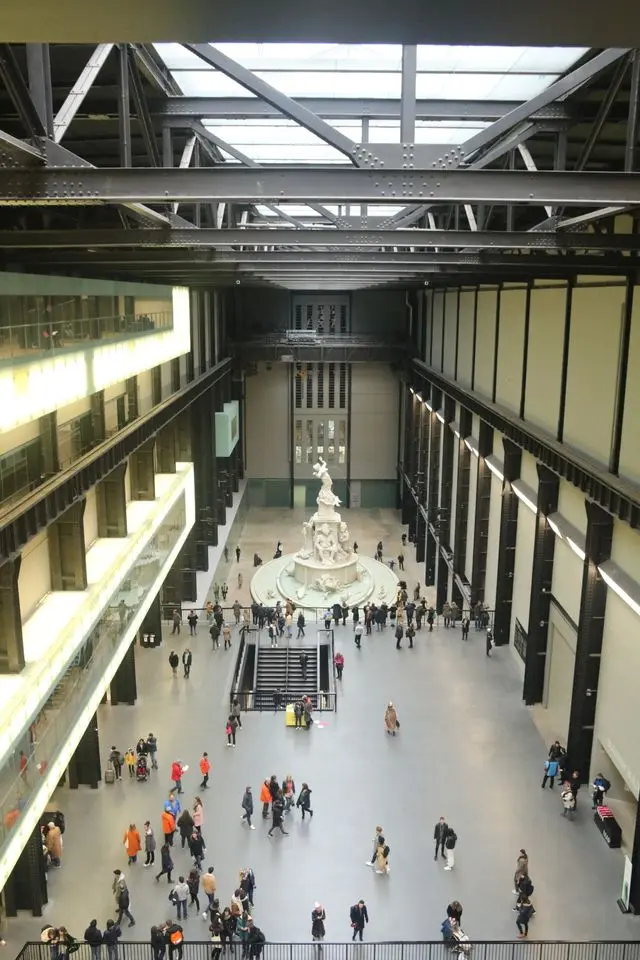
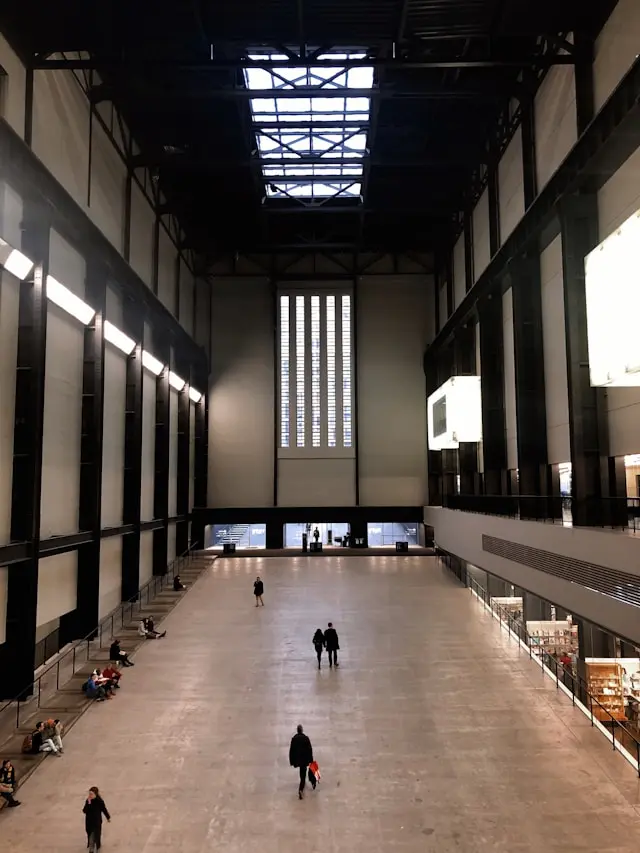
Since opening in 2000, the gallery has become as famous for its building as for the art inside it. Visitors enter through a vast former turbine hall, once filled with the machinery of a working power station and now used to stage some of the most ambitious large-scale art installations anywhere in the world.
History
A Power Station on the Thames
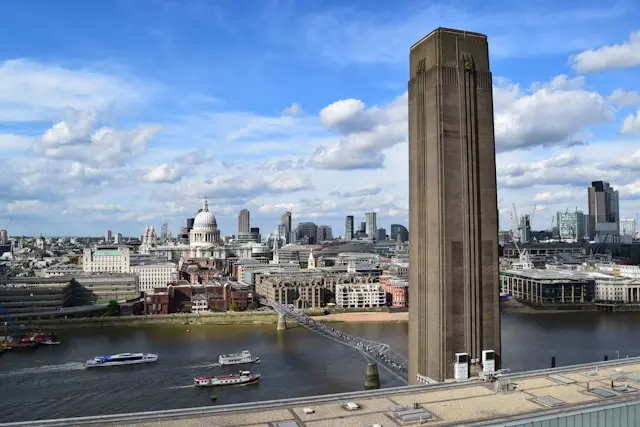
The building that now houses Tate Modern was originally Bankside Power Station, designed by Sir Giles Gilbert Scott, the architect also known for London's classic red telephone box. Built in two phases between 1947 and 1963, the oil-fired station stood directly across the river from St Paul's Cathedral, its brick form conceived as a fitting industrial counterpart to the cathedral's dome.
Decommissioning and a New Purpose
Rising oil prices forced the power station to shut down in 1981, and the building stood empty for over a decade. A campaign to save it from demolition gained momentum in the early 1990s, and in 1994 the Tate Gallery acquired the site to house a new collection of international modern and contemporary art, having considered several other London locations first.
Opening as Tate Modern
Following an international design competition, Swiss architects Herzog & de Meuron were selected to convert the power station, deliberately preserving much of its industrial character rather than erasing it. Tate Modern opened to the public in May 2000 and quickly became a major driver of regeneration for the surrounding Bankside neighborhood.
Architecture & Transformation
Herzog & de Meuron's approach favored restraint over spectacle, keeping the building's brick shell, structure, and industrial details largely intact rather than imposing a dramatic new design. The former boiler house became the main collection galleries, while the vast turbine hall, once home to the station's generators, was left open as an entrance and exhibition space.
In 2016, the gallery expanded with the addition of the Blavatnik Building (originally known as the Switch House), a ten-story extension built above The Tanks, underground spaces that once held the power station's oil reserves and now serve as galleries for performance and installation art.
Recognition & Records
Tate Modern is one of the most visited museums of modern and contemporary art in the world and has played a defining role in London's cultural landscape since opening. Its transformation from disused industrial site to major museum is widely cited as a landmark example of adaptive reuse and urban regeneration.
Key Areas
The Turbine Hall
Spanning the full length of the building, the Turbine Hall is one of the most dramatic interior spaces in London, roughly 35 meters high, and used to display large-scale commissioned artworks and installations.
The Boiler House
The original power station building holds the core of Tate Modern's permanent collection, arranged thematically across several floors rather than in strict chronological order.
The Blavatnik Building
This more recent extension houses additional galleries and The Tanks, along with a top-floor viewing level offering panoramic views across London.
The Tanks
Once used to store oil for the power station, these subterranean concrete spaces are now dedicated to live art, film, and performance-based installations.
Collection Highlights
Tate Modern's permanent collection includes tens of thousands of works, though only a portion is on display at any time, with pieces by artists including Pablo Picasso, Henri Matisse, Piet Mondrian, and Salvador Dalí, spanning the early twentieth century through to contemporary practice.
- A dedicated room of Mark Rothko's Seagram Murals, painted for a New York restaurant commission the artist ultimately withdrew from
- Henri Matisse's late-career paper cut-out works, created after illness left him unable to paint
- Major works from Abstract Expressionism, Surrealism, and Pop Art movements
- Rotating displays of contemporary and global contemporary art alongside the historical collection
Access to the permanent collection is free, while major temporary exhibitions typically carry a separate admission charge.
Turbine Hall Commissions
Since 2000, Tate Modern has commissioned major artists to create a large-scale, site-specific installation for the Turbine Hall roughly once or twice a year. These commissions have become some of the most talked-about art events in London, drawing large crowds during their opening weeks.
Notable past installations have included Olafur Eliasson's glowing artificial sun, Louise Bourgeois's giant spider sculpture, and Ai Weiwei's field of hand-painted porcelain sunflower seeds. The current installation changes periodically, so it's worth checking the museum's website ahead of a visit to see what's on.
Best Time to Visit
Weekday mornings tend to be the quietest time to explore the permanent collection, while weekends and the opening weeks of major Turbine Hall commissions or temporary exhibitions draw larger crowds. The museum also opens later on Friday and Saturday evenings, offering a quieter alternative to daytime visits.
Because the permanent galleries are free and don't require booking, it's easy to fit in a shorter, focused visit at off-peak times rather than committing to a full day.
Visitor Tips
- The permanent collection is free to enter with no ticket required, but major temporary exhibitions charge admission and are worth booking in advance
- The Turbine Hall entrance can have longer queues on weekend mornings; entering via the Blavatnik Building on Park Street is often quicker
- Check the current Turbine Hall commission and any temporary exhibitions on the official Tate website before visiting, since these change periodically
- The viewing level in the Blavatnik Building offers panoramic views over the Thames and St Paul's Cathedral and is worth the trip up
- Photography without flash is generally permitted in the permanent collection, though some temporary exhibitions restrict it
- The museum is fully accessible, with lift access, wheelchair and mobility scooter hire, and quiet rooms available for sensory breaks
Nearby Attractions
Tate Modern sits on Bankside, within walking distance of several of London's best-known landmarks. The Millennium Bridge connects the museum directly across the Thames to St Paul's Cathedral, while Shakespeare's Globe and the food stalls of Borough Market are both just a short stroll along the riverside.
The area's riverside walkway also leads toward the Shard and London Bridge, making it easy to combine a Tate Modern visit with an afternoon exploring the wider Bankside and Southwark district.
Common Questions about Tate Modern
Is Tate Modern free to visit? +
Yes, entry to the permanent collection is free with no ticket required, though major temporary exhibitions and some Turbine Hall commissions may carry a separate admission charge.
What was Tate Modern before it became a museum? +
The building was originally Bankside Power Station, an oil-fired power plant designed by Sir Giles Gilbert Scott, which operated from the early 1950s until its closure in 1981.
How long should I plan for a visit? +
A focused visit to the highlights can take a couple of hours, while seeing the permanent collection, Turbine Hall installation, and a temporary exhibition in depth can take three to four hours or more.
What is the Turbine Hall known for? +
It's the museum's vast entrance space, roughly 35 meters high, used each year to display a major large-scale, site-specific art installation commissioned from a leading contemporary artist.
Do I need to book tickets in advance? +
Booking isn't required for the free permanent collection, but tickets for popular temporary exhibitions should be booked ahead online, as these can sell out.
Is Tate Modern suitable for children and families? +
Yes, the museum is family-friendly, with free entry for children to the permanent collection, stroller access, and family trails, and the scale of the Turbine Hall in particular tends to make a strong impression on younger visitors.
What's nearby to combine with a visit? +
The Millennium Bridge links Tate Modern directly to St Paul's Cathedral, and Shakespeare's Globe and Borough Market are both within easy walking distance along the river.