Table of Contents
Overview
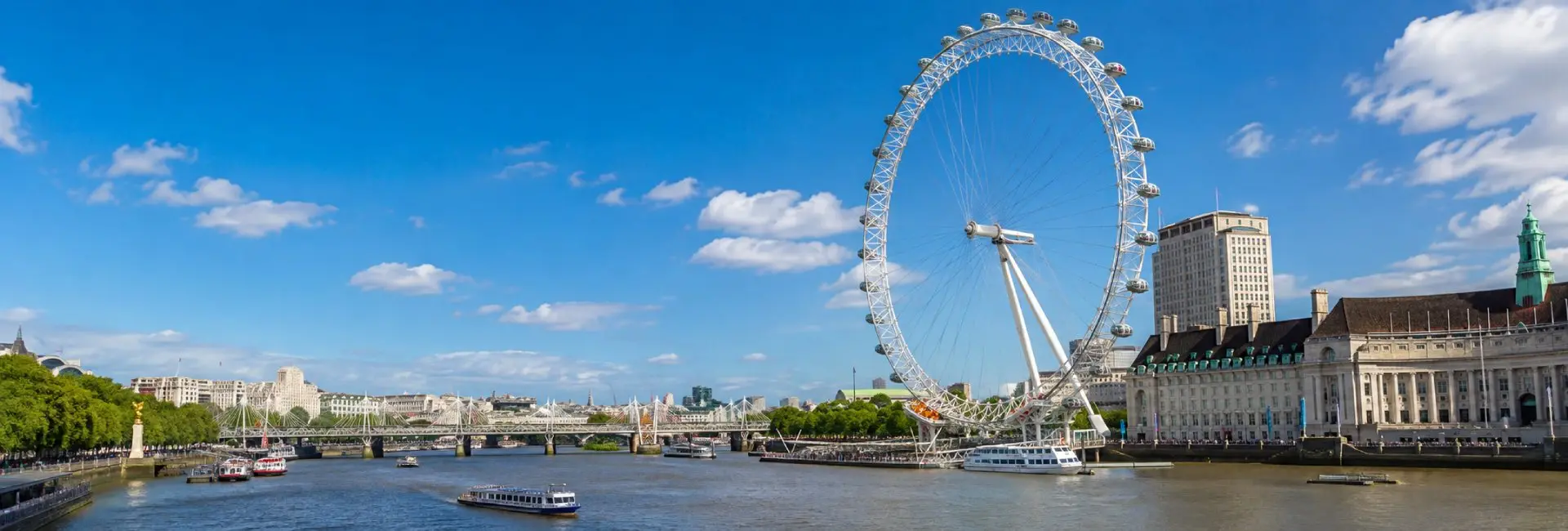
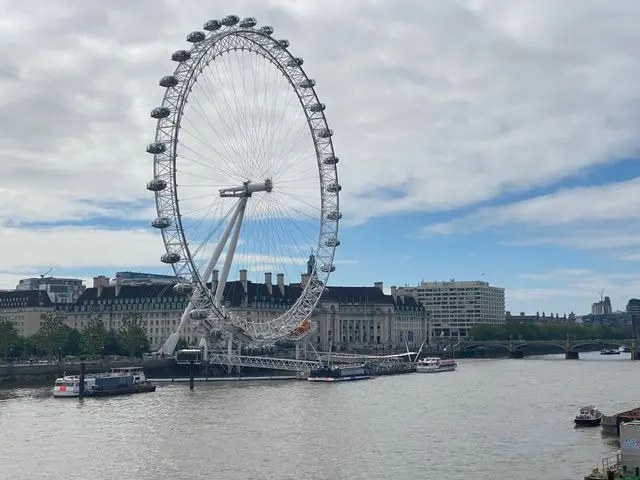
The London Eye is a giant observation wheel standing on the South Bank of the River Thames, between Westminster Bridge and Hungerford Bridge. Rising 135 metres above the river, it offers sweeping 360-degree views across the city, taking in landmarks such as Big Ben, the Houses of Parliament, and St Paul's Cathedral from its 32 glass capsules.
Originally conceived as a temporary millennium landmark, it quickly became one of the most visited paid attractions in the country and has stayed a permanent fixture of the London skyline ever since. A single rotation takes around 30 minutes, giving riders plenty of time to take in the view without ever feeling rushed.
History
Origins and Design Competition
The idea for the London Eye came from architects David Marks and Julia Barfield, a husband-and-wife team who submitted their design in 1993 as part of a competition to mark the new millennium. Their concept for a giant, slow-turning observation wheel stood out from the other entries and eventually won backing to be built on the South Bank.
Construction
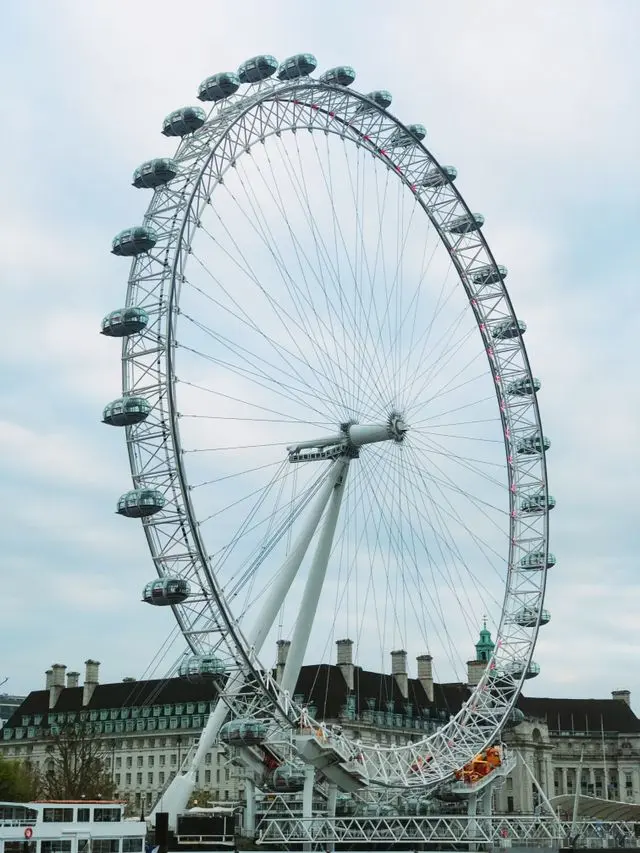
Construction began in 1998 using an unusual method: sections of the wheel were assembled lying flat on floating platforms in the Thames, then gradually raised into an upright position. The finished structure was cantilevered, supported on only one side by a tilted A-frame, with no central column holding it up from below, an engineering approach that had never been attempted at this scale.
Opening and Permanent Status
The wheel was ceremonially switched on by Prime Minister Tony Blair on 31 December 1999, in time for London's millennium celebrations, though a technical issue with the capsule mechanism delayed the public opening until 9 March 2000. It was originally granted planning permission for just five years, but its popularity was so overwhelming that Lambeth Council approved permanent status in 2002.
Design & Engineering
At 135 metres tall with a 120-metre diameter, the London Eye was the tallest Ferris wheel in the world when it opened, a title it held until 2006. Its cantilevered structure, supported by a single tilted A-frame rather than a central axle from below, remains one of its most distinctive engineering features.
- Total structure weight: approximately 2,100 tonnes
- Rotation speed: roughly 0.9 km/h, slow enough that the wheel rarely needs to stop for boarding
- Full rotation time: about 30 minutes
- Visibility on a clear day: up to around 40 kilometres, far enough to spot Windsor Castle
The Capsules
The wheel carries 32 enclosed glass capsules, one for each London borough, spaced evenly around its rim. Each capsule weighs around 10 tonnes and holds up to 25 passengers, with room to move around and view the city from every angle rather than sitting in fixed seats.
Because the wheel turns continuously at a gentle pace, passengers board and disembark via a moving walkway while it's still in motion. This keeps queues moving steadily and means the ride rarely comes to a complete stop except for visitors who need extra time or accessibility support.
Recognition & Records
The London Eye has picked up more than 80 awards for tourism, architecture, and engineering achievement since it opened. It remains Europe's tallest Ferris wheel and, despite being overtaken in height by newer wheels elsewhere in the world, continues to rank among the most visited paid attractions anywhere.
- World's tallest Ferris wheel from 2000 until 2006, when overtaken by the Star of Nanchang in China
- Still Europe's tallest observation wheel today
- Around 3.5 million visitors ride it each year
- Became the UK's most visited paid tourist attraction within its first year of opening
Ways to Experience It
The standard rotation is the classic way to experience the London Eye, but there are several ticket formats depending on what kind of visit you're after.
- Standard flight: a single 30-minute rotation in a shared capsule
- Fast Track tickets: reduced queuing time for a more efficient visit
- Private capsule hire: an exclusive capsule for a group, often used for celebrations
- Combo tickets: paired with nearby attractions such as a Thames river cruise or Madame Tussauds
- Champagne experience: a shorter shared flight that includes a glass of champagne on board
Best Time to Visit
Sunset is widely considered the most rewarding time to ride, since the capsule lets you watch the sky change color while the city lights begin switching on below. Clear days are worth prioritizing over exact time slots, since visibility can extend for miles when the weather cooperates.
Early morning slots tend to have shorter queues and calmer light for photography, while evening flights after dark show off London's illuminated skyline. Weekday visits are generally quieter than weekends, and booking a specific time slot in advance helps avoid the longest queues during peak school holiday periods.
Visitor Tips
A little planning goes a long way with the London Eye, since it's one of the busiest attractions in the city.
- Book timed tickets online in advance to skip the standard queue and guarantee a slot
- Arrive around 20-30 minutes before your booked time to allow for security checks
- Pack light, as larger bags may need to be stored before boarding
- Choose a clear day if possible, since visibility makes a big difference to the views
- The wheel keeps moving during boarding, so step on and off steadily rather than rushing
Nearby Attractions
The London Eye sits in a stretch of the South Bank that's packed with other things to see, making it easy to build a full day around a visit.
- Southbank Centre and Jubilee Gardens, right beside the wheel
- Westminster Abbey and the Houses of Parliament, a short walk across Westminster Bridge
- The Sea Life London Aquarium, located at the base of the Eye
- Waterloo Station, the closest transport hub for onward travel
Common Questions about London Eye
What is the London Eye? +
It's a 135-metre observation wheel on the South Bank of the Thames, offering 360-degree views of London from enclosed glass capsules over a roughly 30-minute rotation.
How long does a ride last? +
One full rotation takes about 30 minutes, and the wheel typically keeps moving throughout rather than stopping to let passengers on and off.
Do I need to book tickets in advance? +
Booking ahead is strongly recommended, since it secures a specific time slot and lets you skip the standard walk-up queue, which can be long during peak season.
Is the London Eye suitable for young children or people with mobility needs? +
Yes, the capsules are spacious and step-free, making the ride accessible for families, wheelchair users, and visitors who need extra boarding time.
What's the best time of day to go? +
Sunset flights are popular for the changing light and city views, while early morning slots tend to have shorter queues; either way, a clear day matters more than the exact hour.
How high up does the capsule go? +
The wheel reaches 135 metres at its highest point, and on a clear day visibility can stretch up to around 40 kilometres.
Can I combine my visit with other attractions? +
Combo tickets are available that pair the London Eye with nearby options like a Thames river cruise or Madame Tussauds, and the South Bank area has plenty to explore on foot afterward.
Is the London Eye scary for people afraid of heights? +
The wheel moves very slowly and the capsules are fully enclosed, which many visitors with a fear of heights find far more manageable than they expect.