Table of Contents
Overview
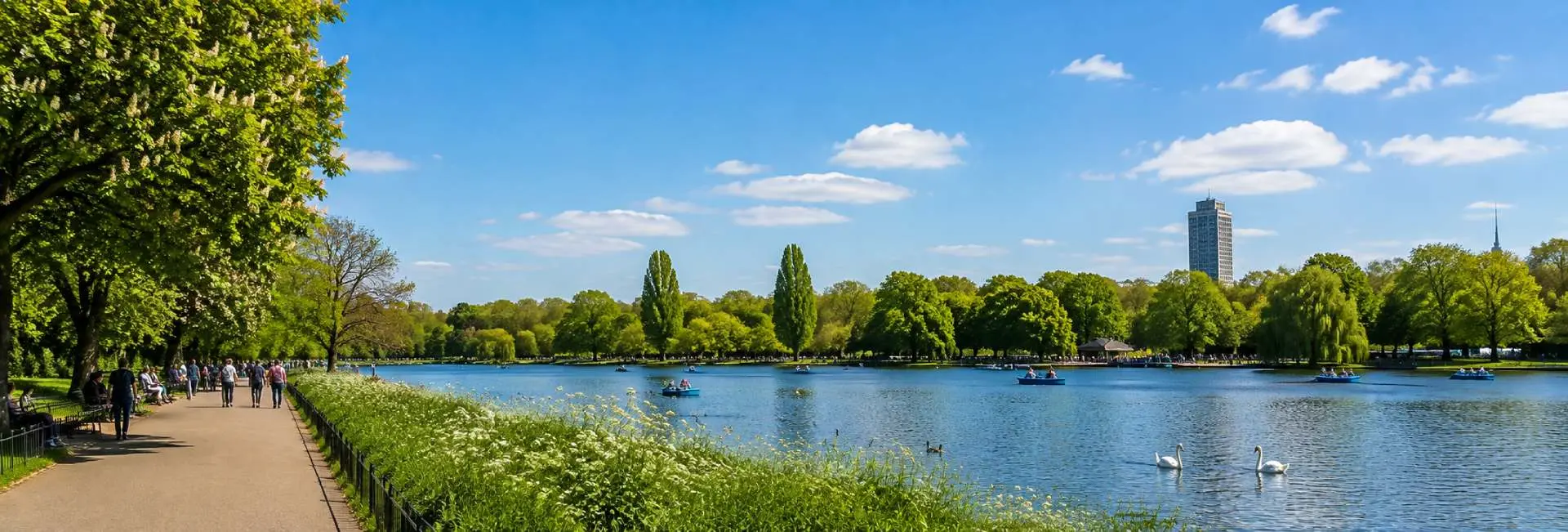
Hyde Park is one of London's largest and best-known Royal Parks, spanning roughly 350 acres in the heart of Westminster. Bordered by Mayfair, Belgravia, and Kensington, it draws millions of visitors each year for its open lawns, tree-lined avenues, and the curving Serpentine lake at its center.
Once a royal hunting ground, the park has evolved into one of London's great public gathering spaces, hosting everything from Sunday boating and horse riding to concerts, protests, and free-speech oratory at Speakers' Corner.
History
From Hunting Ground to Public Park
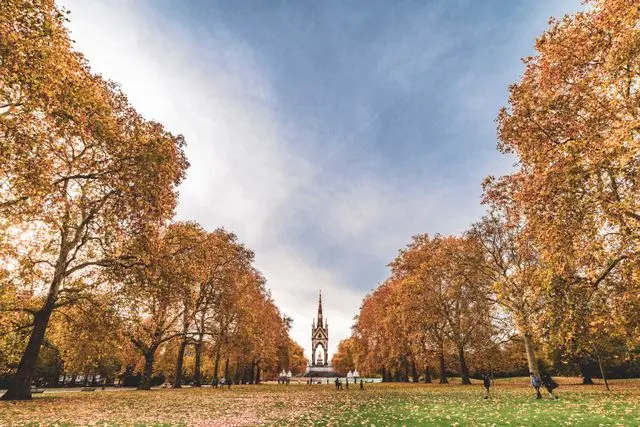
The land that became Hyde Park belonged to the monks of Westminster Abbey until 1536, when Henry VIII seized it during the dissolution of the monasteries and turned it into a private deer-hunting ground. It stayed off-limits to the public for nearly a century.
Opening to the Public
King James I allowed limited access to the wealthy in the early 17th century, and Charles I opened the park to the general public in 1637. During the Great Plague of 1665, many Londoners fled the crowded city to camp in its open air, hoping to escape infection.
Landscaping and the Great Exhibition
Queen Caroline had the park redesigned in the 1730s, damming the River Westbourne to create the Serpentine lake. In 1851, Hyde Park hosted the Great Exhibition inside the purpose-built Crystal Palace, a landmark event that showcased industry and design from around the world and drew millions of visitors.
The Serpentine & Key Areas
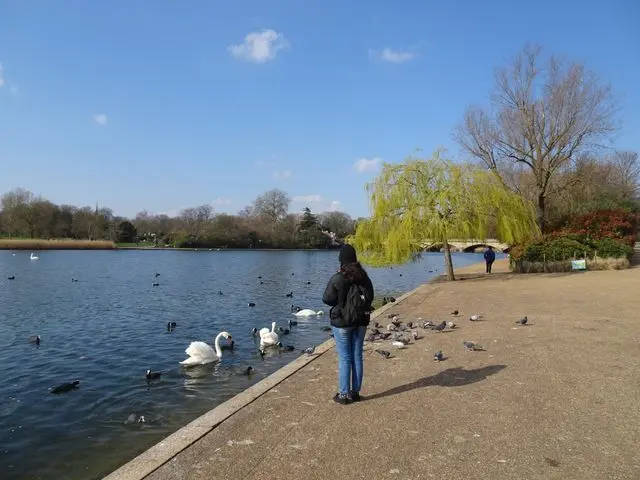
The Serpentine is Hyde Park's defining feature, a 40-acre lake created in 1730 that today supports boating, swimming, and a resident population of ducks, swans, and other waterfowl. Its western arm, known as the Long Water, continues into neighboring Kensington Gardens.
Rotten Row
Running along the park's southern edge, Rotten Row was originally built as a safe royal route between Kensington Palace and St James's Palace. Lit with hundreds of oil lamps in 1690, it became the first artificially illuminated road in Britain and, later, a fashionable spot for horse riding among wealthy Londoners.
Speakers' Corner
Near the Marble Arch entrance, Speakers' Corner has long served as a stage for open-air public speaking and debate, where anyone can step up and address a crowd on the topic of their choosing, a tradition that continues most Sundays.
Landmarks & Monuments
Beyond its green spaces, Hyde Park is dotted with statues, memorials, and structures reflecting different chapters of its history.
- Diana, Princess of Wales Memorial Fountain, a circular water feature dedicated to her memory
- The Achilles statue, commemorating the Duke of Wellington's military victories
- Marble Arch, built in 1827 as a ceremonial gateway originally intended for Buckingham Palace
- The Holocaust Memorial, one of the earliest of its kind in the United Kingdom
- The Rose Garden, a formal planted garden near Hyde Park Corner
Cultural Significance
Hyde Park has been a stage for major moments in British public life, from the Great Exhibition of 1851 to large-scale concerts, festivals, and political demonstrations that continue to this day. Speakers' Corner in particular has made it a symbol of free expression, having hosted speakers ranging from local activists to internationally known historical figures.
The park also carries Olympic history, having hosted the triathlon and marathon swimming events during the London 2012 Games in and around the Serpentine.
Ways to Experience It
- Rent a rowboat or pedal boat on the Serpentine during the warmer months
- Walk or cycle the network of paths connecting Hyde Park to Kensington Gardens
- Listen to public speakers and debates at Speakers' Corner, especially on Sunday mornings
- Visit the Serpentine Galleries for contemporary art exhibitions
- Take a horseback ride along Rotten Row, still used by riders today
- Catch an outdoor concert or seasonal event, such as Winter Wonderland
Best Time to Visit
Spring and summer bring the park to life, with blooming gardens, boating on the Serpentine, and long daylight hours for picnics and walks. Weekday mornings tend to be quieter than weekend afternoons, when the lawns fill with visitors and locals alike.
Winter has its own draw: the park hosts Winter Wonderland, a large seasonal festival with markets, rides, and an ice rink, typically running from November into January.
Visitor Tips
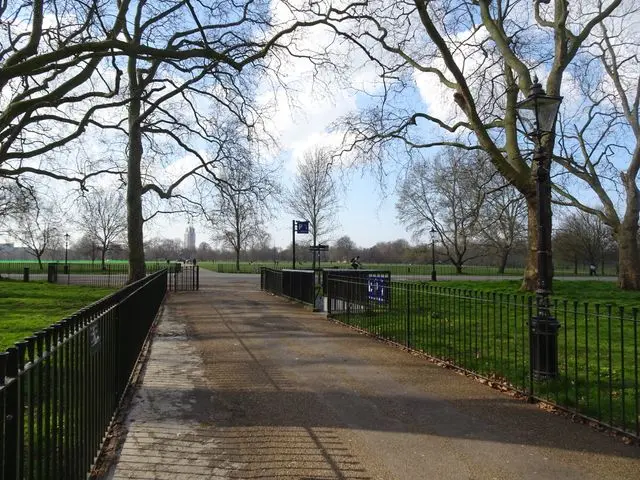
- Entry to the park is free and it's open from early morning until midnight year-round
- Swimming in the Serpentine is only permitted in a designated area, particularly at the Serpentine Lido
- Bring a picnic, as the open lawns are well suited for relaxing, though some areas are reserved as protected meadow
- Major events like concerts or Winter Wonderland can significantly increase crowds, so check the park's events calendar before visiting
- The park connects directly into Kensington Gardens, so it's easy to explore both in a single visit
Nearby Attractions
Hyde Park's central location puts it within easy reach of several other major London sights.
- Kensington Gardens and Kensington Palace, directly adjoining the park
- Buckingham Palace, a short walk to the southeast
- Knightsbridge and Harrods, bordering the park's southern edge
- The Wellington Arch and Apsley House, near Hyde Park Corner
Frequently Asked Questions
Is Hyde Park free to visit? +
Yes, entry is free and the park is open daily from early morning until midnight.
What is Speakers' Corner? +
It's a spot near Marble Arch where members of the public have long been free to give speeches and hold open debates, a tradition that continues most Sundays.
Can you swim in the Serpentine? +
Swimming is allowed only in a designated area, most notably at the Serpentine Lido, which also offers a lifeguarded outdoor swimming spot in warmer months.
How big is Hyde Park? +
It covers roughly 350 acres, making it one of the largest of London's Royal Parks.
What's the difference between Hyde Park and Kensington Gardens? +
They form one continuous green space but are technically separate Royal Parks, divided roughly at the Serpentine Bridge, with Kensington Gardens home to Kensington Palace.
Is Hyde Park good for kids? +
Yes, the park offers open lawns, boating, playgrounds nearby in Kensington Gardens, and seasonal events like Winter Wonderland that are popular with families.
What events take place in Hyde Park? +
The park regularly hosts large outdoor concerts, festivals, and seasonal events, including the Winter Wonderland fair each winter.
What's nearby if I want to combine my visit? +
Kensington Palace, Buckingham Palace, and the shops of Knightsbridge are all within easy walking or short transit distance.