Table of Contents
Overview
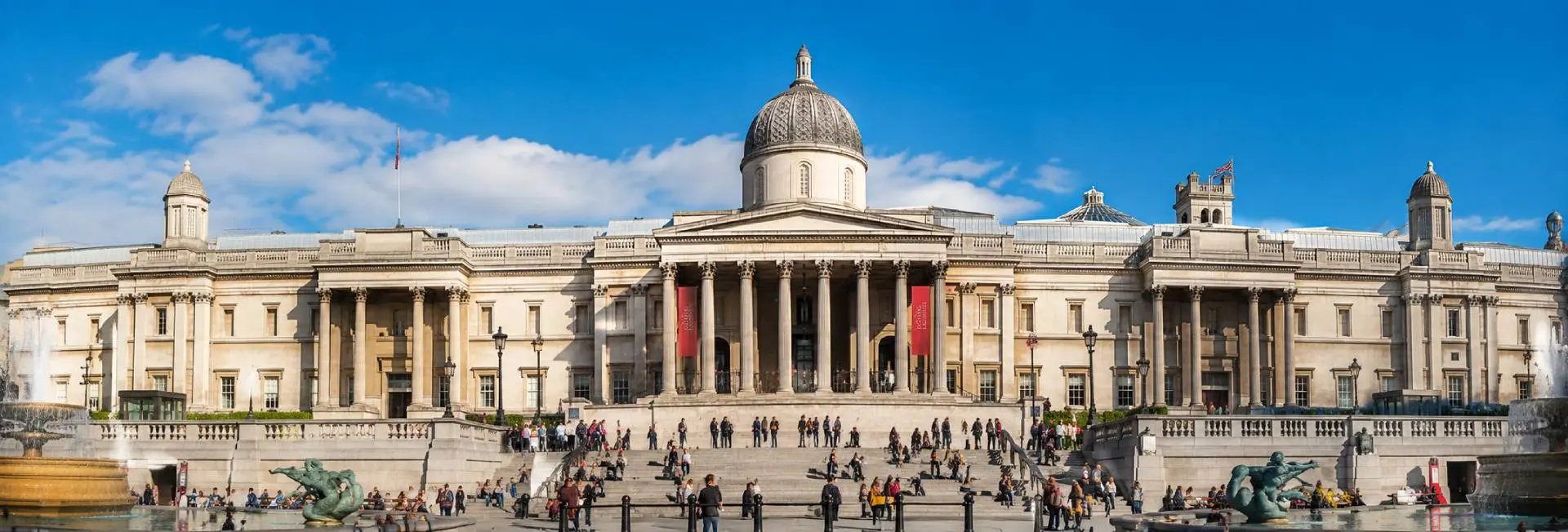
The National Gallery sits on the north side of Trafalgar Square in the heart of London, holding one of the world's finest collections of Western European painting. Its galleries trace an unbroken story of art from the late 13th century through to the early 20th century, bringing together names like Leonardo da Vinci, Botticelli, Vermeer, Turner, and Van Gogh under one roof.
Unlike many national collections in Europe, the Gallery was never built around a royal or aristocratic collection. It began as a public institution from the start, and that founding idea still shapes it today: entry to the permanent collection remains free, and the paintings are considered to belong to everyone.
History
Founding the Collection
The National Gallery was established by Parliament in 1824, when the British government bought 38 paintings from the estate of the banker and merchant John Julius Angerstein. The pictures were first shown in Angerstein's own townhouse at 100 Pall Mall, intended, in the words of the time, "for the enjoyment and education of all."
Moving to Trafalgar Square
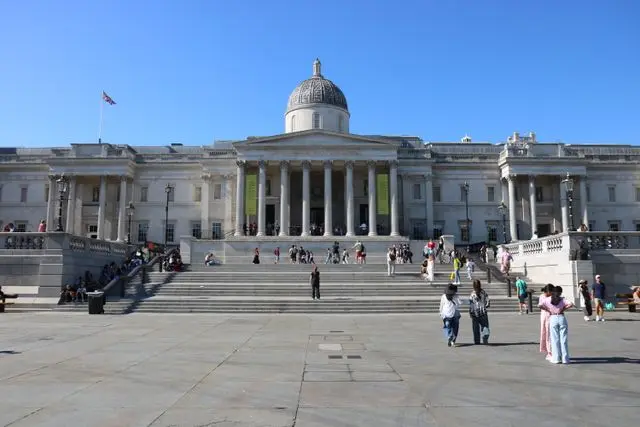
As the collection grew, it quickly outgrew its Pall Mall home. Parliament commissioned a purpose-built gallery on the newly created Trafalgar Square, designed by architect William Wilkins. The building opened to the public in 1838 and has remained the Gallery's home ever since, expanded and altered many times over the following two centuries.
Growth Through Directors and Donors
Much of the collection's depth comes from its early directors, particularly Sir Charles Lock Eastlake, who bought more than 150 paintings during his decade in charge and pushed the Gallery beyond its early focus on fashionable Old Masters. Private bequests and donations have since supplied roughly two-thirds of the collection, turning a modest "gentleman's collection" into a comprehensive survey of European painting.
Into a Third Century
The Gallery marked its 200th anniversary in 2024 with a year-long NG200 celebration, culminating in a major transformation of its Sainsbury Wing entrance and a full rehang of the collection, unveiled in May 2025.
Architecture & Design
The Wilkins Building
The original Trafalgar Square building, completed in 1838, was designed by William Wilkins in a neo-classical style, with a long colonnaded facade, a shallow central dome, and Corinthian columns recycled from the demolished Carlton House. It has been extended and adapted many times since, but its facade remains the recognisable face of the Gallery.
The Sainsbury Wing
Opened in 1991, the Sainsbury Wing was designed by postmodern architects Robert Venturi and Denise Scott Brown to house the Gallery's earliest paintings, from the 13th to the 15th century. Its quieter, more intimate galleries were built specifically to suit smaller-scale early works.
The NG200 Transformation
Between 2023 and 2025, the Sainsbury Wing underwent an £85 million renovation led by architect Annabelle Selldorf, reshaping its facade, foyer, and entrance to create a lighter, more open welcome and step-free access from Trafalgar Square. It reopened as the Gallery's new main entrance in May 2025, alongside a full rehang of the collection titled "C C Land: The Wonder of Art."
Collection Highlights
Early Renaissance to High Renaissance
The Sainsbury Wing houses the Gallery's earliest treasures, including Piero della Francesca's "The Baptism of Christ," Paolo Uccello's "The Battle of San Romano," and Leonardo da Vinci's "The Virgin of the Rocks." The Gallery holds one of the most important collections of Italian Renaissance painting outside Italy itself.
Northern European and Dutch Golden Age
Highlights from the Low Countries include Jan van Eyck's "The Arnolfini Portrait," alongside major works by Vermeer, Rembrandt, and Rubens. Dutch and Flemish paintings form one of the largest concentrations within the collection.
Impressionism and Beyond
The later galleries hold works by Monet, Cézanne, Degas, Renoir, and Van Gogh, including Van Gogh's celebrated "Sunflowers." British painting is also well represented, with rooms dedicated to Turner, Constable, and other national favourites.
- The Arnolfini Portrait – Jan van Eyck
- The Virgin of the Rocks – Leonardo da Vinci
- Sunflowers – Vincent van Gogh
- The Battle of San Romano – Paolo Uccello
- Venus and Mars – Sandro Botticelli
Key Areas
Sainsbury Wing
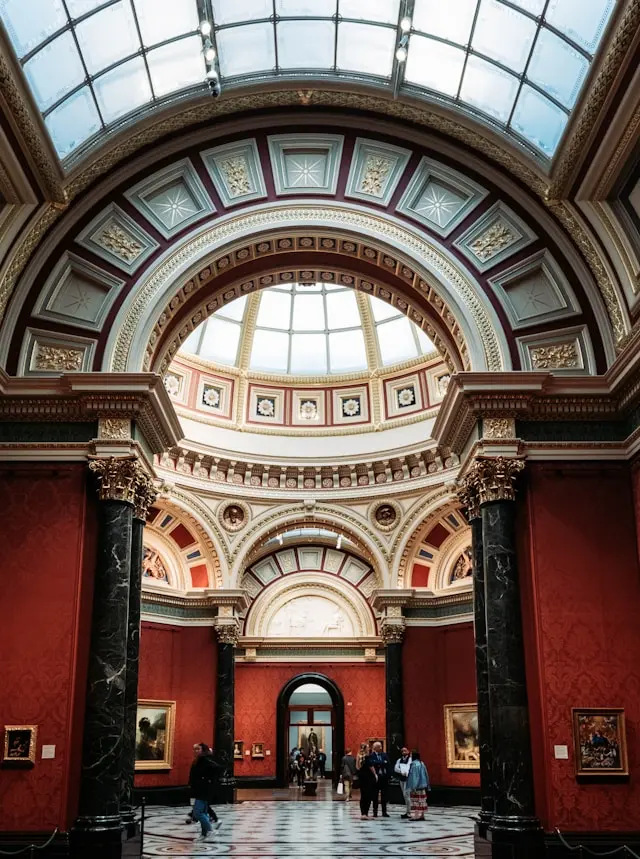
Now serving as the Gallery's main entrance, this wing houses paintings from the 13th to 15th centuries in a series of intimate, chapel-like rooms, including a space designed specifically around Piero della Francesca's "Baptism of Christ."
Wilkins Building
The original Trafalgar Square building holds the bulk of the collection, arranged broadly by period and moving chronologically from the 16th century through to the early 20th century as visitors move through its connected rooms.
Central Hall and Facilities
Beyond the galleries, the building includes a shop, the Locatelli restaurant, Bar Giorgio, and the Pigott Theatre, which hosts talks, films, and performances tied to the collection.
Ways to Experience It
Most visitors explore at their own pace, using free floor plans or the Gallery's app to find specific paintings or plan a route through particular periods. For a deeper dive, the National Gallery also offers several structured ways to engage with the collection.
- Free daily guided highlights tours covering key masterpieces
- Audio guides available in multiple languages, covering the full collection or themed trails
- Ticketed special exhibitions exploring a single artist, movement, or theme in depth
- Talks, courses, and events held in the Pigott Theatre and study rooms
- Family-friendly trails and activity sheets aimed at younger visitors
Best Time to Visit
The Gallery is generally busiest around midday and on weekends, particularly during school holidays. Arriving soon after opening, or in the last couple of hours before closing, tends to mean thinner crowds around the most famous paintings.
The Gallery opens late on Fridays, which is often a quieter and more atmospheric time to visit, with softer light in the galleries and smaller crowds than a typical weekend afternoon.
- Weekday mornings for the calmest galleries
- Friday evenings for a quieter, later visit
- Avoid the first two weeks of major school holidays if possible, as these are consistently the busiest periods
Visitor Tips
Entry to the permanent collection is free, though special exhibitions usually require a ticket and are worth booking in advance during busy periods. Since the 2025 reopening, the Sainsbury Wing has served as the Gallery's main entrance on Trafalgar Square, with step-free access throughout.
- Book tickets for special exhibitions online ahead of time, especially on weekends
- Bags above a certain size may need to be checked at the cloakroom
- Photography without flash is generally permitted in the permanent collection, but check signage in each room
- The building is large; picking two or three "must-see" works in advance makes a short visit far more satisfying than trying to see everything
- Free Wi-Fi and the Gallery's app can help with wayfinding between the Sainsbury Wing and Wilkins Building
Nearby Attractions
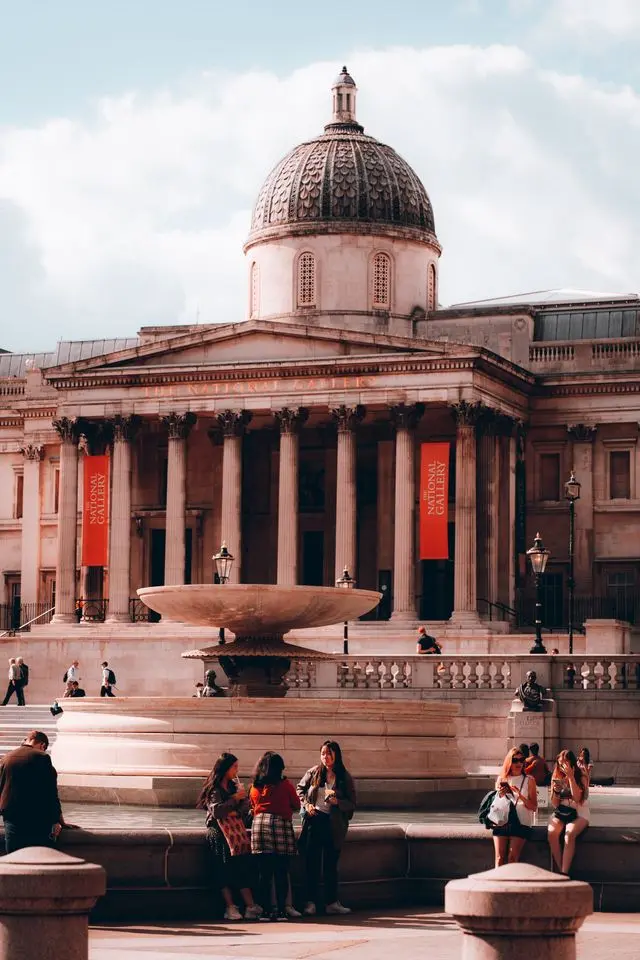
The Gallery's location on Trafalgar Square puts it within easy walking distance of several other major London landmarks, making it simple to combine with a wider day of sightseeing.
- Trafalgar Square and Nelson's Column, right outside the entrance
- The National Portrait Gallery, next door
- St Martin-in-the-Fields church, on the square's edge
- Covent Garden, a short walk to the east
- Westminster and Big Ben, roughly a 15-minute walk south
Common Questions about The National Gallery, London
Is the National Gallery free to visit? +
Yes, entry to the permanent collection is free for everyone. Special temporary exhibitions usually require a paid, timed ticket.
How long should I spend at the National Gallery? +
A focused visit to see a handful of highlights can take 1 to 2 hours, while art lovers wanting to explore the collection in depth often spend half a day or more.
What is the National Gallery most famous for? +
It's best known for its Italian Renaissance holdings and Dutch Golden Age paintings, along with iconic individual works such as Van Gogh's "Sunflowers," Van Eyck's "The Arnolfini Portrait," and Leonardo's "The Virgin of the Rocks."
Where is the main entrance now? +
Since the Sainsbury Wing reopened in May 2025 after a major renovation, it has served as the Gallery's main entrance on Trafalgar Square, with step-free access from street level.
How do I get to the National Gallery? +
The nearest Underground stations are Charing Cross, Leicester Square, and Embankment, all within a short walk of Trafalgar Square, and numerous bus routes stop nearby.
Is the National Gallery suitable for children? +
Yes, the Gallery offers family trails, activity sheets, and free entry for all ages, making it accessible for a family visit, though very young children may tire quickly given the size of the building.
Do I need to book tickets in advance? +
Tickets aren't required for the free permanent collection, but booking ahead is recommended for popular special exhibitions, particularly on weekends and during school holidays.
What's the best time of day to visit to avoid crowds? +
Weekday mornings shortly after opening, or Friday evenings when the Gallery stays open later, tend to be the quietest times to see the most popular paintings.
Can I combine a visit with other nearby attractions? +
Yes, the Gallery sits directly on Trafalgar Square, within easy walking distance of the National Portrait Gallery, Covent Garden, and Westminster, making it easy to pair with a broader day of sightseeing.