Table of Contents
Overview
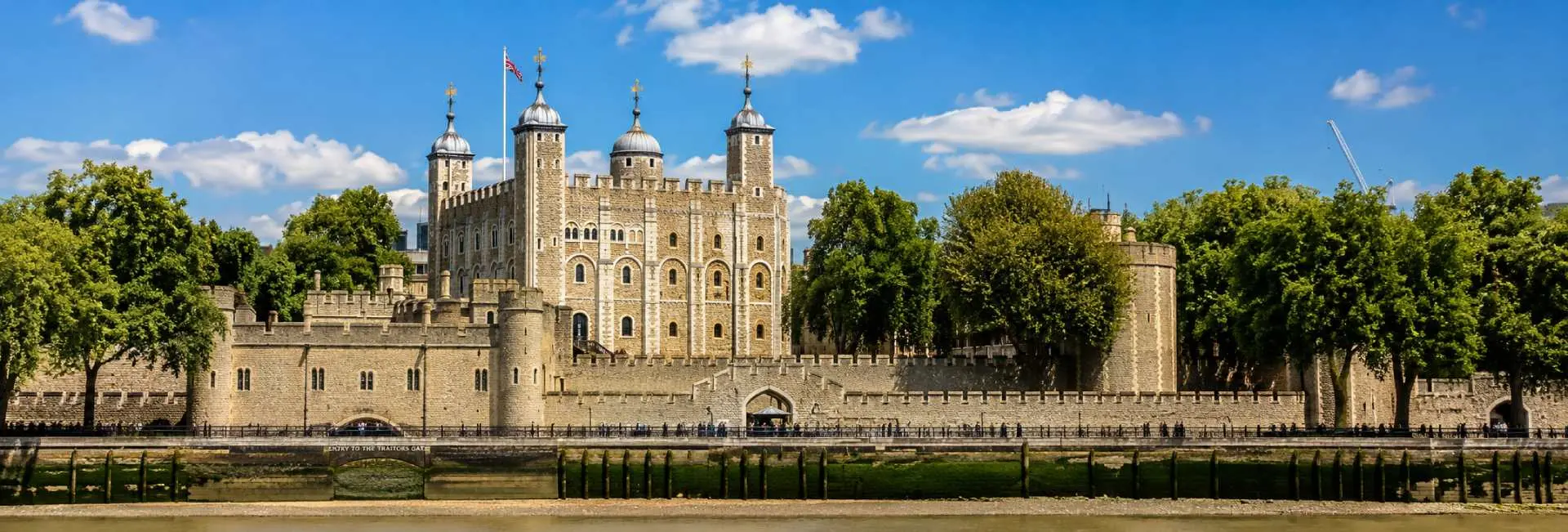
The Tower of London is one of Britain's most iconic landmarks, standing on the north bank of the River Thames in central London. Officially known as Her Majesty's Royal Palace and Fortress of the Tower of London, it has served as a royal residence, a prison, an armory, a royal mint, and the home of the Crown Jewels over nearly a thousand years.
Founded by William the Conqueror shortly after the Norman Conquest, the Tower has witnessed royal executions, imprisoned queens, and guarded state treasures. Today it draws millions of visitors each year who come to walk its ancient walls, meet its famous ravens, and see one of the world's most dazzling jewel collections up close.
History
Norman Origins
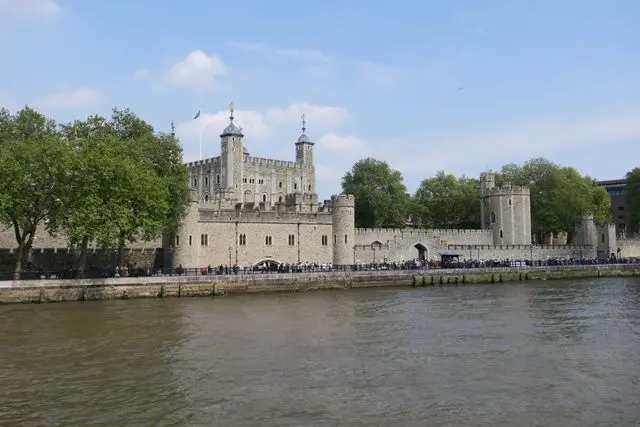
Construction began around 1078 under William the Conqueror, who wanted a powerful fortress to secure his hold over London following his victory at the Battle of Hastings in 1066. The centerpiece, the White Tower, was built from imported Caen stone and designed to project Norman authority over a newly conquered population.
Growth of a Fortress
Over the following centuries, successive monarchs expanded the Tower into the concentric fortress seen today. The Bell Tower was added around 1190-1200, defensive curtain walls and a moat followed, and the complex grew to include a royal palace, chapel, and eventually a menagerie of exotic animals kept as royal gifts.
Prison, Palace, and Powerhouse
By the Tudor period the Tower had become notorious as a place of imprisonment and execution, while still functioning as a royal residence, the Royal Mint, and an armory. It later served as a public records office and remains home to the Crown Jewels and the Royal Armouries collection.
UNESCO World Heritage Status
The Tower of London was inscribed as a UNESCO World Heritage Site in 1988, recognized as an outstanding example of Norman military architecture and a monument symbolic of royal power since the 11th century. The listing highlighted the White Tower as the finest surviving example of a late 11th-century royal Norman castle keep.
- Inscribed on the UNESCO World Heritage List in 1988
- Recognized for its influence on medieval military architecture across the kingdom
- Cited as a lasting symbol of royal authority dating to William the Conqueror's reign
- Managed today by the independent charity Historic Royal Palaces under a formal conservation plan
The White Tower and Architecture
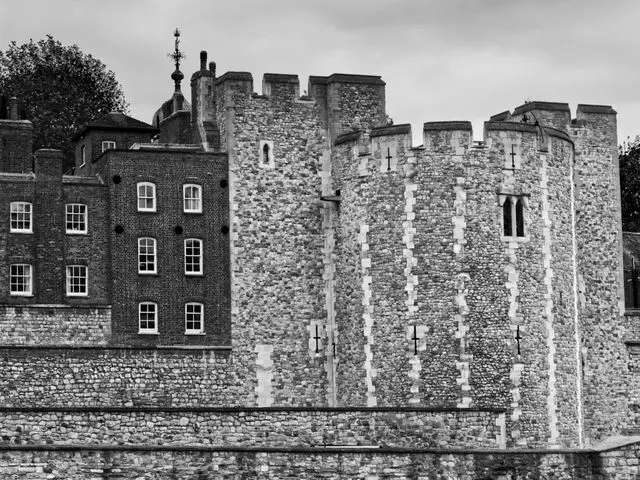
The White Tower is the original stone keep at the heart of the complex and remains the Tower's most recognizable structure. Its thick walls, small arrow-slit windows, and simple, imposing form were built to intimidate as much as to defend, and it still houses part of the Royal Armouries collection of arms and armor.
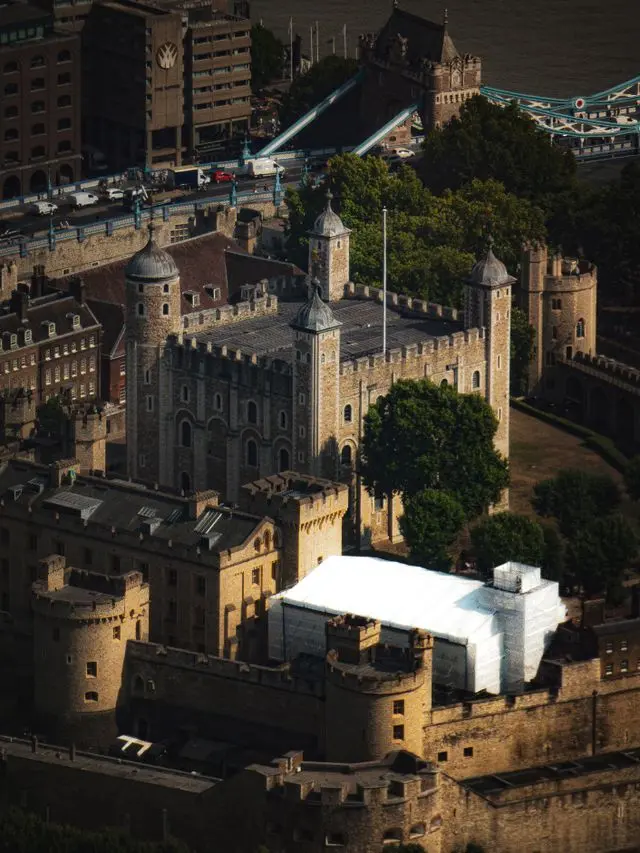
Around the White Tower, later monarchs added concentric rings of walls, towers, and a wide moat, creating layered defenses typical of medieval castle design. The result is a complex where visitors can trace nearly a millennium of architectural change in a single walk, from stark Norman stonework to Tudor and Victorian additions.
Key Areas of the Tower
The White Tower
The original Norman keep, home to historic arms and armor displays including pieces linked to Henry VIII, and the atmospheric Chapel of St. John, one of the oldest church interiors in London.
The Bloody Tower
Named for its dark reputation as a place of imprisonment, this tower is closely associated with the mystery of the "Princes in the Tower" and later held prisoners such as Sir Walter Raleigh.
Traitors' Gate
A grim riverside entrance through which prisoners accused of treason were once brought into the Tower directly from the Thames.
Tower Green
A quiet lawn at the heart of the fortress marking the site where a small number of high-status prisoners, including two of Henry VIII's wives, were executed away from public view.
The Crown Jewels
The Jewel House at the Tower of London holds the Crown Jewels, a working collection of royal regalia used in coronations and state ceremonies rather than a museum display alone. The collection includes the Imperial State Crown and thousands of precious stones amassed over centuries.
- The collection includes more than 23,000 gemstones across its crowns, orbs, and ceremonial pieces
- The regalia has been guarded within the Tower since 1661
- Pieces from the collection were worn during the coronation of King Charles III
- Photography is not permitted inside the Jewel House
Yeoman Warders and the Ravens
The Yeoman Warders
Known worldwide as Beefeaters, the Yeoman Warders have guarded the Tower since 1509 and today combine ceremonial duty with storytelling. Each warder must have completed at least 22 years of military service, and around three dozen serve at any given time, many living with their families inside the Tower walls.
The Ravens
According to a long-standing legend, the Tower and the kingdom will fall if its ravens ever leave, a belief said to date back to the reign of Charles II. A dedicated Ravenmaster, one of the serving Yeoman Warders, cares for at least six ravens at all times, each with its own name and personality.
Notable Prisoners and Dark History
Despite its reputation, the Tower held relatively few executions on its own grounds; most took place nearby on Tower Hill. Still, the fortress is forever linked with some of English history's most dramatic figures and events.
- Anne Boleyn and Catherine Howard, two wives of Henry VIII, were executed on Tower Green
- Sir Thomas More was imprisoned here before his execution for refusing to accept Henry VIII as head of the church
- Sir Walter Raleigh was held in the Bloody Tower for over a decade
- Original graffiti carved by prisoners can still be seen on the walls of some towers
Best Time to Visit
The Tower is open daily year-round, with last admission typically around 3:30pm, so mornings offer the calmest atmosphere before coach tours arrive later in the day. Visiting just after opening or later in the afternoon tends to mean shorter queues for the Crown Jewels and smaller, more personal Yeoman Warder tour groups.
Weekday visits, especially outside UK school holidays, are noticeably quieter than weekends. Winter months bring fewer crowds overall, while summer offers longer daylight for exploring the outer walls and grounds at a relaxed pace.
Visitor Tips
- Book tickets online in advance to skip queues and guarantee entry, especially in peak season
- Head to the Jewel House early or late in the day, when lines are shortest
- Join a free Yeoman Warder tour near the main entrance; the first and last tours of the day tend to be less crowded
- Wear comfortable shoes, as the site involves plenty of walking on stone floors and staircases
- Bring layers, since weather can change quickly along the exposed wall walks
- Photography is not allowed inside the Jewel House or the Chapel of St. John
- Do not touch or feed the ravens; they are working residents of the Tower, not photo props
- Security checks, including bag searches, are carried out on arrival, and large suitcases are not permitted
Nearby Attractions
The Tower of London sits within easy walking distance of several other major London landmarks, making it simple to build a full day of sightseeing around a visit.
- Tower Bridge, the iconic Victorian bascule bridge, is just a short walk away and offers a glass-floor walkway with river views
- The Tower of London riverside path along the Thames offers views of HMS Belfast and the City skyline
- Borough Market and the South Bank are easily reached by crossing Tower Bridge
- The City of London's financial district and St Paul's Cathedral lie a short journey to the west
Common Questions About Tower of London
What is the Tower of London famous for? +
It is best known as the home of the Crown Jewels, its nearly 1,000-year history as a royal fortress and prison, and its resident ravens and Yeoman Warder guards.
How much time should I spend at the Tower of London? +
Most visitors need two to three hours to see the main highlights, though history enthusiasts often prefer half a day to take in the Yeoman Warder tour, the Crown Jewels, and the White Tower without rushing.
Do I need to book tickets in advance? +
Booking online ahead of time is strongly recommended, as it secures entry, is usually cheaper than buying on the day, and helps you avoid long queues at busy periods.
Is the Tower of London suitable for children? +
Yes, the site is popular with families thanks to the dramatic stories told on the Yeoman Warder tours, the ravens, and the armor displays, though some of the history involving executions and imprisonment may be intense for very young children.
Is the Tower of London accessible for visitors with mobility needs? +
Much of the site is accessible, with step-free routes to key areas including the Crown Jewels, though some towers involve narrow, spiral stone staircases that cannot be adapted; assistance dogs are welcome throughout.
How do I get to the Tower of London? +
The nearest Underground stations are Tower Hill and Tower Gateway, both a short walk away, and the site is also reachable by riverboat services and several bus routes along the Thames.
Can I take photos inside the Tower? +
Photography is allowed in most outdoor areas and many interior spaces, but it is not permitted inside the Jewel House, where the Crown Jewels are displayed, or in the Chapel of St. John.
What should I see if I only have limited time? +
Prioritize the Crown Jewels and a Yeoman Warder tour, then use any remaining time for the White Tower's armor collection and a walk along the outer walls to spot the ravens.