
Table of Contents
Overview
The Chinese Garden (Chinagarten) in Zurich is a hidden gem situated along the beautiful right bank of Lake Zurich, just a short walk from the bustling city center. It stands as a striking contrast to the surrounding Swiss architecture and natural landscape, offering visitors a completely authentic, highly stylized pocket of traditional Chinese culture. The garden is enclosed by a distinctive red wall, creating a serene, secluded sanctuary that invites quiet contemplation and relaxation.
Regarded as one of the highest-ranking Chinese temple gardens outside of China itself, the space is relatively small but incredibly dense with meaning and aesthetic beauty. It is meticulously designed according to the strict principles of geomancy (Feng Shui), ensuring a harmonious balance between water, stone, architecture, and plant life. For both tourists and locals, it provides a profoundly peaceful retreat and a fascinating cultural detour during a walk along the lakeshore.
History and The Gift from Kunming
The existence of the Chinese Garden in Zurich is a testament to international diplomacy and municipal friendship. The garden was a direct gift to Zurich from its Chinese partner city, Kunming, located in the Yunnan province. The gift was an expression of gratitude after Zurich provided Kunming with technical assistance and expertise in developing its city water supply and drainage network in the late 1980s.
The garden was officially opened in 1994. Crucially, it was not merely "inspired" by Chinese design; it was actually built by Chinese artisans. All the essential elements-the carved wooden pavilions, the roof tiles, the masonry, and the decorative stonework-were crafted in Kunming, shipped to Switzerland, and assembled on-site by a team of visiting Chinese garden experts. This ensures that every architectural detail and spatial relationship within the garden is deeply authentic.
Architecture and Design Philosophy
The Principle of Feng Shui
The entire layout of the garden is governed by traditional Chinese geomancy, aimed at balancing the flow of energy (Qi). The space is oriented carefully in relation to the cardinal directions, the nearby lake, and the distant mountains. The design utilizes the concept of "borrowed scenery" (Jiejing), where views over the garden wall-such as the trees of the surrounding park or the sky-are deliberately framed by windows and pavilions to make the small garden feel expansive and connected to the wider world.
The Central Pond and Pavilions
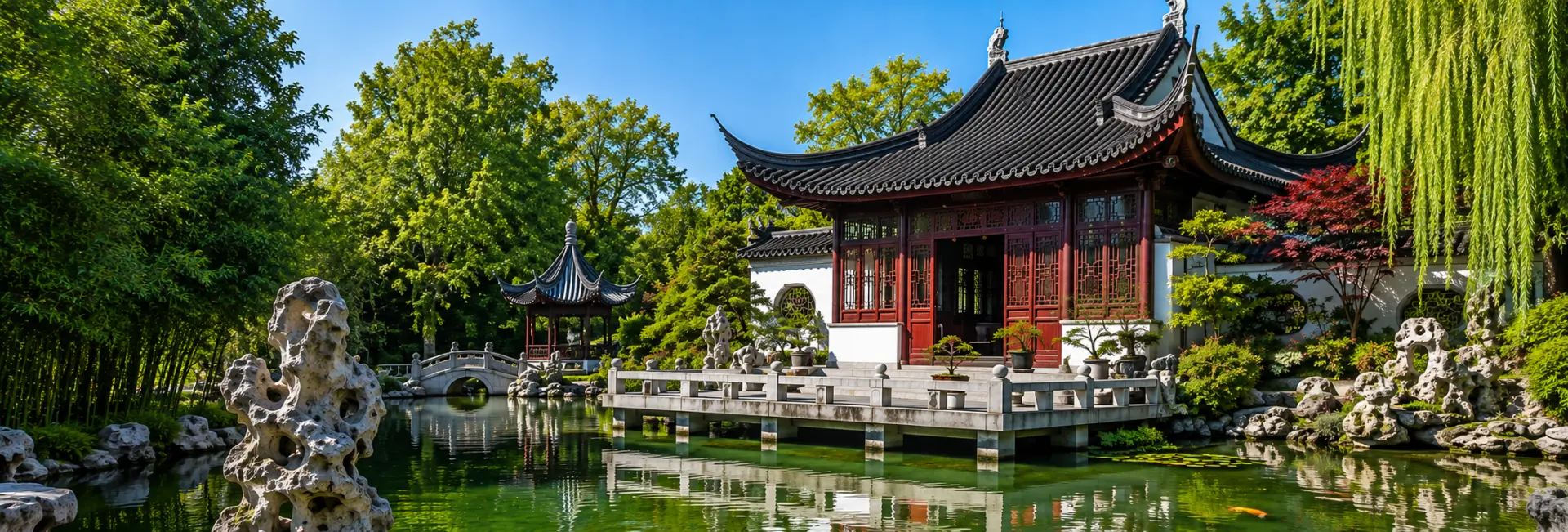
Water is the central, unifying element of the garden, representing the lifeblood of nature. A large, tranquil pond anchors the space, reflecting the sky and the surrounding architecture. Around the pond, visitors can explore several traditional structures, including an elegant waterside pavilion and a grand entrance gate. These buildings feature distinctive, sweeping rooflines, intricate wood carvings, and vibrant, symbolic paintwork, completely transporting visitors out of a European aesthetic context.
Key Features and Symbolism
Every element within the Chinese Garden carries deep symbolic meaning, designed to be read like a visual poem by those who understand the cultural language.
- The Moon Gate: The classic circular entranceway not only frames a beautiful view into the garden but symbolizes perfection, unity, and the cycle of the moon.
- Taihu Stones: Scattered around the pond are highly prized, naturally porous limestone rocks from Lake Tai in China. These strangely shaped, weathered stones represent mountains and are considered the "bones of the earth," symbolizing endurance and wisdom.
- The Zigzag Bridge: The bridge crossing the water is deliberately built with sharp angles. According to Chinese folklore, evil spirits can only move in straight lines, so the zigzag design prevents negative energy from crossing the water and entering the pavilions.
Flora and The Three Friends of Winter
The planting scheme of the garden is highly deliberate, focusing on species that carry significant cultural weight in Chinese philosophy. The central botanical theme is the "Three Friends of Winter" (pine, bamboo, and plum blossom). These three plants are celebrated in Chinese art and literature for their hardiness, as they do not wither when the cold weather sets in.
The pine represents longevity and steadfastness; the bamboo symbolizes resilience, bending without breaking in the wind; and the plum blossom, which blooms beautifully even in the snow, stands for hope and the promise of spring. The garden also features weeping willows draping elegantly over the water and carefully cultivated lotus flowers in the pond, representing purity and enlightenment.
Ways to Experience It
Mindful Observation
The best way to experience the Chinese Garden is slowly and quietly. The space is designed for contemplation rather than active recreation. Visitors are encouraged to sit in the pavilions, listen to the gentle sound of the water, and observe the reflections in the pond. The garden provides a perfect setting for reading, meditation, or quiet conversation.
Photography
Due to its stunning architecture and vibrant colors, the garden is a paradise for photographers. The contrast of the bright red pillars and dark grey roof tiles against a blue sky, or the intricate framing provided by the ornamental windows, offers endless compositional possibilities. It is a particularly popular spot for portrait and wedding photography.
Best Time to Visit
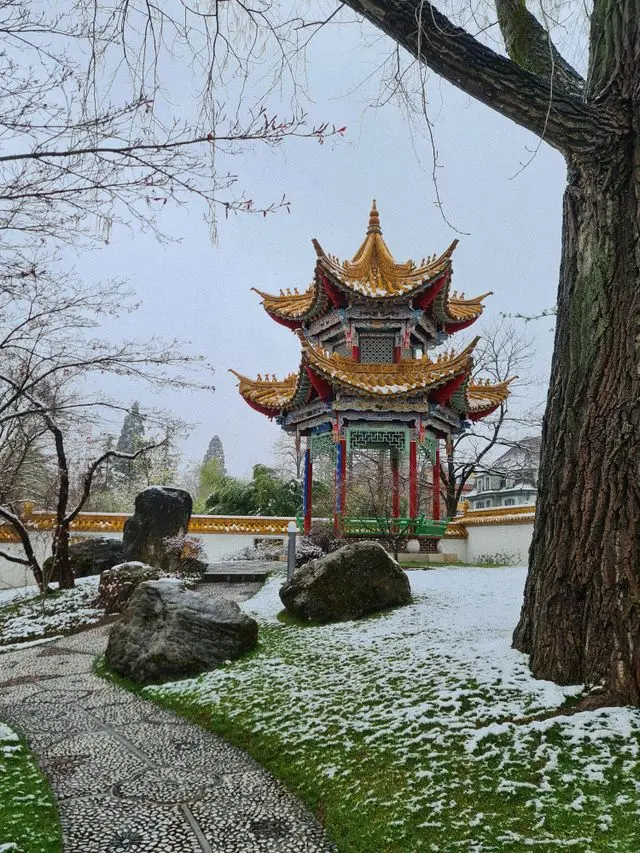
The garden is beautiful throughout the year, but the experience changes dramatically with the seasons. Spring is particularly enchanting when the symbolic plum and cherry blossoms are in full bloom, adding splashes of pink and white to the landscape. Summer offers lush greenery and blooming lotuses in the pond. However, visiting in winter, especially if there is a light dusting of snow on the curved roofs and the "Three Friends of Winter" are prominent, provides a stark, poetic beauty that perfectly aligns with the garden's underlying philosophy.
Visitor Tips and Logistics
Access and Amenities
The Chinese Garden is located within the larger Zürichhorn park area. It is entirely flat and fully accessible for wheelchair users and strollers. There are public restrooms located nearby within the park. While there is no café inside the garden itself, there are several excellent dining options and casual kiosks located just steps away on the lakeshore.
Getting There
The most scenic way to reach the garden is to take a short boat cruise from Bürkliplatz across the lake, disembarking at the "Zürichhorn" stop, which is just a two-minute walk from the garden walls. Alternatively, it is an easy and pleasant 20-minute walk from the city center along the lakeside promenade, or a quick ride on tram lines 2 or 4 to the "Höschgasse" or "Fröhlichstrasse" stops.
Nearby Attractions
The garden's location in the Zürichhorn park makes it easy to combine with other leisurely lakeside activities.
- The Zürichhorn Park: The expansive park surrounding the garden is perfect for picnicking, sunbathing, and playing on the large open lawns right by the water.
- Le Corbusier House: Just a short walk away is the final architectural masterpiece designed by the famous Swiss-French architect Le Corbusier, offering a striking contrast of modern, primary-colored design.
- Strandbad Tiefenbrunnen: A slightly further walk down the lake brings you to this popular public bathing facility, where you can swim in the lake and enjoy the diving boards and sun terraces during the summer.
FAQs about visiting the Chinese Garden Zurich
Is there an entrance fee for the Chinese Garden? +
As of recent years, entry to the Chinese Garden is completely free of charge, making it a very accessible and highly recommended stop during a walk along the lake.
How much time do I need to visit the garden? +
The garden is quite small and compact. A typical visit lasts about 20 to 30 minutes to walk around the pond and admire the pavilions. However, many visitors choose to stay longer simply to sit on the benches and enjoy the peaceful atmosphere.
Can I bring food or have a picnic inside the garden? +
No, eating, drinking, and picnicking are not allowed inside the walled garden to maintain its cleanliness and tranquil atmosphere. However, the expansive Zürichhorn park immediately outside the walls is one of the best places in the city for a picnic.
Is the garden open year-round? +
Yes, the garden is generally open all year round, though the daily opening hours are shorter during the winter months. It is always best to check the current seasonal hours before planning your visit.
Are dogs allowed inside the Chinese Garden? +
No, dogs (with the exception of registered service animals) are not permitted inside the garden walls. They are, however, allowed on leashes in the surrounding public park.
Why is it sometimes called a "Temple Garden"? +
It is classified as a temple garden because it follows the specific, high-ranking architectural and aesthetic rules traditionally reserved for Chinese temples and imperial palaces, rather than the simpler styles used for private merchant gardens.
