Table of Contents
Overview
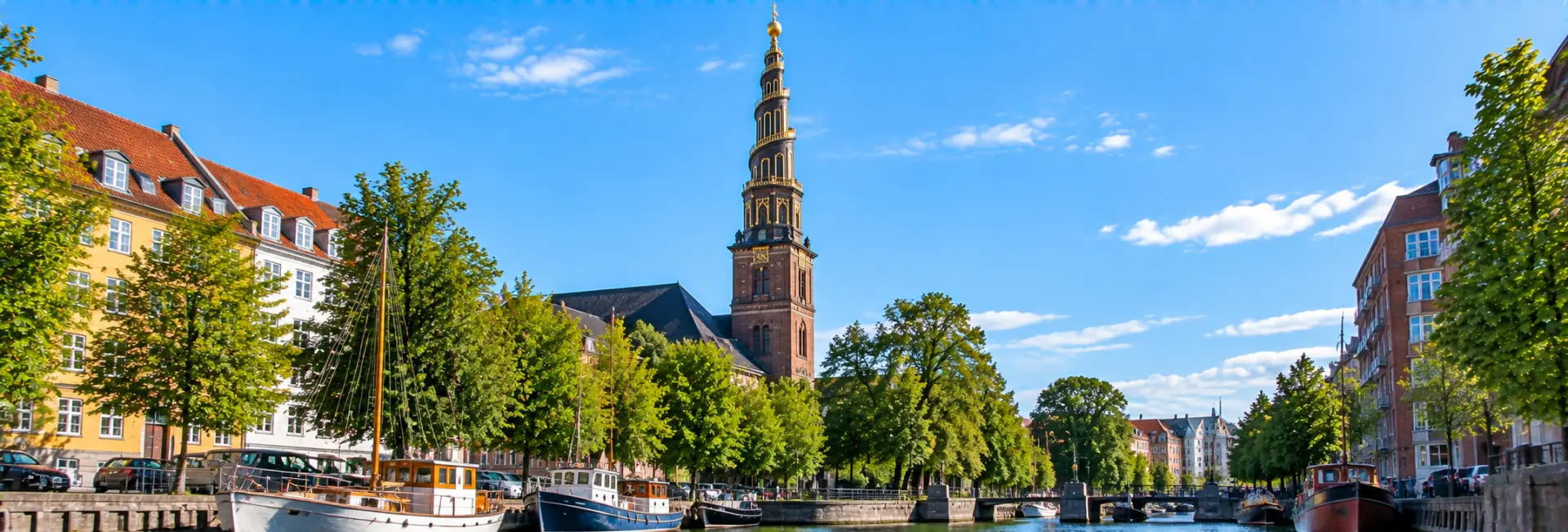
The Church of Our Saviour, known in Danish as Vor Frelsers Kirke, is one of Copenhagen's most recognizable landmarks, rising above the rooftops of Christianshavn with a spire that winds around itself as it climbs toward the sky. Visitors come both to see its Baroque interior and, for those willing to make the climb, to reach the external spiral staircase that circles the spire's final stretch.
Still an active Lutheran parish church serving thousands of local worshippers, it manages to be both a working place of worship and one of Copenhagen's most visited attractions, drawing people for its architecture, its views, and its long, occasionally dramatic history.
History
A Church for a New Merchant Town
When King Christian IV laid out Christianshavn in 1617 as an independent merchant settlement, the growing community needed its own church, and a temporary wooden structure was built around 1639 to serve it. As the district's population grew, a larger, permanent church became necessary.
Building the Present Church
Construction of the current building, designed by architect Lambert van Haven, began in 1682 on the site of the temporary church and its adjoining burial ground. Work proved difficult, since the church stood on reclaimed former seabed requiring complicated foundations, but the building was finally consecrated in 1696, even though it initially lacked its permanent altar and had no spire at all.
Adding the Spire
The church's altar was not completed until 1732, and plans for a spire were only revived in earnest in 1747 under King Frederik V. Architect Lauritz de Thurah took over the project, setting aside van Haven's earlier design in favor of his own, which the king approved in 1749. The spire was completed three years later, and Frederik V himself climbed the tower for its ceremonial opening on 28 August 1752.
Architecture & Design
Van Haven's original church follows a Greek-cross plan in the Dutch Baroque style, built from brick with Tuscan pilasters running up to the top of the facade. The spire added decades later by de Thurah takes the more unusual form of an external spiral staircase winding around a slender oak-framed structure, a design inspired by baroque church towers he had seen in Italy.
The tower rises roughly 90 meters from the ground to the banner held by the gilded figure of Christ at its summit, with around 400 steps leading to the top, the final 150 of which wind around the outside of the spire in the open air. At the very top sits a golden globe large enough to hold several people inside, supporting the three-meter-tall statue of Christ, deliberately oversized so it could be seen clearly from ships approaching the harbor.
Cultural & Religious Significance
As a functioning parish within the Church of Denmark, Vor Frelsers Kirke continues to serve a local congregation of several thousand people, holding regular services alongside its role as a major tourist attraction. Its carillon, one of the largest in northern Europe, plays melodies from the tower every hour between 8 a.m. and midnight, giving the surrounding neighborhood a familiar musical backdrop to daily life.
The church's decoration reflects the absolutist monarchy that built it, with King Christian V's monogram and the elephant motif of Denmark's Order of the Elephant appearing throughout the stucco work and furnishings, tying the building directly to the political ambitions of the Danish crown in the late 17th century.
Notable Features
Beyond the famous spire, the church's interior holds several notable pieces of Baroque craftsmanship.
- An altarpiece by Nicodemus Tessin depicting Christ comforted by an angel in the Garden of Gethsemane, flanked by figures representing piety and justice
- A large organ built by the Botzen brothers between 1698 and 1700, mounted on the wall and supported by two carved elephants, with more than four thousand original pipes
- A carillon of dozens of bells, regarded as one of the largest of its kind in northern Europe
- The external spiral staircase itself, a rare architectural feature and the church's single most photographed detail
- The gilded globe and statue of Christ crowning the spire, visible from much of central Copenhagen
Visiting Etiquette & Tips
A visit to the church combines the etiquette of an active place of worship with a few practical considerations specific to the tower climb.
- Entry to the main church is generally free, while the spire climb requires a separate paid ticket
- Keep voices low and be mindful of visitors attending services or private moments of reflection inside the church
- The tower closes during rain, snow, strong winds, or other unsafe conditions, and is also typically closed for part of the winter, so flexibility is worth building into any plan to climb it
- The external staircase narrows near the top and is not recommended for those uncomfortable with heights or exposed, unguarded stairs
- Booking a time slot in advance is worth considering during busy periods, since access to the tower can be limited
Best Time to Visit
The interior of the church can be visited comfortably year-round, but the spire climb is very much a warm-weather activity, since it typically closes for safety reasons during the depths of winter and on any day with poor weather. Clear, calm days offer the best visibility from the top, making a flexible schedule useful for travelers hoping to climb it.
Arriving earlier in the day, especially outside peak summer months, tends to mean shorter waits for the tower and a quieter experience inside the church itself.
Nearby Attractions
The church's location in the heart of Christianshavn puts several other sights within easy walking distance.
- Freetown Christiania, a short walk from the church's main entrance on Prinsessegade
- The Christianshavn canal and its houseboats, just a few minutes away on foot
- Christianshavn Metro station, offering quick connections to the rest of Copenhagen
- Nyhavn's colorful harbor front, reachable across the Inderhavnsbroen bridge
- Christiansborg Palace and the National Museum of Denmark, both within walking distance across Knippelsbro bridge
FAQs about visiting the Church of Our Saviour
What is the Church of Our Saviour known for? +
It is best known for its distinctive spiral spire, which visitors can climb via an external staircase for panoramic views over Copenhagen, as well as its Baroque interior and large historic organ.
Can I climb the spire year-round? +
No, the tower typically closes for part of the winter and on any day with rain, snow, or strong wind, so it is worth checking conditions and planning for flexibility, especially outside the summer months.
Is entry to the church free? +
Entry to the main church interior is generally free, while climbing the spire requires a separate paid ticket.
How many steps are there to the top of the spire? +
There are roughly 400 steps in total, with the final 150 winding around the outside of the spire in the open air.
Is the climb suitable for everyone? +
The external staircase narrows considerably near the top and is not recommended for those with a fear of heights, mobility limitations, or discomfort with exposed, unguarded stairs.
How do I get to the Church of Our Saviour? +
It sits in Christianshavn, within a short walk of Christianshavn Metro station, and is easily combined with a visit to Freetown Christiania or a walk along the neighboring canal.
Is the church still used for services? +
Yes, it remains an active Lutheran parish church serving thousands of local worshippers, alongside its role as one of Copenhagen's most visited landmarks.
What else is nearby if I want to keep exploring? +
Freetown Christiania, the Christianshavn canal, and Nyhavn are all within easy walking distance, making it simple to pair a visit with a broader day in this part of Copenhagen.